In the two decades since the United States became the world's only superpower, policymakers in Washington have seemingly abandoned many tools of statecraft and instead now rely on U.S. military strength as the key—and sometimes the sole—element of its global strategy. Yet economists see a world in which the salience of military power has been shrinking as greater affluence and deepening interdependence transform the global economy. In Winners without Losers, Edward J. Lincoln, a highly regarded economist, contends that the best chance the United States has of ensuring peace and prosperity—for itself and for the rest of the world—will be found at conference tables rather than on the battlefield. Shining a spotlight on foreign trade policy as an agent for political change, this cogent and well-argued book urges policymakers, the business community, and citizens to find a path to increased stability by forging stronger international economic ties. Interdependence is founded on cooperation with other nations, and in particular on multilateral institutions. Over the past five years, in particular, American policy has moved strongly away from cooperation and, in a single-minded pursuit of the "war against global terror," has largely ignored economic issues. Extending the scope of his previous work, which started with the economic transformations of postwar Japan and more recently considered the evolution of economic linkages and cooperation in East Asia, Lincoln applies regional lessons to the world stage. More than a critique of current policies, Winners without Losers argues for a transformation of American foreign policy that recognizes the new realities of the globalized world-realities that America's leaders ignore at the nation's peril.
"In the late 1980s, Japan's strong economic performance put it on a the verge of becoming a major player in regional and global affairs. But nearly a decade of economic stagnation, a mounting of bad debts, and a continuing stream of scandals have tarnished the country's distinctive economic model. At the turn of the millennium, the Japanese economy remained mired in a pattern of stagnation. As this disappointing condition dragged on, the government pursued policies to restore economic health. Yet Japan has been slow to embrace the systemic reform on which a robust economic recovery depends. In Arthritic Japan, Edward J. Lincoln examines the causes and implications of this weak response. Concluding that Japan is unlikely to pursue the vigorous reform necessary for economic growth, Lincoln warns of serious consequences: a stumbling economy bedeviled by recession and financial crisis, eroding leadership in economic and security issues, a continued defensive trade posture, and a disgruntled population that could turn a more nationalistic stance in foreign policy."
"Something new is happening across East Asia. A region notable for its lack of internal economic links is discussing regional cooperation on trade, investment, and exchange rates. Because of negotiations elsewhere around the globe on regional trade—such as those that led to the consolidation of the European Union, the formation of the North American Free Trade Area, and the rapid proliferation of bilateral free trade areas—the talk is not surprising. Nevertheless, East Asia's past inertia with regard to forming a regional partnership raises many questions about its emerging regionalism. Why has the region suddenly shifted from taking a global approach to economic issues to discussing a regional bloc? How fast and how far will the new regionalism progress? Will the region become a version of the European Union, or something far less? What is the probable impact on American economic and strategic interests—are the likely developments something that the U.S. government should encourage or discourage? Edward Lincoln takes up these questions, exploring what is happening to regional trade and investment flows and what sort of regional arrangements are the most sensible. Lincoln argues that an exclusive grouping is unlikely. Free trade negotiations have brought some economies in the region together, but they also have led to links with nations outside the region. Some regional governments most notably Japan, continue to have difficulty embracing the concept of free trade, even with favored regional partners. In the wake of the Asian financial crisis, governments also have looked at cooperating on exchange rates, but they have done little to move forward. The U.S. government must decide how to respond to these developments in East Asia. An exclusively Asian form of regionalism could run counter to American economic interests, and the U.S. government has reacted negatively to some of these proposals in the past. Because trade and investment links between the countries of the Asia Pacific region and the United States remain very strong, Lincoln argues that the Asia Pacific Economic Cooperation forum remains the appropriate institution for pursuing regional trade and investment issues. "
"Since 1980, Japan's international economic position has undergone a historic transformation that is now having significant consequences for Japan, the United States, Europe, and other countries around the world. In this book, Edward J. Lincoln analyzes the major economic changes that occurred in Japan during the 1980s, including macroeconomic shifts, financial deregulation, yen appreciation, rising labor costs brought on by long-term demographic changes, and technological success.Since 1945, the Japanese have shied away from active involvement in most of the complications and problems of the international community. Now, however, a surge in outward foreign investment, particularly direct investment, has involved the nation, more intimately with the outside world than in the past. As a result, Japan has had to cope with some difficult new questions: how to participate meaningfully in the work of the major multilateral economic institutions and the United Nations, how to expand or change the country's foreign aid program, how to take part in the intentional debate on environmental policy, and how deeply to become involved in solving the world's political problems.Lincoln asserts that overcoming the string of insularity and passivism for the years since 1945 will not be easy. He proposes several specific policies that would lead Japan toward a more productive international engagement and suggests that these changes will also serve the objectives of American foreign policy.The 1993 elections and the new coalition government in Japan offer a greater possibility of domestic change; the mood of the nation has shifted away from continued acceptance of the policies of the past. There is now a greater opportunity for the American government to engage in a productive dialogue that can encourage Japan toward a more open and active global role."
Japan is the great economic success story of the postwar period, growing at unprecedented rates to become one of the world's most advanced industrial nations. But since the early 1970s, Asia's economic giant has had to contend with many of the problems encountered by Western economies--slower growth, increased unemployment, rapid changes in the financial and industrial sectors--problems that have permanently transformed its economy and pose crucial challenges for its leaders.In this book, Edward J. Lincoln discusses Japan's burst of growth and the complex interplay of demographic, cultural, economic, and political forces that shaped the subsequent emergence of large domestic imbalances. The motivation and impact of Tokyo's successive attempts to deal with slower growth receive special attention: ballooning government deficits that supported domestic growth in the late 1970s, a determined switch to austerity measures in the 1980s as a surging current-account surplus conveniently buoyed the economy, and as yet uncertain responses to the recent appreciation of the yen that has capped the external surpluses.Lincoln focuses on the changes experienced by Japan's financial institutions and their implications for international economic transactions. Slower growth and altered monetary flows have brought increasing domestic and international pressures for deregulating financial institutions, and the government has responded cautiously. The study analyzes the resulting tensions and crosscurrents within Japan and the strains that have developed in relations with the United States. It concludes with a lucid presentation of Japan's options for stimulating domestic demand through reducing private-sector savings, increasing investment, and raising government spending, as well as appropriate U.S. policies to promote these outcomes. Whatever policy decisions Japan makes in the next few years will be shaped by the economic forces and institutional framework Lincoln outlines.
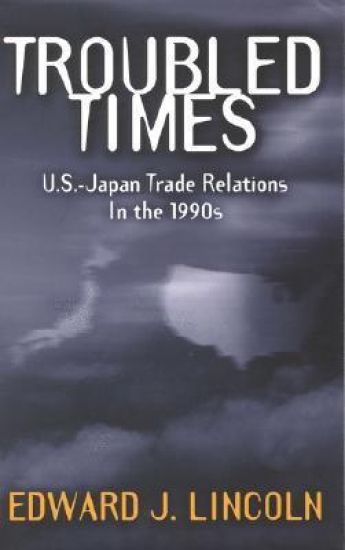
With all the rapid economic success in Japan, it is easy to forget just how insular the nation has been, and how strikingly different its trading patterns remain from those of other industrialized nations. Japan is moving into an era of greater interaction with the world, but Lincoln contends that this does not mean the United States and other nations can end their pressure on Japan to continue opening its markets. "Now is the time to bring Japan into the fold," Lincoln writes in his introduction. Lincoln focuses on the question of access to Japanese markets, Japan's pattern of trade on imports, and the consequences of large trade and current-account imbalances. He argues against the United States abandoning its free-trade ideal and offers suggestions for applying pressure to encourage greater real access to Japanese markets.
"In this book, Edward J. Lincoln tackles the thorny issue of U.S. trade relations with Japan, the subject of so much tension in the 1990s. In so doing, he builds on his earlier Brookings book, Japan's Unequal Trade. Lincoln argues that statistical evidence shows only modest progress in diminishing Japan's ""distinctiveness."" Despite an upturn in the mid-1990s, import penetration, intra-industry trade, and inward foreign direct investment all remain low relative to most other nations. High profile negotiating efforts by both the Bush and Clinton administrations made progress in chipping away at protectionist barriers but fundamental problems remain. While Lincoln offers suggestions on what needs to be done by both sides, the most important lesson drawn from recent experience is that expectations should be lowered. Any feasible approach to making markets more open in Japan is likely to yield slow progress. Such realism--not to be confused with defeatism--is the only approach that has any chance of realizing gains over time. "
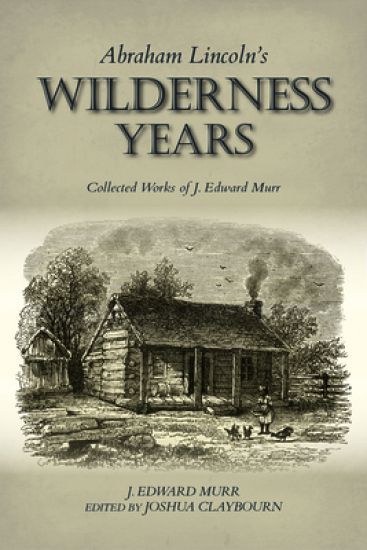
Abraham Lincoln spent a quarter of his life—from 1816 to 1830, ages 7 to 21—learning and growing in southwestern Indiana. Despite the importance of these formative years, Lincoln rarely discussed this period, and with his sudden, untimely death in 1865, mysterious gaps appear in recorded history. In Abraham Lincoln's Wilderness Years, Joshua Claybourn collects and annotates the most significant scholarship from J. Edward Murr, one of the only writers to cover this lost period of Lincoln's life. A Hoosier minister who grew up with the 16th president's cousins, Murr interviewed locals who knew Lincoln. Part I features selected portions of Murr's book-length manuscript on Lincoln's youth, published here for the first time. Part II offers a series by Murr on Lincoln's life in Indiana, originally printed in the Indiana Magazine of History. Part III reveals letters between Murr and US Senator Albert J. Beveridge, a prominent historian, about Beveridge's early manuscript of the biography Abraham Lincoln, 1809–1858. Of all Lincoln's biographers, none knew his boyhood associates and Indiana environment as well as Murr, whose complete Lincoln research and scholarship have never been published—until now. Abraham Lincoln's Wilderness Years preserves and celebrates this important source material, unique for studying Lincoln's boyhood years in Indiana.
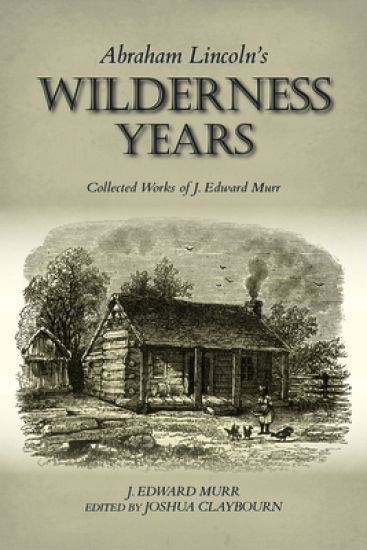
Abraham Lincoln spent a quarter of his life—from 1816 to 1830, ages 7 to 21—learning and growing in southwestern Indiana. Despite the importance of these formative years, Lincoln rarely discussed this period, and with his sudden, untimely death in 1865, mysterious gaps appear in recorded history. In Abraham Lincoln's Wilderness Years, Joshua Claybourn collects and annotates the most significant scholarship from J. Edward Murr, one of the only writers to cover this lost period of Lincoln's life. A Hoosier minister who grew up with the 16th president's cousins, Murr interviewed locals who knew Lincoln. Part I features selected portions of Murr's book-length manuscript on Lincoln's youth, published here for the first time. Part II offers a series by Murr on Lincoln's life in Indiana, originally printed in the Indiana Magazine of History. Part III reveals letters between Murr and US Senator Albert J. Beveridge, a prominent historian, about Beveridge's early manuscript of the biography Abraham Lincoln, 1809–1858. Of all Lincoln's biographers, none knew his boyhood associates and Indiana environment as well as Murr, whose complete Lincoln research and scholarship have never been published—until now. Abraham Lincoln's Wilderness Years preserves and celebrates this important source material, unique for studying Lincoln's boyhood years in Indiana.
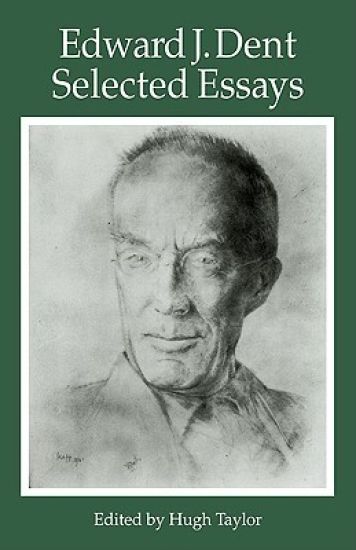
During his long career, Edward Dent wrote on a variety of musical subjects, ranging from substantial articles in the most learned journals to less weighty pieces in Radio Times. This volume aims to reflect that variety. Some of the articles are now of primarily historical interest, others offer insights of a fundamental kind; all are informed by Dent's witty and distinctive prose style. In editing this collection, Hugh Taylor has drawn on writings from 1903 to 1951 and included two pieces originally written in Italian and published here in English for the first time. As well as providing footnotes, which amplify certain of Dent's statements and draw attention to subsequent research, Mr Taylor has listed sources for Dent's many textual references and quotations. Brought together in this way Dent's learned but always readable criticism will appeal to the reader with a general interest in music as well as to the music student and specialist.
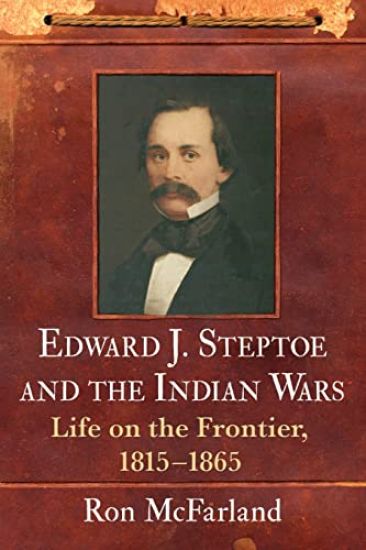
Lieutenant Colonel Edward J. Steptoe's escape from encirclement by 1,000 Northern Plateau Indians in 1858 is a familiar story from the Indian Wars. Yet the details of the Battle of Pine Creek (or Tohotonimme) and its aftermath remain subjects of debate. Outnumbered six to one, Steptoe's 164 troops slipped away in the night. Newspapers called it a "disaster." A few weeks later, Colonel George Wright avenged the defeat and Steptoe, who had suffered a stroke months before the battle, lived his final years in relative obscurity in his native Virginia as the Civil War erupted. This definitive biography of Steptoe chronicles the career of a field officer who served nearly four years in the Second Seminole War, won commendation for gallantry during the Mexican War, performed admirably (though controversially) in the Utah Territory, undertook construction of forts at Walla Walla in the newly defined Washington Territory and engaged with various tribes throughout his deployments. His personal letters reveal a thoughtful, sensitive commander who came to question his choice of career even before his final battle.
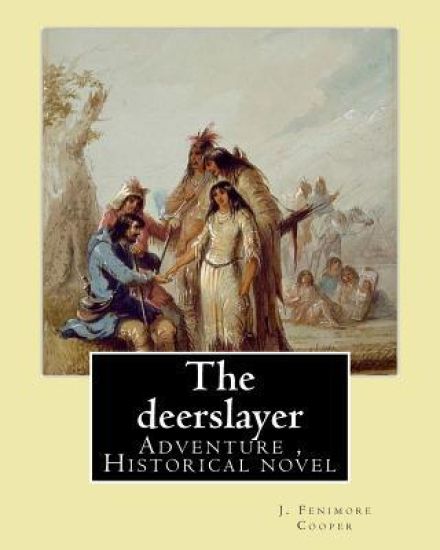
The Deerslayer, or The First Warpath (1841) was the last of James Fenimore Cooper's Leatherstocking Tales to be written. Its 1740-1745 time period makes it the first installment chronologically and in the lifetime of the hero of the Leatherstocking tales, Natty Bumppo. The novel's setting on Otsego Lake in central, upstate New York, is the same as that of The Pioneers, the first of the Leatherstocking Tales to be published (1823). The Deerslayer is considered to be the prequel to the rest of the series. Fenimore Cooper begins his work by relating the astonishing advance of civilization in New York State, which is the setting of four of his five Leatherstocking Tales. Plot: This novel introduces Natty Bumppo as "Deerslayer" a young frontiersman in early 18th-century New York, who objects to the practice of taking scalps, on grounds that every living thing should follow "the gifts" of its nature, which would keep European Americans from taking scalps. Two characters who actually seek to take scalps are Deerslayer's foil Henry March (alias "Hurry Harry") and the former pirate 'Floating Tom' Hutter, to whom Deerslayer is introduced en route to a rendezvous with the latter's lifelong friend Chingachgook (initially apparent in The Last of the Mohicans). Shortly before the rendezvous, Hutter's residence is besieged by the indigenous Hurons, and Hutter and March sneak into the camp of the besiegers to kill and scalp as many as they can; but are captured in the act, and later ransomed by Bumppo, Chingachgook, and Hutter's daughters Judith and Hetty. Bumppo and Chingachgook thereafter plan to rescue Chingachgook's kidnapped betrothed Wah-ta-Wah (alias 'Hist') from the Hurons; but, in rescuing her, Bumppo is captured. In his absence, the Hurons invade Hutter's home, and Hutter is scalped alive. On his deathbed, he confesses that Judith and Hetty were not his daughters by birth, and Judith determines to discover her natural father's identity; but her search reveals only that her late mother had been of aristocratic descent, and had married 'Floating Tom' after the collapse of an illicit affair. Later, Judith attempts and fails to rescue Deerslayer; and they are all saved at last when March returns with English reinforcements, who massacre the Hurons and mortally wound Hetty. After Hetty's death, Judith proposes marriage to Deerslayer, but is refused, and is last described as the paramour of a soldier. Fifteen years later, Bumppo and Chingachgook return to the site, to find Hutter's house in ruins.... James Fenimore Cooper (September 15, 1789 - September 15, 1851) was a prolific and popular American writer of the early 19th century. His historical romances of frontier and Indian life in the early American days created a unique form of American literature. He lived most of his life in Cooperstown, New York, which was founded by his father William on property that he owned. Cooper was a lifelong member of the Episcopal Church and, in his later years, contributed generously to it.He attended Yale University for three years, where he was a member of the Linonian Society, but was expelled for misbehavior. Before embarking on his career as a writer, he served in the U.S. Navy as a Midshipman, which greatly influenced many of his novels ands other writings. The novel that launched his career was The Spy, a tale about counterespionage set during the Revolutionary War and published in 1821. He also wrote numerous sea stories, and his best-known works are five historical novels of the frontier period known as the Leatherstocking Tales. Among naval historians, Cooper's works on the early U.S. Navy have been well received, but they were sometimes criticized by his contemporaries. Among his most famous works is the Romantic novel The Last of the Mohicans, often regarded as his masterpiece.... Edward J. Wheeler (Wheeler, Edward J., approximately 1848-1933)
From "The Last Dream of Bwona Khubla" From steaming lowlands down by the equator, where monstrous orchids blow, where beetles big as mice sit on the tent-ropes, and fireflies glide about by night like little moving stars, the travelers went three days through forests of cactus till they came to the open plains where the oryx are.When Bwona Khubla had gone there three years ago, what with malaria with which he was shaking all over, and what with disgust at finding the water-hole dry, he had decided to die there, and in that part of the world such decisions are always fatal. In any case he was overdue to die, but hitherto his amazing resolution, and that terrible strength of character that so astounded his porters, had kept him alive and moved his safari on.There is not doubt that he was a fearful man. . . .*This peculiar collection is a very real treat: we envy you the reading of it. Among the treasures in this volume are "The Last Dream of Bwona Khubla," "How the Office of Postman Fell Vacant in Offord-Under-the-Wold," "The Prayer of Boob Aheera," "East and West," "A Pretty Quarrel," "How the Gods Avenged Meoul Ki Ning," "The Gift of the Gods," "The Sack of Emeralds," "The Old Brown Coat," "An Archive of the Older Mysteries," and "A City of Wonder," and a section he called Beyond the Fields We Know, which included "Publisher's Note," "Idle Days on the Yann," "A Shop in Go-By Street," and "The Avenger of Perd ndaris."
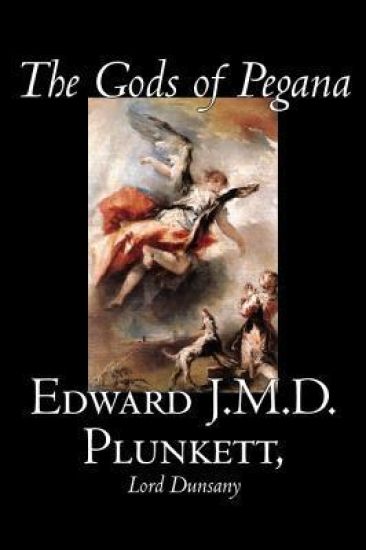
There be islands in the Central Sea, whose waters are bounded by no shore and where no ships come -- this is the faith of their people. In the mists before the Beginning, Fate and Chance cast lots to decide whose the Game should be; and he that won strode through the mists to MANA-YOOD-SUSHAI and said: "Now make gods for Me, for I have won the cast and the Game is to be Mine." Who it was that won the cast, and whether it was Fate or whether Chance that went through the mists before the Beginning to MANA-YOOD-SUSHAI -- none knoweth.More than eighty books of Lord Dunsany's work were published and his oeuvre includes many hundreds of published short stories, as well as successful plays, novels and essays.
Included in this 1908 compilation are a number of Dunsany's classic tales, incuding "The Sword of Welleran," "The Fall of Babbulkund," "The Kith of the Elf Folk," "The Highwayman," "In the Twilight," "The Ghosts," "The Whirlpool," "The Hurricane," "The Fortress Unvanquishable, Save for Sacnoth," "The Lord of Cities," "The Doom of La Traviata," and "On the Dry Land."
Included in this volume: "A Tale of London" "Thirteen at Table" "The City on Mallington Moor" "Why the Milkman Shudders When He Perceives the Dawn" (also published in a chapbook) "The Bad Old Woman in Black" "The Bird of the Difficult Eye" "The Long Porter's Tale" "The Loot of Loma" "The Secret of the Sea" "How Ali Came to the Black Country" "The Bureau d'Echange de Maux" "A Story of Land and Sea" "A Tale of the Equator" "A Narrow Escape" "The Watch-Tower" "How Plash-Goo Came to the Land of None's Desire" "The Three Sailors' Gambit" "The Exiles' Club" "The Three Infernal Jokes"
There be islands in the Central Sea, whose waters are bounded by no shore and where no ships come -- this is the faith of their people. In the mists before the Beginning, Fate and Chance cast lots to decide whose the Game should be; and he that won strode through the mists to MANA-YOOD-SUSHAI and said: "Now make gods for Me, for I have won the cast and the Game is to be Mine." Who it was that won the cast and whether it was Fate or whether Chance that went through the mists before the Beginning to MANA-YOOD-SUSHAI -- none knoweth.More than eighty books of Lord Dunsany's work were published and his oeuvre includes many hundreds of published short stories, as well as successful plays, novels and essays.