

Kirjahaku
Etsi kirjoja tekijän nimen, kirjan nimen tai ISBN:n perusteella.
1000 tulosta hakusanalla Edward James Blakely
Eleven Village Sermons By Edward James Moor (1840)
Edward James Moor
KESSINGER PUBLISHING, LLC
2009
pokkari

Speeches, Articles, Etc. of Edward James Herbert, Third Earl of Powis
Edward James Herbert; Robert Charles (EDT) Herbert; W. H. (EDT) Herbert
Kessinger Pub
2008
pokkari
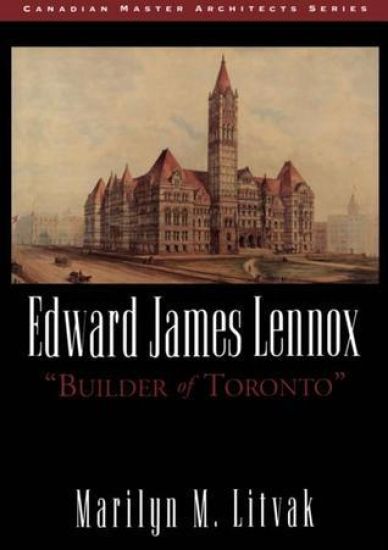
From 1876 to 1915, Edward James Lennox was a formidable force in Toronto’s architectural community. Many of his buildings are still landmarks in a city that continues to evolve.Born and educated in Toronto, Lennox looked to the past for inspiration but was never captured by it. His prototypical Annex houes on Madison Avenue, Old City Hall, and Casa Loma bear witness to his technical expertise and aesthetic sensibilities. Through text and illustrations, this volume tells the story of the a resolute architect whose vision helped shape an emerging city, and who in his time was called the "builder of Toronto."Edward James Lennox, "Builder of Toronto" is the first volume in the Canadian Master Architect series. Each publication will profile the work of an individual Canadian architect. The series editor is Marilyn M. Litvak.

An Autobigraphy of Dr. Edward James Earl: From The Boxcar to The Pulpit
Edward James Earl
Createspace Independent Publishing Platform
2018
nidottu

Brief Memoirs Of The Late John Thomas James, Lord Bishop Of Calcutta
Edward James
Kessinger Pub
2008
pokkari

Brief Memoirs Of The Late John Thomas James, Lord Bishop Of Calcutta: Particularly During His Residence In India (1830)
Edward James
KESSINGER PUBLISHING, LLC
2008
sidottu

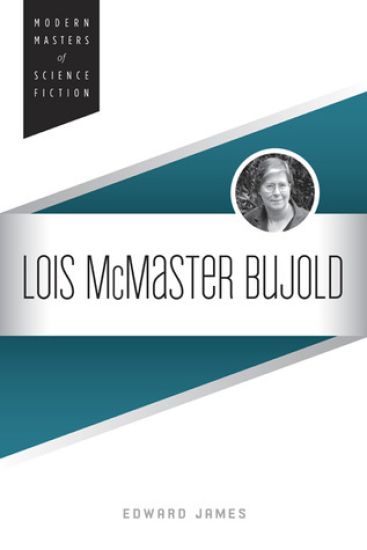
Readers have awarded Lois McMaster Bujold four Hugo Awards for Best Novel, a number matched only by Robert Heinlein. Her Vorkosigan series redefined space opera with its emotional depth and explorations of themes such as bias against the disabled, economic exploitation, and the role of women in society. Acclaimed science fiction scholar Edward James traces Bujold's career, showing how Bujold emerged from fanzine culture to win devoted male and female readers despite working in genres--military SF, space opera--perceived as solely by and for males. Devoted to old-school ideas such as faith in humanity and the desire to probe and do good in the universe, Bujold simultaneously subverted genre conventions and experimented with forms that led her in bold creative directions. As James shows, her iconic hero Miles Vorkosigan--unimposing, physically impaired, self-conscious to a fault--embodied Bujold's thematic concerns. The sheer humanity of her characters, meanwhile, gained her a legion of fans eager to provide her with feedback, expand her vision through fan fiction, and follow her into fantasy.
Readers have awarded Lois McMaster Bujold four Hugo Awards for Best Novel, a number matched only by Robert Heinlein. Her Vorkosigan series redefined space opera with its emotional depth and explorations of themes such as bias against the disabled, economic exploitation, and the role of women in society. Acclaimed science fiction scholar Edward James traces Bujold's career, showing how Bujold emerged from fanzine culture to win devoted male and female readers despite working in genres--military SF, space opera--perceived as solely by and for males. Devoted to old-school ideas such as faith in humanity and the desire to probe and do good in the universe, Bujold simultaneously subverted genre conventions and experimented with forms that led her in bold creative directions. As James shows, her iconic hero Miles Vorkosigan--unimposing, physically impaired, self-conscious to a fault--embodied Bujold's thematic concerns. The sheer humanity of her characters, meanwhile, gained her a legion of fans eager to provide her with feedback, expand her vision through fan fiction, and follow her into fantasy.
'...compresses great erudition with remarkable skill.' The Times Higher Education Supplement
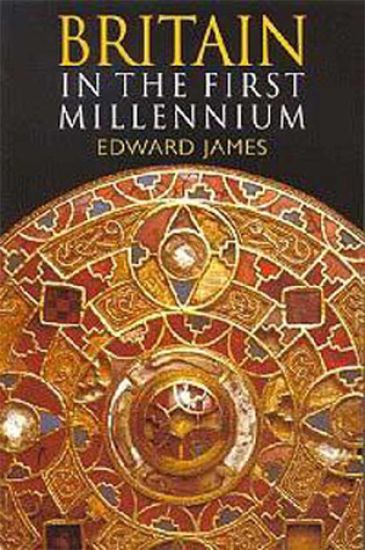
Ideal for undergraduates, this survey of medieval Britain is a coherent narrative of events between the two great invasions from continental Europe. It is unique both for its broad historical perspective and for its wide geographic coverage: it spans the 'long' millennium from the first century BC through the Norman conquest and covers events across the whole of Britain, from Cornwall to the Shetlands. Edward James provides the European context for events in England while also examining the many ways Britain differed from the rest of Europe. Students of medieval Europe will find his book an invaluable synthesis.
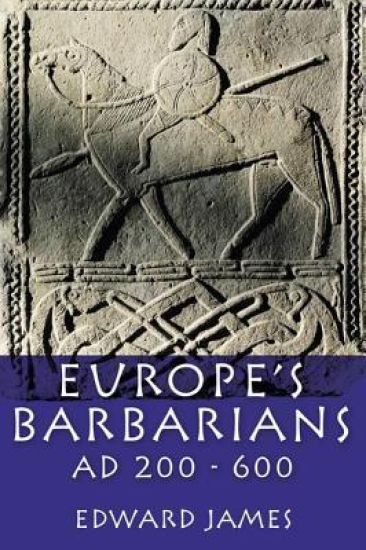
'Barbarians' is the name the Romans gave to those who lived beyond the frontiers of the Roman Empire - the peoples they considered 'uncivilised'. Most of the written sources concerning the barbarians come from the Romans too, and as such, need to be treated with caution. Only archaeology allows us to see beyond Roman prejudices - and yet these records are often as difficult to interpret as historical ones. Expertly guiding the reader through such historiographical complexities, Edward James traces the history of the barbarians from the height of Roman power through to AD 600, by which time they had settled in most parts of imperial territory in Europe. His book is the first to look at all Europe's barbarians: the Picts and the Scots in the far north-west; the Franks, Goths and Slavic-speaking peoples; and relative newcomers such as the Huns and Alans from the Asiatic steppes. How did whole barbarian peoples migrate across Europe? What were their relations with the Romans? And why did they convert to Christianity? Drawing on the latest scholarly research, this book rejects easy generalisations to provide a clear, nuanced and comprehensive account of the barbarians and the tumultuous period they lived through.

The Franks first come to light in the third century A.D. as a group of barbarians living in the marshy lowlands of the Rhine frontier of the Roman Empire. By 800 they had become the political heirs of the Romans in the West.

First published in 1970, America Against Poverty explores America's "War on Poverty," declared by President Johnson in the Economic Opportunity Act of 1964 and continued under President Nixon’s administration. Edward James highlights that this "war" represents only a small part of America's broader effort to lift a fifth of its population out of poverty. He connects this initiative to the larger struggle and the strategies that have shaped it, emphasizing that these strategies can only be fully understood within their uniquely American context. The book offers valuable insights into the relationship between social policy and the society in which it is formed. The narrative begins by examining the key features of American society most relevant to the issue of poverty, including an analysis of what poverty means in the world’s wealthiest nation. It then delves into the state of social services in 1964 and America’s rediscovery of poverty during the 1960s. The author provides a detailed account of major anti-poverty measures, with particular focus on the Economic Opportunity Act. Special attention is given to the Community Action Program launched under this Act, including an in-depth analysis of its implementation in a major city, alongside comparative studies in a large metropolis and a remote rural area. In conclusion, James reflects on the future direction of American social policy and considers the relevance of American approaches—especially community action—to the challenges faced by welfare states elsewhere. This book serves as an essential historical reference for students and scholars of public policy, public administration, social administration, and political science.
'Barbarians' is the name the Romans gave to those who lived beyond the frontiers of the Roman Empire - the peoples they considered 'uncivilised'. Most of the written sources concerning the barbarians come from the Romans too, and as such, need to be treated with caution. Only archaeology allows us to see beyond Roman prejudices - and yet these records are often as difficult to interpret as historical ones.Expertly guiding the reader through such historiographical complexities, Edward James traces the history of the barbarians from the height of Roman power through to AD 600, by which time they had settled in most parts of imperial territory in Europe. His book is the first to look at all Europe's barbarians: the Picts and the Scots in the far north-west; the Franks, Goths and Slavic-speaking peoples; and relative newcomers such as the Huns and Alans from the Asiatic steppes.How did whole barbarian peoples migrate across Europe? What were their relations with the Romans? And why did they convert to Christianity? Drawing on the latest scholarly research, this book rejects easy generalisations to provide a clear, nuanced and comprehensive account of the barbarians and the tumultuous period they lived through.
Merovingian Archaeology of South-west Gaul, Volume I
Edward James
British Archaeological Reports Oxford Ltd
1977
nidottu
Apart from the brief blaze of glory in the late fourth and fifth centuries, with the flourishing of the Bordeaux schools and the reign of the Visigothic kings, south-west Gaul is very much a terra incognita from the time of Caesar's conquest down to the emergence of Romanesque architecture and the poetry of the troubadors. It is usually on the periphery of affairs, it nourished no authors of importance save in that one period of a hundred years, and it has attracted few historians in modern times.
Merovingian Archaeology of South-west Gaul, Volume II
Edward James
British Archaeological Reports Oxford Ltd
1977
nidottu
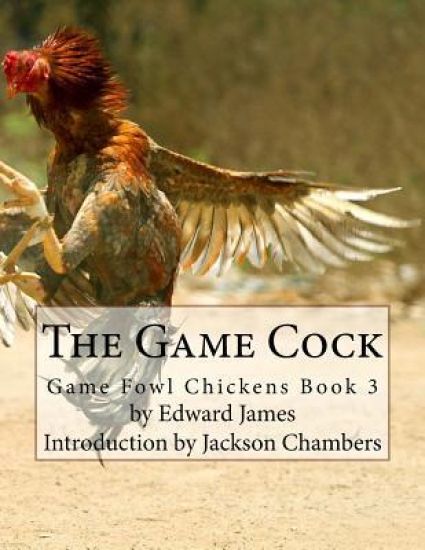
The Game Cock: Game Fowl Chickens Book 3
Edward James
Createspace Independent Publishing Platform
2016
nidottu

Harry Ferguson was an engineering genius. His ability to visualise and build a new system that changed the role of the tractor on the farm, changed farming around the world. The system in use today is still the same system he developed, all those years ago and this book tells how he saved countless farmers lives. We also read how the design changed the way tractors are used on farms. We hear about the effect on the 1930’s Wall St crash ans the need for the tractor and how the little grey Fergie saved an Australian town. The story then tells us about a Danish company that has made the tractor a media star. Harry Ferguson and his tractor, changed the world.

A true classic and one of few books of its kind. Written by a hunter who later founded a tiger sanctuary, it gives us a rare insight into the hunter's mindset and simultaneously shows us the great amount of respect and awe Corbett has for tigers and other animals of the jungles he inhabits.