Kirjojen hintavertailu. Mukana 11 244 527 kirjaa ja 12 kauppaa.

Kirjahaku

Etsi kirjoja tekijän nimen, kirjan nimen tai ISBN:n perusteella.

1000 tulosta hakusanalla Edward M. Young

A Postcard History of Japanese Aviation

A Postcard History of Japanese Aviation

Edward M. Young

Schiffer Publishing Ltd
2012
sidottu
This book provides a unique view of the development of military and commercial aviation in Japan from the pioneering years before World War I to the end of World War II. There are comparatively few books in English that illustrate aviation in Japan in the years before World War II. This is the first book to make extensive use of Japanese aviation postcards to show how aviation in Japan grew from a dependence on foreign aircraft designs and engineers in the early years to an independent industry that produced world-class airplanes. The book uses more than 250 postcards to trace the history of Imperial Japanese Army and Navy aviation, and commercial aviation, during this thirty-five year period. Each of the book's four chapters begins with a narrative survey of key developments during the period covered. The postcards, some in color and some in black and white, show both military and commercial airplanes, many famous and some less so. Of particular interest to those interested in Japanese military aviation in World War II will be a number of postcards of wartime propaganda art.
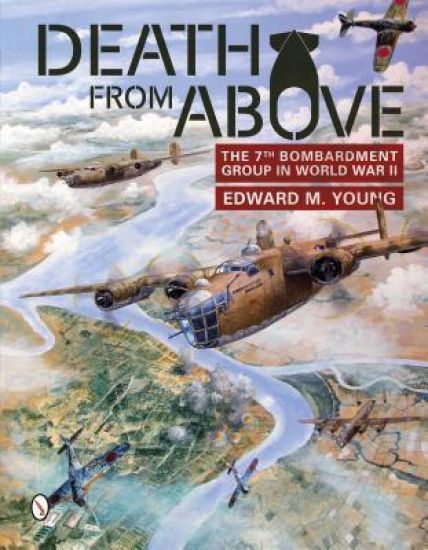
Death from Above

Death from Above

Edward M. Young

Schiffer Publishing Ltd
2014
sidottu
The 7th Bombardment Group was one of the few bombardment groups in the Army Air Corps active during the 1930s. From its activation in 1929 to the attack on Pearl Harbor, the Group flew all major types of Army Air Corps bombardment aircraft and participated in numerous exercises and annual maneuvers, helping to perfect the tactics of daylight precision bombing. During World War II, the 7th Bomb Group carried out strategic bombing operations in a theater of war far different from what the pre-war doctrine had envisioned. Units of the Group were present at the attack on Pearl Harbor and were still flying combat missions at the very end of the war, making the Group one of the longest serving combat units of the Army Air Force. Flying B-17 Flying Fortresses out of Java in the desperate early days of 1942, the Group moved to India to become part of the Tenth Air Force. Beginning combat operations in April 1942, the 7th Bomb Group converted to the B-24 Liberator and continued to fly missions over Burma and Thailand until August 1945. This book provides a description of the little-known strategic bombing operations of the Tenth Air Force in the China-Burma-India Theater.
The Tenth Air Force in World War II

The Tenth Air Force in World War II

Edward M. Young

Schiffer Publishing Ltd
2020
sidottu
During World War II, flying B-24 Liberator bombers on missions deep into Burma, B-25 Mitchell bombers attacking Japanese lines of communications, and P-40 Warhawks, P-47 Thunderbolts, and P-51 Mustangs flying close support for General Joseph Stilwell’s Chinese and American forces in northern Burma, the Tenth Air Force worked closely with the squadrons of the Royal Air Force to push the Japanese out of Burma. The first comprehensive history of the Tenth Air Force and the Army Air Forces, India-Burma sector, this book covers these operations in the context of Allied strategic objectives for prosecuting the war in China and Southeast Asia.
Building Engines for War

Building Engines for War

Edward M. Young

SAE International
2023
sidottu
Dive into the heart of wartime innovation and manufacturing through this groundbreaking book, unveiling a riveting narrative of technological mastery and organizational ingenuity. This meticulously researched work challenges conventional views of wartime production, offering a fresh perspective on the incredible efforts that drove the Allies to victory.Young's insightful analyses illuminate the strategic collaboration between the aerospace and automotive industries, showcasing their collective adaptation that created the engines powering victory. Spanning continents, Young examines the transformation of aircraft engine manufacturing during World War II. Unearthing the operations of key players such as the Bristol Aeroplane Company, Pratt & Whitney, and Wright Aeronautical, he sheds light on the monumental shift from traditional batch production to revolutionary quantity production.Readers will witness the birth of new factories, the development of advanced machine tools, and the innovation required to produce engines of unparalleled complexity and precision. Through Young's fresh perspective, the book unveils the intricate interplay of crisis techno-politics, engineering resilience, and the pivotal role of innovation in shaping the tides of history.This book is not just a study of the past; it is a critical foundation for understanding the dynamics of wartime production that continue to influence our world today."Edward Young's reconstruction and analysis of the Allies' massive World War II aircraft engine programs is priceless, unique, thorough and critical - all at once." Philip Scranton - Professor Emeritus, History of Industry and Technology, Rutgers University
F4U Corsair vs Ki-84 “Frank”

F4U Corsair vs Ki-84 “Frank”

Edward M. Young

Osprey Publishing
2016
nidottu
An illustrated account of the combats in the closing months of World War II between one of America's premier fighter aeroplanes and the product of Japan's effort to introduce fighters that could match American qualitative superiority.The Vought Corsair was the first American single-engined fighter to exceed 400 mph and establish dominance over the legendary Mitsubishi Type Zero-sen. The Ki-84 Hayate was introduced by the Japanese specifically to counter this growing American dominance of the skies over the Pacific. Built in greater numbers than any other late war Japanese fighter, nearly 3000 were completed between 1944 and 1945.This volume examines the clashes between the Corsair and Ki-84 in the closing stages of the war, revealing how Corsair pilots had to adapt their techniques and combat strategies to adapt to these newer types. It also reveals how the kill rate was largely driven by the reduced quality of fighter pilots after the high casualty rates inflicted on the Japanese air force during the air battles over the Solomon Islands.
B-25 Mitchell Units of the CBI

B-25 Mitchell Units of the CBI

Edward M. Young

Osprey Publishing
2018
nidottu
Flying from and between bases in China and India, the B-25s bombed every type of Japanese target during World War 2 in the China-Burma-India (CBI) Theatre, ultimately dropping more ordinance than their larger four-engined B-24 Liberator brethren.Mitchell bombers took on the task of disrupting the flow of Japanese supplies to the frontlines at medium ranges, bombing Japanese supply centres, railway depots and bridges. It was in this last capacity that the B-25 established a unique role as a ‘bridge-buster’. This provided significant support for the British Fourteenth Army as they advanced into Burma.Fully illustrated with detailed cutaway artwork, this book tells the important, yet forgotten story of B-25 operations in the CBI Theatre and the important role that this aircraft played on the road to victory.
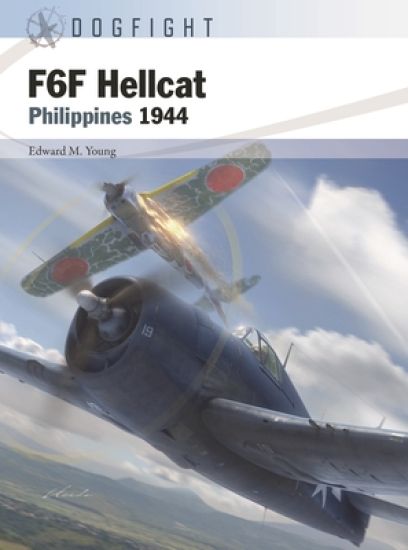
F6F Hellcat

F6F Hellcat

Edward M. Young

BLOOMSBURY PUBLISHING PLC
2022
nidottu
Using maps, contemporary photographs, and new artwork, this book examines the Hellcat and the naval aviators who flew them.Joining combat in the Pacific in late 1943, the Hellcat squadrons soon demonstrated their ascendency over their Japanese opponents, culminating in the great "Marianas Turkey Shoot" during the Battle of the Philippine Sea in June 1944. The fighter proved to be a dream for pilots to fly, allowing both novice and veteran Naval Aviators alike to prevail in largescale aerial combats. From October 1944 to January 1945, the Fast Carriers supported General MacArthur’s invasion of the Philippines.Featuring specially commissioned armament views and battlescenes, this book covers the key role played by Naval Aviators flying the Hellcat into action during the Fast Carrier Task Force’s strikes against the Philippines in September and October 1944. Using maps, contemporary photographs, and technical diagrams, the volume examines the highly effective tactics used to prevail against large enemy formations, and reveals the training that underpinned the success enjoyed by the Naval Aviators and their Hellcats. The key combat actions are vividly described through 3D ribbon diagrams providing a step-by-step depiction of the main dogfights featured in the book, as well as action reports, both from previously unknown pilots and from more famous Hellcat aces.
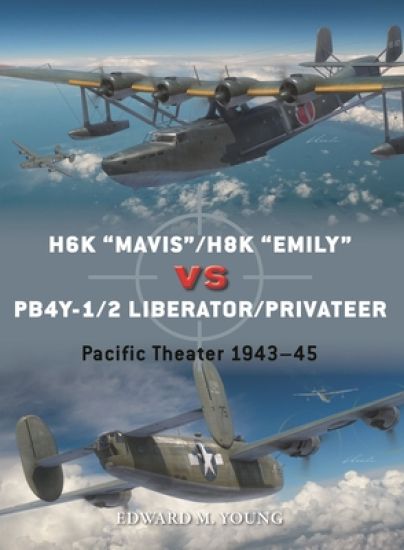
H6K “Mavis”/H8K “Emily” vs PB4Y-1/2 Liberator/Privateer
An illustrated exploration of the dramatic aerial combats between the US Navy's long-range bomber and Japanese flying boats in the Pacific War.Edward Young explores these rarely written about combats, examining the aggressive and strategic tactics deployed by both US Navy and Imperial Japanese Navy Air Force and analyzing the technical improvements installed throughout the war.The PB4Y-1/2 Liberator/Privateer was the US Navy’s first four-engined, land-based bomber, adapted and allocated to fight the U-boat menace in the Atlantic and protect the vast reaches of the Pacific Ocean. The long range, speed, armament and bomb load of the PB4Y-1 enabled the US Navy’s Pacific squadrons to adopt more aggressive tactics. The PB4Y-1, and its follow-on PB4Y-2, engaged in dangerous bombing missions against Japanese installations, shipping strikes, and air combat. On the other side, with its doctrine of making the first strike against an enemy fleet, the Imperial Japanese Navy recognized the vital importance of maritime reconnaissance, relying on carrier-based reconnaissance aircraft, ship-borne floatplanes and, for long-range maritime patrol, flying boats. The Japanese would continue to develop their aircraft throughout the war, resulting, among others, in the H6K ‘Mavis’ and the H8K2 ‘Emily’, which despite never achieving a victory, was regarded by the Allied pilots as the most difficult Japanese aircraft to destroy. Enriched with specially commissioned artwork, including armament and cockpit views, battlescenes and technical diagrams, this title analyses technical specifications in detail. By including first-hand accounts, aviation expert Edward Young provides a detailed account of these one-sided yet dramatic and aggressive combats.
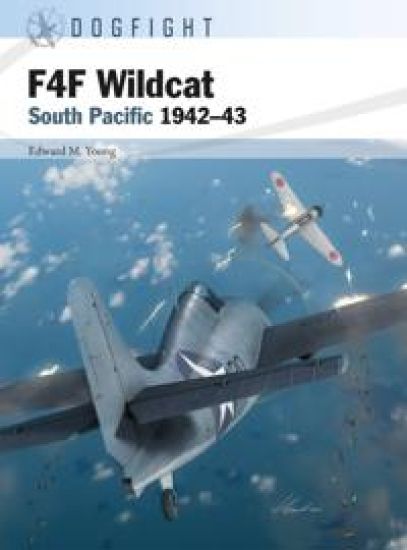
F4F Wildcat

F4F Wildcat

Edward M. Young

BLOOMSBURY PUBLISHING PLC
2023
nidottu
This book examines the role of the Grumman F4F Wildcat, the US Navy’s standard carrier fighter at the start of the Pacific War, and its clashes against the Imperial Japanese Naval Air Force’s Mitsubishi A6M Zero-sen.The US Navy went to war in December 1941 with the tubby Wildcat, the first of Grumman’s famed ‘cats’, as its principal carrier fighter. Ruggedly built and well armed, the F4F’s performance was inferior to the Japanese Zero-sen, yet in the carrier battles of 1942 between the US Navy and the IJN the Wildcat pilots more than held their own against some of the finest naval aviators in the world. Many of the Wildcat pilots that saw action in the South Pacific comprised what respected naval historian John Lundstrom has called the ‘First Team’ – the small group of highly trained prewar pilots who manned the bulk of the US Navy’s carrier fighter squadrons. Illustrated with specially commissioned artwork, including armament views and ribbon diagrams, the book examines the carrier battles that took place in August and October in the South Pacific around the first American offensive of the war – the amphibious assault on the island of Guadalcanal, and the actions of the Wildcat in combat with IJN carrier aircraft. The key combat actions are described and accompanied with rare and original photographs and diagrams, as are the training and tactics that contributed to the Wildcat’s success.
P-38 Lightning vs Bf 109

P-38 Lightning vs Bf 109

Edward M. Young

BLOOMSBURY PUBLISHING PLC
2023
nidottu
An exciting account of the aerial battles fought by the USAAF's P38 Lightnings and the Jagdflieger's Bf 109Gs for dominance over North Africa and the Mediterranean.USAAF fighter pilots experienced a baptism of fire when flying the technically advanced but fragile P-38 Lightning over North Africa in the wake of 1942's Operation Torch. Their opponents were battle-hardened jagdflieger of the Jadgwaffe, flying the tried and tested Bf 109 in its very lastest Gustav iteration. Responsible primarily for escorting USAAF bombers attacking Afrika Korps installations in Tunisia, the P-38 units in North Africa had to develop effective tactics to defend the bombers against Luftwaffe fighter attacks. For several months the Lightning squadrons had to also cope with shortages of aircraft and spare parts, steady losses and a lack of replacement pilots. To survive, American aviators had to learn quickly. While it is difficult to definitively attribute victories in air combat, in the air battles over Tunisia and later over Sicily and Italy, the claims made by Lightning pilots were comparable to Luftwaffe claims for P-38s destroyed. Edward M. Young turns his attention to the bitterly fought air war in North Africa and the Mediterranean in 1942–43. Using original archival sources, official records and first-hand accounts from both USAAF and Luftwaffe veterans, as well as newly commissioned artwork and 50 carefully selected photographs from official and personal archives, this book sees two of the most iconic piston-engined fighters of their era pitted head-to-head for control of the skies in a key theatre of World War II.
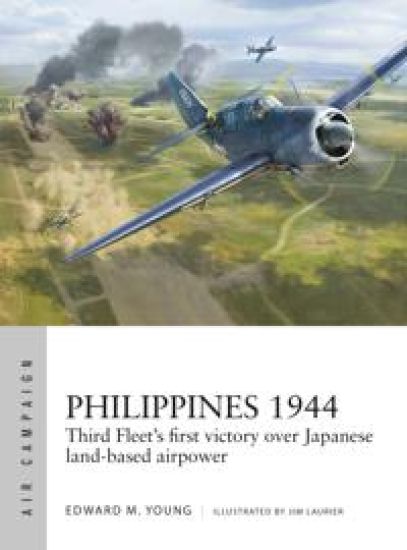
Philippines 1944

Philippines 1944

Edward M. Young

BLOOMSBURY PUBLISHING PLC
2024
nidottu
The US Navy’s 1944 Philippines raids were the first time naval aircraft had challenged and beaten a land-based air force. With artwork and rare photos, this is the first book to study them. During September 1944, the US Navy’s Task Force 38 launched a series of huge airstrikes against Japanese forces in the Philippines. Seventeen carriers, wielding over 1,000 combat aircraft, made up the most powerful naval fleet assembled to date. It was the first time aircraft carriers had dared to confront a major land-based air force. Over a period of two weeks, TF 38 demonstrated the power and mobility of the Fast Carrier Task Force. The strike forces claimed 368 Japanese aircraft shot down and 446 destroyed on the ground, with over a hundred ships destroyed and significant damage to ground installations.This book is the first to focus on the campaign, and is illustrated with archive photos, original artwork, maps and 3D diagrams. Renowned Pacific War historian Edward M. Young draws upon after-action reports and other primary sources to explain how these September strikes impacted the reeling forces of Imperial Japan. Soon overshadowed by the invasion of Leyte and the enormous Battle of Leyte Gulf, few detailed accounts of this campaign exist. But it was an important stage in the Pacific War, for the relative ease of these raids prompted the planned invasion of Leyte to be brought forwards by two months.
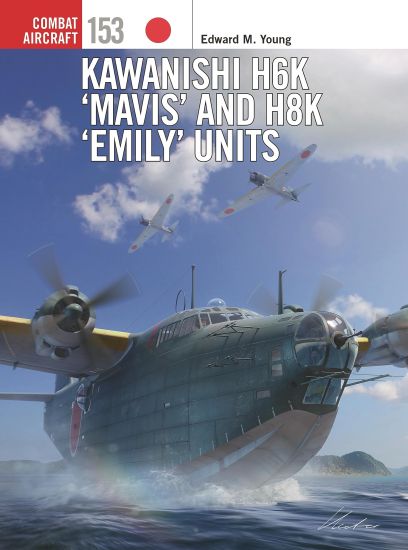
Kawanishi H6K ‘Mavis’ and H8K ‘Emily’ Units

Kawanishi H6K ‘Mavis’ and H8K ‘Emily’ Units

Edward M. Young

BLOOMSBURY PUBLISHING PLC
2024
nidottu
An illustrated account of the little-known operations of the Imperial Japanese Naval Air Force’s flying boat units during World War 2.Respectively codenamed the ‘Mavis’ and ‘Emily’ by the Allies, Japan’s H6K and H8K flying boats outstripped their RAF and US Navy counterparts. The 1941 outbreak of war in the Pacific and Southeast Asia saw these remarkable aircraft carry out offensive missions across vast tracts of ocean and employ their unique capabilities to escort convoys and serve as transports between Japan’s island bases. However, while the technical details of the H6K and H8K are well known in the West, this important new study marks the first English-language account of their wartime operations.Utilizing newly translated Japanese war diaries, as well as Allied intelligence and combat reports, celebrated Pacific War expert Edward M. Young reveals the full story behind the Imperial Japanese Naval Air Force’s flying boat units. Contemporary photos and 22 colour profiles bring new dimensions to this fascinating area of Japanese military history, vividly illustrating the pivotal roles of ‘Emily’ and ‘Mavis’ in events including the Battle of the Coral Sea, the Battle of Midway and the fighting in the Aleutians and the Bismarck and Solomon Islands.
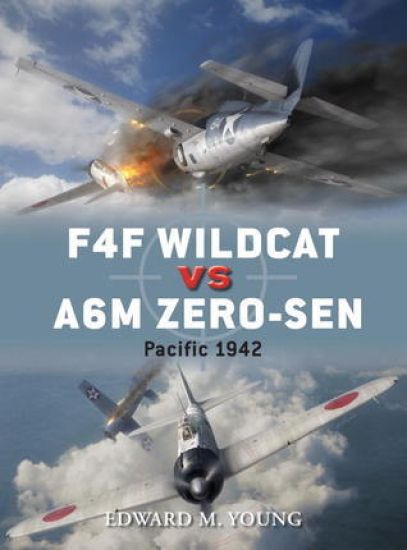
F4F Wildcat vs A6M Zero-sen

F4F Wildcat vs A6M Zero-sen

Edward M. Young

Osprey Publishing
2013
nidottu
The duel between Japan’s superb Mitsubishi A6M Zero and the USA’s rugged Grumman F4F Wildcat in 1942 represented the clash of two contrasting design philosophies and naval fighter doctrines. The Grumman F4F Wildcat and the Mitsubishi A6M Zero-sen were contemporaries, although designed to very different requirements. The Wildcat, ruggedly built to survive the rigors of carrier operations, was the best carrier fighter the US Navy had available when the USA entered World War II, and it remained the principal fighter for the US Navy and the US Marine Corps until 1942–43. With a speed greater than 300mph, exceptional manoeuvrability, long range, and an impressive armament the slick Zero-sen could out-perform any Allied fighter in 1941–42.This fully illustrated account of the battles between the Wildcat and the Zero-sen during 1942 represent a classic duel in which pilots flying a nominally inferior fighter successfully developed air-combat tactics that negated the strengths of their opponent.
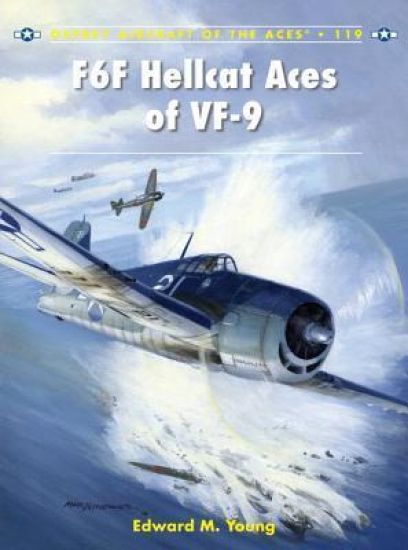
F6F Hellcat Aces of VF-9

F6F Hellcat Aces of VF-9

Edward M. Young

Osprey Publishing
2014
nidottu
In the course of two combat tours VF-9 pilots shot down 250 Japanese aeroplanes and produced 20 aces.VF-9 was activated in March 1942 as part of Carrier Air Group (CAG) 9, one of the many air groups the US Navy was hurriedly forming in the aftermath of the Japanese attack on Pearl Harbor. Equipped with Grumman F4F Wildcats, VF-9 first saw combat during the Allied invasion of North Africa in November 1942, where the squadron engaged Vichy French fighters over Morocco. Returning to the United States, VF-9 became one of the first squadrons to receive the Grumman F6F Hellcat and to deploy on the USS Essex, the first of its class of fleet carriers that would form the backbone of the US Navy’s Fast Carrier Task Force. VF-9, the Hellcat, and the Essex all entered combat in the fall of 1943.This book details how, In the hands of the squadron’s pilots, and with other Navy fighter squadrons, the Hellcat proved superior to the Imperial Japanese Navy’s A6M Zero, which had heretofore been the world’s premier carrier fighter plane.
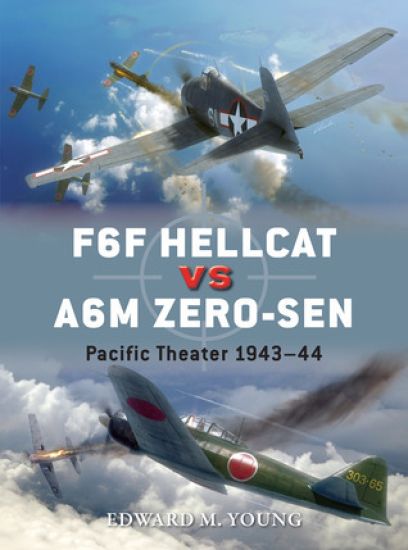
F6F Hellcat vs A6M Zero-sen

F6F Hellcat vs A6M Zero-sen

Edward M. Young

Osprey Publishing
2014
nidottu
A fully illustrated study pitting together the superb Mitsubishi A6M Zero-sen, the world’s finest carrier fighter in 1942, and the heavyweight F6F Hellcat.The Grumman F6F Hellcat and Mitsubishi A6M Zero-sen were the two principal opposing fighters in the brutal aerial clashes of the Pacific War from 1943 onwards. Reminiscent of the preceding F4F Wildcat, the F6F Hellcat was designed specifically to counter the earlier A6M2 Zero-sen, the strengths and weaknesses of which became fully understood by US designers after an undamaged example was recovered in the Aleutians.The powerful Hellcat had an impressive top speed, rate of climb and armament, and it retained its predecessor’s incredible ruggedness. The A6M5 Zero-sen was also born out of an earlier type, but was intended merely as a stop-gap until more modern Japanese fighters could be produced to restore performance parity with Allied aircraft. The chaotic conditions of the Japanese Aircraft industry and war economy prevented new types from being built.Featuring detailed artwork illustrating the technical specifications of these two types and the dramatic encounters between them, this volume focuses on how these iconic fighters came into being, and how they fared as they faced one another over the Pacific skies of World War II.
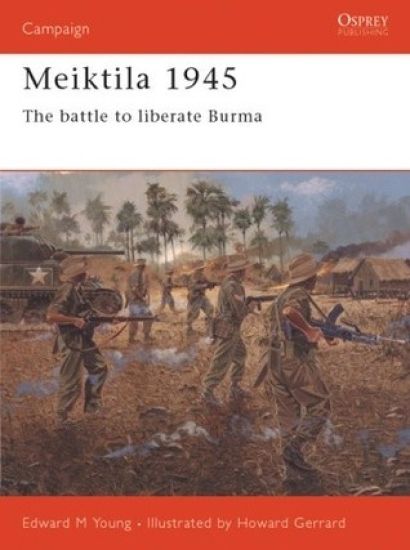
Meiktila 1945

Meiktila 1945

Edward M. Young

Osprey Publishing
2004
nidottu
A compact, illustrated account of the Japanese army's final stand in Burma.In the spring of 1944, Japanese 15th Army was shattered at Imphal and Kohima, allowing General William Slim, commander of 14th Army, to liberate Burma overland from India – a task considered impossible by the British chiefs of staff.Overcoming immense logistical problems, Slim coordinated a precisely timed attack along a 200-mile front, the longest opposed river crossing of the entire war, and an armored dash behind enemy lines that seized Meiktila, cutting Japanese supply lines. Mandalay fell and at the end of March 1945, with the battle lost, the Japanese withdrew south.Slim gave them no chance; Allied troops raced south and captured Rangoon. The Japanese army in Burma was finished.
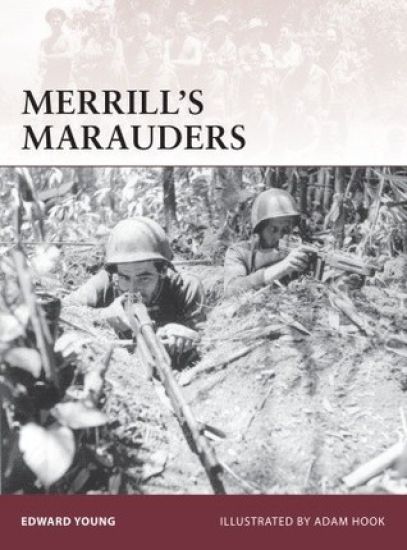
Merrill’s Marauders

Merrill’s Marauders

Edward M. Young

Osprey Publishing
2009
nidottu
Merrill's Marauders were the first American Army infantry unit to fight in the China-Burma-India theater, and one of the most renowned units to come out of World War II. The Marauders established a lasting reputation for hard fighting and tenacity in the face of adversity, combating a determined enemy, some of the most difficult and disease-ridden terrain in the world, and a seemingly indifferent higher command. Pushed beyond the limit of their endurance, at the end of nearly six months of operations behind Japanese lines, the remaining Marauders were withdrawn from combat after suffering over 90% casualties. Because of its courageous actions, the unit received the very rare honor of having every member presented with a Bronze Star for gallantry. This book explores the creation, training and combat experiences of the Marauders, one of the most famous units in the US Army's roll of honor.
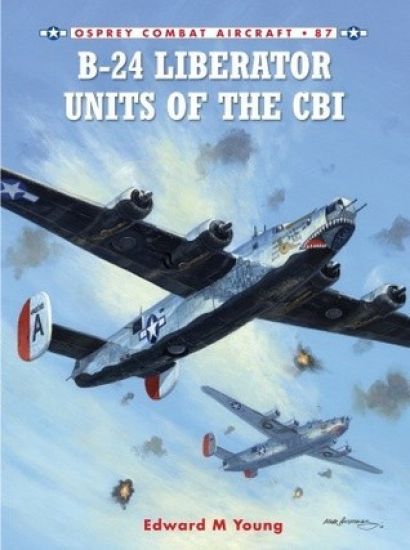
B-24 Liberator Units of the CBI

B-24 Liberator Units of the CBI

Edward M. Young

Osprey Publishing
2011
nidottu
An illustrated history of the B-24 Liberator, the mainstay of the US Army Air Force's strategic bombing effort in the China-Burma-India (CBI) Theatre from 1942 until the end of the war in 1945.With longer range and a greater load-carrying capacity than the B-17, the B-24 was well-suited to the demands of the CBI. The CBI's two air forces, the Tenth in India and the Fourteenth in China, each had one heavy bomb group equipped with Liberators. These two groups, the 7th and the 308th, carried the war to the Japanese across China and South East Asia, flying over some of the most difficult terrain in the world. The 308th had the added burden of having to carry its own fuel and bombs over the Himalayan 'Hump' from India to China in support of its missions.This book shows how, despite the hardships and extreme distances from sources of supply, both units compiled a notable record, each winning two Distinguished Unit Citations.