

Kirjahaku
Etsi kirjoja tekijän nimen, kirjan nimen tai ISBN:n perusteella.
1000 tulosta hakusanalla Edward Rubio Guerrero

Unternehmensschulungen sind praktische Ausbildungsmodelle, die die Wettbewerbsf higkeit und die st ndige Verbesserung der F hrungskr fte zum Ziel haben. Der Ausbildungsbedarf der Unternehmen bersteigt seit vielen Jahren das traditionelle Bildungsangebot. Die von den Universit ten angebotenen Ausbildungsprogramme reichen nicht mehr aus; die Unternehmen suchen nach praktischeren und flexibleren Modellen, die sich leicht an ihre Ziele anpassen lassen. Aus diesem Grund haben sie ihre Ausbildungsbereiche geschaffen und gef rdert, um interne Programme zu entwickeln. Sogar gro e Unternehmen haben ihre eigene Unternehmensuniversit t, die nichts anderes ist als eine Ausbildungsstrategie f r ihre menschlichen Talente in diesem neuen Kontext der Globalisierung. Es ist jedoch wichtig, dass diese Ausbildungsmodelle ein Gleichgewicht im Ausbildungsprozess gew hrleisten, das den Zielen und Erwartungen aller Beteiligten entspricht und nicht nur denen eines Einzelnen. Dies ist eine Herausforderung, der sich die Universit t in ihrer neuen Rolle in der Ausbildung von F hrungskr ften stellen muss. Dieser Text schl gt vor, ein umfassendes Bildungsangebot f r die Ausbildung in Unternehmen zu entwerfen, das von verschiedenen Lernumgebungen aus angegangen wird.

Les cours de formation en entreprise sont des mod les ducatifs pratiques qui visent la comp titivit et l'am lioration continue des cadres. Les besoins de formation des entreprises d passent depuis de nombreuses ann es l'offre ducative traditionnelle. Les programmes de formation propos s par les universit s ne suffisent plus; les entreprises recherchent des mod les plus pratiques et plus flexibles qui s'adaptent facilement leurs objectifs. C'est pourquoi elles ont cr et promu leurs espaces de formation pour d velopper des programmes internes, m me les grandes entreprises ont leur propre universit d'entreprise, qui n'est rien d'autre qu'une strat gie de formation pour leurs talents humains dans ce nouveau contexte de mondialisation. Cependant, il est important que ces mod les ducatifs garantissent un quilibre dans le processus de formation qui r ponde aux objectifs et aux attentes de tous ses protagonistes, et pas seulement de l'un d'entre eux. C'est un d fi que l'universit doit relever dans son nouveau r le de formation des cadres. Ce texte propose la conception d'une proposition ducative compl te pour la formation en entreprise qui est abord e partir de diff rents environnements d'apprentissage.

Corporate trainings are practical educational models that seek competitiveness and continuous improvement of the executive. The training needs of companies have exceeded the traditional educational offer for many years, the training programs offered by universities are no longer enough, companies are looking for more practical and flexible models that easily adapt to their objectives. That is why they have created and promoted their training areas to develop internal programs, even large corporations have their own corporate university which is nothing more than a training strategy for their human talent in this new context of globalization. However, it is important that these educational models guarantee a balance in the training process that meets the objectives and expectations of all its protagonists, not just one of them. This is a challenge that the university must assume in its new role in executive education. This text proposes the design of an integral educational proposal for corporate training that is approached from different learning environments.

I corsi di formazione aziendale sono modelli educativi pratici che mirano alla competitivit e al miglioramento continuo dei dirigenti. Le esigenze formative delle aziende hanno superato da molti anni l'offerta formativa tradizionale: i programmi di formazione offerti dalle universit non sono pi sufficienti; le aziende cercano modelli pi pratici e flessibili che si adattino facilmente ai loro obiettivi. Per questo motivo hanno creato e promosso le loro aree di formazione per sviluppare programmi interni, anche le grandi aziende hanno la loro corporate university, che non altro che una strategia di formazione per il loro talento umano in questo nuovo contesto di globalizzazione. Tuttavia, importante che questi modelli educativi garantiscano un equilibrio nel processo formativo che risponda agli obiettivi e alle aspettative di tutti i suoi protagonisti, non solo di uno di essi. una sfida che l'universit deve raccogliere nel suo nuovo ruolo nella formazione dei dirigenti. Questo testo propone la progettazione di una proposta educativa completa per la formazione aziendale, affrontata a partire da diversi ambienti di apprendimento.

Os cursos de forma o empresarial s o modelos educativos pr ticos que visam a competitividade e a melhoria cont nua do executivo. As necessidades de forma o das empresas ultrapassaram durante muitos anos a oferta educativa tradicional, os programas de forma o oferecidos pelas universidades j n o s o suficientes, as empresas procuram modelos mais pr ticos e flex veis que se adaptem facilmente aos seus objectivos. por isso que as empresas criaram e promoveram as suas reas de forma o para desenvolver programas internos, e mesmo as grandes empresas t m a sua pr pria universidade corporativa, que n o mais do que uma estrat gia de forma o para o seu talento humano neste novo contexto de globaliza o. No entanto, importante que estes modelos educativos garantam um equil brio no processo de forma o que responda aos objectivos e expectativas de todos os seus protagonistas, e n o apenas de um deles. Este um desafio que a universidade deve assumir no seu novo papel na forma o de executivos. Este texto prop e o desenho de uma proposta educativa integral para a forma o corporativa, abordada a partir de diferentes ambientes de aprendizagem.
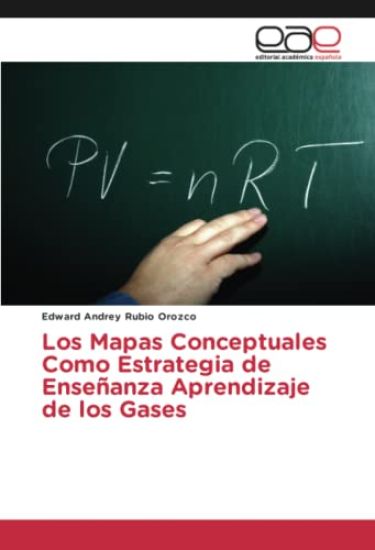
Los Mapas Conceptuales Como Estrategia de Enseñanza Aprendizaje de los Gases
Edward Andrey Rubio Orozco
Editorial Académica Española
2016
nidottu

Given the complexity of human societies, the idea that a society's moral norms track the stages of its historical development is both controversial and difficult to demonstrate. Yet in The New Morality, Edward Rubin, an eminent scholar of the modern state, offers an ambitious account of how current moral norms are inherently connected to the type of state that currently dominates the developed world. He contends that the moral system of 'self-fulfillment'--the idea that people are entitled to the most pleasurable and meaningful life possible, without unnecessary constraints--that has emerged in the last two centuries parallels the rise of the modern administrate state. The modern state's functions--education, unemployment relief, health, and environmental protection, among others--are designed to support that moral system. However, just as the rise of the administrative state generated tensions as it replaced an older state model, self-fulfillment has created stresses because it has gradually supplanted the pre-existing moral code: the religiously based morality of higher purposes, which demanded that people serve God and king. This moral system tracked the rise of centralizing monarchies in Western Europe, and that system in turn replaced a morality of 'honor,' which dominated in the pre-absolutist era where governmental power was private in orientation and the state was weak. Rubin traces how paired state-moral system models have emerged and withered over time, paying close attention to the stresses that emerge when a new order replaces an existing one. He provides a close analysis of the components of the morality of self-fulfillment, exploring sex, pleasure, friendship, hobbies, careers, voting behavior and public obligations. Our entire system of government, he argues, is bound up in this morality, and its primary purpose is to further it. A sweeping, big-idea book in the vein of Richard Sennett's The Fall of Public Man and David Riesman's The Lonely Crowd, The New Morality promises to reshape our understanding of the ultimate aims of modern politics and society.

Research suggests that crime prevention is generally more effective than harsh punishment. But the public fears victimization and demands punishment for the perpetrators of its fears. Consequently, any policy that moves toward prevention, treatment, and alternative modes of punishment must simultaneously move toward reducing the level of victimizat

This book represents an effort by a number of leading criminologists to articulate a pragmatic crime policy for America—a policy that combines academic insights about crime prevention with the realities of contemporary politics.

Federalism is one of the most influential concepts in modern political discourse as well as the focus of immense controversy resulting from the lack of a single coherent definition. Malcolm M. Feeley and Edward Rubin expose the ambiguities of modern federalism, offering a powerful but generous treatise on the modern salience of the term.“Malcolm Feeley and Edward Rubin have published an excellent book.”—Sanford Levinson, University of Texas at Austin“At last, an insightful examination of federalism stripped of its romance. An absolutely splendid book, rigorous but still accessible.”—Larry Yackle, Boston University“Professors Feeley and Rubin clearly define what is and is not federal system. This book should be required for serious students of comparative government and American government.”—G. Ross Stephens, University of Missouri, Kansas City “Feeley and Rubin have written a brilliant book that looks at federalism from many different perspectives—historical, political, and constitutional. Significantly expanding on their earlier pathbreaking work, they have explained the need for a theory of federalism and provided one. This is a must read book for all who are interested in the Constitution.”—Erwin Chemerinsky, Duke University School of Law

The Second Edition of Edward Fitzgerald's Rub�'iyy�t of 'umar Khayy�m (London
Edward Heron-Allen
Trieste Publishing
2018
nidottu

Growth of a Union: The Life and Times of Edward Flore
Jay Rubin; M. J. Obermeier; Hugo Ernst
Literary Licensing, LLC
2011
nidottu

Joseph Conrad and the Fiction of Autobiography
Edward Said; Andrew Rubin
Columbia University Press
2008
sidottu
Edward W. Said locates Joseph Conrad's fear of personal disintegration in his constant re-narration of the past. Using the author's personal letters as a guide to understanding his fiction, Said draws an important parallel between Conrad's view of his own life and the manner and form of his stories. The critic also argues that the author, who set his fiction in exotic locations like East Asia and Africa, projects political dimensions in his work that mirror a colonialist preoccupation with "civilizing" native peoples. Said then suggests that this dimension should be considered when reading all of Western literature. First published in 1966, Said's critique of the Western self's struggle with modernity signaled the beginnings of his groundbreaking work, Orientalism, and remains a cornerstone of postcolonial studies today.

Joseph Conrad and the Fiction of Autobiography
Edward Said; Andrew Rubin
Columbia University Press
2008
pokkari
Edward W. Said locates Joseph Conrad's fear of personal disintegration in his constant re-narration of the past. Using the author's personal letters as a guide to understanding his fiction, Said draws an important parallel between Conrad's view of his own life and the manner and form of his stories. The critic also argues that the author, who set his fiction in exotic locations like East Asia and Africa, projects political dimensions in his work that mirror a colonialist preoccupation with "civilizing" native peoples. Said then suggests that this dimension should be considered when reading all of Western literature. First published in 1966, Said's critique of the Western self's struggle with modernity signaled the beginnings of his groundbreaking work, Orientalism, and remains a cornerstone of postcolonial studies today.

This book argues that many of the basic concepts that we use to describe and analyze our governmental system are out of date. Developed in large part during the Middle Ages, they fail to confront the administrative character of modern government. These concepts, which include power, discretion, democracy, legitimacy, law, rights, and property, bear the indelible imprint of this bygone era's attitudes, and Arthurian fantasies, about governance. As a result, they fail to provide us with the tools we need to understand, critique, and improve the government we actually possess. Beyond Camelot explains the causes and character of this failure, and then proposes a new conceptual framework, drawn from management science and engineering, which describes our administrative government more accurately, and identifies its weaknesses instead of merely bemoaning its modernity. This book's proposed framework envisions government as a network of connected units that are authorized by superior units and that supervise subordinate ones. Instead of using inherited, emotion-laden concepts like democracy and legitimacy to describe the relationship between these units and private citizens, it directs attention to the particular interactions between these units and the citizenry, and to the mechanisms by which government obtains its citizens' compliance. Instead of speaking about law and legal rights, it proposes that we address the way that the modern state formulates policy and secures its implementation. Instead of perpetuating outdated ideas that we no longer really believe about the sanctity of private property, it suggests that we focus on the way that resources are allocated in order to establish markets as our means of regulation. Highly readable, Beyond Camelot offers an insightful and provocative discussion of how we must transform our understanding of government to keep pace with the transformation that government itself has undergone.
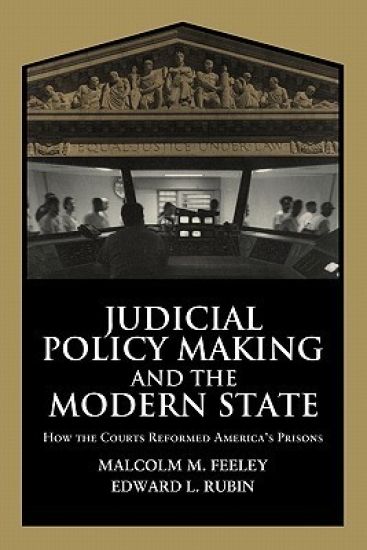
Judicial Policy Making and the Modern State
Malcolm M. Feeley; Edward L. Rubin
Cambridge University Press
1998
sidottu
Between 1965 and 1990, federal judges in almost all of the states handed down sweeping rulings that affected virtually every prison and jail in the United States. Without a doubt judges were the most important prison reformers during this period. This book provides an account of this process, and uses it to explore the more general issue of the role of courts in the modern bureaucratic state. In doing so, it provides detailed accounts of how the courts formulated and sought to implement their orders, and how this action affected the traditional conception of federalism, separation of powers, and the rule of law.

Judicial Policy Making and the Modern State
Malcolm M. Feeley; Edward L. Rubin
Cambridge University Press
2000
pokkari
Between 1965 and 1990, federal judges in almost all of the states handed down sweeping rulings that affected virtually every prison and jail in the United States. Without a doubt judges were the most important prison reformers during this period. This book provides an account of this process, and uses it to explore the more general issue of the role of courts in the modern bureaucratic state. In doing so, it provides detailed accounts of how the courts formulated and sought to implement their orders, and how this action affected the traditional conception of federalism, separation of powers, and the rule of law.
Data Science for Public Policy
Jeffrey C. Chen; Edward A. Rubin; Gary J. Cornwall
Springer Nature Switzerland AG
2021
sidottu
This textbook presents the essential tools and core concepts of data science to public officials, policy analysts, and economists among others in order to further their application in the public sector. An expansion of the quantitative economics frameworks presented in policy and business schools, this book emphasizes the process of asking relevant questions to inform public policy. Its techniques and approaches emphasize data-driven practices, beginning with the basic programming paradigms that occupy the majority of an analyst’s time and advancing to the practical applications of statistical learning and machine learning. The text considers two divergent, competing perspectives to support its applications, incorporating techniques from both causal inference and prediction. Additionally, the book includes open-sourced data as well as live code, written in R and presented in notebook form, which readers can use and modify to practice working with data.
Data Science for Public Policy
Jeffrey C. Chen; Edward A. Rubin; Gary J. Cornwall
Springer Nature Switzerland AG
2022
nidottu
This textbook presents the essential tools and core concepts of data science to public officials, policy analysts, and economists among others in order to further their application in the public sector. An expansion of the quantitative economics frameworks presented in policy and business schools, this book emphasizes the process of asking relevant questions to inform public policy. Its techniques and approaches emphasize data-driven practices, beginning with the basic programming paradigms that occupy the majority of an analyst’s time and advancing to the practical applications of statistical learning and machine learning. The text considers two divergent, competing perspectives to support its applications, incorporating techniques from both causal inference and prediction. Additionally, the book includes open-sourced data as well as live code, written in R and presented in notebook form, which readers can use and modify to practice working with data.