Kirjojen hintavertailu. Mukana 11 244 527 kirjaa ja 12 kauppaa.

Kirjahaku

Etsi kirjoja tekijän nimen, kirjan nimen tai ISBN:n perusteella.

1000 tulosta hakusanalla Edward W. Said

Power, Politics, and Culture: Interviews with Edward W. Said
Edward Said has long been considered one of the world's most compelling public intellectuals, taking on a remarkable array of topics with his many publications. But no single book has encompassed the vast scope of his stimulating erudition quite like Power, Politics, and Culture. "A fascinating, oblique entry into the mind of one whose own writings . . . are a brilliant questioning chronicle of contemporary culture and values." --Nadine Gordimer In these twenty-eight interviews, Said addresses everything from Palestine to Pavarotti, from his nomadic upbringing under colonial rule to his politically active and often controversial adulthood, and reflects on Austen, Beckett, Conrad, Naipaul, Mahfouz, and Rushdie, as well as on fellow critics Bloom, Derrida, and Foucault. The passion Said feels for literature, music, history, and politics is powerfully conveyed in this indispensable complement to his prolific life's work.
The Legacy of Edward W. Said

The Legacy of Edward W. Said

William V. Spanos

University of Illinois Press
2008
sidottu
With the untimely death of Edward W. Said in 2003, various academic and public intellectuals worldwide have begun to reassess the writings of this powerful oppositional intellectual. Figures on the neoconservative right have already begun to discredit Said’s work as that of a subversive intent on slandering America’s benign global image and undermining its global authority. On the left, a significant number of oppositional intellectuals are eager to counter this neoconservative vilification, proffering a Said who, in marked opposition to the “anti-humanism” of the great poststructuralist thinkers who were his contemporaries--Jacques Derrida, Jean-Francois Lyotard, Jacques Lacan, Louis Althusser, and Michel Foucault--reaffirms humanism and thus rejects poststructuralist theory.In this provocative assessment of Edward Said’s lifework, William V. Spanos argues that Said’s lifelong anti-imperialist project is actually a fulfillment of the revolutionary possibilities of poststructuralist theory. Spanos examines Said, his legacy, and the various texts he wrote--including Orientalism,Culture and Imperialism, and Humanism and Democratic Criticism--that are now being considered for their lasting political impact.
The Legacy of Edward W. Said

The Legacy of Edward W. Said

William V. Spanos

University of Illinois Press
2008
nidottu
With the untimely death of Edward W. Said in 2003, various academic and public intellectuals worldwide have begun to reassess the writings of this powerful oppositional intellectual. Figures on the neoconservative right have already begun to discredit Said’s work as that of a subversive intent on slandering America’s benign global image and undermining its global authority. On the left, a significant number of oppositional intellectuals are eager to counter this neoconservative vilification, proffering a Said who, in marked opposition to the “anti-humanism” of the great poststructuralist thinkers who were his contemporaries--Jacques Derrida, Jean-Francois Lyotard, Jacques Lacan, Louis Althusser, and Michel Foucault--reaffirms humanism and thus rejects poststructuralist theory.In this provocative assessment of Edward Said’s lifework, William V. Spanos argues that Said’s lifelong anti-imperialist project is actually a fulfillment of the revolutionary possibilities of poststructuralist theory. Spanos examines Said, his legacy, and the various texts he wrote--including Orientalism,Culture and Imperialism, and Humanism and Democratic Criticism--that are now being considered for their lasting political impact.
The Geocritical Legacies of Edward W. Said
Edward W. Said is considered one of the most influential literary and postcolonial theorists in the world. Affirming Said's multifaceted and enormous critical impact, this collection features essays that highlight the significance of Said's work for contemporary spatial criticism, comparative literary studies, and the humanities in general.
The Geocritical Legacies of Edward W. Said
Edward W. Said is considered one of the most influential literary and postcolonial theorists in the world. Affirming Said's multifaceted and enormous critical impact, this collection features essays that highlight the significance of Said's work for contemporary spatial criticism, comparative literary studies, and the humanities in general.
Interviews with Edward W. Said

Interviews with Edward W. Said

University Press of Mississippi
2004
nidottu
Edward W. Said has been a controversial and influential figure in and around the U.S. academy for well over three decades. His work has played a foundational role in the development of postcolonial studies, even as his books- such as Orientalism (1978), The World, the Text, and the Critic (1983), and Culture and Imperialism (1993)-have contributed to a radical transformation of literary studies. In Interviews with Edward W. Said, the first collection of interviews with this powerful intellectual, Said reveals the displacements and conflicts in his Palestinian background, and the energies and concerns that have made him a shaper of public discourse. Covering encounters from 1972 to 2000, the book provides, for both the specialist and the general reader, an engaging introduction to Said's wide and disparate oeuvre and his insights that have made a considerable impact on the practices of many disciplines, including literature, anthropology, political science, international studies, peace studies, history, sociology, and music. Since the late 1970s, through his literary writings, Said has established a reputation as a towering and paradoxical figure whose work has evolved theory, but who has, at the same time, challenged the damaging effect of various critical methods and schools on our ability to respond to the ""complex affiliations binding the texts to the world."" In the interviews gathered here, Said's formidable capacity as a public speaker is evidenced as he discusses the evolving issues that surround the still ambiguous political fortunes of his native Palestinians. Not only is Said a major public intellectual on the U.S. scene today, but also he has elaborated in his speeches, writings, and interviews on how one can be a responsible public person and what it means to be one. In almost all his interviews, Said's passion and occasional rage mark the probity and complexity of his positions on a variety of topics. In 1999, he told an interviewer that he was ""still a militant intellectual . . . my tongue is very sharp, and . . . I give and trade blows with people . . . who disagree with me, I mean that's part of the deal . . . ."" While in some interviews Said comes through as feisty and argumentative, in others his wit and urbanity allow for a charming persuasiveness. In a 1995 interview, Said stated: ""I am invariably criticized by younger post-colonialists . . . for being inconsistent and untheoretical, and I find that I like that. Who wants to be consistent?"" Delightful and edifying, this book will serve as a rich resource on Said's thoughtful personality and his often provocative views on both personal identity and historical experience. Amritjit Singh is a professor of English at Rhode Island College and co-editor of Postcolonial Theory and the United States, published by University Press of Mississippi in 2000. Bruce G. Johnson, a doctoral candidate at the University of Rhode Island, teaches courses in writing and African American studies at Rhode Island College.
The Selected Works of Edward Said, 1966 - 2006
The renowned literary and cultural critic Edward Said was one of our era's most provocative and important thinkers. This comprehensive collection of his work draws from across his entire four-decade career, including his posthumously published books, making it a definitive one-volume source. "Said is a brilliant and unique amalgam of scholar, aesthete, and political activist... He] challenges and stimulates our thinking in every area." --Washington Post Book World The Selected Works includes key sections from all of Said's books, including his groundbreaking Orientalism; his memoir, Out of Place; and his last book, On Late Style. Whether writing of Zionism or Palestinian self-determination, Jane Austen or Yeats, or of music or the media, Said's uncompromising intelligence casts urgent light on every subject he undertakes. The Selected Works is a joy for the general reader and an indispensable resource for scholars in the many fields that his work has influenced and transformed.
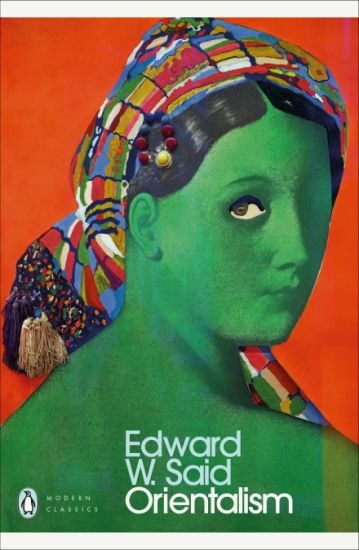
Orientalism

Orientalism

Edward W. Said

Penguin Books Ltd.
2003
pokkari
Surveys the history and nature of Western attitudes towards the East, considering orientalism as a powerful European ideological creation - a way for writers, philosophers and colonial administrators to deal with the 'otherness' of eastern culture, customs and beliefs.
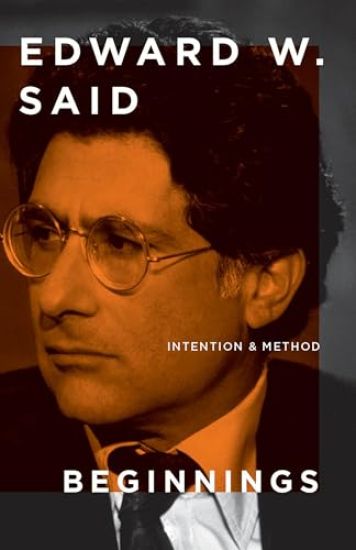
Beginnings: Intention and Method

Beginnings: Intention and Method

Edward W. Said

VINTAGE
2025
nidottu
From one of the world's most beloved and outspoken public intellectuals comes an illuminating book on the nature of criticism "Readers will be surprised, stimulated, instructed, impressed."―The New Yorker "What is a beginning? What must one do in order to begin? What is special about beginning as an activity or a moment or a place?" So begins Beginnings, a scintillating work of criticism by Edward W. Said, author of Orientalism, The Question of Palestine, and other seminal works, and one of the most lauded public intellectuals of our time. Tracing humankind's diverse understandings of what it means to begin throughout history, Said argues that "beginning" is itself a method, the first step in the creation of meaning. It's what sparks a break from preexisting tradition, and it's what authorizes new texts to be. As ever, Said insists on a criticism that is both humane and socially responsible. Beginnings is about much more than writing: it is about imagination and action as well as the constraints on freedom and invention that come from achieving human intention. The result is a classic and necessary treatise on the role of the intellectual and the worth of criticism.
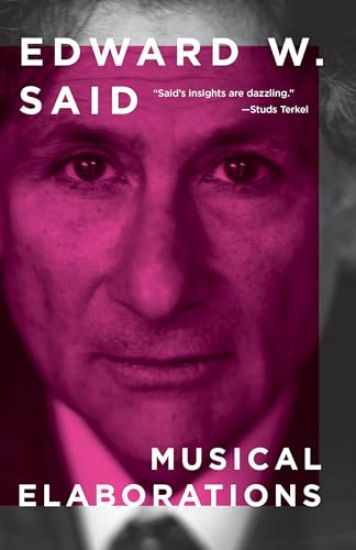
Musical Elaborations

Musical Elaborations

Edward W. Said

VINTAGE
2026
nidottu
From one of the world's most beloved and respected public intellectuals comes a sweeping work of musical criticism, examining the distance between the performer and their audience "Not since Virgil Thomson have we had a music critic with as wide ranging a view as Edward Said."--Studs Terkel "Wonderful personal thoughts on music and musicians . . . Mr. Said is marvelous."--New York Times Book Review Filling a significant gap in contemporary cultural studies, Musical Elaborations examines the intersection of the public and private meaning of music. Incorporating the music criticism of Adorno, musical ideas from literary works by Proust, and criticism by Benjamin and de Man into his work, noted critic Edward W. Said discusses performers such as Glenn Gould, Arturo Toscanini, and Alfred Brendel and such composers as Beethoven, Wagner, and Strauss.
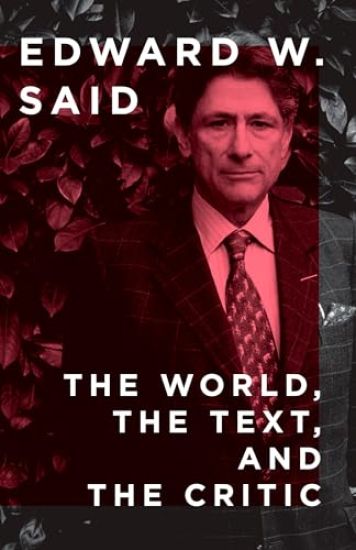
The World, the Text, and the Critic
A sweeping and intellectually rigorous work of literary criticism that moves the field forward, from one of the preeminent public scholars " Said's] book is relaxed and discursive, original, immensely learned, fluently written."―John Bayley, The New York Times Book Review Edward W. Said, author of Beginnings and the controversial yet seminal Orientalism, is one of the most acclaimed public intellectuals of our time. In this sweeping and rigorous work of literary criticism, he pushes the field even further forward. Moving from Derrida to Foucault, from Marxism to structuralism to psychoanalysis, and from Swift to Conrad to Luk cs to Renan, Said argues that critical systems and the dogmas of the dominant culture have crippled our engagement with literature, forcing a text to meet the requirements of theory while ignoring the tethers that bind it to the living world. Provocatively, Said advocates for freedom of consciousness and responsiveness to history, to the exigencies of the text, to political, social, and human values, and to the heterogeneity of human experience. The World, the Text, and the Critic asks daring questions, investigates problems of urgent significance, and gives a subtle yet powerful new meaning to the enterprise of criticism in modern society.
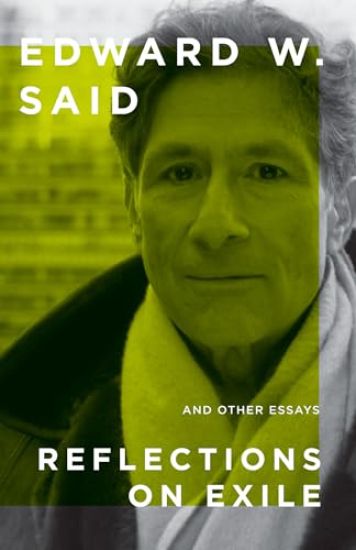
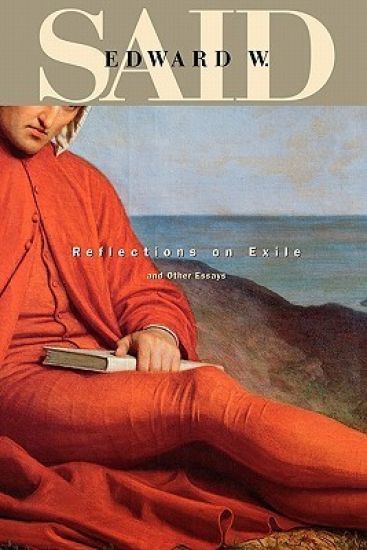
Reflections on Exile: And Other Essays
From one of the world's most beloved and respected public intellectuals comes a collection of essays examining culture, the literary canon, and the ever-shifting terrain of history "This is surely a major work, among the most provocative and cogent accounts of culture and the humanities that America has produced in recent years."―Martha C. Nussbaum, The New York Times Book Review Edward W. Said's writings have transformed the field of literary studies. In this bracing collection of essays, one of the most beloved and respected public intellectuals of our time examines culture, the literary canon, and the ever-shifting terrain of history. Said's topics are many and diverse, from the Hollywood heroics of Tarzan to the machismo of Ernest Hemingway to the shades of difference that divide Alexandria and Cairo. In the title essay, the widely admired "Reflections on Exile," he weighs his own estrangement from his home country and the fate of the Palestinian people against the literary canon's most romanticized fugitives. "What could be more intransigent than the conflict between Zionist Jews and Arab Palestinians?" Said asks. "Palestinians feel that they have been turned into exiles by the proverbial people of exile." The culmination of thirty-five years of scholarship, Reflections on Exile and Other Essays is an invigorating and life-affirming achievement, a work of intellectual, emotional, and moral rigor.
Reflections on Exile and Other Essays

Reflections on Exile and Other Essays

Edward W. Said

HARVARD UNIVERSITY PRESS
2002
nidottu
With their powerful blend of political and aesthetic concerns, Edward W. Said's writings have transformed the field of literary studies. This long-awaited collection of literary and cultural essays, the first since Harvard University Press published The World, the Text, and the Critic in 1983, reconfirms what no one can doubt--that Said is the most impressive, consequential, and elegant critic of our time--and offers further evidence of how much the fully engaged critical mind can contribute to the reservoir of value, thought, and action essential to our lives and our culture. As in the title essay, the widely admired "Reflections on Exile," the fact of his own exile and the fate of the Palestinians have given both form and the force of intimacy to the questions Said has pursued. Taken together, these essays--from the famous to those that will surprise even Said's most assiduous followers--afford rare insight into the formation of a critic and the development of an intellectual vocation. Said's topics are many and diverse, from the movie heroics of Tarzan to the machismo of Ernest Hemingway to the shades of difference that divide Alexandria and Cairo. He offers major reconsiderations of writers and artists such as George Orwell, Giambattista Vico, Georg Lukacs, R. P. Blackmur, E. M. Cioran, Naguib Mahfouz, Herman Melville, Joseph Conrad, Walter Lippman, Samuel Huntington, Antonio Gramsci, and Raymond Williams. Invigorating, edifying, acutely attentive to the vying pressures of personal and historical experience, his book is a source of immeasurable intellectual delight.