This book introduces the reader to relevant logic and provides the subject with a philosophical interpretation. The defining feature of relevant logic is that it forces the premises of an argument to be really used ('relevant') in deriving its conclusion. The logic is placed in the context of possible world semantics and situation semantics, which are then applied to provide an understanding of the various logical particles (especially implication and negation) and natural language conditionals. The book ends by examining various applications of relevant logic and presenting some interesting open problems. It will be of interest to a range of readers including advanced students of logic, philosophical and mathematical logicians, and computer scientists.
This book introduces the reader to relevant logic and provides the subject with a philosophical interpretation. The defining feature of relevant logic is that it forces the premises of an argument to be really used ('relevant') in deriving its conclusion. The logic is placed in the context of possible world semantics and situation semantics, which are then applied to provide an understanding of the various logical particles (especially implication and negation) and natural language conditionals. The book ends by examining various applications of relevant logic and presenting some interesting open problems. It will be of interest to a range of readers including advanced students of logic, philosophical and mathematical logicians, and computer scientists.
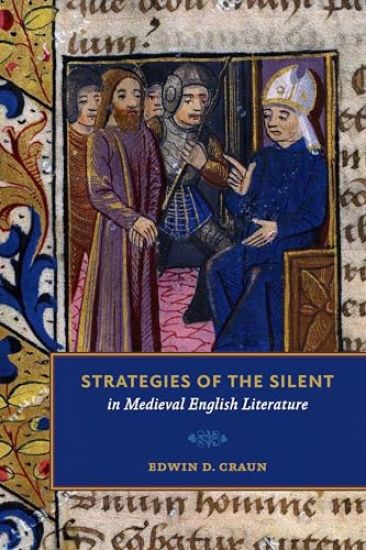
Silence, like speech, is a mode of communication that can be used strategically. In Strategies of the Silent in Medieval English Literature, Edwin D. Craun investigates the silences in public life that punctuate talk in late Middle English literature.Centering his study on readings of canonical texts, including the works of Thomas Hoccleve, the anonymous Mum and the Sothsegger, William Langland’s Piers Plowman, John Lydgate’s translation of Guillaume de Deguileville’s Pelerinage de vie humaine, The Testimony of William Thorpe, a selection of the York cycle of passion plays, and The Book of Margery Kempes, Craun recovers the widespread moral discourse on silence developed by late medieval secular and clerical writers, who compiled materials from Roman popular morality and Stoic texts as well as Jewish wisdom books and Christian texts. These texts model how silence could play a role in effective government, respond to violent and angry antagonists, or in some cases to entirely obviate a good outcome. Through this nuanced exploration of the ethics of communication in medieval moral, narrative, and dramatic literature, Craun shows us that public silences, then as now, have strategies and consequences, dimensions that medieval imaginative writers explore subtly yet analytically in order to provoke ethical reflection and pragmatic action. Strategies of the Silent in Medieval English Literature offers original thematical and rhetorical insights into the written history of silence. It will appeal to scholars, graduate students, and advanced undergraduates interested in Middle English literature, history, and political thought.
Silence, like speech, is a mode of communication that can be used strategically. In Strategies of the Silent in Medieval English Literature, Edwin D. Craun investigates the silences in public life that punctuate talk in late Middle English literature.Centering his study on readings of canonical texts, including the works of Thomas Hoccleve, the anonymous Mum and the Sothsegger, William Langland’s Piers Plowman, John Lydgate’s translation of Guillaume de Deguileville’s Pelerinage de vie humaine, The Testimony of William Thorpe, a selection of the York cycle of passion plays, and The Book of Margery Kempes, Craun recovers the widespread moral discourse on silence developed by late medieval secular and clerical writers, who compiled materials from Roman popular morality and Stoic texts as well as Jewish wisdom books and Christian texts. These texts model how silence could play a role in effective government, respond to violent and angry antagonists, or in some cases to entirely obviate a good outcome. Through this nuanced exploration of the ethics of communication in medieval moral, narrative, and dramatic literature, Craun shows us that public silences, then as now, have strategies and consequences, dimensions that medieval imaginative writers explore subtly yet analytically in order to provoke ethical reflection and pragmatic action. Strategies of the Silent in Medieval English Literature offers original thematical and rhetorical insights into the written history of silence. It will appeal to scholars, graduate students, and advanced undergraduates interested in Middle English literature, history, and political thought.
The purpose of this introductory text is to help the interested reader to learn about and engage in critical study of the New Testament. It has been written for students and other lay people with no formal training in New Testament studies. Although it is not intended to be a 'popular' treatment - the kind of book that usually oversimplifies material and presents it so rapidly that it rarely challenges thoughtful readers - it avoids the technical language used in more advanced work. Its aim is to inform, not to convert; to educate, not to indoctrinate, and it has been designed for those willing to go beyond denominational or romantic approaches. First comes a general introduction to subjects important for understanding the settings of the New Testament writings. The three parts which follow deal with Jesus and the first three Gospels; Acts and Paul and his letters; and writings from times of oppression and controversy, the context in which the Fourth Gospel is studied. There are useful figures and diagrams to illustrate points relating to sources and style, and illustrations where these are relevant to the text. The result is a valuable resource book which will enjoy the widest possible use.
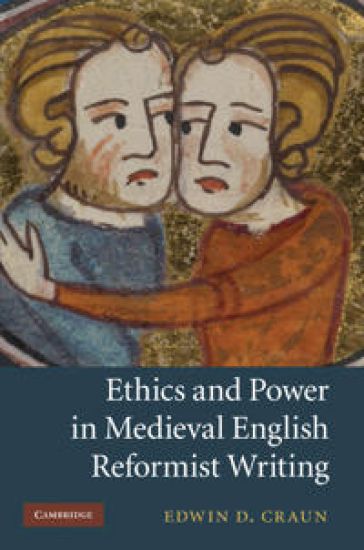
The late medieval Church obliged all Christians to rebuke the sins of others, especially those who had power to discipline in Church and State: priests, confessors, bishops, judges, the Pope. This practice, in which the injured party had to confront the wrong-doer directly and privately, was known as fraternal correction. Edwin Craun examines how pastoral writing instructed Christians to make this corrective process effective by avoiding slander, insult, and hypocrisy. He explores how John Wyclif and his followers expanded this established practice to authorize their own polemics against mendicants and clerical wealth. Finally, he traces how major English reformist writing - Piers Plowman, Mum and the Sothsegger, and The Book of Margery Kempe - expanded the practice to justify their protests, to protect themselves from repressive elements in the late Ricardian and Lancastrian Church and State, and to urge their readers to mount effective protests against religious, social, and political abuses.
Freed's highly accessible introduction, directed at students and interested non-specialists as well as scholars, explains and examines these well-known stories from a critical perspective. "Critical" is taken in the sense of judging among alternative answers to problems that arise from such study and arguing for the preferred solution. The aim of this book is to draw the reader to the gospel accounts for the purpose of evoking critical thought rather than to persuade of a particular interpretation. In pursuit of this goal, the author shows how many diverse factors, including earlier traditions, literary styles, and the theological convictions of each gospel writer, have contributed to the composition of the narratives.
Relates data on age at marriage, occupation, etc. to socio-economic status and fertility. Originally published in 1963. The Princeton Legacy Library uses the latest print-on-demand technology to again make available previously out-of-print books from the distinguished backlist of Princeton University Press. These editions preserve the original texts of these important books while presenting them in durable paperback and hardcover editions. The goal of the Princeton Legacy Library is to vastly increase access to the rich scholarly heritage found in the thousands of books published by Princeton University Press since its founding in 1905.
Relates data on age at marriage, occupation, etc. to socio-economic status and fertility. Originally published in 1963. The Princeton Legacy Library uses the latest print-on-demand technology to again make available previously out-of-print books from the distinguished backlist of Princeton University Press. These editions preserve the original texts of these important books while presenting them in durable paperback and hardcover editions. The goal of the Princeton Legacy Library is to vastly increase access to the rich scholarly heritage found in the thousands of books published by Princeton University Press since its founding in 1905.
This book, the first ever overview of the subject, traces the history of the government of higher education from the middle ages through the 1950's and concludes with a look towards the future. It provides insight into the origins and progression of corporate organization associated with western universities, and explores whether and to what extent changing conditions raise the question of its obsolescence. It will be of interest to those who study higher education as well as the general public, governing board members, and professors.
In the eighteenth and nineteenth centuries--a period that marked the emergence of a global modernity--educated landowners, or "gentlemen," dominated the development of British natural history, utilizing networks of trade and empire to inventory nature and understand events across the world. Specimens, ranging from a Welsh bittern to the plants of Botany Bay, were collected, recorded, and classified, while books were produced in London and copies distributed and used across Britain, Continental Europe, the Pacific, Asia, and the Americas. Natural history connected a diverse range of individuals, from European landowners to Polynesian priests, incorporating, distributing, synthesizing, and appropriating information collected on a global scale. In Reading the World, Edwin D. Rose positions books, natural history specimens, and people in a close cycle of literary production and consumption. His book reveals new aspects of scientific practice and the specific roles of individuals employed to collect, synthesize, and distribute knowledge--reevaluating Joseph Banks's and Daniel Solander's investigations during James Cook's Endeavour voyage to the Pacific. Uncovering the range of skills involved in knowledge production, Rose expands our understanding of natural history as a cyclical process, from the initial collection and identification of specimens to the formal publication of descriptions to the eventual printing of sources.
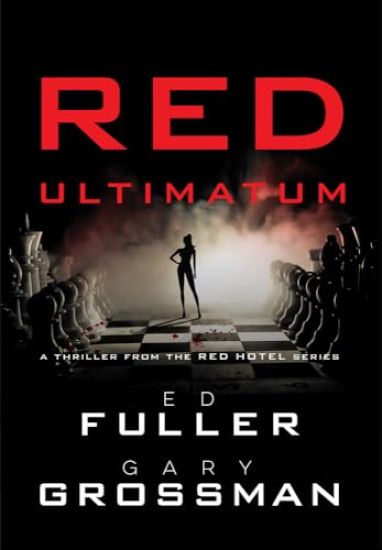
A former U.S. President's plane is brought down in the Atlantic. Revolutionary forces attack Cairo. The U.S. Secretary of State is kidnapped in Panama. A North Korean ballistic missile submarine tracks toward America's West Coast. A sleeper cell spy awakens in the halls of Congress. A woman assassin takes aim on the Washington Mall. Behind it all is Russian President Nicolai Gorshkov who has mastered the ability to walk between the raindrops and not get wet. Until... China determines that Gorshkov's policies are endangering its global initiatives... until Beijing issues Gorshkov a defiant ultimatum... until Dan Reilly, hotel executive/CIA freelancer, and friend of the Secretary of State, reads the moves on the international political chessboard and picks up the pieces. The non-stop action plays out on Air, Land, and Sea. Yet, with so many geo-political threads being tugged simultaneously, will the Russian leader succeed getting another step closer to rebuilding the old Soviet Empire in his image?
A former U.S. President's plane is brought down in the Atlantic. Revolutionary forces attack Cairo. The U.S. Secretary of State is kidnapped in Panama. A North Korean ballistic missile submarine tracks toward America's West Coast. A sleeper cell spy awakens in the halls of Congress. A woman assassin takes aim on the Washington Mall. Behind it all is Russian President Nicolai Gorshkov who has mastered the ability to walk between the raindrops and not get wet. Until... China determines that Gorshkov's policies are endangering its global initiatives... until Beijing issues Gorshkov a defiant ultimatum... until Dan Reilly, hotel executive/CIA freelancer, and friend of the Secretary of State, reads the moves on the international political chessboard and picks up the pieces. The non-stop action plays out on Air, Land, and Sea. Yet, with so many geo-political threads being tugged simultaneously, will the Russian leader succeed getting another step closer to rebuilding the old Soviet Empire in his image?
This work has been selected by scholars as being culturally important and is part of the knowledge base of civilization as we know it.This work is in the public domain in the United States of America, and possibly other nations. Within the United States, you may freely copy and distribute this work, as no entity (individual or corporate) has a copyright on the body of the work.Scholars believe, and we concur, that this work is important enough to be preserved, reproduced, and made generally available to the public. To ensure a quality reading experience, this work has been proofread and republished using a format that seamlessly blends the original graphical elements with text in an easy-to-read typeface.We appreciate your support of the preservation process, and thank you for being an important part of keeping this knowledge alive and relevant.
This comprehensive history of the Delaware and Hudson Canal covers its engineering, construction, and operation, its role in the transportation of coal and other goods, and its impact on the communities it served.This work has been selected by scholars as being culturally important, and is part of the knowledge base of civilization as we know it.This work is in the "public domain in the United States of America, and possibly other nations. Within the United States, you may freely copy and distribute this work, as no entity (individual or corporate) has a copyright on the body of the work.Scholars believe, and we concur, that this work is important enough to be preserved, reproduced, and made generally available to the public. We appreciate your support of the preservation process, and thank you for being an important part of keeping this knowledge alive and relevant.