Kirjojen hintavertailu. Mukana 11 241 044 kirjaa ja 12 kauppaa.

Kirjahaku

Etsi kirjoja tekijän nimen, kirjan nimen tai ISBN:n perusteella.

1000 tulosta hakusanalla Edwin Lyle Brown

802.1X Port-Based Authentication

802.1X Port-Based Authentication

Edwin Lyle Brown

CRC Press
2019
nidottu
Port-based authentication is a “network access control” concept in which a particular device is evaluated before being permitted to communicate with other devices located on the network. 802.1X Port-Based Authentication examines how this concept can be applied and the effects of its application to the majority of computer networks in existence today. 802.1X is a standard that extends the Extensible Authentication Protocol (EAP) over a Local Area Network (LAN) through a process called Extensible Authentication Protocol Over LANs (EAPOL).The text presents an introductory overview of port-based authentication including a description of 802.1X port-based authentication, a history of the standard and the technical documents published, and details of the connections among the three network components. It focuses on the technical aspect of 802.1X and the related protocols and components involved in implementing it in a network. The book provides an in-depth discussion of technology, design, and implementation with a specific focus on Cisco devices. Including examples derived from the 802.1X implementation, it also addresses troubleshooting issues in a Cisco environment. Each chapter contains a subject overview. Incorporating theoretical and practical approaches, 802.1X Port-Based Authentication seeks to define this complex concept in accessible terms. It explores various applications to today’s computer networks using this particular network protocol.

802.1X Port-Based Authentication

802.1X Port-Based Authentication

Edwin Lyle Brown

Auerbach Publishers Inc.
2006
sidottu
Port-based authentication is a “network access control” concept in which a particular device is evaluated before being permitted to communicate with other devices located on the network. 802.1X Port-Based Authentication examines how this concept can be applied and the effects of its application to the majority of computer networks in existence today. 802.1X is a standard that extends the Extensible Authentication Protocol (EAP) over a Local Area Network (LAN) through a process called Extensible Authentication Protocol Over LANs (EAPOL).The text presents an introductory overview of port-based authentication including a description of 802.1X port-based authentication, a history of the standard and the technical documents published, and details of the connections among the three network components. It focuses on the technical aspect of 802.1X and the related protocols and components involved in implementing it in a network. The book provides an in-depth discussion of technology, design, and implementation with a specific focus on Cisco devices. Including examples derived from the 802.1X implementation, it also addresses troubleshooting issues in a Cisco environment. Each chapter contains a subject overview. Incorporating theoretical and practical approaches, 802.1X Port-Based Authentication seeks to define this complex concept in accessible terms. It explores various applications to today’s computer networks using this particular network protocol.
Edwin

Edwin

John Mortimer

Samuel French Ltd
1993
nidottu
Sir Fennimore Truscott, a retired Judge, sits under his mulberry tree and 'tries' his next-door-neighbour Tom Marjoriebanks for - allegedly - seducing Truscott's wife Margaret many years earlier.1 woman, 2 men
Edwin

Edwin

J. Sari

Angel Heart Publishing
2009
nidottu
EDWIN chronicles the story of a loner who finds his place in life and in the process lifts the spirit of a town. EDWIN is a whimsical satire written in alliteration which endeavors to expand kids' vocabulary while entertaining them with the music, rhythm, and magic of the English language. Written by Actress & Author J. Sari (My Pal Pudge) and with vibrant illustration by Emmy Award-winner Ed Ghertner (Producer/Director, Disney's Winnie the Pooh), EDWIN spins a fanciful tale while teaching an important lesson on the value of human kindness and love. This special story will warm your heart. Age Appropriate: K-12th Reading Comprehension Level: 6th-8th grade
Edwin

Edwin

Shirley Eldridge

Linellen Press
2020
pokkari
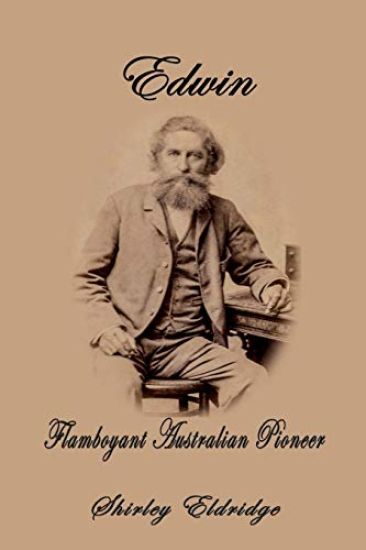
From weathered sailor to fencer to businessman to mayor to magistrate, the inimitable Edwin Macaree, with a passion for phrenology, Shakespeare and the stage, stormed Rockhampton in its early days, often cutting corners in his quest for power, wealth and status.Arriving in Rockhampton with a wife and just seven shillings and sixpence in his pocket in 1861, he initially struggled to survive. His great achievements were seriously threatened by the 1890's financial crisis, forcing tough decisions.Family tragedies were not unknown to the Macarees whose lives were interwoven with the Fraser pioneering family. Though a tad younger, the Frasers were no less extraordinary.
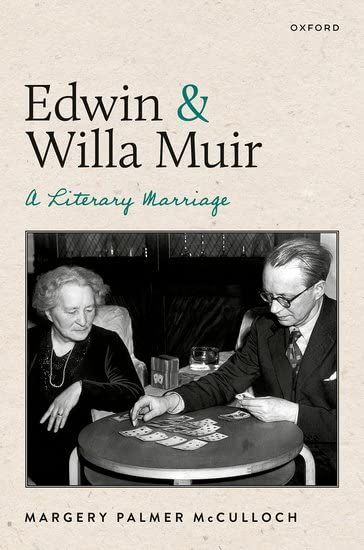
Edwin and Willa Muir

Edwin and Willa Muir

Margery Palmer McCulloch

Oxford University Press
2023
sidottu
This is the story of a literary marriage. It tells of the partnership between Edwin and Willa Muir, two intellectuals from small town Scottish backgrounds and their discovery of Europe in the years after the first and second world wars. It tells us about the cultural, social, and political issues of those dynamic and difficult years and much else, in intimate detail, about their own personal struggles. Edwin Muir was to become a leading poet in the twentieth century Scottish literary renaissance, but to make a living the couple also worked as translators of modern German literature, including key works by Hermann Broch and, most famously, Franz Kafka. They were intimate with many of the leading writers of their time, both at home and abroad, and these contacts, and their travels in Europe gave them a special and sometimes painful insight into the trials of the twentieth century. Dr Margery McCulloch's study draws on personal travel and a wealth of new sources from private correspondence, publishers' archives, the recollections of friends, and the diaries, unpublished journals, and autobiographical memoirs of Edwin and Willa themselves. This is the fullest account of the couple's life and times together during a long and loving marriage, not without its difficulties as Willa struggled to find proper acknowledgement of her translation skills, and space for her own creativity as a novelist in the shadow of her own ill health and Edwin's growing status as a major modern poet.
Edwin Arlington Robinson

Edwin Arlington Robinson

Scott Donaldson

Columbia University Press
2007
sidottu
At the time of his death in 1935, Edwin Arlington Robinson was regarded as the leading American poet-the equal of Frost and Stevens. In this biography, Scott Donaldson tells the intriguing story of this poet's life, based in large part on a previously unavailable trove of more than 3,000 personal letters, and recounts his profoundly important role in the development of modern American literature. Born in 1869, the youngest son of a well-to-do family in Gardiner, Maine, Robinson had two brothers: Dean, a doctor who became a drug addict, and Herman, an alcoholic who squandered the family fortune. Robinson never married, but he fell in love as many as three times, most lastingly with the woman who would become his brother Herman's wife. Despite his shyness, Robinson made many close friends, and he repeatedly went out of his way to give them his support and encouragement. Still, it was always poetry that drove him. He regarded writing poems as nothing less than his calling-what he had been put on earth to do. Struggling through long years of poverty and neglect, he achieved a voice and a subject matter all his own. He was the first to write about ordinary people and events-an honest butcher consumed by grief, a miser with "eyes like little dollars in the dark," ancient clerks in a dry goods store measuring out their days like bolts of cloth. In simple yet powerful rhetoric, he explored the interior worlds of the people around him. Robinson was a major poet and a pivotal figure in the course of modern American literature, yet over the years his reputation has declined. With his biography, Donaldson returns this remarkable talent to the pantheon of great American poets and sheds new light on his enduring legacy.
Edwin O. Reischauer and the American Discovery of Japan

Edwin O. Reischauer and the American Discovery of Japan

George R. Packard

Columbia University Press
2010
sidottu
In 1961, President Kennedy named Edwin O. Reischauer the U.S. Ambassador to Japan. Already deeply intimate with the country, Reischauer hoped to establish a more equal partnership with Japan, which had long been maligned in the American imagination. Reischauer pushed his fellow citizens to abandon caricature and stereotype and recognize Japan as a peace-loving democracy. Though his efforts were often condemned for being "too soft," the immensity of his influence (and the truth of his arguments) can be felt today. Having worked as Reischauer's special assistant in Tokyo, George R. Packard writes the definitive--and first--biography of this rare, charismatic talent. Reischauer reset the balance between two powerful nations. During World War II, he analyzed intelligence and trained American codebreakers in Japanese. He helped steer Japan toward democracy and then wrote its definitive English-language history. Reischauer's scholarship supplied the foundations for future East Asian disciplines, and his prescient research foretold America's missteps with China and involvement in Vietnam. At the time of his death in 1990, Reischauer warned the U.S. against adopting an attitude toward Asia that was too narrow and self-centered. India, Pakistan, and North Korea are now nuclear powers, and Reischauer's political brilliance has become more necessary and trenchant than ever.
Edwin Rogers Embree

Edwin Rogers Embree

Alfred Perkins

Indiana University Press
2011
sidottu
One of the most influential philanthropists of the early 20th century, Edwin Rogers Embree was the scion of generations of abolitionists and integrationists. He ably served the Rockefeller Foundation and when Julius Rosenwald created a foundation for his philanthropic activity, he called on Embree to be its head. The Rosenwald Fund is best known for constructing more than 5,300 schools for rural black communities in the South. In the 1940s, Embree became more personally engaged with race relations in the U.S. He chaired Chicago's Commission on Race Relations, helped create Roosevelt College, and was co-founder of the American Council on Race Relations. Late in life, Embree was president of the Liberian Foundation, devoted to improving health and education in Africa's oldest republic.
Edwin Booth

Edwin Booth

L Oggel

Greenwood Press
1992
sidottu
Edwin Booth was the foremost Shakespearean actor in late nineteenth-century America, enjoying almost mythic status. This comprehensive analysis and documentation of his career provides an aperture from which to view theatre and society of the period. The scholarly bibliography of over 1,000 annotated entries includes substantive writings about Booth in books, journals, and dissertations covering 130 years during and after his career as well as ephemeral references to Booth in the major journals of his day and a section of specialized reference materials relating to Booth. Among its unique features are a section on Booth's own writings and a section on Booth manuscript materials identified in sixty-four repositories in the United States and England.A biographical sketch analyzes Booth's career in terms of the major periods and upheavals in his life: his early fame, the death of his first wife, the assassination of President Lincoln by his brother, his management of Booth's Theatre, and his national and international tours. Accompanying this is a chronology of major events, a genealogical chart, and reproductions of portraits and playbills. Fully indexed, this volume makes a wealth of material readily available to Booth scholars as well as to others researching related theatre and social history.
Edwin Sandys and the Reform of English Religion
This book examines the complexities of reformed religion in early-modern England, through an examination of the experiences of Edwin Sandys, a prominent member of the Elizabethan Church hierarchy. Sandys was an ardent evangelical in the Edwardian era forced into exile under Mary I, but on his return to England he became a leader of the Elizabethan Church. He was Bishop of Worcester and London and finally Archbishop of York. His transformation from Edwardian radical to a defender of the Elizabethan status quo illustrated the changing role of the Protestant hierarchy. His fight against Catholicism dominated much of his actions, but his irascible personality also saw him embroiled in numerous conflicts and left him needing to defend his own status.
Edwin Hubble

Edwin Hubble

G.E Christianson

CRC Press
2019
nidottu
Edwin Hubble: Mariner of the Nebulae is both the biography of an extraordinary human being and the story of the greatest quest in the history of astronomy since the Copernican revolution. The book is a revealing portrait of scientific genius, an incisive engaging history of ideas, and a shimmering evocation of what we see when gazing at the stars. Born in 1889 and reared in the village of Marshfield, Missouri, Edwin Powell Hubble-star athlete, Rhodes Scholar, military officer, and astronomer- became one of the towering figures in twentieth-century science. Hubble worked with the great 100-inch Hooker telescope at California's Mount Wilson Observatory and made a series of discoveries that revolutionized humanity's vision of the cosmos. In 1923 he was able to confirm the existence of other nebulae (now known to be galaxies) beyond our own Milky Way. By the end of the decade, Hubble had proven that the universe is expanding, thus laying the very cornerstone of the big bang theory of creation. It was Hubble who developed the elegant scheme by which the galaxies are classified as ellipticals and spirals, and it was Hubble who first provided reliable evidence that the universe is homogeneous, the same in all directions as far as the telescope can see. An incurable Anglophile with a penchant for tweed jackets and English briars, Hubble, together with his brilliant and witty wife, Grace Burke, became a fixture in Hollywood society in the 1930s and 40s. They counted among their friends Charlie Chaplin, the Marx brothers, Anita Loos, Aldous and Maria Huxley, Walt Disney, Helen Hayes, and William Randolph Hearst. Albert Einstein, a frequent visitor to Southern California, called Hubble's work "beautiful" and modified his equations on relativity to account for the discovery that the cosmos is expanding.
Edwin H. Sutherland

Edwin H. Sutherland

David Friedrichs; Isabel Schoultz; Aleksandra Jordanoska

Routledge
2020
nidottu
Edwin H. Sutherland is widely identified as the single most important and influential criminologist of the twentieth century. He is especially well-known for his path-breaking criminology textbook (first published in 1924), his promotion of a sociological (and scientific) approach to the understanding of crime and its control, his theory of differential association, and his work over his final ten years on white-collar crime, a term he is credited with having introduced. This book explores the contemporary meaning of Edwin Sutherland and considers why criminologists today should continue to engage with his work. What can and should Sutherland mean to future 21st century criminologists, those working in the field say between 2021 and 2050, or some one hundred years after the 1921 to 1950 period that encompassed Sutherland’s criminological career? Which dimensions of Sutherland’s work have best survived the march of time and which are most likely to – and deserve to – survive going forward?Making the case that Sutherland is important to both mainstream and critical criminologists, to positivistic criminologists and those who study crimes of the powerful, this book is essential reading for both students and scholars interested in exploring the enduring legacy of this key thinker in criminology.
Edwin Howland Blashfield
Edwin Howland Blashfield (1848–1936) rose to prominence as a muralist during the “American Renaissance,” the period between the 1893 World’s Columbian Exposition and the United States’ entry into World War I. Blashfield’s monumental work can be viewed in courthouses, state capitols, churches, universities, museums, and other places across the United States. New scholarship highlights Blashfield’s contributions to the beauty of civic spaces and his lasting influence on public art in America. The first book in decades to focus on the renowned muralist, this covers the artist as defender of the classical tradition, surveys his artistic production, observes the works from a conservator’s perspective, and discusses his legacy. It references Blashfield’s writing and leadership of numerous cultural organizations, as well as his paintings, in examining his efforts to codify the professional relationship between architects and artists and promote the blending of classic principles with American symbolism, history and contemporary realities.
Edwin Chadwick: Nineteenth-Century Social Reform
Edwin Chadwick (1800-1890) is most famous for his contributions to the public health movement of the nineteenth century where his 1842 Report on the Sanitary Condition of the Labouring Population highlighted the unsanitary conditions that prevailed in the industrial towns and cities of Victorian Britain. While particular cities are mentioned in his work, such as London, Manchester, Leeds and Liverpool, his work had an effect on Britain as a whole as it changed government policy on a national level. Other facets of social welfare in which he was actively involved included the Poor Law, police, education and the evolving responsibilites of central and local government.This collection includes a reprint of Finer's biography, The Life and Times of Sir Edwin Chadwick, Chadwick's 1842 Sanitary Report and many of his rarer pamphlets and addresses to learned societies. Each of the volumes also contains a specially prepared Introduction.