Kirjojen hintavertailu. Mukana 11 244 527 kirjaa ja 12 kauppaa.

Kirjahaku

Etsi kirjoja tekijän nimen, kirjan nimen tai ISBN:n perusteella.

782 tulosta hakusanalla Egon Krause

Strömungslehre, Gasdynamik und Aerodynamisches Laboratorium
Dieses Lehrbuch basiert auf den Lehrveranstaltungen Stromungslehre I und II und Gasdynamik sowie auf den Versuchsberichten fur die Laboratoriumsubungen an dem namhaften Aerodynamischen Institut der RWTH Aachen. Der erste Teil gibt eine Einfuhrung in die Stromungslehre, wahrend der zweite Teil im wesentlichen die Grundgleichungen der Stromungsmechanik erklart und deren Naherungslosungen mit Anwendungen beschreibt. Beide Teile werden durch zahlreiche Ubungsaufgaben mit getrennt dargestellten Losungen erlautert und vertieft. Danach werden die Grundlagen der Gasdynamik ebenfalls mit Ubungen dargestellt. Abschliessend werden 11 Versuche beschrieben, die sich auf verschiedene Teilgebiete des dargestellten Stoffes beziehen.
Fluid Mechanics

Fluid Mechanics

Egon Krause

Springer-Verlag Berlin and Heidelberg GmbH Co. K
2005
sidottu
Despite dramatic advances in numerical and experimental methods of fluid mechanics, the fundamentals are still the starting point for solving flow problems. This textbook introduces the major branches of fluid mechanics of incompressible and compressible media, the basic laws governing their flow, and gas dynamics. Fluid Mechanics demonstrates how flows can be classified and how specific engineering problems can be identified, formulated and solved, using the methods of applied mathematics. The material is elaborated in special applications sections by more than 200 exercises and separately listed solutions. The final section comprises the Aerodynamics Laboratory, an introduction to experimental methods treating eleven flow experiments. This class-tested textbook offers a unique combination of introduction to the major fundamentals, many exercises, and a detailed description of experiments.
Fluid Mechanics

Fluid Mechanics

Egon Krause

Springer-Verlag Berlin and Heidelberg GmbH Co. K
2010
nidottu
Despite dramatic advances in numerical and experimental methods of fluid mechanics, the fundamentals are still the starting point for solving flow problems. This textbook introduces the major branches of fluid mechanics of incompressible and compressible media, the basic laws governing their flow, and gas dynamics. Fluid Mechanics demonstrates how flows can be classified and how specific engineering problems can be identified, formulated and solved, using the methods of applied mathematics. The material is elaborated in special applications sections by more than 200 exercises and separately listed solutions. The final section comprises the Aerodynamics Laboratory, an introduction to experimental methods treating eleven flow experiments. This class-tested textbook offers a unique combination of introduction to the major fundamentals, many exercises, and a detailed description of experiments.
Handbuch der Individualpsychologie

Handbuch der Individualpsychologie

Egon Wexberg; Alfred Adler; Max Fürnrohr; Bruno Krause; Fritz Künkel; Eleonore Rieniets; Leonhard Seif; Karl Sulzer; I. Verploegh-Chassé; Egon Weigl

Springer-Verlag Berlin and Heidelberg GmbH Co. K
1926
nidottu
Dieser Buchtitel ist Teil des Digitalisierungsprojekts Springer Book Archives mit Publikationen, die seit den Anfängen des Verlags von 1842 erschienen sind. Der Verlag stellt mit diesem Archiv Quellen für die historische wie auch die disziplingeschichtliche Forschung zur Verfügung, die jeweils im historischen Kontext betrachtet werden müssen. Dieser Titel erschien in der Zeit vor 1945 und wird daher in seiner zeittypischen politisch-ideologischen Ausrichtung vom Verlag nicht beworben.
Egon Schiele

Egon Schiele

Jean-Louis Gaillemin

Thames Hudson Ltd
2007
nidottu
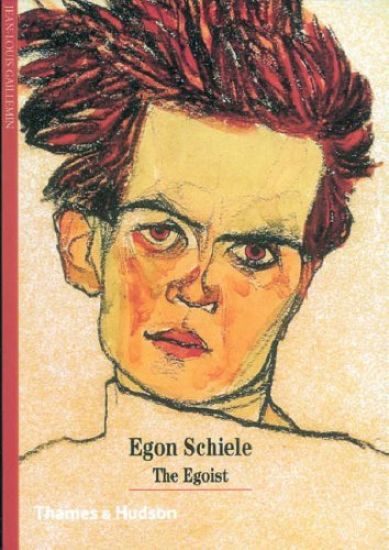
Egon Schiele lived in Vienna during its last years as capital of the declining Habsburg Empire. Rejected by his family and hounded by society for his interest in young girls, he expressed through his art a deep and bewildering loneliness and an obsession with sexuality, death and decay. Schiele died at the age of twenty-eight, yet he left behind him a body of work that sustains a huge public reputation – and myth. This profusely illustrated book delves into both the controversial sexual themes and neglected aspects of Schiele’s art, notably his formal experiments and his later expressionist portraits and allegorical paintings – works that reveal much about the importance of his short career.
Egon Schiele

Egon Schiele

Jane Kallir

Thames Hudson Ltd
2003
sidottu
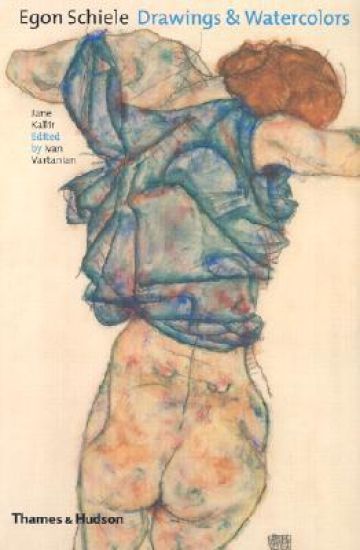
Austrian Expressionist Egon Schiele produced a prolific body of work before his early death at the age of twenty-eight in the flu epidemic of 1918. As well as a few hundred oil paintings, he created nearly 3,000 drawings and watercolours. Limited access to these fragile works and dispersion among several collections have made a comprehensive survey of his work a rarity. This volume assembles this master draughtsman's works on paper, providing a unique opportunity to study his rapid artistic development over the course of his brief twelve years of activity. Jane Kallir, the author of Schiele’s catalogue raisonné, introduces each year of the artist’s output, discussing his step-by-step progression from child prodigy to master of the human form and expression.
Egon Wellesz (1885-1974)

Egon Wellesz (1885-1974)

Caroline C Benser

Peter Lang Publishing Inc
1985
sidottu
This study covers Egon Wellesz's career as both composer and musicologist. Drawing on materials from the Wellesz Fonds housed in the Music Collection of the Austrian National Library in Vienna, and also on firsthand information from interviews and corres- pondence, the author follows Wellesz from his pre-World War I years in his native Vienna to his long tenure as a scholar and composer in Oxford. In Vienna Wellesz had been one of Arnold Schoenberg's first pupils. Alban Berg and Anton Webern were associates. At the University, Wellesz received a doctorate in musicology under Guido Adler. Recognition as a composer came with successful performances of his stage works throughout the Weimar Republic. Soon after immi- gration to England in 1938, he became a Fellow of Lincoln College. Unable to compose during the war, he returned to research in Byzantine music, producing A History of Byzantine Music and Hymnography. When he resumed composition, he followed the line of symphonic writing abandoned after Bruckner's work. He wrote his first symphony in 1945 at the age of sixty and completed his ninth symphony in 1971.One of his most cherished compliments was his designation as Bruckner's heir.
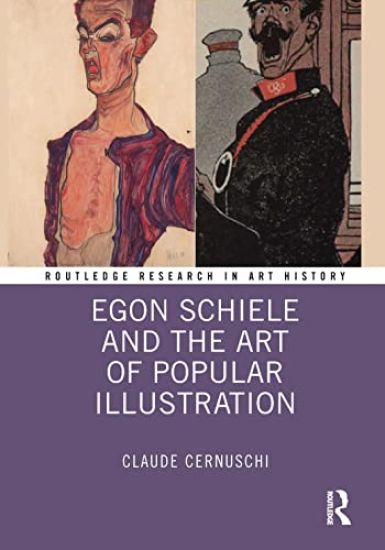
Egon Schiele and the Art of Popular Illustration

Egon Schiele and the Art of Popular Illustration

Claude Cernuschi

TAYLOR FRANCIS LTD
2022
sidottu
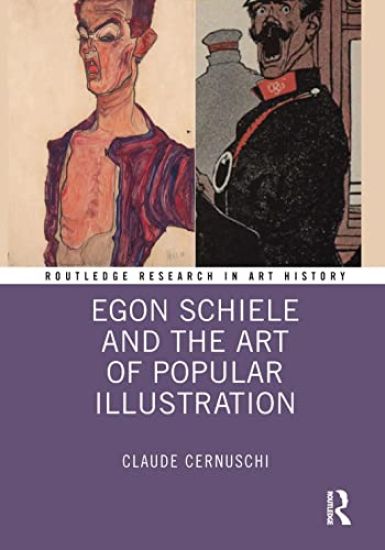
Presenting a radically different picture of Egon Schiele’s work, this study documents (in one-to-one comparisons) the extent of the artist’s visual borrowings from the Viennese humoristic journal, Die Muskete. Claude Cernuschi analyzes each comparison on a case-by-case basis, primarily because the interpretation of cartoons and caricatures is highly contingent on their specific historical and cultural context. Although this connection has gone unnoticed in the literature, in retrospect, this correlation makes perfect sense. Not only was Schiele’s artistic production frequently compared to caricature (and derided for being “grotesque”), but Expressionism and caricature are natural allies. One may belong to “high” art and the other to “popular” culture, yet both presuppose similar assumptions and deploy a similar rhetorical position: namely, that the exaggeration of human physiognomy allows deeper psychological “truths” to emerge. The book will be of interest to scholars working in art history, visual culture, popular culture, and politics.
Egon Schiele and the Art of Popular Illustration

Egon Schiele and the Art of Popular Illustration

Claude Cernuschi

TAYLOR FRANCIS LTD
2024
nidottu
Presenting a radically different picture of Egon Schiele’s work, this study documents (in one-to-one comparisons) the extent of the artist’s visual borrowings from the Viennese humoristic journal, Die Muskete. Claude Cernuschi analyzes each comparison on a case-by-case basis, primarily because the interpretation of cartoons and caricatures is highly contingent on their specific historical and cultural context. Although this connection has gone unnoticed in the literature, in retrospect, this correlation makes perfect sense. Not only was Schiele’s artistic production frequently compared to caricature (and derided for being “grotesque”), but Expressionism and caricature are natural allies. One may belong to “high” art and the other to “popular” culture, yet both presuppose similar assumptions and deploy a similar rhetorical position: namely, that the exaggeration of human physiognomy allows deeper psychological “truths” to emerge. The book will be of interest to scholars working in art history, visual culture, popular culture, and politics.
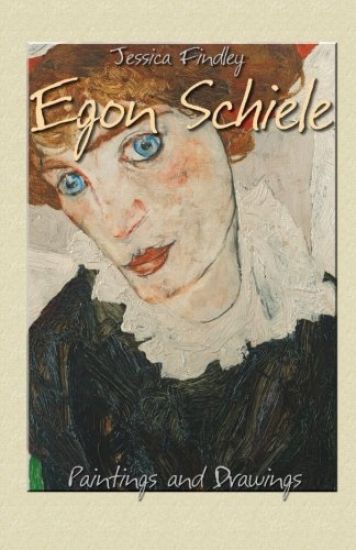
Egon Schiele: Paintings and Drawings

Egon Schiele: Paintings and Drawings

Jessica Findley

Createspace Independent Publishing Platform
2014
nidottu
With his signature graphic style, embrace of figural distortion, and bold defiance of conventional norms of beauty, Egon Schiele was one of the leading figures of Austrian Expressionism. He was an Austrian painter, a prot g of Gustav Klimt and important figurative painter of the early 20th century. The twisted body shapes and the expressive line that characterize his paintings and drawings mark the artist as one an earliest exponent of Expressionism. In Schiele's early years, he was strongly influenced by Klimt and Kokoschka but soon evolved into his own characteristic style. He focused on portraits of others as well as himself. In his later years, while he still worked often with nudes, they were done in a more realist fashion. Schiele made many drawings, some of which were extremely erotic. During his short but highly prolific career which ended with his premature death, Schiele created more than three thousand works on paper and approximately 300 paintings.
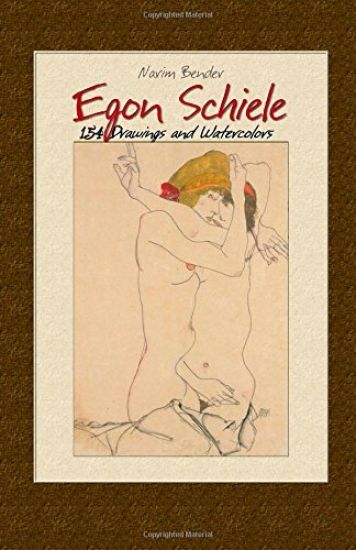
Egon Schiele: 154 Drawings and Watercolors

Egon Schiele: 154 Drawings and Watercolors

Narim Bender

Createspace Independent Publishing Platform
2014
nidottu
With his signature graphic style, embrace of figural distortion, and bold defiance of conventional norms of beauty, Egon Schiele was one of the leading figures of Austrian Expressionism. He was an Austrian painter, a prot g of Gustav Klimt and important figurative painter of the early 20th century. The twisted body shapes and the expressive line that characterize his paintings and drawings mark the artist as one an earliest exponent of Expressionism. In Schiele's early years, he was strongly influenced by Klimt and Kokoschka but soon evolved into his own characteristic style. He focused on portraits of others as well as himself. In his later years, while he still worked often with nudes, they were done in a more realist fashion. Schiele made many drawings, some of which were extremely erotic. During his short but highly prolific career which ended with his premature death, Schiele created more than three thousand works on paper and approximately 300 paintings.
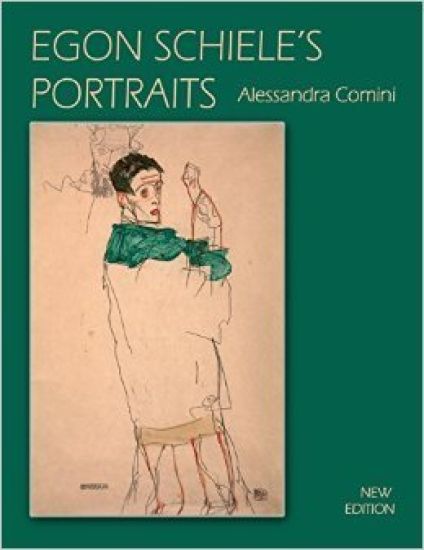
Egon Schiele

Egon Schiele

Alessandra Comini

Sunstone Press
2017
sidottu
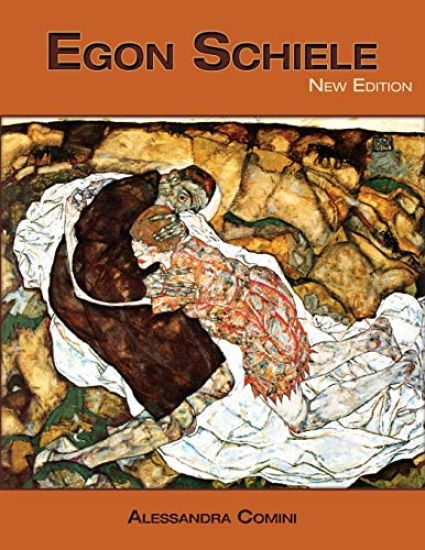
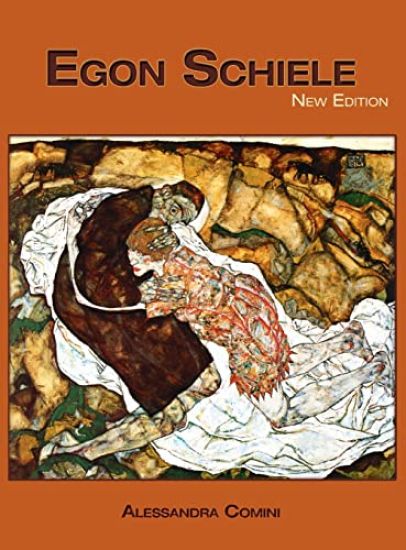
Egon Schiele was a meteor that flashed across the galaxy of Viennese art at the beginning of the last century. Although he lived only twenty-eight years--dying quite suddenly of influenza in 1918 just as World War I came to an end--he left a stunning pictorial oeuvre. Schiele's obsession with sexuality, his own and that of others, made him at once a voyeur and a participant in that sexual imperative which Freud was concurrently plumbing with such unsettling results. The disturbing revelations of Schiele's unmasking portraiture and of the new science of psychology disclosed a collective cultural anxiety during the last years of the crumbling Austrian empire. Schiele was disturbingly dualistic: his provocative explorations of erotica with their startlingly modern sensibilities do not prepare the viewer for the tenderness revealed in his lyrical landscapes and mostly unpeopled town scenes. These emit a haunting loneliness and are related to an obsession with pathos expressed in the artist's melancholy allegories and existential portraits.