

Kirjahaku
Etsi kirjoja tekijän nimen, kirjan nimen tai ISBN:n perusteella.
1000 tulosta hakusanalla Eileen M Foti





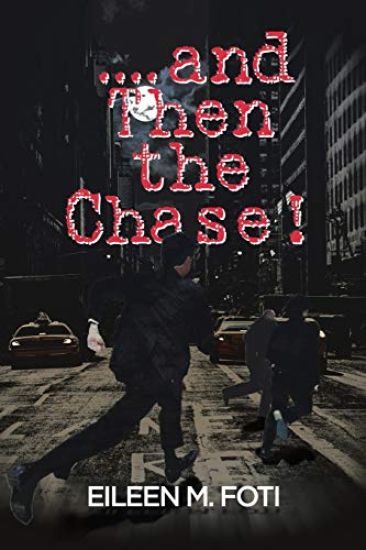


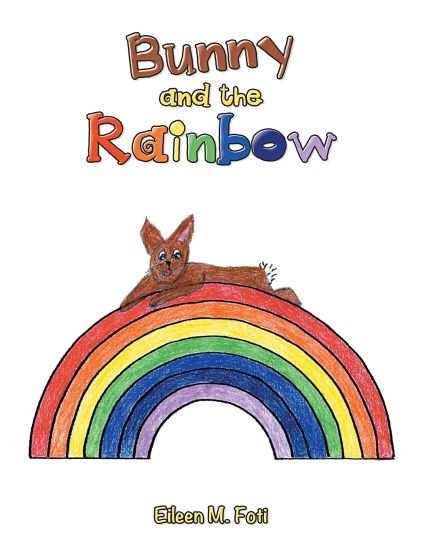
There's no available information at this time. Author will provide once information is available.


This is a story about a little boy who takes a trip to the zoo with his father. The little boy, Abraham, loves seeing all the animals, and loves hearing his father read all the signs on each cage to him. However, that night he dreams he is all the animals he saw at the zoo that day. Abraham has some some scary moments until he wakes up, and realizes, it was all a dream


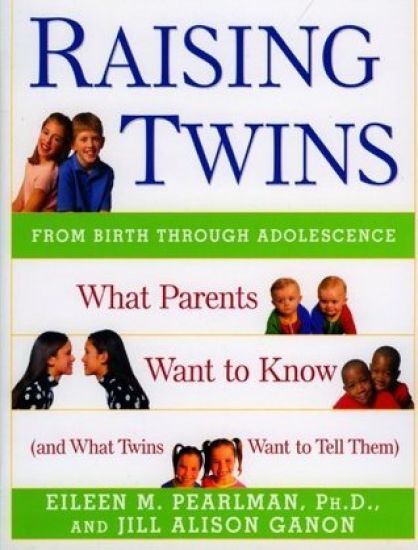
Raising Twins guides you through the physical, emotional, and cognitive developmental differences and challenges specific to twins. Straightforward and reassuring, this book addresses the key issues that impact twins from babyhood all the way through adolescence: * Sharing and comparisons * Competition and rivalry * The "secret language" of twins * The good twin/bad twin myth * Teen-specific issues like dating and applying for college * And much more including lively, candid discussions with twins and their parents

Songs in Black and Lavender
Eileen M. Hayes; Linda Tillery
University of Illinois Press
2010
nidottu
Drawing on fieldwork conducted at eight women's music festivals, Eileen M. Hayes shows how studying these festivals--attended by predominately white lesbians--provides critical insight into the role of music and lesbian community formation. She argues that the women's music festival is a significant institutional site for the emergence of black feminist consciousness in the contemporary period. Hayes also offers sage perspectives on black women's involvement in the women's music festival scene, the ramifications of their performances as drag kings in those environments, and the challenges and joys of a black lesbian retreat based on the feminist festival model. With acuity and candor, longtime feminist activist Hayes elucidates why this music scene matters. Veteran vocalist, percussionist, producer, and cultural historian Linda Tillery provides a foreword.

"This is an extremely well written and carefully argued book that is quite persuasive. It should be essential reading for every scholar in African literature." —Research in African Literatures " . . . a bold challenge and a tool for the student as well as for the scholar in African literature, and also a veritable tour de force in comparative literature." —World Literature Today "Eileen Julien has produced an astute, well-researched, and lucidly written text on issues of orality in African literature." —International Journal of African Historical Studies " . . . a joy to read because of the precious clarity, infectious liveliness and concision with which Julien writes." —African Studies Review The search for oral origins in African literature is a quest for African authenticity. In a critique and revision of the conceptual category of orality as it has been understood and used by scholars, Julien stresses the transformation of narrative genres as an index of sociopolitical relations and authorial vision.

This book places youth violence within a Routine Activity Ecological Framework. Youth violence, specifically youth exposure to community violence and youth perpetration of violent behaviors, occur within various contexts. Ahlin and Antunes situate their discussion of youth violence within an ecological framework, identifying how it is nested within four mesosystem layers: community, family, peers and schools, and youth characteristics. Contextualized using an ecological framework, the Routine Activity Theory and Lifestyles perspective (RAT/LS) are well suited to guide an examination of youth violence risk and protective factors across the four layers. Drawing on scholarship that explores predictors and consequences of youth violence, the authors apply RAT/LS theory to explain how community, family, peers, schools, and youth characteristics influence youth behavior. Each layer of the ecological framework unfolds to reveal the latest scholarship and contextualizes how concepts of RAT/LS, specifically the motivated offender, target suitability, and guardianship, can be applied at each level. This book also highlights the mechanisms and processes that contribute to youth exposure to and involvement in violence by exploring factors examined in the literature as protective and risk factors of youth violence. Youth violence occurs in context, and, as such, the understanding of multilevel predictors and preventive measures against it can be situated within an RAT/LS ecological framework. This work links theory to extant research. Ahlin and Antunes demonstrate how knowledge of youth violence can be used to develop a robust theoretical foundation that can inform policy to improve neighborhoods and youth experiences within their communities, families, and peers and within their schools while acknowledging the importance of individual characteristics. This monograph is essential reading for those interested in youth violence, juvenile delinquency, and juvenile justice research and anyone dedicated to preventing crime among youths.
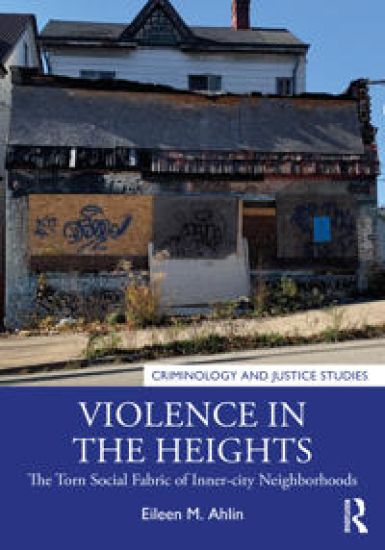
Given the media attention and research focus on big cities with large minority populations, people have grown accustomed to associating violence with these attributes. Violence in the Heights counters that narrative to provide a fresh perspective on inner-city violence with a close look at violence and associated social disorder in a cluster of neighborhoods in a mid-sized, predominantly White city. Eileen M. Ahlin studied 42 residents and their perceptions of and responses to violence to give voice to their experiences. Ahlin provides a historical overview of the neighborhoods and highlights a series of pivotal violent events, and discovers how they differentially impacted residents and their perceptions of safety. Residents reveal how institutional and demographic shifts reduced interpersonal connections and weakened the community's social fabric. A unique take on inner-city violence, Violence in the Heights also details why residents move to other communities when violence increases or, if they remain, adapt to changing conditions.This book will interest mainstream readers interested in learning about urban affairs and the human-interest story as it will track why inner-city residents stay in their neighborhoods or move to other communities when violence increases. This book will also serve as an academic text to outline the changes in violence and community disorder in a mid-sized city that is predominantly White, an understudied aspect of urban violence.

Given the media attention and research focus on big cities with large minority populations, people have grown accustomed to associating violence with these attributes. Violence in the Heights counters that narrative to provide a fresh perspective on inner-city violence with a close look at violence and associated social disorder in a cluster of neighborhoods in a mid-sized, predominantly White city. Eileen M. Ahlin studied 42 residents and their perceptions of and responses to violence to give voice to their experiences. Ahlin provides a historical overview of the neighborhoods and highlights a series of pivotal violent events, and discovers how they differentially impacted residents and their perceptions of safety. Residents reveal how institutional and demographic shifts reduced interpersonal connections and weakened the community's social fabric. A unique take on inner-city violence, Violence in the Heights also details why residents move to other communities when violence increases or, if they remain, adapt to changing conditions.This book will interest mainstream readers interested in learning about urban affairs and the human-interest story as it will track why inner-city residents stay in their neighborhoods or move to other communities when violence increases. This book will also serve as an academic text to outline the changes in violence and community disorder in a mid-sized city that is predominantly White, an understudied aspect of urban violence.