

Kirjahaku
Etsi kirjoja tekijän nimen, kirjan nimen tai ISBN:n perusteella.
1000 tulosta hakusanalla Elena M Leman

Finding Elena: My thoughts and feelings expressed through words and photographs
Elena M. de Luigi
Createspace Independent Publishing Platform
2017
nidottu
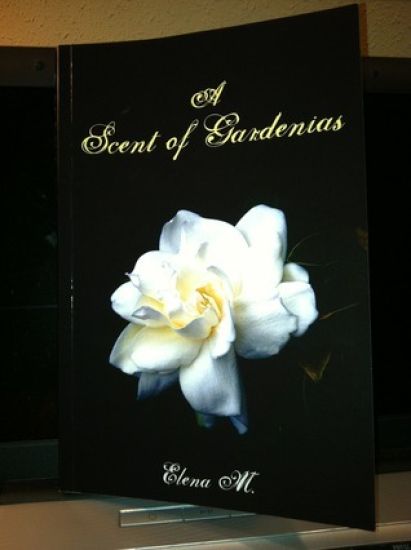
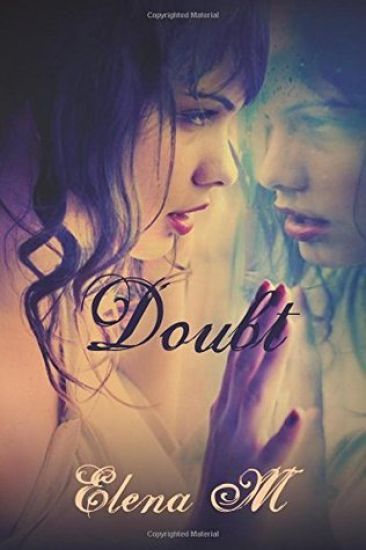
For the past two years, Lilly McAllister has been struggling to keep her family afloat. Since the untimely death of her husband, she has endured all the trials and tribulations of raising two teenagers on her own-complete with rebellion, mood swings, hormones, and first loves. But the single-parent lifestyle is about to get much more difficult for Lilly and her family. A recent string of grisly murders has been terrorizing their area-and when the eldest McAllister daughter witnesses the man who might be responsible, the family is dragged into the investigation against their wills. Along with the unwanted drama, old wounds reopen and the family dynamic veers off balance once again. It's up to Lilly to find ways to bring stability and peace back to their home-a nearly impossible feat when their lives now hinge on such a heinous set of crimes. Combining true-to-life family issues with a compelling murder investigation, Doubt paints an unforgettable picture of the struggles of single parenting, love, and loss-with a central mystery that will keep readers guessing until the very end.




Determinanten gesundheitlicher Ungleichheit und deren Relevanz für die pädagogische Praxis
Elena M.
GRIN Verlag
2018
nidottu


Determinanten gesundheitlicher Ungleichheit. Eine empirische Analyse auf Basis der ALLBUS 2014
Elena M.
GRIN Verlag
2019
nidottu
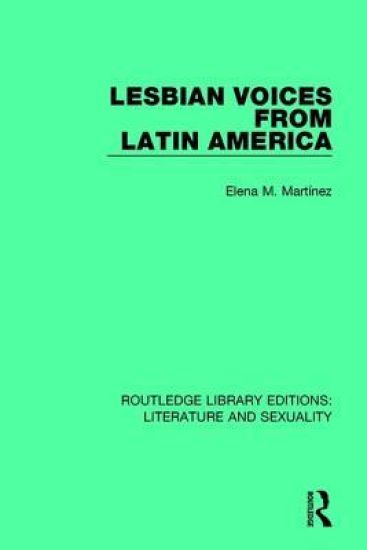
In spite of the attention that Latin American women writers have attracted in recent years, a book dedicated exclusively to those writers whose work primarily articulates a lesbian perspective was until now missing. The purpose of this book, first published in 1996, is to bring attention to and examine the articulation of lesbian themes, motifs and issues in the works of these writers. It aims to study the problems pertaining to the specific literary representations of lesbianism and to examine the dimensions of a lesbian view in the works. By undertaking the study of the works of these women writers, this book contributes to the recognition and legitimization of a lesbian literary discourse.
In spite of the attention that Latin American women writers have attracted in recent years, a book dedicated exclusively to those writers whose work primarily articulates a lesbian perspective was until now missing. The purpose of this book, first published in 1996, is to bring attention to and examine the articulation of lesbian themes, motifs and issues in the works of these writers. It aims to study the problems pertaining to the specific literary representations of lesbianism and to examine the dimensions of a lesbian view in the works. By undertaking the study of the works of these women writers, this book contributes to the recognition and legitimization of a lesbian literary discourse.

Midnight, 1954. A striking woman in a torn black dress slinks down a cobwebbed, candelabra'd corridor. She stops, shrieks hysterically into the camera, then solemnly says, "Good evening, I am Vampira." Her real name is Maila Nurmi and she was the first in a long line of television horror movie hosts, commonly seen on independent stations' late-night "grade Z" offerings dressed as some zany ghoul or mad scientist. This book covers the major hosts in detail, along with styles and show themes. Merchandise tie-in and fan reactions are also chronicled. The appendices list film and record credits.

Debate over the representation of Jews in Russian literature has long been dominated by the dichotomy of anti- and philo-Semitic discourses. Rather than analyzing ""the image of the Jew"" in terms of negative or positive characteristics, and branding the authors respectively as anti- or philo-Semitic, Elena M. Katz explores the complex and the ambiguous construction of Jewishness as ""Otherness"" in the works of three of Russia's greatest nineteenth-century authors. Katz identifies Gogol, Dostoevsky, and Turgenev as creators of special modes of Jewish discourse in Russian literature. She tackles traditional tropes of Jews in light of the sociohistoric and cultural contexts of the time and of the writers' own politics and aesthetics.
Challenging received scholarship on the practice of Shakespeare’s theatre, this book displaces a contemporary cultural bias towards leadership models to reconsider possibilities of working in a non-hierarchical and inclusive creative theatrical practice. It offers ways of restoring to actors a sense of what the Existentialists termed “autonomy” that Shakespeare’s company would have embodied. Against a critical account of two major Shakespeare playhouses – Shakespeare’s Globe, London and the American Shakespeare Center – the book describes the original practice-based research by An?rke Shakespeare and V.enice S.hakespeare C.ompany without a controlling director. Their staging of three directorless Shakespeare plays, and his narrative poem The Rape of Lucrece, with diverse actors, performance spaces, languages and countries, explores multilingual, intersectional, cross-disciplinary and international possibilities of early modern performance and study. Directorless Shakespeare as “Embodied Literary Criticism” releases the dialogical forces of Shakespeare’s texts, which are more fully served by the centrifugal force of the collective ensemble rather than the centripetal force of the single director. It allows texts to speak fully and multiply, in democratic exchange with an audience, liberated from directorial or theoretically driven concepts.Directorless Shakespeare will be of great interest to students and scholars in theatre and performance studies, professional practitioners, and historians.
The first extended analysis of the relationship between Italian criminology and crime fiction in English, Methods of Murder examines works by major authors both popular, such as Gianrico Carofiglio, and canonical, such as Carlo Emilio Gadda. Many scholars have argued that detective fiction did not exist in Italy until 1929, and that the genre, which was considered largely Anglo-Saxon, was irrelevant on the Italian peninsula. By contrast, Past traces the roots of the twentieth-century literature and cinema of crime to two much earlier, diverging interpretations of the criminal: the bodiless figure of Cesare Beccaria’s Enlightenment-era On Crimes and Punishments, and the biological offender of Cesare Lombroso’s positivist Criminal Man. Through her examinations of these texts, Past demonstrates the links between literary, philosophical, and scientific constructions of the criminal, and provides the basis for an important reconceptualization of Italian crime fiction.

T'was the Night Before Christmas - Italian Style
Elena M. Romanelli
Createspace Independent Publishing Platform
2012
nidottu

Talan wants to mark Maya-with more than his ink. The owner of a prominent tattoo shop, he's used to being hit on by easy women. Though "easy" is not a word associated with Maya when she comes in to support her friend. Flirtation ensues, but what will it take to break the painted man?

Talan wants more and it's faster than Maya can handle.After officially starting a relationship, he's having trouble managing Maya-a woman who consumes every part of his being-and his own wants. His need to control everything, including her, is driving Maya insane, but he has good reason. After all, Janice is still lurking, and she has a vendetta against his Bitty.Will they make it through the turbulence?And if so, at what cost?