Kirjojen hintavertailu. Mukana 11 244 527 kirjaa ja 12 kauppaa.

Kirjahaku

Etsi kirjoja tekijän nimen, kirjan nimen tai ISBN:n perusteella.

1000 tulosta hakusanalla Elie Wiesel

Elie Wiesel

Elie Wiesel

Indiana University Press
2013
sidottu
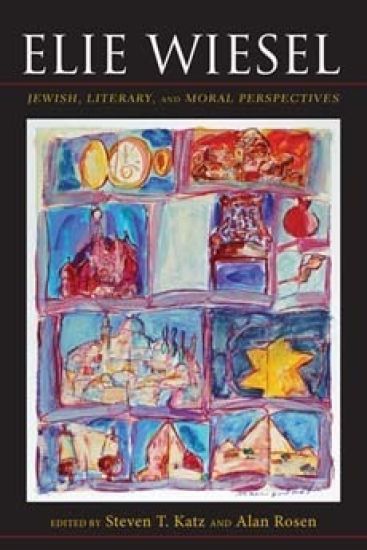
Nobel Peace Prize recipient Elie Wiesel, best known for his writings on the Holocaust, is also the accomplished author of novels, essays, tales, and plays as well as portraits of seminal figures in Jewish life and experience. In this volume, leading scholars in the fields of Biblical, Rabbinic, Hasidic, Holocaust, and literary studies offer fascinating and innovative analyses of Wiesel's texts as well as illuminating commentaries on his considerable influence as a teacher and as a moral voice for human rights. By exploring the varied aspects of Wiesel's multifaceted career—his texts on the Bible, the Talmud, and Hasidism as well as his literary works, his teaching, and his testimony—this thought-provoking volume adds depth to our understanding of the impact of this important man of letters and towering international figure.
Elie Wiesel

Elie Wiesel

Robert McAfee Brown

University of Notre Dame Press
1983
nidottu
Elie Wiesel: Messenger to All Humanity is a call to both Christians and Jews to face the tragedy of the Holocaust and begin again. Robert McAfee Brown was a friend of Wiesel and wrote Elie Wiesel: Messenger to All Humanity to process his own thoughts, engage with Wiesel's thinking, and inspire others to read and engage with Wiesel's own works. First published in 1983, this book grapples with the horrors of the Holocaust without overshadowing or speaking over Jewish survivors. Brown writes with care and sensitivity and does not shy away from the true magnitude of the tragedy and suffering. As he says in the introduction, "Although we cannot enter Elie Wiesel's world, we can let him enter ours." This text lets Wiesel enter our world and allows us to learn from him through the eyes, ears, and heart of a friend.
Elie Wiesel

Elie Wiesel

Robert McAfee Brown

University of Notre Dame Press
2017
sidottu
Elie Wiesel: Messenger to All Humanity is a call to both Christians and Jews to face the tragedy of the Holocaust and begin again. Robert McAfee Brown was a friend of Wiesel and wrote Elie Wiesel: Messenger to All Humanity to process his own thoughts, engage with Wiesel's thinking, and inspire others to read and engage with Wiesel's own works. First published in 1983, this book grapples with the horrors of the Holocaust without overshadowing or speaking over Jewish survivors. Brown writes with care and sensitivity and does not shy away from the true magnitude of the tragedy and suffering. As he says in the introduction, "Although we cannot enter Elie Wiesel's world, we can let him enter ours." This text lets Wiesel enter our world and allows us to learn from him through the eyes, ears, and heart of a friend.
Elie Wiesel

Elie Wiesel

Joseph Berger

YALE UNIVERSITY PRESS
2023
sidottu
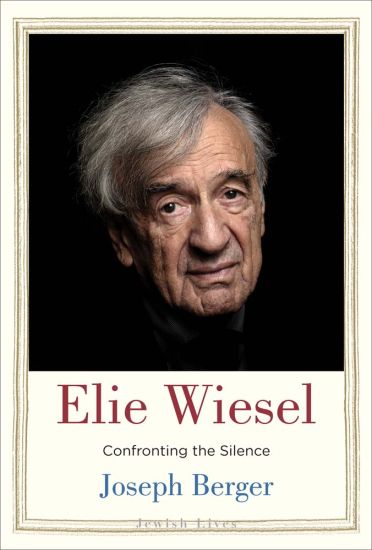
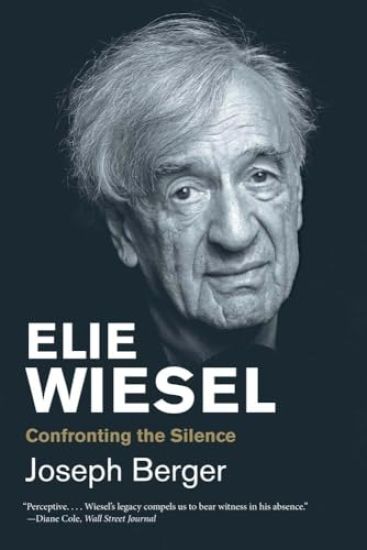
An intimate look at Elie Wiesel, author of the seminal Holocaust memoir Night and recipient of the Nobel Peace Prize Finalist for the National Jewish Book Award, Biography category “An indispensable touchstone.”—Julia M. Klein, Forward As an orphaned survivor and witness to the horrors of Auschwitz, Elie Wiesel (1928–2016) compelled the world to confront the Holocaust with his searing memoir Night. How did this soft-spoken man from a small Carpathian town become such an influential figure on the world stage? Drawing on Wiesel’s prodigious literary output and interviews with his family, friends, scholars, and critics, Joseph Berger seeks to answer this question. Berger explores Wiesel’s Hasidic childhood in Sighet, his postwar years spent rebuilding his life from the ashes in France, his transformation into a Parisian intellectual, his failed attempts at romance, his years scraping together a living in America as a journalist, his decision to marry and have a child, his emergence as a spokesperson for Holocaust survivors and persecuted peoples throughout the world, his lifelong devotion to the state of Israel, and his difficult final years. Through this penetrating portrait we come to know intimately the man the Norwegian Nobel Committee called “a messenger to mankind.”
Elie Wiesel

Elie Wiesel

Joseph Berger

YALE UNIVERSITY PRESS
2025
pokkari
An intimate look at Elie Wiesel, author of the seminal Holocaust memoir Night and recipient of the Nobel Peace Prize Finalist for the National Jewish Book Award, Biography category “An indispensable touchstone.”—Julia M. Klein, Forward As an orphaned survivor and witness to the horrors of Auschwitz, Elie Wiesel (1928–2016) compelled the world to confront the Holocaust with his searing memoir Night. How did this soft-spoken man from a small Carpathian town become such an influential figure on the world stage? Drawing on Wiesel’s prodigious literary output and interviews with his family, friends, scholars, and critics, Joseph Berger seeks to answer this question. Berger explores Wiesel’s Hasidic childhood in Sighet, his postwar years spent rebuilding his life from the ashes in France, his transformation into a Parisian intellectual, his failed attempts at romance, his years scraping together a living in America as a journalist, his decision to marry and have a child, his emergence as a spokesperson for Holocaust survivors and persecuted peoples throughout the world, his lifelong devotion to the state of Israel, and his difficult final years. Through this penetrating portrait we come to know intimately the man the Norwegian Nobel Committee called “a messenger to mankind.”
Elie Wiesel

Elie Wiesel

Alan L. Berger

Routledge
2021
sidottu
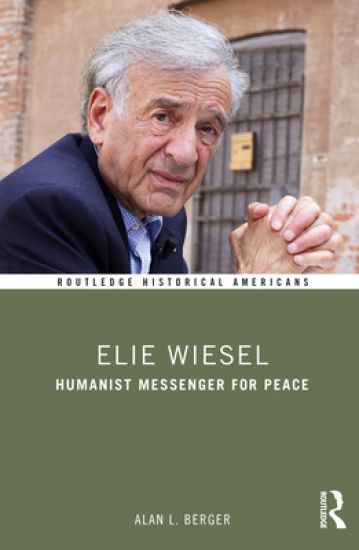
Elie Wiesel: Humanist Messenger for Peace is part biography and part moral history of the intellectual and spiritual journey of Elie Wiesel, a Holocaust survivor, human rights activist, author, university professor, and Nobel Peace Prize winner.In this concise text, Alan L. Berger portrays Wiesel’s transformation from a pre-Holocaust, deeply God-fearing youth to a survivor of the Shoah who was left with questions for both God and man. An advisor to American presidents of both political parties, his nearly 60 books voiced an activism on behalf of oppressed people everywhere. The book illuminates Wiesel’s contributions in the areas of religion, human rights, literature, and Jewish thought to show the impact that he has had on American life. Supported by primary documents about and from Wiesel, the volume gives students a gateway to explore Wiesel’s incredible life.This book will make a great addition to courses on American religious or intellectual thought.
Elie Wiesel

Elie Wiesel

Alan L. Berger

Routledge
2021
nidottu
Elie Wiesel: Humanist Messenger for Peace is part biography and part moral history of the intellectual and spiritual journey of Elie Wiesel, a Holocaust survivor, human rights activist, author, university professor, and Nobel Peace Prize winner.In this concise text, Alan L. Berger portrays Wiesel’s transformation from a pre-Holocaust, deeply God-fearing youth to a survivor of the Shoah who was left with questions for both God and man. An advisor to American presidents of both political parties, his nearly 60 books voiced an activism on behalf of oppressed people everywhere. The book illuminates Wiesel’s contributions in the areas of religion, human rights, literature, and Jewish thought to show the impact that he has had on American life. Supported by primary documents about and from Wiesel, the volume gives students a gateway to explore Wiesel’s incredible life.This book will make a great addition to courses on American religious or intellectual thought.
Elie Wiesel

Elie Wiesel

Graham B. Walker

McFarland Co Inc
2012
pokkari
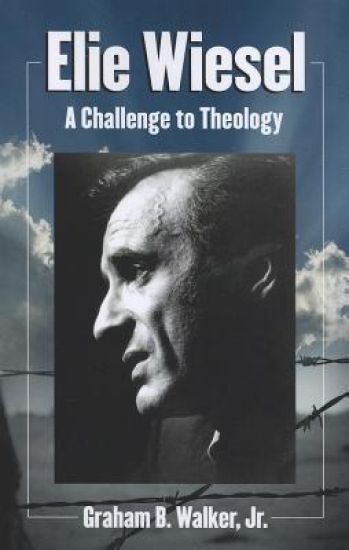
"Something happened a generation ago, to the world, to man. Something happened to God. Certainly something happened to the relations between man and God, man and man, man and himself"--Elie Wiesel. The literary voice of Elie Wiesel, Holocaust survivor and eloquent witness, has been heard in the world and its importance was verified in 1986 by the Nobel Peace Prize. This work will help the reader understand the evolution of Wiesel's writing. Many fascinating topics are covered--Jesus as a "wandering Jew," the prototype of Christian pilgrimage, various theological responses to the Holocaust (e.g., Rabbinic, radical, Mad Midrashic), and the ambiguity of a listening God.
Elie Wiesel

Elie Wiesel

New York University Press
1991
pokkari
A deeply reflective work, written by a number of eminent scholars both Jewish and Christian who represent a variety of disciplines and perspectives, this book explores basic issues in Wiesel's work -the nature of God, madness, silence, horror, and hope. With essays by such authorities among others, as Robert McAfee Brown, Eugene J. Fisher, Hary James Cargas, Eva Fleuschner, and Irving Abrahamson, the bool reflects the inspitation of Wiesel's reconstructed belief in God, humanity, and the future. These eminent theologians, literary scholars, and philosophers show how Wiesel's thinking has changed over the past thirty years, and how it has remained the same.
Elie Wiesel

Elie Wiesel

Ellen Norman Stern

Jewish Publication Society
1996
pokkari
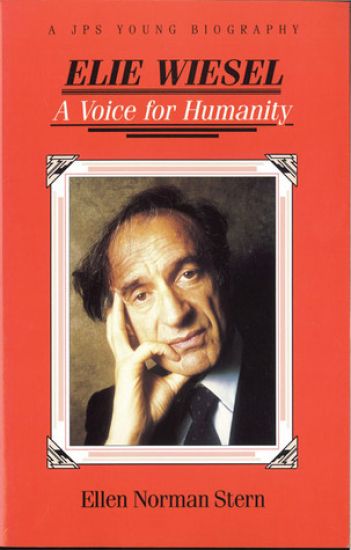
Few Holocaust survivors have gained the recognition and honor as Elie Wiesel has as an author, journalist and lecturer. In this latest biography Ellen Stern chronicles the remarkable life of Elie Wiesel.
Elie Wiesel

Elie Wiesel

Irving Greenberg; Carol Rittner

Cascade Books
2018
pokkari
Who was Elie Wiesel? He was a Holocaust survivor, Nobel peace laureate, activist on behalf of the oppressed, a teacher, a writer, and friend of humanity. Born into an observant Jewish family in Sighet, Rumania, he was a God-intoxicated youth who survived the Shoah. As an adult he moved easily among presidents and prime ministers but was equally at home among the poor and disenfranchised. The reflections in this volume come judges in the Elie Wiesel Ethics Essay contest. They share their personal and professional experiences working with and learning from Wiesel and provide a glimpse of the person behind the public figure. At a time when the future looks ominous, these reflections collectively hold out the promise of a more ethical and morally robust future. Their message reflects Wiesel's message about the abiding necessity of friendship; the importance of interrogating without abandoning God; the fact that everyone has a share in remembering--an obligation to remember--the past in order to construct a better future; and the importance of fighting against indifference. If we want to repair the world, we need to repair relations with each other and with ourselves.
Elie Wiesel

Elie Wiesel

Irving Greenberg; Carol Rittner

Cascade Books
2018
sidottu
Who was Elie Wiesel? He was a Holocaust survivor, Nobel peace laureate, activist on behalf of the oppressed, a teacher, a writer, and friend of humanity. Born into an observant Jewish family in Sighet, Rumania, he was a God-intoxicated youth who survived the Shoah. As an adult he moved easily among presidents and prime ministers but was equally at home among the poor and disenfranchised. The reflections in this volume come judges in the Elie Wiesel Ethics Essay contest. They share their personal and professional experiences working with and learning from Wiesel and provide a glimpse of the person behind the public figure. At a time when the future looks ominous, these reflections collectively hold out the promise of a more ethical and morally robust future. Their message reflects Wiesel's message about the abiding necessity of friendship; the importance of interrogating without abandoning God; the fact that everyone has a share in remembering--an obligation to remember--the past in order to construct a better future; and the importance of fighting against indifference. If we want to repair the world, we need to repair relations with each other and with ourselves. ""There is some real beauty to be found here in these memories of my father."" --Elisha Wiesel, Elie Wiesel's son ""Elie Wiesel once said he wrote not to be understood, but to understand. The gift of the Prize in Ethics is that Elie inspired the next generation to do the same . . . In this book lies the opportunity to learn from Elie's dear friends and partners in the Prize in Ethics, who have worked with him tirelessly over the years in promoting his urgent call to humanity to 'think higher and feel deeper.'"" --Dov Seidman, partner to the Elie Wiesel Foundation for Humanity ""Through the memories of his colleagues and students, we meet an educator who was able to transform the classroom into a sacred space. It is a privilege for those of us who never knew him to be able to enter that space and to experience for ourselves how profoundly Professor Wiesel touched and transformed the lives around him."" --Theresa Sanders, Georgetown University ""I was moved, and at the same time very happy, to read the contributions to this outstanding volume that keeps alive the memory of one of the finest messengers of humankind, our great teacher Elie Wiesel."" --Reinhold Boschki, Tubingen University ""This compilation seems the most fitting tribute to a consummate educator whose pedagogy was grounded in story-telling itself. I can think of no better way to honor a man who taught through the stories he told and wrote, than to present this collection--stories of the impact of his life, work, and inspired teaching on individuals and institutions."" --Elizabeth Anthony, United States Holocaust Memorial Museum ""This book reminds us that a great teacher can open minds, ennoble spirits, and--most miraculously--break hearts while filling them with joy and hope. In these pages we hear the gracious, kind, caring, wise voice of Elie Wiesel--teaching, mentoring, uplifting . . . Never has a book been so utterly necessary: at a time of shrill crassness and ethical void, we are reminded of the power of grace, of speaking softly and listening to all--especially to one's students. We are deeply grateful to the editor and contributors for this compelling, extraordinary gift."" --Nehemia Polen, Hebrew College, Newton Center, Massachusetts Alan L. Berger occupies the Raddock Family Eminent Scholar Chair for Holocaust Studies and is Professor of Jewish Studies at Florida Atlantic University where he directs the Center for the Study of Values and Violence after Auschwitz. He is the author or editor of nearly twenty books, including Third-Generation Holocaust Representation (coauthored with Victoria Aarons, 2017), Post-Holocaust Jewish-Christian Dialogue (editor, 2015), and Trialogue and Terror (Cascade Books, 2012).
Elie Wiesel: The Perils of Indifference

Elie Wiesel: The Perils of Indifference

Rebecca Sjonger

Crabtree Publishing Company
2020
sidottu
Elie Wiesel lost most of his family to the Nazi death camps of World War II. As a Holocaust survivor, he dedicated his life to ending injustice, suffering, and indifference. In this 1999 speech given at the White House, Wiesel makes the case for gratitude, passion, and "making a difference" in the world. His speech links being indifferent, or being a bystander to hate, to destroying humanity. Indifference harms all, because "in denying (people) their humanity we betray our own."
Elie Wiesel: The Perils of Indifference

Elie Wiesel: The Perils of Indifference

Rebecca Sjonger

Crabtree Publishing Company
2020
nidottu
Elie Wiesel lost most of his family to the Nazi death camps of World War II. As a Holocaust survivor, he dedicated his life to ending injustice, suffering, and indifference. In this 1999 speech given at the White House, Wiesel makes the case for gratitude, passion, and "making a difference" in the world. His speech links being indifferent, or being a bystander to hate, to destroying humanity. Indifference harms all, because "in denying (people) their humanity we betray our own."
Elie Wiesel and the Art of Storytelling
"In this work, essays examine Wiesel's roots in Jewish storytelling traditions; influences from religious, folk and secular sources; education; Yiddish background; Holocaust experience; and writing style. Emphasized throughout is Wiesel's use of multiplesources in an effort to reach diverse audiences"--Provided by publisher.
Elie Wiesel's Secretive Texts

Elie Wiesel's Secretive Texts

University Press of Florida
1994
sidottu
Elie Wiesel's fiction is rooted in his experience as a survivor of Auschwitz and Buchenwald. His work as a novelist has been accompanied by increasing involvement in human rights activities, for which he received the Nobel Peace Prize in 1986. Working through some of the ethical implications of literary interpretation, Colin Davis examines the consequences of taking a modern critical perspective on Holocaust literature. With the notion of narrative secrecy fundamental to his study, he suggests that Wiesel's fiction is more darkly ambiguous and deeply complex than his stance on human rights issues. Drawing on Wiesel's short stories, novels and essays, Davis illustrates the disjunction between the uncertainties expressed in Wiesel's fiction and the polemical confidence of some of his non-literary writing. He discusses tensions in the fiction in the context of the personal, theological, intellectual and aesthetic traumas of the Holocaust. He analyses important themes in Wiesel's writing, such as madness, language and silence, and the death of the father, and links them to the ideas of storytelling and of the loss of meaning. He ends by drawing some tentative conclusions about secrecy and interpretation through a consideration of Wiesel's most recent novel, ""The Forgotten"". Davis acknowledges the risks involved in approaching Holocaust literature from the standpoint of fictional form. He writes, ""By concentrating on hesitations and indeterminacies in Wiesel's writing, I do not for a moment intend to deny the awful reality of the Holocaust, or to detract from Wiesel's remarkable work as a human rights activist"". While Wiesel's fiction is disturbingly enigmatic, David says, the pain on every page is radiantly clear.