
Kirjahaku
Etsi kirjoja tekijän nimen, kirjan nimen tai ISBN:n perusteella.
1000 tulosta hakusanalla Eliot
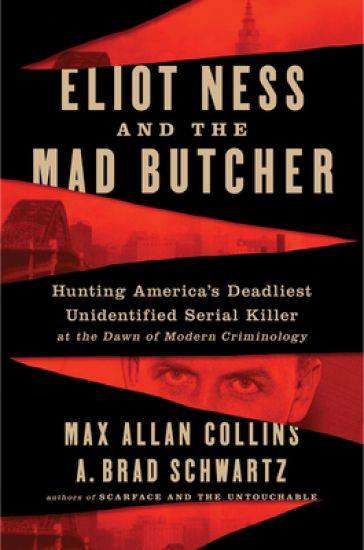
Eliot Ness and the Mad Butcher
Max Allan Collins; A. Brad Schwartz
William Morrow Paperbacks
2021
nidottu
"The thrilling history of the torso murderer. The tale of the ‘Untouchable’ who got Al Capone but failed to solve his goriest case." —Dan Jones, The Sunday TimesIn the spirit of Devil in the White City comes a true detective tale of the highest standard: the haunting story of Eliot Ness's forgotten final case–his years-long hunt for "The Mad Butcher of Kingsbury Run," a serial killer who terrorized Cleveland through the Great Depression. “After helping to put Al Capone behind bars, lawman Eliot Ness came to Cleveland, where he did battle with a vicious killer. ... Even Ness was stumped trying to apprehend the ‘torso murderer’ responsible for a series of ghoulish killings. ... The authors have done Ness justice." —Wall Street JournalIn 1934, the nation’s most legendary crime-fighter–fresh from taking on the greatest gangster in American history–arrived in Cleveland, a corrupt and dangerous town about to host a world's fair. It was to be his coronation, as well as the city's. Instead, terror descended, as headless bodies started turning up. The young detective, already battling the mob and crooked cops, found his drive to transform American policing subverted by a menace largely unknown to law enforcement: a serial murderer.Eliot Ness's greatest case had begun. Now, Max Allan Collins and A. Brad Schwartz–the acclaimed writing team behind Scarface and the Untouchable–uncover this lost crime epic, delivering a gripping and unforgettable nonfiction account based on decades of groundbreaking research.Ness had risen to fame in 1931 for leading the “Untouchables,” which helped put Chicago’s Al Capone behind bars. As Cleveland's public safety director, in charge of the police and fire departments, Ness offered a radical new vision for better law enforcement. Crime-ridden and devastated by the Depression, Cleveland was preparing for a star-turn itself: in 1936, it would host the "Great Lakes Exposition," which would be visited by seven million people. Late in the summer of 1934, however, pieces of a woman’s body began washing up on the Lake Erie shore–first her ribs, then part of her backbone, then the lower half of her torso. The body count soon grew to five, then ten, then more, all dismembered in gruesome ways.As Ness zeroed in on a suspect–a doctor tied to a prominent political family–powerful forces thwarted his quest for justice. In this battle between a flawed hero and a twisted monster–by turns horror story, political drama, and detective thriller–Collins and Schwartz find an American tragedy, classic in structure, epic in scope.
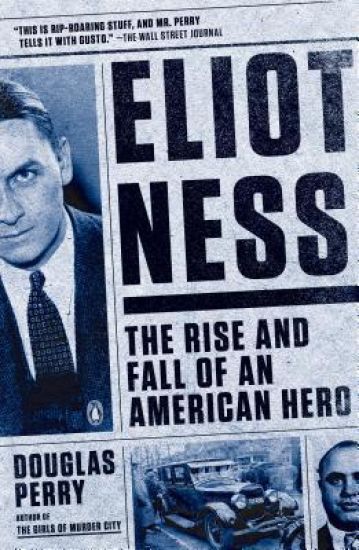
The story of Eliot Ness, the legendary lawman who led the Untouchables, took on Al Capone, and saved a city's soul As leader of an unprecedented crime-busting squad, twenty-eight-year-old Eliot Ness won fame for taking on notorious mobster Al Capone. But the Untouchables' daring raids were only the beginning of Ness's unlikely story. This new biography grapples with the charismatic lawman's complicated, largely forgotten legacy. Perry chronicles Ness's days in Chicago as well as his spectacular second act in Cleveland, where he achieved his greatest success: purging the profoundly corrupt city and forging new practices that changed police work across the country. He also faced one of his greatest challenges: a mysterious serial killer known as the Torso Murderer. Capturing the first complete portrait of the real Eliot Ness, Perry brings to life an unorthodox man who believed in the integrity of law and the power of American justice.

In this new look at Modernism, Sultan illuminates the shared enterprise of T. S. Eliot and James Joyce. The author discusses their seminal works, considering new aspects of the company they kept, and revealing their rich connection with the writers who preceeded them. Sultan combines a literary history of Modernism with objective analysis of three of its key works, Ulysses, The Waste Land, and The Love Song of J. Alfred Prufrock.
Schuchard's critical study draws upon previously unpublished and uncollected materials in showing how T.S. Eliot's personal voice works through the sordid, the bawdy, the blasphemous, and the horrific to create a unique moral world and the only theory of moral criticism in English literature. The book also erodes conventional attitudes toward Eliot's intellectual and spiritual development, showing how early and consistently his classical and religious sensibility manifests itself in his poetry and criticism. The book examines his reading, his teaching, his bawdy poems, and his life-long attraction to music halls and other modes of popular culture to show the complex relation between intellectual biography and art.
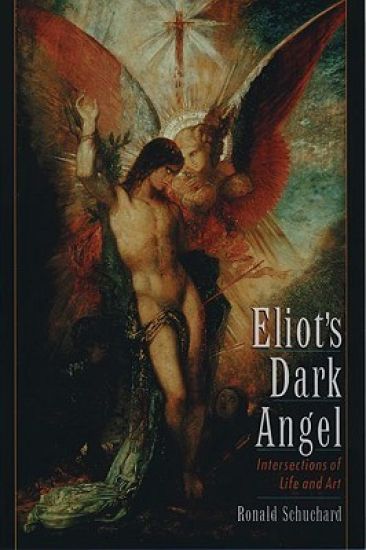
Schuchard's critical study draws upon previously unpublished and uncollected materials in showing how Eliot's personal voice works through the sordid, the bawdy, the blasphemous, and the horrific to create a unique moral world and the only theory of moral criticism in English literature. The book also erodes conventional attitudes toward Eliot's intellectual and spiritual development, showing how early and consistently his classical and religious sensibility manifests itself in his poetry and criticism. The book examines his reading, his teaching, his bawdy poems, and his life-long attraction to music halls and other modes of popular culture to show the complex relation between intellectual biography and art.

The second volume of Robert Crawford's magisterial biography of the revolutionary modernist, visionary poet and troubled man, drawing on extensive new sources.In this compelling and meticulous portrait of the twentieth century's most important poet, Robert Crawford completes the story he began in Young Eliot. Drawing on extensive new sources and letters, this is the first full-scale biography to make use of Eliot's most significant surviving correspondence, including the archive of letters (unsealed for the first time in 2020) detailing his decades-long love affair with Emily Hale. This long-awaited second volume, Eliot After 'The Waste Land', tells the story of the mature Eliot, his years as a world-renowned writer and intellectual, and his troubled interior life. From his time as an exhausted bank employee after the publication of The Waste Land, through the emotional turmoil of the 1920s and 1930s, and his years as a firewatcher in bombed wartime London, Crawford reveals the public and personal experiences that helped generate some of Eliot's masterpieces. He explores the poet's religious conversion, his editorship at Faber and Faber, his separation from Vivien Haigh-Wood and happy second marriage to Valerie Fletcher, and his great work Four Quartets. Robert Crawford presents this complex and remarkable man not as a literary monument but as a human being: as a husband, lover and widower, as a banker, editor, playwright and publisher, but most of all as an epoch-shaping poet struggling to make art among personal disasters.
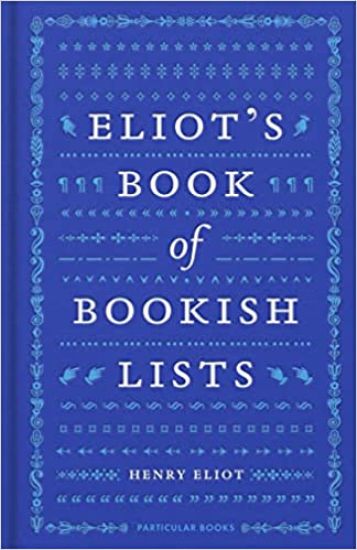
Who had birds called Death, Wigs and Spinach? How do you spell the noise of a door slamming? Whose working title was The Chronic Argonauts?Henry Eliot - author, editor and insatiable bookworm - has ransacked the libraries and archives of world literature, compiling hundreds of bookish lists. This eclectic gallimaufry showcases his favourites: we witness the tragic ends of the Ancient Greek tragedians, learn the name of George Orwell's pet cockerel and rummage through Joan Didion's travelling bag; we consider the history of literary fart jokes, orbit the Shakespearean moons of Uranus and meet several pigs with wings. From the sublime to the ridiculous - and everything in between - Eliot's lists, recommendations and nuggets of trivia will delight, inspire and surprise anyone who loves reading.Beautifully presented with supplementary maps and illustrations, Henry Eliot's Book of Bookish Lists is the essential gift for book-lovers.
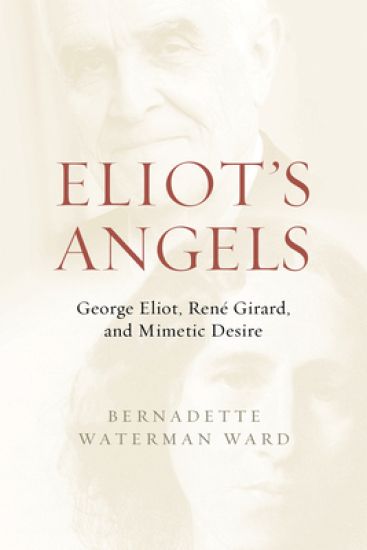
René Girard's mimetic theory opens up ways to make sense of the tension between the progressive politics of George Eliot and the conservative moralism of her narratives. In this innovative study, Bernadette Waterman Ward offers an original rereading of George Eliot's work through the lens of René Girard's theories of mimetic desire, violence, and the sacred. It is a fruitful mapping of a twentieth-century theorist onto a nineteenth-century novelist, revealing Eliot's understanding of imitative desire, rivalry, idol-making, and sacrificial victimization as critical elements of the social mechanism. While the unresolved tensions between Eliot's realism and her desire to believe in gradual social amelioration have often been studied, Ward is especially adept at articulating the details of such conflict in Eliot's early novels. In particular, Ward emphasizes the clash between the ruthless mechanisms of mimetic desire and the idea of progress, or, as Eliot stated, "growing good"; Eliot's Christian sympathy for sacrificial victims against her general rejection of Christianity; and her resort to "Nemesis" to evade the systemic injustice of the social sphere. The "angels" in the title are characters who appear to offer a humanist way forward in the absence of religious belief. They are represented, in Girardian terms, as figures who try to rise above the snares of the mimetic machine to imitate Christ's self-sacrifice but are finally rendered ineffectual. Very few studies have tackled Eliot's short fiction and narrative poetry. Eliot's Angels gives the short fiction its due, and it will appeal to scholars of mimetic and literary theory, Victorianists, and students of the novel.
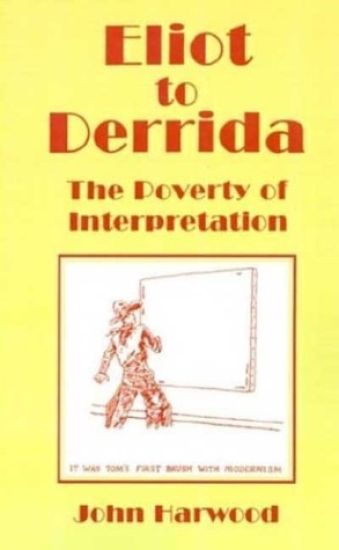
'...a book which should be read by all students contemplating enrolment for a university course in modern English or European literary studies.' - Roy Harris, Times Higher Education Supplement Eliot to Derrida is a sardonic portrait of the cult of the specialist interpreter, from I.A. Richards and the Cambridge School to Jacques Derrida and his disciples. This lucid, iconoclastic study shows how, and why, so much of the academic response to a rich variety of literary experiment has been straitjacketed by the vast industries which have grown up around `modernism' and `postmodernism'. For anyone disenchanted with the extravagant claims - and leaden prose - of literary theorists, this will be an exhilarating book.
Part of a series of literature guides designed for GCSE and A Level coursework requirements, this book contains details on T.S. Eliot, background to "Murder in the Cathedral", summaries of the text, critical commentaries, analysis of characterization, and sample questions with guideline answers.
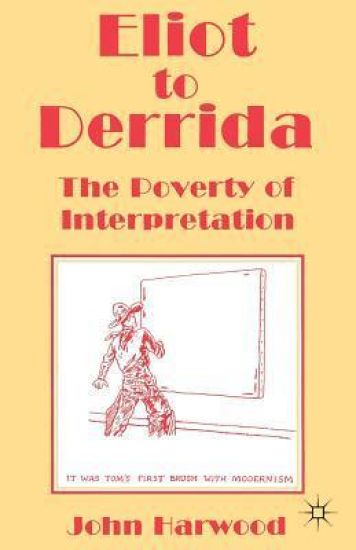
'...a book which should be read by all students contemplating enrolment for a university course in modern English or European literary studies.' - Roy Harris, Times Higher Education Supplement Eliot to Derrida is a sardonic portrait of the cult of the specialist interpreter, from I.A. Richards and the Cambridge School to Jacques Derrida and his disciples. This lucid, iconoclastic study shows how, and why, so much of the academic response to a rich variety of literary experiment has been straitjacketed by the vast industries which have grown up around `modernism' and `postmodernism'. For anyone disenchanted with the extravagant claims - and leaden prose - of literary theorists, this will be an exhilarating book.

T. S. Elliot (1888-1965) was the dominant force in twentieth-century British and American poetry. With poems such as "The Love Song of J. Alfred Prufrock," he introduced an edgy, disenchanted, utterly contemporary version of French Symbolism to the English-speaking world. With his masterpiece "The Waste Land," he almost single-handedly ushered an entire poetic culture into the modern world. And with his enormously influential essays he set the canonical standards to which writers and critics of poetry have adhered throughout our era.
A comprehensive introduction to Middlemarch, offering both general information and an original interpretation. It pays considerable attention to the intellectual and social context surrounding Middlemarch, and situates the work within nineteenth-century traditions of the novel in England and Europe. Karen Chase gives particular emphasis to the Woman Question in Middlemarch.
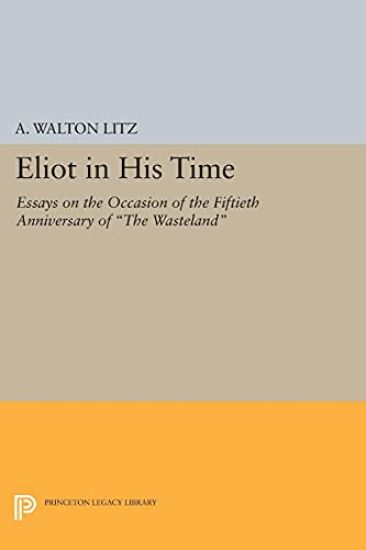
The essays in this new collection, all by outstanding experts in the field of modern literature, provide a different and more complex sense of Eliot's place in literary history. The eight essays are: "The Waste Land Fifty Years After," by A. Walton Litz; "The Urban Apocalypse," by Hugh Kenner; "The First Waste Land:' by Richard Ellmann;" The Waste Land: Paris 1922," by Helen Gardner; "New Modes of Characterization in The Waste Land," by Robert Langbaum; "Precipitating Eliot," by Robert M. Adams; "Fear in the Way: The Design of Eliot's Drama," by Michael Goldman; and "Anglican Eliot," by Donald Davie. Originally published in 1973. The Princeton Legacy Library uses the latest print-on-demand technology to again make available previously out-of-print books from the distinguished backlist of Princeton University Press. These editions preserve the original texts of these important books while presenting them in durable paperback and hardcover editions. The goal of the Princeton Legacy Library is to vastly increase access to the rich scholarly heritage found in the thousands of books published by Princeton University Press since its founding in 1905.