Kirjojen hintavertailu. Mukana 11 417 157 kirjaa ja 12 kauppaa.

Kirjahaku

Etsi kirjoja tekijän nimen, kirjan nimen tai ISBN:n perusteella.

1000 tulosta hakusanalla Elisabeth S Efrem

Polymers

Polymers

Elisabeth S Efrem

Nova Biomedical
2002
sidottu
The word polymer comes from the Greek 'polumeres', which means 'having many parts'. Polymers are large molecules consisting of repeated chemical units ('mers') joined together, usually in a line, like beads on a string. Each 'mer' is typically made up of more than five and less than five hundred atoms; the word 'polymer' is applied when you have more than about 50 'mers' stuck together. Polymer research and development continues to move on at breakneck speed throughout the world. This book presents a guide primarily to the book literature over the last ten years and is fully indexed by author, title and subject.
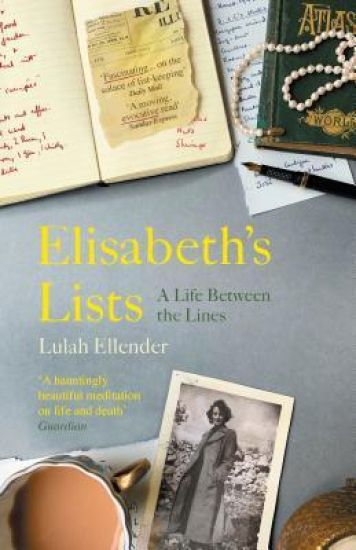
Elisabeth’s Lists

Elisabeth’s Lists

Lulah Ellender

Granta Books
2019
nidottu
'Go to your "books to read" list and place Elisabeth's Lists right at the top' Damian Barr The vivacious and moving true story of a lost era and a lost grandmother, pieced together from an inherited book of handwritten lists Many years after the death of her grandmother, Lulah Ellender inherited a curious object - a book of handwritten lists. On the face of it, Elisabeth's lists seemed rather ordinary - shopping lists, items to be packed for a foreign trip, a tally of the eggs laid by her hens. But from these everyday fragments, Lulah began to weave together the extraordinary life of the grandmother she never knew - a life lived in the most rarefied and glamorous of circles, from Elisabeth's early years as an ambassador's daughter in 1930s China, to her marriage to a British diplomat and postings in Madrid under Franco's regime, post-war Beirut, Rio de Janeiro and Paris. But it was also a life of stark contrasts - between the opulent excess of embassy banquets and the deprivations of wartime rationing in England, between the unfailing charm she displayed in public and the dark depressions that blanketed her in private, between her great appetite for life and her sudden, early death. As Lulah learns that she is losing her own mother, she finds herself turning to her grandmother's life, and to her much-travelled book of lists, in search of meaning and solace. Elisabeth's Lists is both a vivid memoir and a moving study of the familial threads that binds us, even beyond death. 'This is a hauntingly beautiful meditation on life and death' Guardian
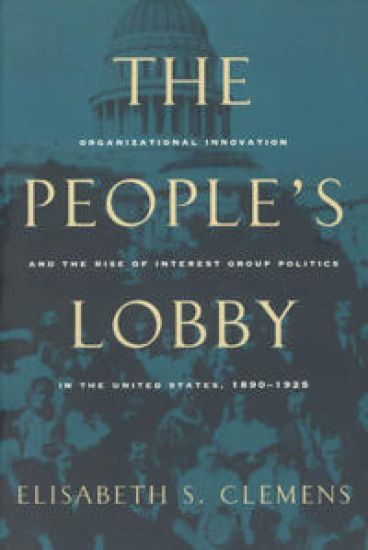
The People's Lobby

The People's Lobby

Elisabeth S. Clemens

University of Chicago Press
1997
sidottu
This study examines the social origins of interest group politics in the USA. Between 1890 and 1925, a system centred on elections and party organizations was partially transformed by increasingly prominent legislative and administrative policy-making, and by the insistent participation of nonpartisan organizations, including farmers, workers and women, who invented strategies to circumvent the parties. Voters learned how to monitor legislative processes, to hold their representives accountable at the polls, and to institutionalize their ongoing participation in shaping policy. The text analyzes organizational politics in three American states, California, Washington and Wisconsin, seeking to demonstrate how the political opportunity structure of federalism allowed regional innovations to exert leverage on national political institutions.
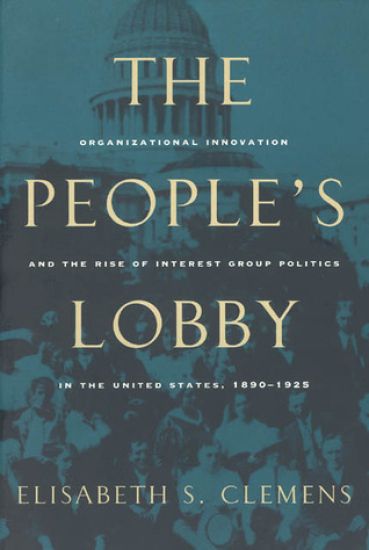
The People's Lobby

The People's Lobby

Elisabeth S. Clemens

University of Chicago Press
1997
nidottu
This study examines the social origins of interest group politics in the USA. Between 1890 and 1925, a system centred on elections and party organizations was partially transformed by increasingly prominent legislative and administrative policy-making, and by the insistent participation of nonpartisan organizations, including farmers, workers and women, who invented strategies to circumvent the parties. Voters learned how to monitor legislative processes, to hold their representives accountable at the polls, and to institutionalize their ongoing participation in shaping policy. The text analyzes organizational politics in three American states, California, Washington and Wisconsin, seeking to demonstrate how the political opportunity structure of federalism allowed regional innovations to exert leverage on national political institutions.
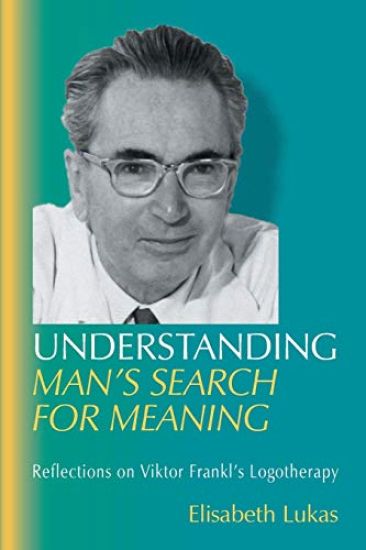
Understanding Man's Search for Meaning

Understanding Man's Search for Meaning

Elisabeth S Lukas

Purpose Research
2019
pokkari
In Man's Search for Meaning, Viktor Frankl told the story of his experience in the Nazi concentration camps, and outlined the basis for finding meaning in life, which he called logotherapy. Elisabeth Lukas is one of Frankl's foremost students, and has written numerous books and given lectures and training courses around the world.This book contains a distillation of the writings of Elisabeth Lukas, based on decades of reflection on, and application of, the core ideas embodied in the logotherapy of Viktor Frankl. Available for the first time in English, this collection of articles and keynote addresses gives further insights into topics including: The role of meaning in finding health Moving beyond self-actualization toward self-transcendence How our view of past, present, and future can be healing: "no tic temporality" The importance of "key words" in preventing the imposition of values How relapses can be reduced using the concepts of logotherapy Unique characteristics of logotherapy that distinguish it from other approaches From the book: Logotherapy is often nothing but the correction of a "how" in a patient's viewpoint. The future will give 50 lashes or 50 gold pieces. It will reward or punish for the views and attitudes chosen--attitudes to the same situations For the attitude: "Why should I take care of my children? No one took care of me " it will strike such an individual 20 years later when the great distance to his or her children causes great pain. For the attitude: "I suffered as a child, so I want to spare my children that lot " it will place something precious into that person's hands 20 years later, when the children give their warm greetings and affection. (p. 35)
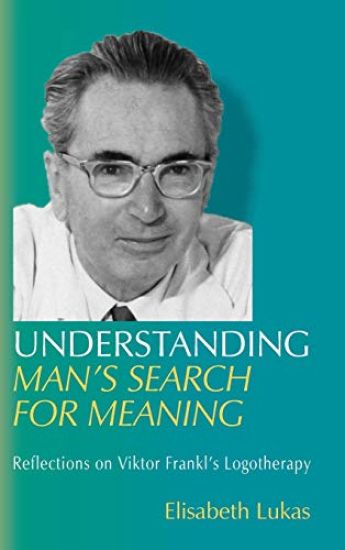
Understanding Man's Search for Meaning

Understanding Man's Search for Meaning

Elisabeth S Lukas

Purpose Research
2019
sidottu
In Man's Search for Meaning, Viktor Frankl told the story of his experience in the Nazi concentration camps, and outlined the basis for finding meaning in life, which he called logotherapy. Elisabeth Lukas is one of Frankl's foremost students, and has written numerous books and given lectures and training courses around the world.This book contains a distillation of the writings of Elisabeth Lukas, based on decades of reflection on, and application of, the core ideas embodied in the logotherapy of Viktor Frankl. Available for the first time in English, this collection of articles and keynote addresses gives further insights into topics including: The role of meaning in finding health Moving beyond self-actualization toward self-transcendence How our view of past, present, and future can be healing: "no tic temporality" The importance of "key words" in preventing the imposition of values How relapses can be reduced using the concepts of logotherapy Unique characteristics of logotherapy that distinguish it from other approaches From the book: Logotherapy is often nothing but the correction of a "how" in a patient's viewpoint. The future will give 50 lashes or 50 gold pieces. It will reward or punish for the views and attitudes chosen--attitudes to the same situations For the attitude: "Why should I take care of my children? No one took care of me " it will strike such an individual 20 years later when the great distance to his or her children causes great pain. For the attitude: "I suffered as a child, so I want to spare my children that lot " it will place something precious into that person's hands 20 years later, when the children give their warm greetings and affection. (p. 35)
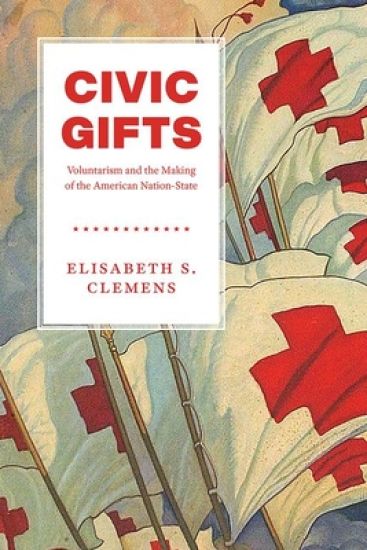
Civic Gifts

Civic Gifts

Elisabeth S. Clemens

University of Chicago Press
2020
sidottu
In Civic Gifts, Elisabeth S. Clemens takes a singular approach to probing the puzzle that is the United States. How, she asks, did a powerful state develop within an anti-statist political culture? How did a sense of shared nationhood develop despite the linguistic, religious, and ethnic differences among settlers and, eventually, citizens? Clemens reveals that an important piece of the answer to these questions can be found in the unexpected political uses of benevolence and philanthropy, practices of gift-giving and reciprocity that coexisted uneasily with the self-sufficient independence expected of liberal citizens Civic Gifts focuses on the power of gifts not only to mobilize communities throughout US history, but also to create new forms of solidarity among strangers. Clemens makes clear how, from the early Republic through the Second World War, reciprocity was an important tool for eliciting both the commitments and the capacities needed to face natural disasters, economic crises, and unprecedented national challenges. Encompassing a range of endeavors from the mobilized voluntarism of the Civil War, through Community Chests and the Red Cross to the FDR-driven rise of the March of Dimes, Clemens shows how voluntary efforts were repeatedly articulated with government projects. The legacy of these efforts is a state co-constituted with, as much as constrained by, civil society.
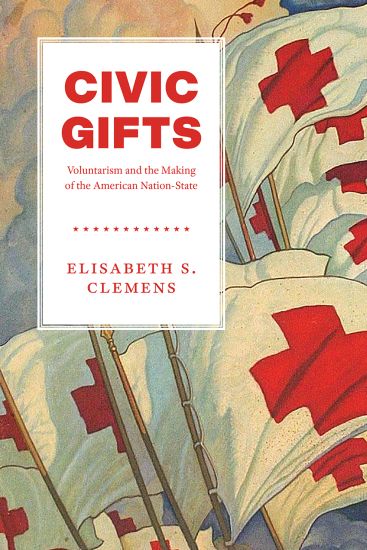
Civic Gifts

Civic Gifts

Elisabeth S. Clemens

University of Chicago Press
2020
nidottu
In Civic Gifts, Elisabeth S. Clemens takes a singular approach to probing the puzzle that is the United States. How, she asks, did a powerful state develop within an anti-statist political culture? How did a sense of shared nationhood develop despite the linguistic, religious, and ethnic differences among settlers and, eventually, citizens? Clemens reveals that an important piece of the answer to these questions can be found in the unexpected political uses of benevolence and philanthropy, practices of gift-giving and reciprocity that coexisted uneasily with the self-sufficient independence expected of liberal citizens Civic Gifts focuses on the power of gifts not only to mobilize communities throughout US history, but also to create new forms of solidarity among strangers. Clemens makes clear how, from the early Republic through the Second World War, reciprocity was an important tool for eliciting both the commitments and the capacities needed to face natural disasters, economic crises, and unprecedented national challenges. Encompassing a range of endeavors from the mobilized voluntarism of the Civil War, through Community Chests and the Red Cross to the FDR-driven rise of the March of Dimes, Clemens shows how voluntary efforts were repeatedly articulated with government projects. The legacy of these efforts is a state co-constituted with, as much as constrained by, civil society.