Kirjojen hintavertailu. Mukana 11 244 527 kirjaa ja 12 kauppaa.

Kirjahaku

Etsi kirjoja tekijän nimen, kirjan nimen tai ISBN:n perusteella.

1000 tulosta hakusanalla Elisabeth Stanley

Stanley Cavell zur Einführung

Stanley Cavell zur Einführung

Elisabeth Bronfen

JUNIUS VERLAG GMBH
2009
nidottu
Stanley Cavell (*1926) ist ein Grenzgänger zwischen Philosophie, Kulturwissenschaft und Literatur. Seit seiner ersten Aufsatzsammlung MustWe Mean WhatWe Say hat er den Skeptizismus gegen alle Widerlegungsversuche durch die angloamerikanische analytische Philosophie entschieden verteidigt. Der andere Teil seines Werks besteht in einer engagierten philosophischen Diskussion der Dramen Shakespeares und der Schriften der amerikanischen Transzendentalisten, vor allem aber des Hollywood-Kinos. Cavells Grenzgänge zwischen Descartes, Freud, Heidegger, Kant, Rawls,Wittgenstein und den Filmkomödien sowie den Melodramen der 1930er und 1940er Jahre, Shakespeares Wintermärchen oder Thoreaus Walden zeichnen nicht nur einen persönlichen Atlas philosophischer Bildformeln, sondern bringen diese in immer neue Konstellationen.
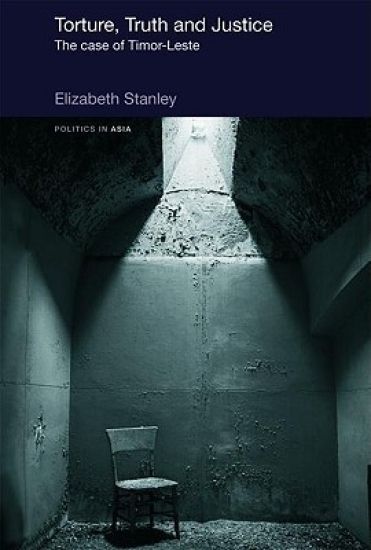
Torture, Truth and Justice

Torture, Truth and Justice

Elizabeth Stanley

Routledge
2008
sidottu
This book highlights how, and why, torture is such a compelling tool for states and other powerful actors. While torture has a short-term use value for perpetrators, it also creates a devastating legacy for victims, their families and communities. In exposing such repercussions, this book addresses the questions ‘What might torture victims need to move forward from their violation?’ and ‘How can official responses provide truth or justice for torture victims?’ Building on observations, documentary analysis and over seventy interviews with both torture victims and transitional justice workers this book explores how torture was used, suffered and resisted in Timor-Leste. The author investigates the extent to which transitional justice institutions have provided justice for torture victims; illustrating how truth commissions and international courts operate together and reflecting on their successes and weaknesses with reference to wider social, political and economic conditions. Stanley also details victims’ experiences of torture and highlights how they experience life in the newly built state of Timor-LesteTracking the past, present and future of human rights, truth and justice for victims in Timor-Leste, Torture, Truth and Justice will be of interest to students, professionals and scholars of Asian studies, International Studies, Human Rights and Social Policy.
Torture, Truth and Justice

Torture, Truth and Justice

Elizabeth Stanley

Routledge
2011
nidottu
This book highlights how, and why, torture is such a compelling tool for states and other powerful actors. While torture has a short-term use value for perpetrators, it also creates a devastating legacy for victims, their families and communities. In exposing such repercussions, this book addresses the questions ‘What might torture victims need to move forward from their violation?’ and ‘How can official responses provide truth or justice for torture victims?’ Building on observations, documentary analysis and over seventy interviews with both torture victims and transitional justice workers this book explores how torture was used, suffered and resisted in Timor-Leste. The author investigates the extent to which transitional justice institutions have provided justice for torture victims; illustrating how truth commissions and international courts operate together and reflecting on their successes and weaknesses with reference to wider social, political and economic conditions. Stanley also details victims’ experiences of torture and highlights how they experience life in the newly built state of Timor-LesteTracking the past, present and future of human rights, truth and justice for victims in Timor-Leste, Torture, Truth and Justice will be of interest to students, professionals and scholars of Asian studies, International Studies, Human Rights and Social Policy.
The Auto/Biographical

The Auto/Biographical

Elizabeth Stanley

Manchester University Press
1995
nidottu
This feminist literary study discusses postmodern ideas about the self, particularly about the way in which selves are constructed by biography and autobiography. The author particularly examines the manner in which women write about themselves.
Mourning Becomes...

Mourning Becomes...

Elizabeth Stanley

Manchester University Press
2006
sidottu
This fascinating work challenges many of the accepted facts about the concentration camps run by the British during the South African War. The author demonstrates that much of what we have traditionally understood about these camps originates the testimony which was solicited, selected and published by key women activists within Boer proto-nationalist circles. Using detailed archival evidence, she shows that much of the history of the camps results from a deliberate imposition of ‘post/memory’ - a process by which what was ‘remembered’ was shaped and reshaped to support the development of a racialised nationalist framework. Many of the camps’ occupants died from successive epidemics of measles, typhoid, enteritis and pneumonia rather than deliberate ill-treatment, yet the book shows how mourning for those who died was overridden by state commemorative activities concerned with promoting pan-Boer nationalist aspirations. The innovative and groundbreaking approach of the author invites the reader to step into and explore with her the commemorative sites passed by nationalist land acts, which still powerfully mark the South African landscape.
Tolerating State Violence

Tolerating State Violence

Elizabeth Stanley

TAYLOR FRANCIS LTD
2025
nidottu
Why do we tolerate state violence, despite it being disagreeable, painful and often harmful for our societies? Drawing on three liberal democratic countries – Aotearoa New Zealand, Australia and the United Kingdom – this book exposes how states perpetuate tolerance for their violence through representations, the management of experiences and testimonies, bureaucratic and technological architectures, and ritualistic reforms.Using contemporary case examples - including in relation to borders, welfare, surveillance, incarceration, slavery and climate crimes - the book provides an analysis of how state institutions organize and facilitate politics, laws, bureaucracies, economies, technologies and social experiences such that violence is normalized. It spells out how state harms can be known and made tolerable, with the resulting pain and trauma becoming part of everyday governance, social relations, institutional policies and personal experiences.In exploring the many state structures, strategies and techniques that facilitate and sustain violence, this book also maps out what we must challenge, and where our resistance efforts and demands for transformation must be directed. In short, the book questions: how do state institutions create the conditions for the tolerance of state violence and harms? And, from this knowledge, how might we make the violence and harms intolerable?Tolerating State Violence is indispensable reading for students and scholars of criminology and criminal justice, sociology, and political science. The book will also appeal to policymakers, legal professionals, and social justice advocates concerned with institutional reform and addressing systemic violence.
Tolerating State Violence

Tolerating State Violence

Elizabeth Stanley

TAYLOR FRANCIS LTD
2025
sidottu
Why do we tolerate state violence, despite it being disagreeable, painful and often harmful for our societies? Drawing on three liberal democratic countries – Aotearoa New Zealand, Australia and the United Kingdom – this book exposes how states perpetuate tolerance for their violence through representations, the management of experiences and testimonies, bureaucratic and technological architectures, and ritualistic reforms.Using contemporary case examples - including in relation to borders, welfare, surveillance, incarceration, slavery and climate crimes - the book provides an analysis of how state institutions organize and facilitate politics, laws, bureaucracies, economies, technologies and social experiences such that violence is normalized. It spells out how state harms can be known and made tolerable, with the resulting pain and trauma becoming part of everyday governance, social relations, institutional policies and personal experiences.In exploring the many state structures, strategies and techniques that facilitate and sustain violence, this book also maps out what we must challenge, and where our resistance efforts and demands for transformation must be directed. In short, the book questions: how do state institutions create the conditions for the tolerance of state violence and harms? And, from this knowledge, how might we make the violence and harms intolerable?Tolerating State Violence is indispensable reading for students and scholars of criminology and criminal justice, sociology, and political science. The book will also appeal to policymakers, legal professionals, and social justice advocates concerned with institutional reform and addressing systemic violence.

Widen the Window

Widen the Window

Elizabeth Stanley; Bessel van der Kolk

Yellow Kite
2021
pokkari
A pioneering researcher gives us a new understanding of stress and trauma, as well as the tools to heal and thrive.This groundbreaking book examines the cultural norms that impede resilience in America, especially our collective tendency to disconnect stress from its potentially extreme consequences and override our need to recover. It explains the science of how to direct our attention to perform under stress and recover from trauma, exploring how our survival brain and thinking brain react to traumatic situations differently.By directing our attention in particular ways, we can widen the window within which our thinking brain and survival brain work together cooperatively. When we use awareness to regulate our biology this way, we can access our best, uniquely human qualities: our compassion, courage, curiosity, creativity, and connection with others. By building our resilience, we can train ourselves to make wise decisions and access choice - even during times of incredible stress, uncertainty and change.With stories from men and women Dr Stanley has trained in settings as varied as military bases, healthcare facilities, as well as her own striking experiences with stress and trauma, she gives readers hands-on strategies they can use themselves, whether they want to perform under pressure or heal from traumatic experience, while at the same time pointing our understanding in a new direction.Foreword by Bessel Van Der Kolk, bestselling author of The Body Keeps the Score.'Widen the Window is a comprehensive overview of stress and trauma, responses to it, and tools for healing and thriving. It's not only for those in high-intensity work, but for everyone.' - Mindful Magazine
Road to Hell

Road to Hell

Stanley Elizabeth

Auckland University Press
2016
nidottu
From the 1950s to the 1980s, the New Zealand government took more than 100,000 children from experiences of strife, neglect, poverty or family violence and placed them under state care in residential facilities. In homes like Epuni and Kingslea, Kohitere and Allendale, the state took over as parent. The state failed. Within institutions, children faced abysmal conditions, limited education and social isolation. They endured physical, sexual and psychological violence, as well as secure cells, knock-out sedatives and electro-convulsive therapy. This book tells the story of 105 New Zealanders who experienced this mass institutionalisation. Informed by thousands of pages of Child Welfare accounts, letters, health reports, legal statements as well as interviews, Stanley tells the children's story: growing up in homes characterised by violence and neglect; removal into the State's 'care' network; daily life in the institutions; violence and punishment; and the legacy of this treatment for victims today. This book contains personal, first-hand accounts, allowing its subjects to speak for themselves.