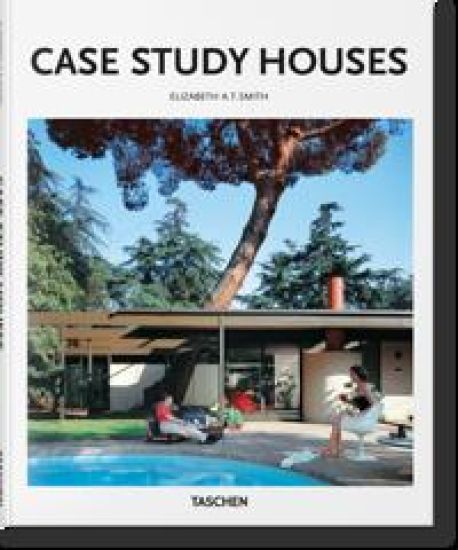
The Case Study House program (1945–66) was an exceptional, innovative event in the history of American architecture and remains to this day unique. The program, which concentrated on the Los Angeles area and oversaw the design of 36 prototype homes, sought to make available plans for modern residences that could be easily and cheaply constructed during the postwar building boom. The program’s chief motivating force was Arts & Architecture editor John Entenza, a champion of modernism who had all the right connections to attract some of architecture’s greatest talents, such as Richard Neutra, Charles and Ray Eames, and Eero Saarinen. Highly experimental, the program generated houses that were designed to redefine the modern home, and thus had a pronounced influence on architecture—American and international—both during the program’s existence and even to this day. TASCHEN brings you a monumental retrospective of the entire program with comprehensive documentation, brilliant photographs from the period and, for the houses still in existence, contemporary photos, as well as extensive floor plans and sketches.
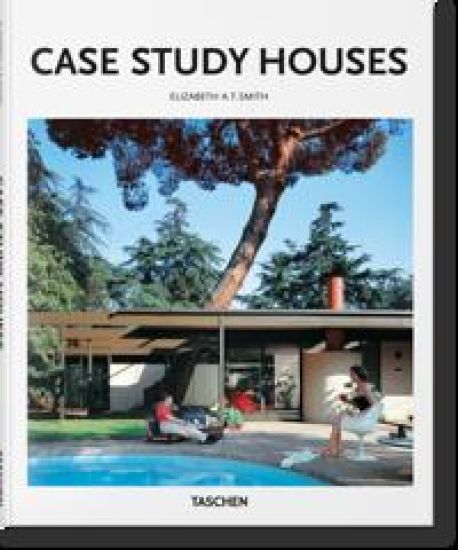
With 36 prototype designs, the Case Study House program created paradigms for modern living that would extend their influence far beyond their Los Angeles heartland. This essential introduction features 150 photographs and plans to explore each of these model residences and their architects, including Richard Neutra, Charles and Ray Eames, and Eero Saarinen.
The Case Study House program (1945–1966) was a unique event in the history of American architecture. Sponsored by Arts & Architecture magazine, the program sought to respond to the postwar building boom with prototype modern homes that could be both easily replicated and readily affordable to the average American. Concentrated on the Los Angeles area, the Case Study Houses included 36 model homes commissioned from such major architects of the day as Richard Neutra, Raphael Soriano, Craig Ellwood, Charles and Ray Eames, Pierre Koenig, Eero Saarinen, A. Quincy Jones, and Ralph Rapson. Their criteria included “using, as far as is practicable, many war-born techniques and materials best suited to the expression of man’s life in the modern world.” The results of the program would redefine the modern home and extend influence not only across the United States but around the world. This compact guide includes all of the Case Study Houses with over 150 photos and plans, as well as a map showing locations of all sites, including those that no longer exist.
The Case Study House program (1945–1966) was an exceptional, innovative event in the history of American architecture and remains to this day unique. The program, which concentrated on the Los Angeles area and oversaw the design of 36 prototype homes, sought to make available plans for modern residences that could be easily and cheaply constructed during the postwar building boom. The program’s chief motivating force was Arts & Architecture editor John Entenza, a champion of modernism who had all the right connections to attract some of architecture’s greatest talents, such as Richard Neutra, Charles and Ray Eames, and Eero Saarinen. Highly experimental, the program generated houses that were designed to redefine the modern home, and had a pronounced influence on architecture—American and international—both during the program’s existence and even to this day. TASCHEN brings you a retrospective of the entire program with comprehensive documentation, brilliant photographs from the period and, for the houses still in existence, contemporary photos, as well as extensive floor plans and sketches.
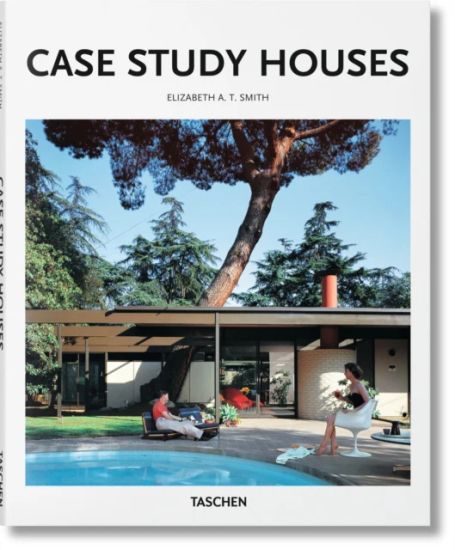
When you are sure you can't do something...are you really sure?Elizabeth Engkjer could well be your neighbor, the lady sitting in the church pew three rows ahead of you, or the psychiatric nurse you hesitantly consulted about a family member. So how in the world did she become the administrator of Buen Samaritano Clinic in impoverished Flor n, Ecuador? During twenty-five years of multiple challenges, Elizabeth unveils the motivational force that built a clinic from the ground up, brought professionals from a variety of venues...and yes, an impoverished community that surrounded her with love, tears, and laughter in the midst of severe flooding, no water, disease, and death...as her thoughts often screamed, I can't do this So who did?
Two young women, dormitory mates, embark on their education at a big state university. Five years later, one is earning a good salary at a prestigious accounting firm. With no loans to repay, she lives in a fashionable apartment with her fiancé. The other woman, saddled with burdensome debt and a low GPA, is still struggling to finish her degree in tourism. In an era of skyrocketing tuition and mounting concern over whether college is "worth it," Paying for the Party is an indispensable contribution to the dialogue assessing the state of American higher education. A powerful exposé of unmet obligations and misplaced priorities, it explains in vivid detail why so many leave college with so little to show for it.Drawing on findings from a five-year interview study, Elizabeth Armstrong and Laura Hamilton bring us to the campus of "MU," a flagship Midwestern public university, where we follow a group of women drawn into a culture of status seeking and sororities. Mapping different pathways available to MU students, the authors demonstrate that the most well-resourced and seductive route is a "party pathway" anchored in the Greek system and facilitated by the administration. This pathway exerts influence over the academic and social experiences of all students, and while it benefits the affluent and well-connected, Armstrong and Hamilton make clear how it seriously disadvantages the majority.Eye-opening and provocative, Paying for the Party reveals how outcomes can differ so dramatically for those whom universities enroll.
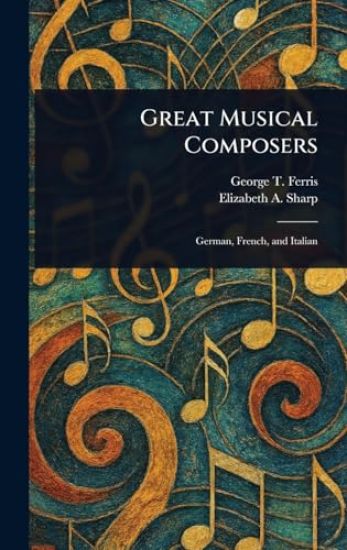
This book "" Great Musical Composers: German, French, and Italian "", has been considered important throughout the human history, and so that this work is never forgotten we have made efforts in its preservation by republishing this book in a modern format for present and future generations. This whole book has been reformatted, retyped and designed. These books are not made of scanned copies and hence the text is clear and readable.
Dieses klassische Buch wurde urspr nglich vor Jahrzehnten ver ffentlicht als "" Great Musical Composers German, French, and Italian "". Es wurde jetzt von Writat f r seine deutschsprachigen Leser ins Deutsche bersetzt. Bei Writat liegt uns die Bewahrung des literarischen Erbes der Vergangenheit sehr am Herzen. Wir haben dieses Buch ins Deutsche bersetzt, damit es heutige und zuk nftige Generationen lesen und bewahren k nnen.
Ce livre classique a t initialement publi il y a des d cennies sous le titre "" Great Musical Composers German, French, and Italian "". Il a maintenant t traduit par Writat en langue fran aise pour leurs lecteurs francophones. Chez Writat, nous sommes passionn s par la pr servation du patrimoine litt raire du pass . Nous avons traduit ce livre en fran ais afin que les g n rations pr sentes et futures puissent le lire et le conserver.
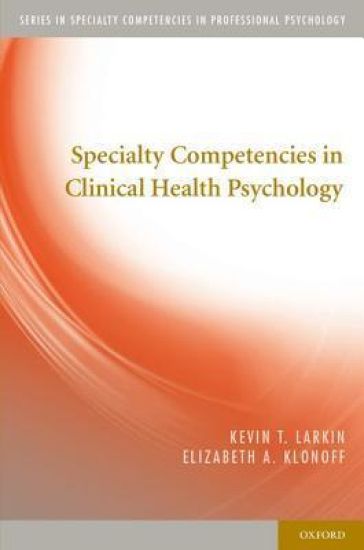
As professional psychology has transformed into the practice of psychology as a health profession, a substantial focus has been placed on defining the competencies required for practicing as health service providers. Not all health service providers, however, acquire the essential competencies needed for functioning in medical hospitals and health science center settings, the province of clinical health psychology. It is important to distinguish competencies for practicing as health service providers from competencies for the specialty practice of clinical health psychology. In Specialty Competencies in Clinical Health Psychology, Larkin and Klonoff provide a comprehensive overview of recent efforts to define specialty competencies for the practice of clinical health psychology. They have been at the table for every national conversation focusing on this topic and share this knowledge with those who desire to become clinical health psychologists and those who train and supervise them. Series in Specialty Competencies in Professional Psychology Series Editors Arthur M. Nezu and Christine Maguth Nezu As the field of psychology continues to grow and new specialty areas emerge and achieve recognition, it has become increasingly important to define the standards of professional specialty practice. Developed and conceived in response to this need for practical guidelines, this series presents methods, strategies, and techniques for conducting day-to-day practice in any given psychology specialty. The topical volumes address best practices across the functional and foundational competencies that characterize the various psychology specialties, including clinical psychology, cognitive and behavioral psychology, school psychology, geropsychology, forensic psychology, clinical neuropsychology, couples and family psychology, and more. Functional competencies include common practice activities like assessment and intervention, while foundational competencies represent core knowledge areas such as ethical and legal issues, cultural diversity, and professional identification. In addition to describing these competencies, each volume provides a definition, description, and development timeline of a particular specialty, including its essential and characteristic pattern of activities, as well as its distinctive and unique features. Written by recognized experts in their respective fields, volumes are comprehensive, up-to-date, and accessible. These volumes offer invaluable guidance to not only practicing mental health professionals, but those training for specialty practice as well.
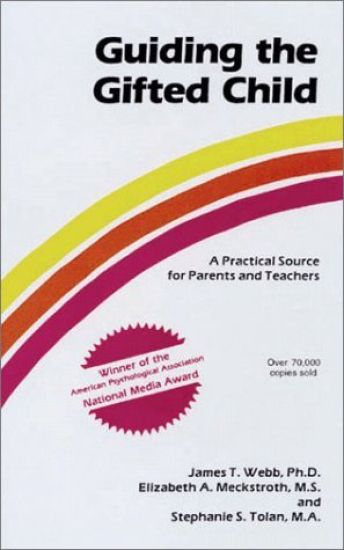
This book has become a classic in the fields of gifted education and gifted psychology. For years, parents have referred to it as "the Dr. Spock book for parents of gifted children." Gifted children have unique social and emotional concerns, and this book provides the guidance that parents need to support them. Each chapter features problems or issues common to gifted children and their families. Topics include communication, discipline, friends, sibling rivalry, and educational needs.
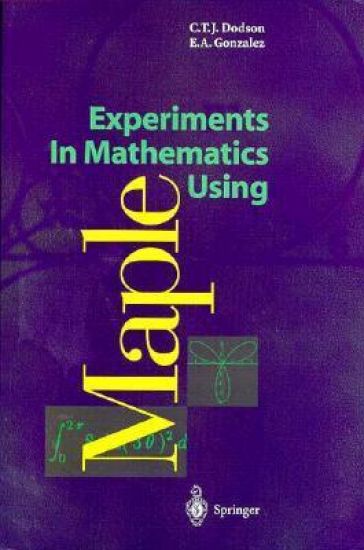
We believe that to understand and be comfortable with mathematical con cepts and methods, it is necessary to do mathematics and, traditionally, doing meant with a pencil and paper. Now, a modest home computer can provide a platform for a computer algebra package like Maple, which can perform all of the operations encountered in secondary school mathematics and beyond, and pro vide graphical representations of functions, including animations. The capability of rendering accurate graphics for mathematical functions greatly enhances the learning experience, and helps intuition work in new situations, before beginning to do the algebra and calculus needed to solve a problem. For example, if you can see that a function has a clear minimum from its graph, then you are more likely to be able to identify its location precisely by analysis. This book is designed to support the interactive Maple worksheets that we have developed for the two senior secondary school years and made available via the Internet at the anonymous ftp site ftp. ut irc. utoronto . ca (/pub/ednet/maths/maple). This takes you from basic algebra, functions and sequences, to calculus and its applications. Thus, the book is a hardcopy version of the worksheets, with additional explanatory text, cross-referencing, appen dices containing worked solutions to all exercises, and indexing.
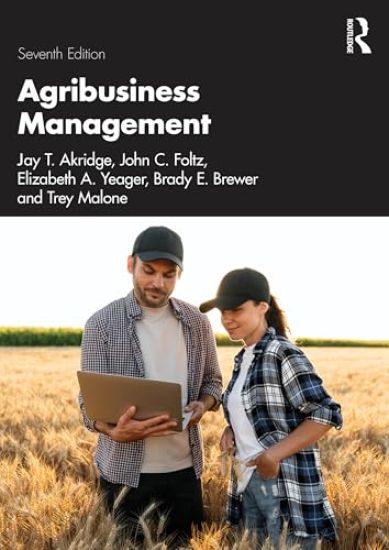
This seventh edition of Agribusiness Management provides students and managers with a fundamental understanding of the key concepts needed to successfully manage food and agribusinesses in a rapidly changing, global, high-tech, consumer-oriented, and uncertain world.This leading text has been restructured and revised for this edition to make it even more relevant and accessible. Offering a contemporary focus that reflects the issues that agribusiness managers face today and are likely to face tomorrow, the book presents conceptual material in a pragmatic way with illustrations and examples that will help the reader understand how a specific concept works in practice. Its decision-making emphasis provides contemporary tools that readers will find useful when making decisions in the current and future business environment. Examples and case studies are used extensively, including new vignettes throughout the text to help students understand how to apply the material in an industry setting. This seventh edition includes a new chapter on strategic management, as well as more emphasis on supply chain management, and new agricultural technology and Artificial Intelligence (AI), and its use by agribusiness firms.The book is supported by a suite of digital learning resources, featuring PowerPoint slides and test bank questions for each chapter. It is an ideal text for all courses on management in the agribusiness industry.