Celibacy is a worldwide practice that is often adopted, rarely discussed. Now, in Elizabeth Abbott's fascinating and wide-ranging history, it is examined in all its various forms: shaping religious lives, conditioning athletes and shamans, surfacing in classical poetry and camp literature, resonating in the voices of castrati, and permeating ancient mythology. Found in every society of the past, practiced by both the anonymous and the legendary (St. Catherine, Joan of Arc, Leonardo da Vinci, Elizabeth I, Gandhi), celibacy has as many stories as adherents, and Abbott weaves them into a provocative, seamless tapestry that brings history alive.
Much like oil today, sugar was once the most powerful commodity on earth. It shaped world affairs, influencing the economic policies of nations, driving international trade and wreaking environmental havoc. The Western world's addiction to sugar came at a terrible human cost: the near extinction of the New World indigenous peoples gave rise to a new form of slavery, as millions of captured Africans were crammed into ships to make the dangerous voyage to Caribbean cane plantations. What began as the extraordinarily expensive luxury of nobles and the very wealthy has become a staple in the modern world. Indeed, it played its own role in creating that world, fuelling the workers of the Industrial Revolution, and giving rise to the craze for fast food. "Sugar: A Bittersweet History" tells the extraordinary, dramatic and thought-provoking story of this most commonplace of products from its very origins to the present day. Elizabeth Abbott examines how and in what quantities we still consume sugar; its role in the crisis of obesity and diabetes; how its cultivation continues to affect the environment; and how coerced labour continues in so many sugar-producing nations.Richly detailed, impeccably researched and thoroughly compelling, "Sugar" is a comprehensive social history of a substance that has revolutionised the way we eat, and poignant testimony to the suffering endured in the name of satisfying the world's sweet tooth.
Sugar was once the most powerful commodity on earth. It shaped world affairs, influenced the economic policies of nations, drove international trade and left a legacy of suffering that still resonates today. But how did a substance that began as an expensive luxury of the wealthy become a staple in the modern world? In Sugar this dark history is unveiled, from the horrors of the transatlantic slave trade to the environmental devastation caused by sugar cultivation. Richly detailed and thoroughly compelling, Elizabeth Abbott traces sugar from its very origins to the twenty-first century, examining the true cost of satisfying the world's sweet tooth.
A child of the Greatest Generation, Elizabeth Abbott Green enjoyed immensely her formative years of the '50s and her early years of marriage in the '60s. Despite the stress brought about by her husband's military career moves, the times were very good for the growing family that joined them. As the Peace Generation of the '60s turned into the generations that followed in the '70s and '80s, however, America became harsher, more fractured, and less forgiving . . . even as, and maybe because, it became more affluent.As America changed, so too did the growing family. With increasing exposure to the drug scene and with more free time, young people were more inclined to look outside the home for role models. Mankind has borne the seeds of destruction within himself since Adam, and our Country, which once stood for peace, freedom and Christian values, has now become like a war zone driven by lies, hatred and resentment. There is no peace Therefore, it's time to look up and prepare to meet the Lord.
A child of the Greatest Generation, Elizabeth Abbott Green enjoyed immensely her formative years of the '50s and her early years of marriage in the '60s. Despite the stress brought about by her husband's military career moves, the times were very good for the growing family that joined them. As the Peace Generation of the '60s turned into the generations that followed in the '70s and '80s, however, America became harsher, more fractured, and less forgiving . . . even as, and maybe because, it became more affluent.As America changed, so too did the growing family. With increasing exposure to the drug scene and with more free time, young people were more inclined to look outside the home for role models. Mankind has borne the seeds of destruction within himself since Adam, and our Country, which once stood for peace, freedom and Christian values, has now become like a war zone driven by lies, hatred and resentment. There is no peace Therefore, it's time to look up and prepare to meet the Lord.
Christopher Houston Carson (December 24, 1809 - May 23, 1868), better known as Kit Carson, was an American frontiersman. He was a mountain man (fur trapper), wilderness guide, Indian agent, and U.S. Army officer. Carson became a frontier legend in his own lifetime via biographies and news articles. Exaggerated versions of his exploits were the subject of dime novels. Carson left home in rural present-day Missouri at age 16 to become a mountain man and trapper in the West. In the 1830s, he accompanied Ewing Young on an expedition to Mexican California and joined fur trapping expeditions into the Rocky Mountains. He lived among and married into the Arapaho and Cheyenne tribes. In the 1840s, he was hired as a guide by John C. Fremont. Fremont's expedition covered much of California, Oregon, and the Great Basin area. Fremont mapped and wrote reports and commentaries on the Oregon Trail to assist and encourage westward-bound American pioneers. Carson achieved national fame through Fremont's accounts of his expeditions. Under Fremont's command, Carson participated in the uprising against Mexican rule in California at the beginning of the Mexican-American War. Later in the war, Carson was a scout and courier, celebrated for his rescue mission after the Battle of San Pasqual and for his coast-to-coast journey from California to Washington, DC to deliver news of the conflict in California to the U.S. government. In the 1850s, he was appointed as the Indian agent to the Ute Indians and the Jicarilla Apaches. During the American Civil War, Carson led a regiment of mostly Hispanic volunteers from New Mexico on the side of the Union at the Battle of Valverde in 1862. When the Confederate threat to New Mexico was eliminated, Carson led forces to suppress the Navajo, Mescalero Apache, and the Kiowa and Comanche Indians. Carson was breveted a Brigadier General and took command of Fort Garland, Colorado. He was there only briefly: poor health forced him to retire from military life. Carson was married three times and had ten children. The Carson home was in Taos, New Mexico. Carson died at Fort Lyon, Colorado, of an aortic aneurysm on May 23, 1868. He is buried in Taos, New Mexico, next to his third wife Josefa Jaramillo.............. Elizabeth Eleanor Greatorex (1854-1917) was an American painter and illustrator.... John Stevens Cabot Abbott (September 19, 1805 - June 17, 1877), an American historian, pastor, and pedagogical writer, was born in Brunswick, Maine to Jacob and Betsey Abbott. Early life: He was a brother of Jacob Abbott, and was associated with him in the management of Abbott's Institute, New York City, and in the preparation of his series of brief historical biographies. Dr. Abbott graduated at Bowdoin College in 1825, prepared for the ministry at Andover Theological Seminary, and between 1830 and 1844, when he retired from the ministry in the Congregational Church, preached successively at Worcester, Roxbury and Nantucket, all in Massachusetts. Literary career: Owing to the success of a little work, The Mother at Home, he devoted himself, from 1844 onwards, to literature. He was a voluminous writer of books on Christian ethics, and of popular histories, which were credited with cultivating a popular interest in history. He is best known as the author of the widely popular History of Napoleon Bonaparte (1855), in which the various elements and episodes in Napoleon's career are described. Abbott takes a very favourable view towards his subject throughout. Also among his principal works are: History of the Civil War in America (1863-1866), and The History of Frederick II, Called Frederick the Great (New York, 1871). He also did a forward to a book called Life of Boone by W.M. Bogart, about Daniel Boone in 1876. In general, except that he did not write juvenile fiction, his work in subject and style closely resembles that of his brother, Jacob Abbott....
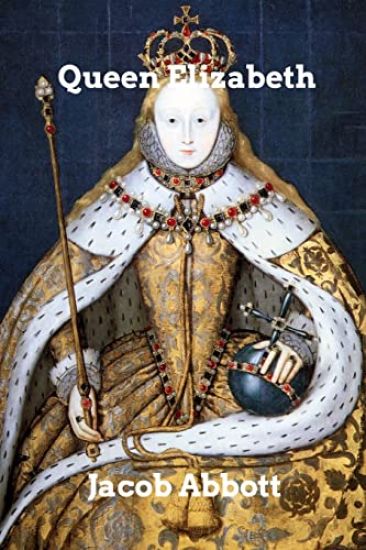
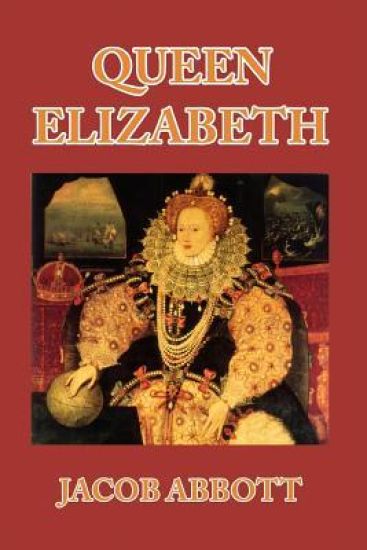
Queen Elizabeth I, daughter of Henry VIII and Anne Boleyn, was England's greatest monarch. This riveting account of her life and her exploits during her mid-sixteenth century reign provide the reader with a comprehensive insight into events which have become engraved in world history. Starting with her family background, master storyteller Jacob Abbott takes the reader on a nonstop narration through her imprisonment, the intrigues which led to her ascension to the throne following the reign of "Bloody Mary," the formal establishment of the English Protestant ("Anglican") church, the threats to her life after the Pope released her subjects from all loyalty to her throne, the war with Scotland, and the momentous defeat of the Spanish Armada. It also discusses her personal life, lovers, suitors, and death in 1603 after forty-four tumultuous years as leader of her nation. During her time, England started on its path to establishing a world empire, and gifted the world such intellectual treasures as William Shakespeare. This edition has been completely reset and illustrated.
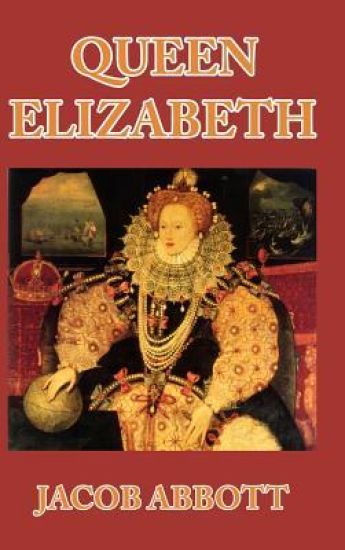
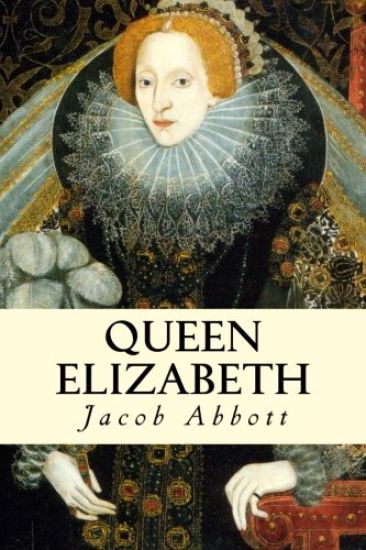
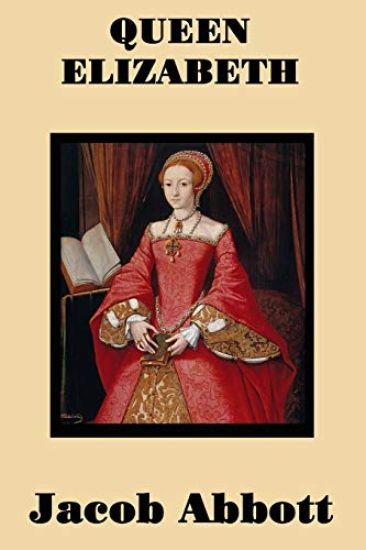
Queen Elizabeth I, daughter of Henry VIII and Anne Boleyn, was England's greatest monarch ever. This riveting account of her life and her nation's exploits under her mid-sixteenth century reign provide the reader with a comprehensive insight into events which have become engraved in world history. Starting with her family background, master story-teller Jacob Abbott takes the reader on a nonstop narration through her imprisonment, the intrigues which led to her ascension to the throne following the reign of "Bloody Mary," the formal establishment of the English Protestant ("Anglican") church, the threats to her life after the Pope released her subjects from all loyalty to her throne, the war with Scotland and the momentous defeat of the Spanish Armada.It also discusses her personal life, her lovers, suitors, and ultimate death in 1603 after forty-four tumultuous years as leader of her nation.During her time, England started on its path to establishing a world empire, and gifted the world such intellectual treasures as William Shakespeare.This brand new edition has been completely reset and contains all new images which richly illustrate this now classic work.
Queen Elizabeth, by Jacob Abbott, is a classic English royalty biography that details the life of Queen Elizabeth the 1st. Elizabeth I (7 September 1533 - 24 March 1603)was Queen of England and Ireland from 17 November 1558 until her death on 24 March 1603. Sometimes called The Virgin Queen, Gloriana or Good Queen Bess, Elizabeth was the last monarch of the House of Tudor. Elizabeth was the daughter of Henry VIII and Anne Boleyn, his second wife, who was executed two-and-a-half years after Elizabeth's birth. Anne's marriage to Henry VIII was annulled, and Elizabeth was declared illegitimate. Her half-brother, Edward VI, ruled until his death in 1553, bequeathing the crown to Lady Jane Grey and ignoring the claims of his two half-sisters, Elizabeth and the Roman Catholic Mary, in spite of statute law to the contrary. Edward's will was set aside and Mary became queen, deposing Lady Jane Grey. During Mary's reign, Elizabeth was imprisoned for nearly a year on suspicion of supporting Protestant rebels. In 1558, Elizabeth succeeded her half-sister to the throne and set out to rule by good counsel. She depended heavily on a group of trusted advisers, led by William Cecil, 1st Baron Burghley. One of her first actions as queen was the establishment of an English Protestant church, of which she became the Supreme Governor. This Elizabethan Religious Settlement was to evolve into the Church of England. It was expected that Elizabeth would marry and produce an heir to continue the Tudor line. She never did, despite numerous courtships. As she grew older, Queen Elizabeth became celebrated for her virginity. A cult grew around her which was celebrated in the portraits, pageants, and literature of the day. In government, Queen Elizabeth was more moderate than her father and half-siblings had been. One of her mottoes was "video et taceo" ("I see but say nothing"). In religion, she was relatively tolerant and avoided systematic persecution. After the pope declared her illegitimate in 1570 and released her subjects from obedience to her, several conspiracies threatened her life, all of which were defeated with the help of her ministers' secret service. Elizabeth was cautious in foreign affairs, manoeuvring between the major powers of France and Spain. She only half-heartedly supported a number of ineffective, poorly resourced military campaigns in the Netherlands, France, and Ireland. By the mid-1580s, England could no longer avoid war with Spain. England's defeat of the Spanish Armada in 1588 associated Elizabeth with one of the greatest military victories in English history. Elizabeth's reign is known as the Elizabethan era. The period is famous for the flourishing of English drama, led by playwrights such as William Shakespeare and Christopher Marlowe, and for the seafaring prowess of English adventurers such as Francis Drake. Some historians depict Elizabeth as a short-tempered, sometimes indecisive ruler, who enjoyed more than her share of luck. Towards the end of her reign, a series of economic and military problems weakened her popularity. Elizabeth is acknowledged as a charismatic performer and a dogged survivor in an era when government was ramshackle and limited, and when monarchs in neighbouring countries faced internal problems that jeopardised their thrones. Such was the case with Queen Elizabeth's rival, Mary, Queen of Scots, whom she imprisoned in 1568 and had executed in 1587. After the short reigns of Elizabeth's half-siblings, her 44 years on the throne provided welcome stability for the kingdom and helped forge a sense of national identity.
Jacob Abbott was a well-known 19th century historian who wrote biographies on various leaders and famous individuals, including this one about Queen Elizabeth I of England. When Queen Elizabeth II came to the throne in 1952, many commentators heralded the beginning of her reign as the second Elizabethan age. The first one, of course, concerned the reign of Henry VIII's second surviving daughter and middle surviving child, Queen Elizabeth I, one of England's most famous and influential rulers. It was an age when the arts, commerce and trade flourished. It was the epoch of gallantry and great, enduring literature. It was also an age of wars and military conflicts in which men were the primary drivers and women often were pawns. Elizabeth I changed the rules of the game and indeed she herself was changed by the game. She was a female monarch of England, a kingdom that had unceremoniously broken with the Catholic Church, and the Vatican and the rest of Christendom was baying for her blood. She had had commercial and militaristic enemies galore. In the end, she helped change the entire structure of female leadership. Elizabeth was the last Tudor sovereign, the daughter of the cruel and magnificent King Henry VIII and a granddaughter of the Tudor House's founder, the shrewd Henry VII. Elizabeth, hailed as "Good Queen Bess," "Gloriana" and "The Virgin Queen" to this day in the public firmament, would improve upon Henry VIII's successes and mitigate his failures, and despite her own failings would turn out to "have the heart and stomach of a king, and a king of England too". Indeed, that was the phrase she would utter in describing herself while exhorting her troops to fight for England against the Spanish Armada). Elizabeth often has been featured in biographies that were more like hagiographies, glossing over her fits of temper, impatience and other frailties. It is fair to say, however, that she had also inherited her grandfather's political acumen and her father's magnificence, thus creating not just one of the most colourful courts in Europe but also one of the most effective governments in English history. It was an age of Christopher Marlowe's and William Shakespeare's flourishing creativity that still enhances English as well as comparative literature. Elizabeth was also patroness of Sir Francis Drake, the pirate, thereby promoting English settlement of foreign colonies. The Jamestown Settlement in Virginia would come in 1607, four years after Elizabeth's passing, and the Plymouth colony in Massachusetts would come in 1620. Elizabeth had also fought for her life time and time again in an era that was already unsafe for female leaders and she probably had remembered the searing feeling of realizing that her mother Queen Anne (Anne Boleyn) had been executed by her father arguably on a trumped-up charge. Danger was pervasive; strategy was needed not just to thrive but just to survive.
Jacob Abbott was a prolific author, writing juvenile fiction, brief histories, biographies, religious books for the general reader, and a few works in popular science. Check out the following list of books to take and exciting, informative, and easy to understand stroll through history Alexander the Great, Alfred the Great, Charles I, Charles II, Cleopatra, Cyrus the Great, Darius the Great, Ghengis Khan, Hannibal, History of Julius Caesar, Margaret of Anjou, Mary, Queen of Scots, Nero, Peter the Great, Pyyrhus, Queen Elizabeth, Richard I, Richard II, Richard III, Romulus, William the Conqueror, Xerxes