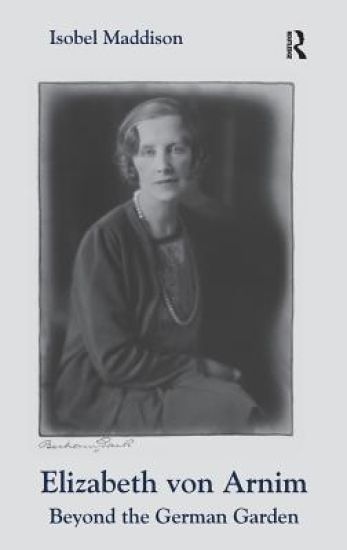
In the first book-length treatment of Elizabeth von Arnim's fiction, Isobel Maddison examines her work in its historical and intellectual contexts, demonstrating that von Arnim's fine comic writing and complex and compelling narrative style reward close analysis. Organised chronologically and thematically, Maddison's book is informed by unpublished material from the British and Huntington Libraries, including correspondence between von Arnim, her publishers and prominent contemporaries such as H.G. Wells, Bertrand Russell and her cousin Katherine Mansfield -- whose early modernist prose is seen as indebted to von Arnim's earlier literary influence. Maddison's exploration of the novelist's critical reception is situated within recent discussions of the ’middlebrow’ and establishes von Arnim as a serious author among her intellectual milieu, countering the misinformed belief that the author of such novels as Elizabeth and Her German Garden, The Caravaners, The Pastor's Wife and Vera wrote light-hearted fiction removed from gritty reality. On the contrary, various strands of socialist thought and von Arnim's wider political beliefs establish her as a significant author of British anti-invasion literature while weighty social issues underpin much of her later writing.
In the first book-length treatment of Elizabeth von Arnim's fiction, Isobel Maddison examines her work in its historical and intellectual contexts, demonstrating that von Arnim's fine comic writing and complex and compelling narrative style reward close analysis. Organised chronologically and thematically, Maddison's book is informed by unpublished material from the British and Huntington Libraries, including correspondence between von Arnim, her publishers and prominent contemporaries such as H.G. Wells, Bertrand Russell and her cousin Katherine Mansfield -- whose early modernist prose is seen as indebted to von Arnim's earlier literary influence. Maddison's exploration of the novelist's critical reception is situated within recent discussions of the ’middlebrow’ and establishes von Arnim as a serious author among her intellectual milieu, countering the misinformed belief that the author of such novels as Elizabeth and Her German Garden, The Caravaners, The Pastor's Wife and Vera wrote light-hearted fiction removed from gritty reality. On the contrary, various strands of socialist thought and von Arnim's wider political beliefs establish her as a significant author of British anti-invasion literature while weighty social issues underpin much of her later writing.
Elizabeth von Arnim (31 August 1866 - 9 February 1941), born Mary Annette Beauchamp, was an Australian-born British novelist. By marriage she became Gr fin (Countess) von Arnim-Schlagenthin, and by a second marriage, Countess Russell. Although known in her early life as Mary, after the publication of her first book, she was known to her readers, eventually to her friends, and finally even to her family as Elizabeth 1] and she is now invariably referred to as Elizabeth von Arnim. She also wrote under the pen name Alice Cholmondeley.She was born at her family's holiday home in Kirribilli Point, Australia. When she was three years old, the family returned to England where she was raised. Her parents were Henry Herron Beauchamp (1825-1907), merchant, and her mother Elizabeth (Louey) Weiss Lassetter (1836-1919). Arnim had four brothers, a sister, and a cousin from New Zealand, Kathleen Beauchamp, who later married John Middleton Murry and wrote under the pen name Katherine Mansfield
Princess Priscilla's Fortnight is a 1905 comedy-drama novel by the British writer Elizabeth von Arnim, known at the time as Elizabeth Russell. It was turned into a play The Cottage in the Air in 1909.Film adaptation In 1929 the novel was turned into a film The Runaway Princess directed by Anthony Asquith and Fritz Wendhausen and starring Mady Christians, Norah Baring and Paul Cavanagh. It was a co-production between the Britain and Germany, and a separate German language version Priscillas Fahrt ins Gl ck was made........... Elizabeth von Arnim (31 August 1866 - 9 February 1941), born Mary Annette Beauchamp, was an Australian-born British novelist. By marriage she became Gr fin (Countess) von Arnim-Schlagenthin, and by a second marriage, Countess Russell. Although known in her early life as Mary, after the publication of her first book, she was known to her readers, eventually to her friends, and finally even to her family as Elizabeth and she is now invariably referred to as Elizabeth von Arnim. She also wrote under the pen name Alice Cholmondeley.She was born at her family's holiday home in Kirribilli Point, Australia. When she was three years old, the family returned to England where she was raised. Her parents were Henry Herron Beauchamp (1825-1907), merchant, and Elizabeth (Louey) Weiss Lassetter (1836-1919). Arnim had four brothers, a sister, and a cousin from New Zealand, Kathleen Beauchamp, who later married John Middleton Murry and wrote under the pen name, Katherine Mansfield. In 1891, Elizabeth married Count Henning August von Arnim-Schlagenthin, a Prussian aristocrat, whom she had met during an Italian tour with her father. They lived in Berlin and eventually moved to the countryside where, in Nassenheide, Pomerania, the Arnims had their family estate. The couple had five children, four daughters and a son. The children's tutors at Nassenheide included E. M. Forster and Hugh Walpole. In 1908, Arnim left Nassenheide to return to London.Count von Arnim died in 1910, and later that year she moved to Randogne, Switzerland, where she built the Chalet Soleil and entertained literary and society friends.From 1910 until 1913, she was a mistress of the novelist H.G. Wells. In 1916, she married John Francis Stanley Russell, 2nd Earl Russell, elder brother of Bertrand Russell. The marriage ended in acrimony, with Elizabeth fleeing to the United States and the couple separating in 1919, although they never divorced. In 1920, she embarked on an affair with Alexander Stuart Frere Reeves (1892-1984), a British publisher nearly 30 years her junior; he later married and named his only daughter Elizabeth in her honour. After leaving Germany, she lived, variously, in London, France and Switzerland. In 1939, on the outbreak of the Second World War, she returned to the United States, where she died of influenza at the Riverside Infirmary, Charleston, South Carolina, on 9 February 1941, aged 74. She was cremated at Fort Lincoln cemetery, Maryland and in 1947 her ashes were mingled with her brother Sydney's in the churchyard of St Margaret's, Tylers Green, Penn, Buckinghamshire.The Latin inscription on her tombstone reads, parva sed apta (small but apt), alluding to her short stature.
Elizabeth von Arnim (31 August 1866 - 9 February 1941), born Mary Annette Beauchamp, was an Australian-born British novelist. By marriage she became Gr fin (Countess) von Arnim-Schlagenthin, and by a second marriage, Countess Russell. Although known in her early life as Mary, after the publication of her first book, she was known to her readers, eventually to her friends, and finally even to her family as Elizabeth and she is now invariably referred to as Elizabeth von Arnim. She also wrote under the pen name Alice Cholmondeley.She was born at her family's holiday home in Kirribilli Point, Australia. When she was three years old, the family returned to England where she was raised. Her parents were Henry Herron Beauchamp (1825-1907), merchant, and Elizabeth (Louey) Weiss Lassetter (1836-1919). Arnim had four brothers, a sister, and a cousin from New Zealand, Kathleen Beauchamp, who later married John Middleton Murry and wrote under the pen name, Katherine Mansfield. In 1891, Elizabeth married Count Henning August von Arnim-Schlagenthin, a Prussian aristocrat, whom she had met during an Italian tour with her father. They lived in Berlin and eventually moved to the countryside where, in Nassenheide, Pomerania, the Arnims had their family estate. The couple had five children, four daughters and a son. The children's tutors at Nassenheide included E. M. Forster and Hugh Walpole. In 1908, Arnim left Nassenheide to return to London.Count von Arnim died in 1910, and later that year she moved to Randogne, Switzerland, where she built the Chalet Soleil and entertained literary and society friends.From 1910 until 1913, she was a mistress of the novelist H.G. Wells. In 1916, she married John Francis Stanley Russell, 2nd Earl Russell, elder brother of Bertrand Russell. The marriage ended in acrimony, with Elizabeth fleeing to the United States and the couple separating in 1919, although they never divorced. In 1920, she embarked on an affair with Alexander Stuart Frere Reeves (1892-1984), a British publisher nearly 30 years her junior; he later married and named his only daughter Elizabeth in her honour. After leaving Germany, she lived, variously, in London, France and Switzerland. In 1939, on the outbreak of the Second World War, she returned to the United States, where she died of influenza at the Riverside Infirmary, Charleston, South Carolina, on 9 February 1941, aged 74. She was cremated at Fort Lincoln cemetery, Maryland and in 1947 her ashes were mingled with her brother Sydney's in the churchyard of St Margaret's, Tylers Green, Penn, Buckinghamshire.The Latin inscription on her tombstone reads, parva sed apta (small but apt), alluding to her short stature.
Vera by Elizabeth von Arnim is a black comedy based on her disastrous second marriage to Earl Russell: a mordant analysis of the romantic delusions through which wives acquiesce in husbands' tyrannies. In outline the story of this utterly unromantic novel anticipates DuMaurier's Rebecca. Naive Lucy Entwhistle is swept into marriage by widower, Everard Wemyss. His mansion "The Willows" is pervaded by the spectre of his dead wife Vera, with whom Lucy becomes obsessed. ... Here the servants are partisan for both wives, and lose no opportunity to disrupt Everard's unctuous, oppressive household routines. An extraordinarily black vision of marriage, also continuously funny, the novel's power lies in the wit and economy of the usually prolix Von Arnim. Elizabeth von Arnim (31 August 1866 - 9 February 1941), born Mary Annette Beauchamp, was an Australian-born British novelist. By marriage she became Gr fin (Countess) von Arnim-Schlagenthin, and by a second marriage, Countess Russell. Although known in her early life as Mary, after the publication of her first book, she was known to her readers, eventually to her friends, and finally even to her family as Elizabeth and she is now invariably referred to as Elizabeth von Arnim. She also wrote under the pen name Alice Cholmondeley.She was born at her family's holiday home in Kirribilli Point, Australia. When she was three years old, the family returned to England where she was raised. Her parents were Henry Herron Beauchamp (1825-1907), merchant, and Elizabeth (Louey) Weiss Lassetter (1836-1919). Arnim had four brothers, a sister, and a cousin from New Zealand, Kathleen Beauchamp, who later married John Middleton Murry and wrote under the pen name, Katherine Mansfield. In 1891, Elizabeth married Count Henning August von Arnim-Schlagenthin, a Prussian aristocrat, whom she had met during an Italian tour with her father. They lived in Berlin and eventually moved to the countryside where, in Nassenheide, Pomerania, the Arnims had their family estate. The couple had five children, four daughters and a son. The children's tutors at Nassenheide included E. M. Forster and Hugh Walpole. In 1908, Arnim left Nassenheide to return to London.Count von Arnim died in 1910, and later that year she moved to Randogne, Switzerland, where she built the Chalet Soleil and entertained literary and society friends.From 1910 until 1913, she was a mistress of the novelist H.G. Wells. In 1916, she married John Francis Stanley Russell, 2nd Earl Russell, elder brother of Bertrand Russell. The marriage ended in acrimony, with Elizabeth fleeing to the United States and the couple separating in 1919, although they never divorced. In 1920, she embarked on an affair with Alexander Stuart Frere Reeves (1892-1984), a British publisher nearly 30 years her junior; he later married and named his only daughter Elizabeth in her honour. After leaving Germany, she lived, variously, in London, France and Switzerland. In 1939, on the outbreak of the Second World War, she returned to the United States, where she died of influenza at the Riverside Infirmary, Charleston, South Carolina, on 9 February 1941, aged 74. She was cremated at Fort Lincoln cemetery, Maryland and in 1947 her ashes were mingled with her brother Sydney's in the churchyard of St Margaret's, Tylers Green, Penn, Buckinghamshire.The Latin inscription on her tombstone reads, parva sed apta (small but apt), alluding to her short stature.
Elizabeth von Arnim (31 August 1866 - 9 February 1941), born Mary Annette Beauchamp, was an Australian-born British novelist. By marriage she became Gr fin (Countess) von Arnim-Schlagenthin, and by a second marriage, Countess Russell. Although known in her early life as Mary, after the publication of her first book, she was known to her readers, eventually to her friends, and finally even to her family as Elizabeth and she is now invariably referred to as Elizabeth von Arnim. She also wrote under the pen name Alice Cholmondeley.She was born at her family's holiday home in Kirribilli Point, Australia. When she was three years old, the family returned to England where she was raised. Her parents were Henry Herron Beauchamp (1825-1907), merchant, and Elizabeth (Louey) Weiss Lassetter (1836-1919). Arnim had four brothers, a sister, and a cousin from New Zealand, Kathleen Beauchamp, who later married John Middleton Murry and wrote under the pen name, Katherine Mansfield. In 1891, Elizabeth married Count Henning August von Arnim-Schlagenthin, a Prussian aristocrat, whom she had met during an Italian tour with her father. They lived in Berlin and eventually moved to the countryside where, in Nassenheide, Pomerania, the Arnims had their family estate. The couple had five children, four daughters and a son. The children's tutors at Nassenheide included E. M. Forster and Hugh Walpole. In 1908, Arnim left Nassenheide to return to London. Count von Arnim died in 1910, and later that year she moved to Randogne, Switzerland, where she built the Chalet Soleil and entertained literary and society friends. From 1910 until 1913, she was a mistress of the novelist H.G. Wells. In 1916, she married John Francis Stanley Russell, 2nd Earl Russell, elder brother of Bertrand Russell. The marriage ended in acrimony, with Elizabeth fleeing to the United States and the couple separating in 1919, although they never divorced. In 1920, she embarked on an affair with Alexander Stuart Frere Reeves (1892-1984), a British publisher nearly 30 years her junior; he later married and named his only daughter Elizabeth in her honour. After leaving Germany, she lived, variously, in London, France and Switzerland. In 1939, on the outbreak of the Second World War, she returned to the United States, where she died of influenza at the Riverside Infirmary, Charleston, South Carolina, on 9 February 1941, aged 74. She was cremated at Fort Lincoln cemetery, Maryland and in 1947 her ashes were mingled with her brother Sydney's in the churchyard of St Margaret's, Tylers Green, Penn, Buckinghamshire. The Latin inscription on her tombstone reads, parva sed apta (small but apt), alluding to her short stature.Arnim would later refer to her domineering first husband by the Biblical title the "Man of Wrath" and writing became her refuge from what turned out to be an incompatible marriage. Arnim's husband had increasing debts and was eventually sent to prison for fraud. This was when she created her pen name "Elizabeth" and launched her career as a writer by publishing her semi-autobiographical, brooding, yet satirical Elizabeth and Her German Garden (1898). Detailing her struggles both to create a garden on the estate and her attempts to integrate into German, high-class, Junker society, it was such a success that it was reprinted twenty times in its first year. A bitter-sweet memoir and companion to it was The Solitary Summer (1899). Other works, such as the The Benefactress (1902), Vera (1921), and Love (1925)
Every one who has been to school and still remembers what he was taught there, knows that R gen is the biggest island Germany possesses, and that it lies in the Baltic Sea off the coast of Pomerania. Round this island I wished to walk this summer, but no one would walk with me. It is the perfect way of moving if you want to see into the life of things. It is the one way of freedom. If you go to a place on anything but your own feet you are taken there too fast, and miss a thousand delicate joys that were waiting for you by the wayside. If you drive you are bound by a variety of considerations, eight of the most important being the horses' legs. If you bicycle-but who that loves to get close to nature would bicycle? And as for motors, the object of a journey like mine was not the getting to a place but the going there.