Kirjojen hintavertailu. Mukana 11 342 296 kirjaa ja 12 kauppaa.

Kirjahaku

Etsi kirjoja tekijän nimen, kirjan nimen tai ISBN:n perusteella.

1000 tulosta hakusanalla Elizabeth Barrett Browning

Elizabeth Barrett Browning

Elizabeth Barrett Browning

Oxford University Press
2018
nidottu
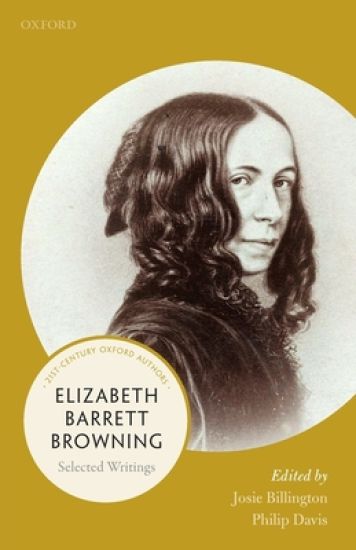
This volume in the 21st Century Oxford Authors series offers students and readers a comprehensive selection of the work of the poet Elizabeth Barrett Browning (1806-1861). Accompanied by full scholarly apparatus, this authoritative edition enables students to study Barrett Browning's work within the rich context of her life and writing career. The revaluation of Elizabeth Barrett Browning's work by feminist scholars has made her an established author in university syllabuses in Britain and in America. Yet the reception of Barrett Browning as a writer within an explicitly female tradition has tended to limit the appreciation of her wider contribution to English literary culture in the nineteenth century, just as her popular image as a ringleted romantic heroine served sentimentally to eclipse her role as a literary pioneer. This edition complements or corrects these emphases by being the first edition dedicated to witnessing the progress and growth of the poet's creative direction--from her juvenilia through to her major achievements and beyond. The selection of works presented here appear in the order in which they were originally published, enabling students and readers to experience the contours of Barrett Browning's poetic career. Thus, following selections from published juvenilia, The Battle of Marathon (1820) and 'An Essay on Mind' and Other Poems (1826) and from 'Prometheus Bound' and Miscellaneous Poems (1833), there are more extensive selections from 'The Seraphim' and Other Poems (1838), from Poems 1844 and from Poems 1850 including the full text of Sonnets from the Portuguese. Substantial excerpts from Casa Guidi Windows (1851) is followed by the full text of Aurora Leigh (1857) and by selections from the posthumous Last Poems (1862). These individual sections are supplemented by careful selections (also chronologically ordered) from the correspondence, including the courtship letters with Robert Browning, and, where applicable, from poetry unpublished in the nineteenth century. Explanatory notes and commentary are included, to enhance the study, understanding, and enjoyment of these works, and the edition includes an Introduction to the life and works of Barrett Browning, and a Chronology.
Elizabeth Barrett Browning

Elizabeth Barrett Browning

Oxford University Press
2014
sidottu
The Barret Browning volume in the 21st Century Oxford Authors series offers a comprehensive selection of the works of one of the nineteenth-century's most famous poets. The revaluation of Elizabeth Barrett Browning's work by feminist scholars has made her an established (indeed standard) author in university syllabuses in Britain and in America. Yet the emphasis upon her contribution to a female tradition has tended to rigidify Barrett Browning's contribution to English literary culture in the nineteenth century, just as her popular image as ringleted-invalid-turned-romantic-heroine served sentimentally to eclipse her role as a literary pioneer. This edition complements or corrects these emphases by being the first edition dedicated to witnessing the progress and growth of the poet's creative direction - from her juvenilia through to her major achievements and beyond. In keeping with the aims of the series, the selection honours the original sequencing of the published works as the best means of indicating the contours of Barrett Browning's poetic career. Thus, following fairly limited selections from published juvenilia, The Battle of Marathon (1820) and 'An Essay on Mind' and Other Poems (1826) and from 'Prometheus Bound' and Miscellaneous Poems (1833), there are more extensive selections from 'The Seraphim' and Other Poems (1838), from Poems 1844 and from Poems 1850 including the full text of Sonnets from the Portuguese. Substantial excerpts from Casa Guidi Windows (1851) is followed by the full text of Aurora Leigh (1857) and by selections from the posthumous Last Poems (1862). These individual sections are supplemented by careful selections (also chronologically ordered) from the correspondence, including the courtship letters with Robert Browning, and, where applicable, from poetry unpublished in the nineteenth century. The edition comes with full scholarly apparatus (introduction, chronology, explanatory notes), though it follows the series policy of recording only significant variants between editions.
Elizabeth Barrett Browning

Elizabeth Barrett Browning

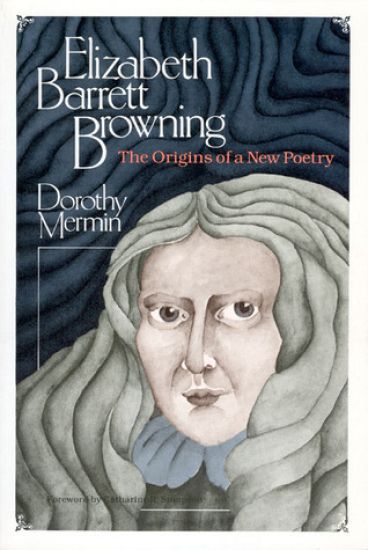
Dorothy Mermin

University of Chicago Press
1989
nidottu
Elizabeth Barrett Browning (1806-61) was the first major woman poet in the English literary tradition. Her significance has been obscured in this century by her erasure from most literary histories and her exclusion from academic anthologies. Dorothy Mermin's critical and biographical study argues for Barrett Browning's originative role in both the Victorian poetic tradition and the development of women's literature. Barrett Browning's place at the wellhead of a new female tradition remains the single most important fact about her in terms of literary history, and it was central to her self-consciousness as a poet. Mermin's study shows that Barrett Browning's anomalous situation was constantly present to her imagination and that questions of gender shaped almost everything she wrote. Mermin argues that Barrett Browning's poetry covertly inspects and dismantles the barriers set in her path by gender and that in her major works—Sonnets from the Portuguese, Aurora Leigh, her best political poems, "A Musical Instrument"—difficulty is turned into triumph, incorporating the author's femininity, her situation as a woman poet, and her increasingly substantial fame. Mermin skillfully interweaves biography and close readings of the poems to show precisely how Barrett Browning's life as a woman writer is a part of the essential meaning of her art. Both her personal and her literary achievements are exceptionally well documented, especially for her formative years. Mermin makes extensive use of the poet's early essays, a diary covering most of her twenty-sixth year, and the enormous number of letters that have survived. Ranging from her earliest ambitions through her long periods of discouragement and illness to her happy married life with Robert Browning, this comprehensive study of Elizabeth Barrett Browning is essential reading for students of the Victorian period, English literature, and women's studies.
Elizabeth Barrett Browning
Elizabeth Barrett Browning (1806–61) was the foremost female poet of her day, to the extent that in 1850 she was mooted as a serious candidate for the Poet Laureate. With the publication in 2010 of a definitive five-volume edition of Elizabeth Barrett Browning’s poetry—the first full scholarly edition in a hundred years—this long-awaited collection on Barrett Browning’s work from Routledge’s acclaimed Critical Heritage series is both timely and desirable. After languishing for most of the twentieth century, critical study of Barrett has flourished over the past thirty years, focusing largely on her importance as both a female—and a political—poet.Particularly after her death in 1861, assessments of Barrett have been bound up with gender politics, and in order to partake fully in this—and other—debates, scholars and students need to be able to consult the key primary materials: the reviews and letters which are currently scattered widely across online databases, archives in Texas and Florence, and in anthologies of letters.This new two-volume set from Routledge brings together a careful selection from the vast number of reviews of Elizabeth Barrett and traces the intersecting issues of Barrett as both a female and a political poet. The collection is organized chronologically, drawing attention to particular trends and changes in Barrett’s reception. As well as her success in Britain, Barrett also became popular in America and Italy, and this Routledge Critical Heritage collection includes sections on her Italian and American reception, including newly translated essays currently available only in Italian.The collection also contains passages from letters to Elizabeth Barrett which comment on her poetry, including those from, among others, Richard Hengist Horne, Mary Russell Mitford, John Kenyon, and, of course, Robert Browning. With a comprehensive introduction which highlights trends and changes within Barrett’s reception history, as well as learned editorial commentary to each section, this new addition to Routledge’s Critical Heritage series is certain to be welcomed—particularly by scholars and advanced students of Literary and Victorian Studies—as an indispensable one-stop reference resource.
Elizabeth Barrett Browning

Elizabeth Barrett Browning

Stott Rebecca; Simon Avery

Longman
2003
nidottu
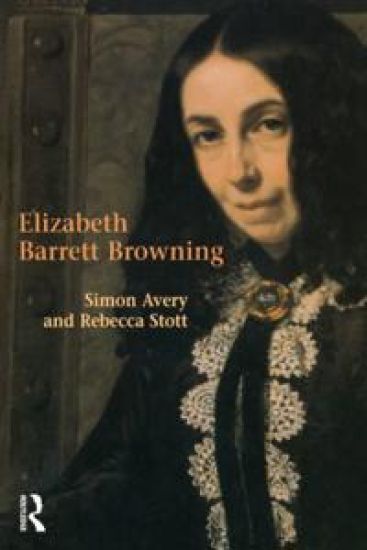
This volume will provide students with an introduction to the poetry and life of Elizabeth Barrett Browning, one of the most popular poets of her day in Britain and America and who has become one of the great icons of Victorianism for the modern age. The authors present a biographical survey, study of her poetry, its critical reception and an assessment of her influence on later poets. This book also examines the complex 'myths' which are associated with Elizabeth Barrett Browning and offers re-readings of her life and work, particularly in dispelling the myth of the ailing invalid poet-recluse and instead showing her to be one of the great intellectuals of her day, immersed in European history and politics from a very early age. The book situates Browning within broader historical,political and cultural contexts than have yet been examined enabling a better understanding of her poetry and paints the portrait of a fine and innovative poet, an intellectual and an astute political thinker.
Elizabeth Barrett Browning

Elizabeth Barrett Browning

Dr Simon Avery

Northcote House Publishers Ltd
2011
nidottu
Elizabeth Barrett Browning (1806-61) was one of the most important poets of the nineteenth century and has recently undergone a major critical reappraisal. In this study, Simon Avery considers a range of her poems, drawn from across her career, in order to examine the concern with the search for a meaningful home which underpins much of her writing. In a series of interrelated chapters of Barrett Browning’s religious poetry, love poetry, political poetry, and her major work, Aurora Leigh, he explores the way in which speakers and protagonists of her poems constantly search for a place of security and stability even though this often seems finally unattainable. Attention is also given to Barrett Browning’s own search for a home in relation to inherited poetic models and traditions, and her establishment of an often radical poetics.