Celebrated in their time and still popular over a century after their deaths, Robert Browning and Elizabeth Barrett had a unique relationship which is reflected in their work. Both were distinguished as poets before they met, and they learnt from one another without ever sacrificing their individuality. If Elizabeth recognized that Robert’s talent was the greater of the two, Robert understood that his wife’s voice was unique. All the great themes they shared are represented in this collection of their shorter poems – love, marriage, poetry, religion, England and Italy, the natural world – and the poems are accompanied by a selection from the marvellous letters they wrote to one another, especially in the years of their courtship. Among the items included are extracts from Aurora Leigh and Pauline, and the whole of Sonnets from the Portuguese, together with many lyrics and narrative poems by both poets.
The 18th century was a wealth of knowledge, exploration and rapidly growing technology and expanding record-keeping made possible by advances in the printing press. In its determination to preserve the century of revolution, Gale initiated a revolution of its own: digitization of epic proportions to preserve these invaluable works in the largest archive of its kind. Now for the first time these high-quality digital copies of original 18th century manuscripts are available in print, making them highly accessible to libraries, undergraduate students, and independent scholars.Rich in titles on English life and social history, this collection spans the world as it was known to eighteenth-century historians and explorers. Titles include a wealth of travel accounts and diaries, histories of nations from throughout the world, and maps and charts of a world that was still being discovered. Students of the War of American Independence will find fascinating accounts from the British side of conflict. ++++The below data was compiled from various identification fields in the bibliographic record of this title. This data is provided as an additional tool in helping to insure edition identification: ++++British LibraryT039585With a half-title.London: printed for the author; and J. Williams, 1767. 4],35, 1]p.; 8
This book has been considered by academicians and scholars of great significance and value to literature. This forms a part of the knowledge base for future generations. So that the book is never forgotten we have represented this book in a print format as the same form as it was originally first published. Hence any marks or annotations seen are left intentionally to preserve its true nature.
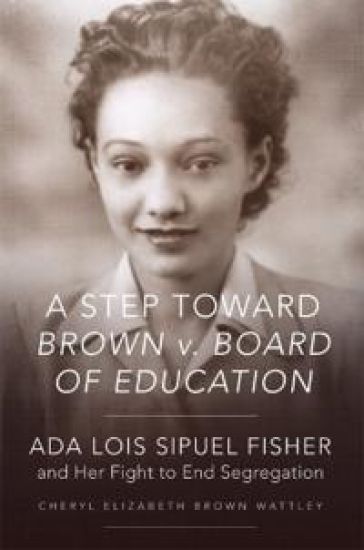
In 1946 a young woman named Ada Lois Sipuel Fisher (1924-1995) was denied admission to the University of Oklahoma College of Law because she was African American. The OU law school was an all-white institution in a town where African Americans could work and shop as long as they got out before sundown. But if segregation was entrenched in Norman, so was the determination of black Oklahomans who had survived slavery to stake a claim in the territory. This was the tradition that Ada Lois Sipuel sprang from, a tradition and determination that would sustain her through the slow, tortuous path of litigation to gaining admission to law school. A Step toward Brown v. Board of Education - the first book to tell Fisher's full story - is at once an inspiring biography and a remarkable chapter in the history of race and civil rights in America. Cheryl Elizabeth Brown Wattley gives us a richly textured picture of the black-and-white world from which Ada Lois Sipuel and her family emerged. Against this Oklahoma background Wattley shows Sipuel (who married Warren Fisher a year before she filed her suit) struggling against a segregated educational system. Her legal battle is situated within the history of civil rights litigation and race-related jurisprudence in the state of Oklahoma and in the nation. Hers was a test case organized by the NAACP (National Association for the Advancement of Colored People) to go all the way to the U.S. Supreme Court and, as precedent, strike another blow against ""separate but equal"" public education. Fisher served as both a litigant, with Thurgood Marshall for counsel, and, later, a litigator; both a plaintiff and an advocate for the NAACP; and both a student and, ultimately, a teacher of the very history she had helped to write. In telling Fisher's story, Wattley also reveals a time and a place undergoing a profound transformation spurred by one courageous woman taking a bold step forward.
Fanciful Foxes Coloring Book is an adult coloring book for grown ups who is interested in animal designs especially foxes and wolves to relieve their stress. In this book you will find 30 different foxes outline with madala patterns for you to colour. it is the best gift to anyone who loves to play with colours. This book will give hours of enjoyment and at the same time smooth out your tension. Great for relaxation. The designs are simple to complicated and suits all levels of people. Everyone has a creative designer hidden in their subconscious. This coloring book will help in bringing out your inner creativity. This fox coloring book is best for adults, teens, and twins who want to let their creativity flow or want to relax.The Book Contains 30 full page foxes waiting to be coloured and bring to life. Printed single side so you don't have to worry about bleeding if you are using water colors. Large 8 1/2 x 11 inch pages. Pure white paper.It gives you hours of fun and relaxation Buy it Now.
The title page calls the author of this 1888 work 'A Lady Astronomer'. She was Elizabeth Brown (1830–99), and the shadow she was pursuing was the eclipse of the sun on 19 August 1887, which could be best observed in northern Russia. Brought up by her father to make weather observations and to use a telescope, she became a member of the Liverpool Astronomical Society - on behalf of which she undertook her Russian expedition - and was later active in founding the British Astronomical Association. (The Royal Astronomical Society did not at this point admit women.) The book describes her journey, from her arrival at Hull to meet her travelling companion, to Russia, and home again. The actual viewing of the eclipse, at Kineshma, 200 miles north-east of Moscow, was spoiled by cloud cover, but her lively and observant account of her adventures is a fascinating record by a pioneering female scientist.
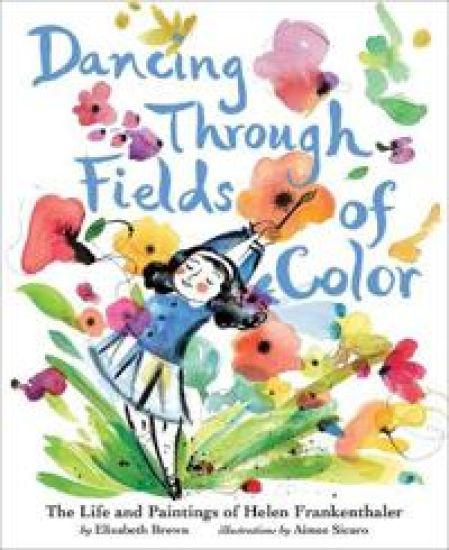
They said only men could paint powerful pictures, but Helen Frankenthaler (1928-2011) splashed her way through the modern art world. Channeling deep emotion, Helen poured paint onto her canvas and danced with the colors to make art unlike anything anyone had ever seen. She used unique tools like mops and squeegees to push the paint around, to dazzling effects. Frankenthaler became an originator of the influential “Color Field” style of abstract expressionist painting with her “soak stain” technique, and her artwork continues to electrify new generations of artists today. Dancing Through Fields of Color discusses Frankenthaler’s early life, how she used colors to express emotion, and how she overcame the male-dominated art world of the 1950s.
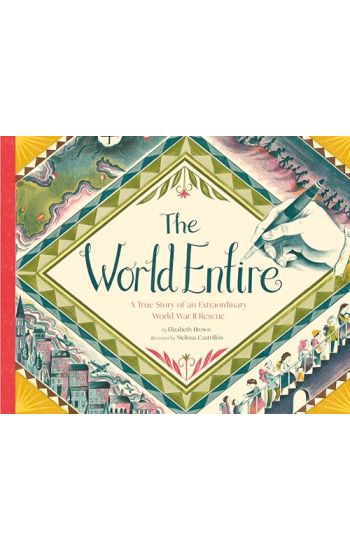
Everyone knows Oskar Schindler and his famous list, but few have heard of Aristides de Sousa Mendes-a Portuguese diplomat who saved the lives of thousands in World War II. This magnificently illustrated picture book biography tells a moving story that resonates profoundly today.“He who saves a single life, saves the world entire.” —Talmud Here is the true and powerful story of Aristides de Sousa Mendes, who, against his government’s commands, helped refugees flee France to escape the Nazis by granting visas that allowed them entry to Portugal. In one of the greatest individual acts of rescue in World War II, Mendes saved many thousands of people, including the artist Salvador Dalí; H.A. and Margret Rey, the creators of Curious George; professors of medicine, biology, and physics who would go on to teach in America; and thousands of others whose lives are less known but no less precious. He and his family paid dearly for it, but Aristides never regretted his actions, believing to the very end of his life that every life is worth saving.