Kirjojen hintavertailu. Mukana 11 244 527 kirjaa ja 12 kauppaa.

Kirjahaku

Etsi kirjoja tekijän nimen, kirjan nimen tai ISBN:n perusteella.

1000 tulosta hakusanalla Elizabeth C Wright

Dear Bob, Dear Betty: Love and Marriage During the Great Depression
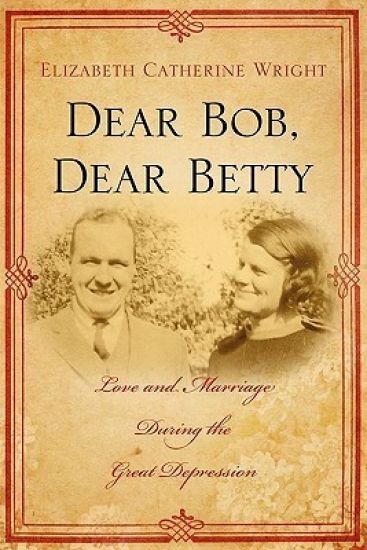
In 1932, at the height of the Great Depression, two young people meet and fall in love. Llewellyn Wright (Bob), Frank Lloyd Wright's youngest son, whose adolescence was marked by the public scandals surrounding his father's private life, is struggling to begin a private law practice in Chicago. Elizabeth Kehler (Betty), daughter of a Chicago artist who abandoned the family when she was still in the womb, is working as an intake counselor at the Milwaukee Vocational School. Their fervent correspondence over a 10-month courtship period is witty, sassy and poignant, as they grapple with their passionate feelings and try to create a financially stable marriage in the midst of the 20th century's most serious economic crisis. The couple's daughter, a scholar of French literature, has written an Introduction telling their story before and after the courtship. 35 illustrations, extensive footnotes and an Index illuminate the family and social history behind the letters.
Dear Bob, Dear Betty: Love and Marriage During the Great Depression
In 1932, at the height of the Great Depression, two young people meet and fall in love. Llewellyn Wright (Bob), Frank Lloyd Wright's youngest son, whose adolescence was marked by the public scandals surrounding his father's private life, is struggling to begin a private law practice in Chicago. Elizabeth Kehler (Betty), daughter of a Chicago artist who abandoned the family when she was still in the womb, is working as an intake counselor at the Milwaukee Vocational School. Their fervent correspondence over a 10-month courtship period is witty, sassy and poignant, as they grapple with their passionate feelings and try to create a financially stable marriage in the midst of the 20th century's most serious economic crisis. The couple's daughter, a scholar of French literature, has written an Introduction telling their story before and after the courtship. 35 illustrations, extensive footnotes and an Index illuminate the family and social history behind the letters.

Lichen Tufts

Lichen Tufts

Elizabeth C Wright

Hansebooks
2017
pokkari
Lichen Tufts - From the Alleghanies is an unchanged, high-quality reprint of the original edition of 1860. Hansebooks is editor of the literature on different topic areas such as research and science, travel and expeditions, cooking and nutrition, medicine, and other genres. As a publisher we focus on the preservation of historical literature. Many works of historical writers and scientists are available today as antiques only. Hansebooks newly publishes these books and contributes to the preservation of literature which has become rare and historical knowledge for the future.
Lichen Tufts, from the Alleghanies

Lichen Tufts, from the Alleghanies

Elizabeth C. Wright; Laurie Lounsberry Meehan

STATE UNIVERSITY OF NEW YORK PRESS
2023
pokkari
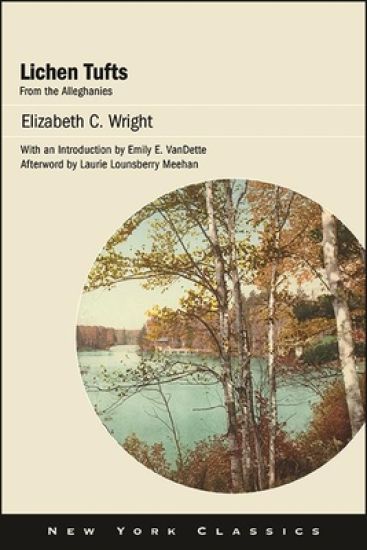
An important and prescient early example of US environmental writing with a profound sense of consciousness and appreciation for the natural world.In her 1860 book Lichen Tufts, from the Alleghanies, Elizabeth C. Wright weaves together environmental philosophy, lyrical nature writing, and social consciousness. A graduate of Alfred University, Wright was an activist for women's rights, temperance, and the abolition of slavery. She was a teacher, a botanist, and, later in life, a Kansas homesteader. In Lichen Tufts, Wright urged her readers to cultivate an intimate knowledge of the natural world, reflecting her Transcendentalist belief that an immersive relationship with nature benefits the individual as well as society as a whole. Composed of four essays and forty poems, Lichen Tufts reveals wisdom and beauty in an early example of eco-feminism that highlights the natural world as antidote to society's restrictive gender codes, one that is still relevant today.SUNY Press brings Lichen Tufts, from the Alleghanies to life for modern audiences, with a recovery edition featuring the 1860 book in its entirety. An Introduction by Emily E. VanDette places the book and its author in the context of nineteenth-century social reform campaigns throughout the "Burned Over District" of western New York. An Afterword written by Laurie Lounsberry Meehan highlights the history of Alfred University and the cohort that influenced Wright's environmental and social reform activism.
Lichen Tufts, from the Alleghanies

Lichen Tufts, from the Alleghanies

Elizabeth C. Wright; Laurie Lounsberry Meehan

STATE UNIVERSITY OF NEW YORK PRESS
2022
sidottu
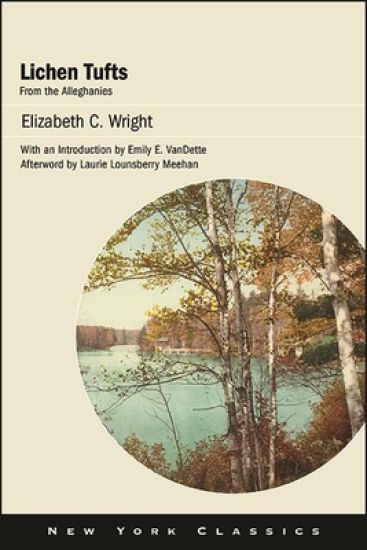
An important and prescient early example of US environmental writing with a profound sense of consciousness and appreciation for the natural world.In her 1860 book Lichen Tufts, from the Alleghanies, Elizabeth C. Wright weaves together environmental philosophy, lyrical nature writing, and social consciousness. A graduate of Alfred University, Wright was an activist for women's rights, temperance, and the abolition of slavery. She was a teacher, a botanist, and, later in life, a Kansas homesteader. In Lichen Tufts, Wright urged her readers to cultivate an intimate knowledge of the natural world, reflecting her Transcendentalist belief that an immersive relationship with nature benefits the individual as well as society as a whole. Composed of four essays and forty poems, Lichen Tufts reveals wisdom and beauty in an early example of eco-feminism that highlights the natural world as antidote to society's restrictive gender codes, one that is still relevant today.SUNY Press brings Lichen Tufts, from the Alleghanies to life for modern audiences, with a recovery edition featuring the 1860 book in its entirety. An Introduction by Emily E. VanDette places the book and its author in the context of nineteenth-century social reform campaigns throughout the "Burned Over District" of western New York. An Afterword written by Laurie Lounsberry Meehan highlights the history of Alfred University and the cohort that influenced Wright's environmental and social reform activism.
Trajectories of Empire

Trajectories of Empire

Jerome C. Branche; Elizabeth Wright; Cassia Roth; Baltasar Fra-Molinero; Miguel Valerio; Miguel Olmedo; Agnes Lugo-Ortiz; Lucia Helena Costigan; Abreu Alberto; Eliseo Jacob; Maria Andrea de Santos Soares

VANDERBILT UNIVERSITY PRESS
2022
nidottu
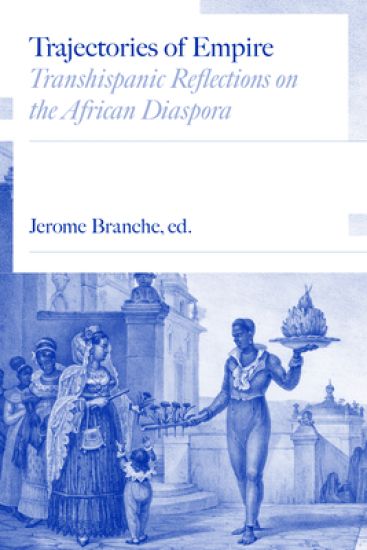
Trajectories of Empire extends from the beginning of the Iberian expansion of the mid-fifteenth century, through colonialism and slavery, and into the twentieth and twenty-first centuries in Latin American republics. Its point of departure is the question of empire and its aftermath, as reflected in the lives of contemporary Latin Americans of African descent, and of their ancestors caught up in the historical process of Iberian colonial expansion, colonization, and the Atlantic slave trade. The book's chapters explore what it's like to be Black today in the so-called racial democracies of Brazil, Colombia, and Cuba; the role of medical science in the objectification and nullification of Black female personhood during slavery in Brazil in the nineteenth century; the deployment of visual culture to support insurgency for a largely illiterate slave body again in the nineteenth century in Cuba; aspects of discourse that promoted the colonial project as evangelization, or alternately offered resistance to its racialized culture of dominance in the seventeenth century; and the experiences of the first generations of forced African migrants into Spain and Portugal in the fifteenth and sixteenth centuries, as the discursive template was created around their social roles as enslaved or formerly enslaved people.Trajectories of Empire's contributors come from the fields of literary criticism, visual culture, history, anthropology, popular culture (rap), and cultural studies. As the product of an interdisciplinary collective, this book will be of interest to researchers and graduate students in Iberian or Hispanic Studies, Africana Studies, Postcolonial Studies, and Transatlantic Studies, as well as the general public.
Trajectories of Empire

Trajectories of Empire

Jerome C. Branche; Elizabeth Wright; Cassia Roth; Baltasar Fra-Molinero; Miguel Valerio; Miguel Olmedo; Agnes Lugo-Ortiz; Lucia Helena Costigan; Abreu Alberto; Eliseo Jacob; Maria Andrea de Santos Soares

VANDERBILT UNIVERSITY PRESS
2022
sidottu
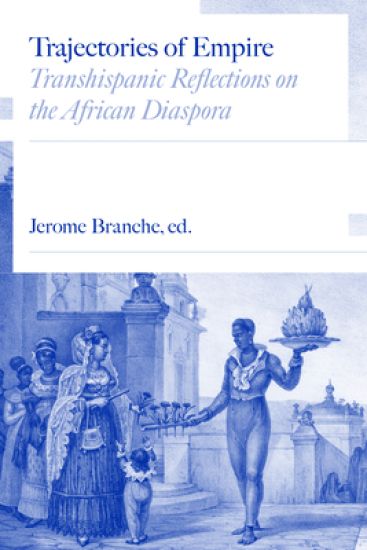
Trajectories of Empire extends from the beginning of the Iberian expansion of the mid-fifteenth century, through colonialism and slavery, and into the twentieth and twenty-first centuries in Latin American republics. Its point of departure is the question of empire and its aftermath, as reflected in the lives of contemporary Latin Americans of African descent, and of their ancestors caught up in the historical process of Iberian colonial expansion, colonization, and the Atlantic slave trade. The book's chapters explore what it's like to be Black today in the so-called racial democracies of Brazil, Colombia, and Cuba; the role of medical science in the objectification and nullification of Black female personhood during slavery in Brazil in the nineteenth century; the deployment of visual culture to support insurgency for a largely illiterate slave body again in the nineteenth century in Cuba; aspects of discourse that promoted the colonial project as evangelization, or alternately offered resistance to its racialized culture of dominance in the seventeenth century; and the experiences of the first generations of forced African migrants into Spain and Portugal in the fifteenth and sixteenth centuries, as the discursive template was created around their social roles as enslaved or formerly enslaved people. Trajectories of Empire's contributors come from the fields of literary criticism, visual culture, history, anthropology, popular culture (rap), and cultural studies. As the product of an interdisciplinary collective, this book will be of interest to researchers and graduate students in Iberian or Hispanic Studies, Africana Studies, Postcolonial Studies, and Transatlantic Studies, as well as the general public.
Psychoanalytic Criticism

Psychoanalytic Criticism

Elizabeth Wright

Routledge
2002
sidottu
First published in 2002. Modes and categories inherited from the past no longer seem to fit the reality experienced by a new generation. ‘New Accents’ is intended as a positive response to the initiative offered by such a situation. Each volume in the series will seek to encourage rather than resist the process of change, to stretch rather than reinforce the boundaries that currently define literature and its academic study. The purpose of this book is to give a critical overview of what has become a very wide field: the relationship of psychoanalytic theory to the theories of literature and the arts, and the way that developments in both domains have brought about changes in critical practice.
Psychoanalytic Criticism

Psychoanalytic Criticism

Elizabeth Wright

Routledge
2013
nidottu
First published in 2002. Modes and categories inherited from the past no longer seem to fit the reality experienced by a new generation. ‘New Accents’ is intended as a positive response to the initiative offered by such a situation. Each volume in the series will seek to encourage rather than resist the process of change, to stretch rather than reinforce the boundaries that currently define literature and its academic study. The purpose of this book is to give a critical overview of what has become a very wide field: the relationship of psychoanalytic theory to the theories of literature and the arts, and the way that developments in both domains have brought about changes in critical practice.
Psychoanalytic Criticism: A Reappraisal
As criticism settles into an end-of-century milieu, its appropriations of psychoanalysis are increasingly polarized: while the last ten years have witnessed a spate of virulent and provocative attacks on psychoanalysis in general and Freud in particular, at no time has psychoanalysis burgeoned and thrived so strongly in literary theory and practice. In this thoroughly updated version of Elizabeth Wright's classic text, the author explores the ways in which Freudian theory has become essential to our experience of literature. Wright's comprehensive, historical approach to literary theory and practice since Freud loses none of its sharpness for its breadth: from Artaud to Zizek, Foucault to Kristeva, Psychoanalytic Criticism maintains a sharp focus on our experience of language, literature and consciousness.
Psychoanalytic Criticism

Psychoanalytic Criticism

Elizabeth Wright

Polity Press
1998
sidottu
What is psychoanalytic criticism and how can it be justified as a type of criticism in its own right? In this new and thoroughly revised edition of her classic textbook, Elizabeth Wright provides a cogent answer to this question and a wide-ranging introduction to psychoanalytic criticism from Freud to the present day. Since each school of psychoanalysis has its own theory of the aesthetic process, the field is complex. Adopting a critical perspective, Elizabeth Wright focuses on major figures and texts in psychoanalysis and in literary and art criticism: classical psychoanalysis; Jungian analytic psychology; objects-relations theory; French psychoanalysis; French anti-psychoanalysis; feminist psychoanalytic criticism. Across these divisions certain problems recur, problems which conceal themselves in a wide range of surprising places, from Shakespearean tragedy to performance theatre from magic realism to detective fiction, from the German Lied to Wagner. These areas are investigated with reference to rival psychoanalytic theories, while connections are traced between the aesthetic process and the psychoanalytic approach. Already established as the leading introduction to the field, this new edition of Psychoanalytic Criticism will be essential reading for students of literature and literary theory, psychoanalysis, feminism and feminist theory, cultural studies and the humanities generally.
Psychoanalytic Criticism

Psychoanalytic Criticism

Elizabeth Wright

Polity Press
1998
nidottu
What is psychoanalytic criticism and how can it be justified as a type of criticism in its own right? In this revised edition, Elizabeth Wright provides an answer to this question and a wide-ranging introduction to psychoanalytic criticism from Freud to the present day.
Postmodern Brecht

Postmodern Brecht

Elizabeth Wright

Routledge
2016
sidottu
In this radical and deliberately controversial re-reading of Brecht, first published in 1989, Elizabeth Wright takes a new view of the playwright, giving us a more ‘Brechtian’ reading than so far achieved and making his work historically relevant here and now. The author discusses in detail Brecht’s principle theories and concepts in the light of poststructuralist theory, and reassess the aesthetics and politics with regard to Marxist critics of his own day. Wright includes a re-reading of Brecht’s early works, which presents them in relation to a postmodern theatre, and gives critical analyses of the work of Pina Bausch, Robert Wilson, and Heiner Müller, who use the techniques of performance theatre, showing how they deconstruct Brecht’s distinction between illusion and reality and point to a postmodern understanding of their dialectical relation.
Postmodern Brecht

Postmodern Brecht

Elizabeth Wright

Routledge
2018
nidottu
In this radical and deliberately controversial re-reading of Brecht, first published in 1989, Elizabeth Wright takes a new view of the playwright, giving us a more ‘Brechtian’ reading than so far achieved and making his work historically relevant here and now. The author discusses in detail Brecht’s principle theories and concepts in the light of poststructuralist theory, and reassess the aesthetics and politics with regard to Marxist critics of his own day. Wright includes a re-reading of Brecht’s early works, which presents them in relation to a postmodern theatre, and gives critical analyses of the work of Pina Bausch, Robert Wilson, and Heiner Müller, who use the techniques of performance theatre, showing how they deconstruct Brecht’s distinction between illusion and reality and point to a postmodern understanding of their dialectical relation.