Kirjojen hintavertailu. Mukana 11 244 527 kirjaa ja 12 kauppaa.

Kirjahaku

Etsi kirjoja tekijän nimen, kirjan nimen tai ISBN:n perusteella.

1000 tulosta hakusanalla Elizabeth Grosz

Sexual Subversions

Sexual Subversions

Elizabeth Grosz

Allen Unwin
1989
nidottu
Introducing the work of three French feminists - Julia Kristeva, Luce Irigaray and Michele L Doeuff - "Sexual Subversions" provides access to the work of these writers. In doing so this book raises some key issues of relevance to feminist research, addressing debates around the nature of feminist theory; the relationship between feminist thinking theory; the relationship between feminist thinking and male-dominatd areas of knowledge; the strategies appropriate for developing non-patriarchal or woman-centred knowledges. While Kristeva, Irigaray and Le Doeuff do not present a common political or theoretical position, each usefully highlights the differences of the others. Each addresses the questions of women's autonomy from male definition, seeking out a femininity women can use to question patriarchy norms and reject the pre-ordained positions partriarchy allots to woman. No book on French feminists would be complete without including the contributions of Kristeva and Irigaray.The inclusion of Le Doeuff's work, which brings a different perspective to bear on the question of sexual difference, provides a counterbalance to literary appropriations of French feminism by Anglo--American readerships. Kristeva, Irigaray and Le Doeuff are the focal points of this study, precisely because each highlights the differences of the others, revealing the frameworks to which the others are committed. Nevertheless, while these writers do not present a common political or theoretical position or form a school, each does address the question of women's autonomy from male definition, affirms the sexual specificity of women, seeks out a feminity women can use to question the patriarchal norms and ideals of feminity and rejects the preordained positions patriarchy allots to woman. "Elizabeth Grosz teaches philosophy at the University of Sydney and is the author of a forthcoming study of Jacques Lacan. Among the many works to which she has contributed are "Feminist challenges" and "Crossing boundaries" (both Allen & Unwin).". This book is intended for students and researchers in women's studies , philosophy and feminism.

Chaos, Territory, Art

Chaos, Territory, Art

Elizabeth Grosz

Columbia University Press
2008
sidottu
Instead of treating art as a unique creation that requires reason and refined taste to appreciate, Elizabeth Grosz argues that art-especially architecture, music, and painting-is born from the disruptive forces of sexual selection. She approaches art as a form of erotic expression connecting sensory richness with primal desire, and in doing so, finds that the meaning of art comes from the intensities and sensations it inspires, not just its intention and aesthetic. By regarding our most cultured human accomplishments as the result of the excessive, nonfunctional forces of sexual attraction and seduction, Grosz encourages us to see art as a kind of bodily enhancement or mode of sensation enabling living bodies to experience and transform the universe. Art can be understood as a way for bodies to augment themselves and their capacity for perception and affection-a way to grow and evolve through sensation. Through this framework, which knits together the theories of Charles Darwin, Henri Bergson, Gilles Deleuze, Felix Guattari, and Jakob von Uexkull, we are able to grasp art's deep animal lineage. Grosz argues that art is not tied to the predictable and known but to new futures not contained in the present. Its animal affiliations ensure that art is intensely political and charged with the creation of new worlds and new forms of living. According to Grosz, art is the way in which life experiments with materiality, or nature, in order to bring about change.
Chaos, Territory, Art

Chaos, Territory, Art

Elizabeth Grosz

Columbia University Press
2020
pokkari
Instead of treating art as a unique creation that requires reason and refined taste to appreciate, Elizabeth Grosz argues that art-especially architecture, music, and painting-is born from the disruptive forces of sexual selection. She approaches art as a form of erotic expression connecting sensory richness with primal desire, and in doing so, finds that the meaning of art comes from the intensities and sensations it inspires, not just its intention and aesthetic.By regarding our most cultured human accomplishments as the result of the excessive, nonfunctional forces of sexual attraction and seduction, Grosz encourages us to see art as a kind of bodily enhancement or mode of sensation enabling living bodies to experience and transform the universe. Art can be understood as a way for bodies to augment themselves and their capacity for perception and affection-a way to grow and evolve through sensation. Through this framework, which knits together the theories of Charles Darwin, Henri Bergson, Gilles Deleuze, Félix Guattari, and Jakob von Uexküll, we are able to grasp art's deep animal lineage. Grosz argues that art is not tied to the predictable and known but to new futures not contained in the present. Its animal affiliations ensure that art is intensely political and charged with the creation of new worlds and new forms of living. According to Grosz, art is the way in which life experiments with materiality, or nature, in order to bring about change.
The Incorporeal

The Incorporeal

Elizabeth Grosz

Columbia University Press
2017
sidottu
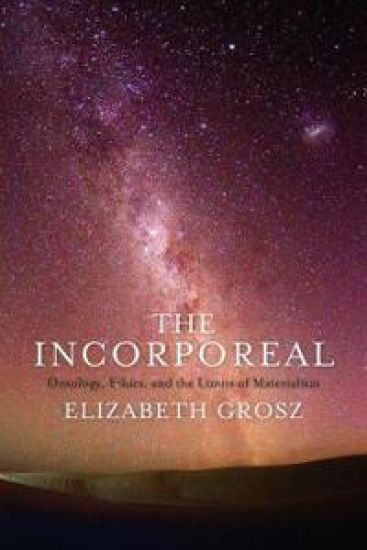
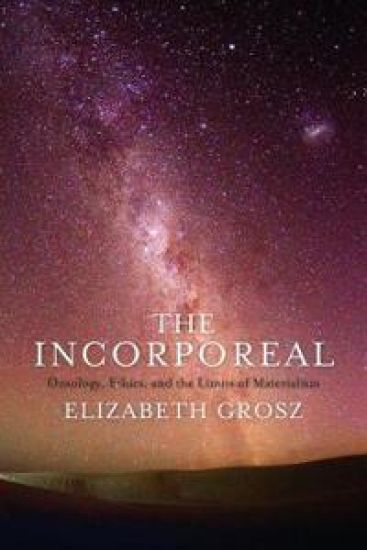
Philosophy has inherited a powerful impulse to embrace either dualism or a reductive monism-either a radical separation of mind and body or the reduction of mind to body. But from its origins in the writings of the Stoics, the first thoroughgoing materialists, another view has acknowledged that no forms of materialism can be completely self-inclusive-space, time, the void, and sense are the incorporeal conditions of all that is corporeal or material. In The Incorporeal Elizabeth Grosz argues that the ideal is inherent in the material and the material in the ideal, and, by tracing its development over time, she makes the case that this same idea reasserts itself in different intellectual contexts. Grosz shows that not only are idealism and materialism inextricably linked but that this "belonging together" of the entirety of ideality and the entirety of materiality is not mediated or created by human consciousness. Instead, it is an ontological condition for the development of human consciousness. Grosz draws from Spinoza's material and ideal concept of substance, Nietzsche's amor fati, Deleuze and Guattari's plane of immanence, Simondon's preindividual, and Raymond Ruyer's self-survey or autoaffection to show that the world preexists the evolution of the human and that its material and incorporeal forces are the conditions for all forms of life, human and nonhuman alike. A masterwork by an eminent theoretician, The Incorporeal offers profound new insight into the mind-body problem
The Incorporeal

The Incorporeal

Elizabeth Grosz

Columbia University Press
2018
pokkari
Philosophy has inherited a powerful impulse to embrace either dualism or a reductive monism—either a radical separation of mind and body or the reduction of mind to body. But from its origins in the writings of the Stoics, the first thoroughgoing materialists, another view has acknowledged that no forms of materialism can be completely self-inclusive—space, time, the void, and sense are the incorporeal conditions of all that is corporeal or material. In The Incorporeal Elizabeth Grosz argues that the ideal is inherent in the material and the material in the ideal, and, by tracing its development over time, she makes the case that this same idea reasserts itself in different intellectual contexts.Grosz shows that not only are idealism and materialism inextricably linked but that this "belonging together" of the entirety of ideality and the entirety of materiality is not mediated or created by human consciousness. Instead, it is an ontological condition for the development of human consciousness. Grosz draws from Spinoza's material and ideal concept of substance, Nietzsche's amor fati, Deleuze and Guattari's plane of immanence, Simondon's preindividual, and Raymond Ruyer's self-survey or autoaffection to show that the world preexists the evolution of the human and that its material and incorporeal forces are the conditions for all forms of life, human and nonhuman alike. A masterwork by an eminent theoretician, The Incorporeal offers profound new insight into the mind-body problem
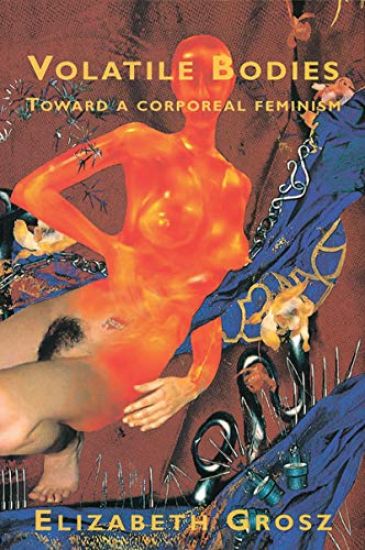
Volatile Bodies

Volatile Bodies

Elizabeth Grosz

Indiana University Press
1994
pokkari
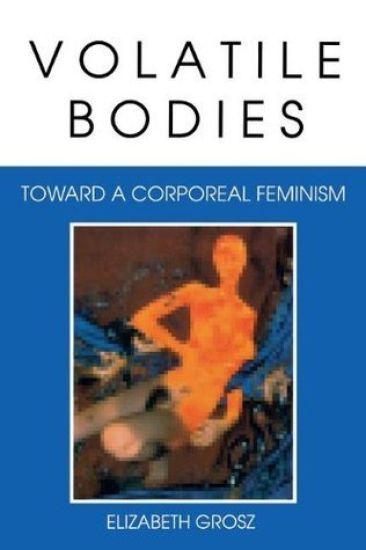
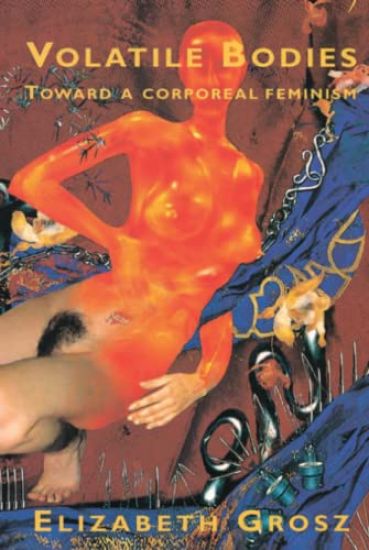
"The location of the author's investigations, the body itself rather than the sphere of subjective representations of self and of function in cultures, is wholly new. . . . I believe this work will be a landmark in future feminist thinking." —Alphonso Lingis "This is a text of rare erudition and intellectual force. It will not only introduce feminists to an enriching set of theoretical perspectives but sets a high critical standard for feminist dialogues on the status of the body." —Judith Butler Volatile Bodies demonstrates that the sexually specific body is socially constructed: biology or nature is not opposed to or in conflict with culture. Human biology is inherently social and has no pure or natural "origin" outside of culture. Being the raw material of social and cultural organization, it is "incomplete" and thus subject to the endless rewriting and social inscription that constitute all sign systems. Examining the theories of Freud, Lacan, Merleau-Ponty, Foucault, Deleuze, Derrida, etc. on the subject of the body, Elizabeth Grosz concludes that the body they theorize is male. These thinkers are not providing an account of "human" corporeality but of male corporeality. Grosz then turns to corporeal experiences unique to women—menstruation, pregnancy, childbirth, lactation, menopause. Her examination of female experience lays the groundwork for developing theories of sexed corporeality rather than merely rectifying flawed models of male theorists.
Sexual Subversions

Sexual Subversions

Elizabeth Grosz

Routledge
2021
sidottu
Sexual Subversions introduces the works of three well known, if not well-read, French feminists: Julia Kristeva, Luce Irigaray and Micele Le Doeuff. It provides a map of an area where there are few detailed discussion of the achievements of these difficult, yet immensely rewarding, writers. In doing so, this overview raises issues of general relevance to feminist research: it participates in debates around the nature of feminist theory, the relations feminist intellectuals have to male dominated knowledges, and the strategies appropriate for developing non patriarchal, autonomous or woman-centred knowledges. No book in French feminists would be complete without including the contributions of Kristeva and Irigaray. The inclusion of Le Deouff's work, which brings a different perspective to bear on the question of sexual difference, provides a counterbalance to literary appropriations of French feminism by Anglo-American readerships. Kristeva, Irigaray and Le Deouff are the focal points of this study, precisely because each highlights the differences of the others, revealing the frameworks to which the others are committed. Nevertheless, while these writers do not present a common political or theoretical position or form a school, each addresses the question of women's autonomy from male definition, affirms the sexual specificity of women, seeks out a femininity women can use to question the patriarchal norms and ideals of femininity and rejects the preordained positions patriarchy allots to women.
The Nick of Time

The Nick of Time

Elizabeth Grosz

Routledge
2021
sidottu
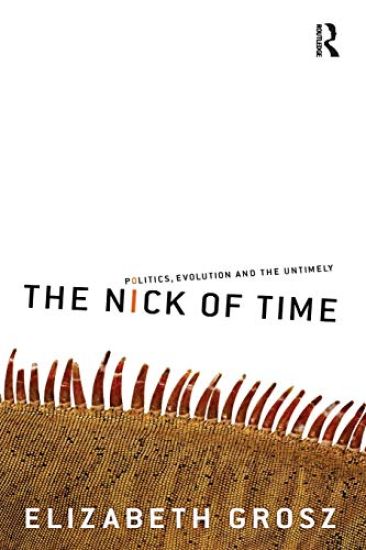
In this pathbreaking new work, Elizabeth Grosz proposes a theory of becoming in place of the prevailing emphasis on being in social, political and biological discourse. Drawing on evolutionary biology, she explores the effect of time on the organization of matter and the development of biological life. She argues that factoring in the relentless forward movement of time throws new light on the ever-growing complication of social life, and also on political struggle.Grosz juxtaposes the work of Darwin, Nietzsche and Bergson. Each theorises time as an active phenomenon with specific effects, with a profound impact on understandings of the body in relation to time. She shows how their concepts of life, evolution, and becoming are manifest in the work of Deleuze and Irigaray.Throughout The Nick of Time, Grosz emphasizes the political and cultural imperative to fundamentally rethink time: the more clearly we understand our temporal location as beings straddling the past and the future without the security of a stable and abiding present, the more transformation becomes conceivable.
Volatile Bodies

Volatile Bodies

Elizabeth Grosz

Routledge
2021
sidottu
Volatile Bodies is based on a risky wager: that all the effects of subjectivity, psychological depth and inferiority can be refigured in terms of bodies and surfaces. It uses, transforms and subverts the work of a number of distinguished male theorists of the body (Freud, Lacan, Merleau-Ponty, Schilder, Nietzsche, Foucault, Lingis and Deleuze) who, while freeing the body from its subordination to the mind, are nonetheless unable to accomodate the specificities of women's bodies.This book explores various dissonances in thinking the relation between mind and body. It investigates issues that resist reduction to these binary terms - psychosis, hypochondria, neurological disturbances, perversions and sexual deviation - and most particularly the enigmatic status of body fluids, and the female body.
Jacques Lacan

Jacques Lacan

Elizabeth Grosz

Routledge
1990
nidottu
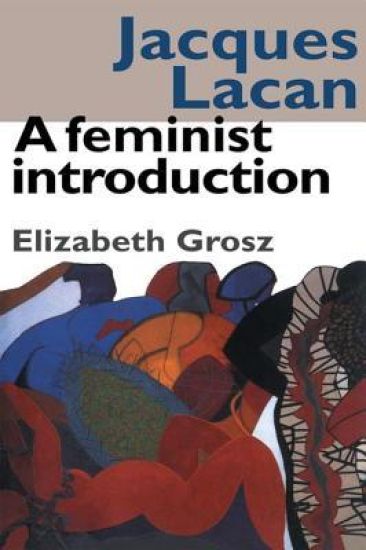
Grosz gives a critical overview of Lacan's work from a feminist perspective. Discussing previous attempts to give a feminist reading of his work, she argues for women's autonomy based on an indifference to the Lacanian phallus.
Space, Time and Perversion

Space, Time and Perversion

Elizabeth Grosz

Routledge
1995
nidottu
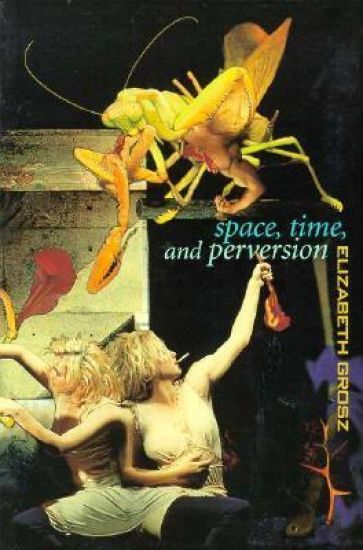
Exploring the fields of architecture, philosophy, and queer theory, Grosz shows how feminism and cultural analysis have conceptually stripped bodies of their specificity, their corporeality, and the vestigal traces of their production as bodies. She investigates the work of Michel Foucault, Teresa de Lauretis, Gilles Deleuze, Judith Butler and Alphonso Lingi, considering their work by examining the ways in which the functioning of bodies transforms understandings of space and time, knowledge and desire. Grosz moves toward a radical consideration of bodies and their relationship to transgression and perversity.
The Nick of Time

The Nick of Time

Elizabeth Grosz

Duke University Press
2004
pokkari
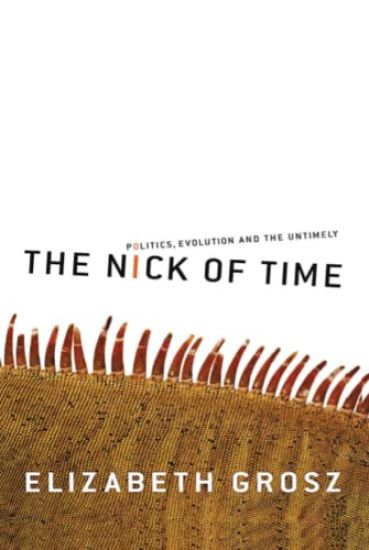
In this pathbreaking philosophical work, Elizabeth Grosz points the way toward a theory of becoming to replace the prevailing ontologies of being in social, political, and biological discourse. Arguing that theories of temporality have significant and underappreciated relevance to the social dimensions of science and the political dimensions of struggle, Grosz engages key theoretical concerns related to the reality of time. She explores the effect of time on the organization of matter and on the emergence and development of biological life. Considering how the relentless forward movement of time might be conceived in political and social terms, she begins to formulate a model of time that incorporates the future and its capacity to supersede and transform the past and present.Grosz develops her argument by juxtaposing the work of three major figures in Western thought: Charles Darwin, Friedrich Nietzsche, and Henri Bergson. She reveals that in theorizing time as an active, positive phenomenon with its own characteristics and specific effects, each of these thinkers had a profound effect on contemporary understandings of the body in relation to time. She shows how their allied concepts of life, evolution, and becoming are manifest in the work of Gilles Deleuze and Luce Irigaray. Throughout The Nick of Time, Grosz emphasizes the political and cultural imperative to fundamentally rethink time: the more clearly we understand our temporal location as beings straddling the past and the future without the security of a stable and abiding present, the more transformation becomes conceivable.
The Nick of Time

The Nick of Time

Elizabeth Grosz

Duke University Press
2004
sidottu
In this pathbreaking philosophical work, Elizabeth Grosz points the way toward a theory of becoming to replace the prevailing ontologies of being in social, political, and biological discourse. Arguing that theories of temporality have significant and underappreciated relevance to the social dimensions of science and the political dimensions of struggle, Grosz engages key theoretical concerns related to the reality of time. She explores the effect of time on the organization of matter and on the emergence and development of biological life. Considering how the relentless forward movement of time might be conceived in political and social terms, she begins to formulate a model of time that incorporates the future and its capacity to supersede and transform the past and present.Grosz develops her argument by juxtaposing the work of three major figures in Western thought: Charles Darwin, Friedrich Nietzsche, and Henri Bergson. She reveals that in theorizing time as an active, positive phenomenon with its own characteristics and specific effects, each of these thinkers had a profound effect on contemporary understandings of the body in relation to time. She shows how their allied concepts of life, evolution, and becoming are manifest in the work of Gilles Deleuze and Luce Irigaray. Throughout The Nick of Time, Grosz emphasizes the political and cultural imperative to fundamentally rethink time: the more clearly we understand our temporal location as beings straddling the past and the future without the security of a stable and abiding present, the more transformation becomes conceivable.
Time Travels

Time Travels

Elizabeth Grosz

Duke University Press
2005
sidottu
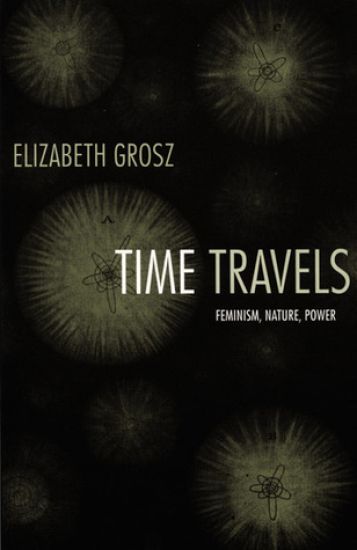
Recently the distinguished feminist theorist Elizabeth Grosz has turned her critical acumen toward rethinking time and duration. Time Travels brings her trailblazing essays together to show how reconceptualizing temporality transforms and revitalizes key scholarly and political projects. In these essays, Grosz demonstrates how imagining different relations between the past, present, and future alters understandings of social and scientific projects ranging from theories of justice to evolutionary biology, and she explores the radical implications of the reordering of these projects for feminist, queer, and critical race theories.Grosz’s reflections on how rethinking time might generate new understandings of nature, culture, subjectivity, and politics are wide ranging. She moves from a compelling argument that Charles Darwin’s notion of biological and cultural evolution can potentially benefit feminist, queer, and antiracist agendas to an exploration of modern jurisprudence’s reliance on the notion that justice is only immanent in the future and thus is always beyond reach. She examines Henri Bergson’s philosophy of duration in light of the writings of Gilles Deleuze, Maurice Merleau-Ponty, and William James, and she discusses issues of sexual difference, identity, pleasure, and desire in relation to the thought of Deleuze, Friedrich Nietzsche, Michel Foucault, and Luce Irigaray. Together these essays demonstrate the broad scope and applicability of Grosz’s thinking about time as an undertheorized but uniquely productive force.
Time Travels

Time Travels

Elizabeth Grosz

Duke University Press
2005
pokkari
Recently the distinguished feminist theorist Elizabeth Grosz has turned her critical acumen toward rethinking time and duration. Time Travels brings her trailblazing essays together to show how reconceptualizing temporality transforms and revitalizes key scholarly and political projects. In these essays, Grosz demonstrates how imagining different relations between the past, present, and future alters understandings of social and scientific projects ranging from theories of justice to evolutionary biology, and she explores the radical implications of the reordering of these projects for feminist, queer, and critical race theories.Grosz’s reflections on how rethinking time might generate new understandings of nature, culture, subjectivity, and politics are wide ranging. She moves from a compelling argument that Charles Darwin’s notion of biological and cultural evolution can potentially benefit feminist, queer, and antiracist agendas to an exploration of modern jurisprudence’s reliance on the notion that justice is only immanent in the future and thus is always beyond reach. She examines Henri Bergson’s philosophy of duration in light of the writings of Gilles Deleuze, Maurice Merleau-Ponty, and William James, and she discusses issues of sexual difference, identity, pleasure, and desire in relation to the thought of Deleuze, Friedrich Nietzsche, Michel Foucault, and Luce Irigaray. Together these essays demonstrate the broad scope and applicability of Grosz’s thinking about time as an undertheorized but uniquely productive force.
Becoming Undone

Becoming Undone

Elizabeth Grosz

Duke University Press
2011
sidottu
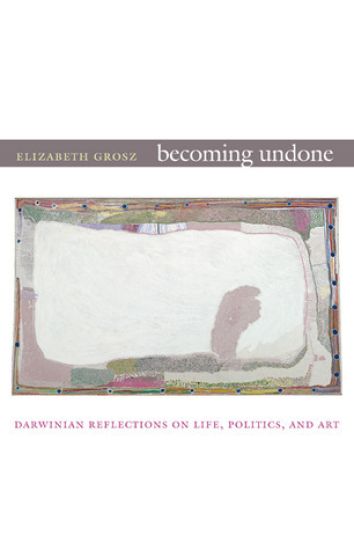
In Becoming Undone, Elizabeth Grosz addresses three related concepts-life, politics, and art-by exploring the implications of Charles Darwin’s account of the evolution of species. Challenging characterizations of Darwin’s work as a form of genetic determinism, Grosz shows that his writing reveals an insistence on the difference between natural selection and sexual selection, the principles that regulate survival and attractiveness, respectively. Sexual selection complicates natural selection by introducing aesthetic factors and the expression of individual will, desire, or pleasure. Grosz explores how Darwin’s theory of sexual selection transforms philosophy, our understanding of humanity in its male and female forms, our ideas of political relations, and our concepts of art. Connecting the naturalist’s work to the writings of Bergson, Deleuze, and Irigaray, she outlines a postmodern Darwinism that understands all of life as forms of competing and coordinating modes of openness. Although feminists have been suspicious of the concepts of nature and biology central to Darwin’s work, Grosz proposes that his writings are a rich resource for developing a more politicized, radical, and far-reaching feminist understanding of matter, nature, biology, time, and becoming.
Becoming Undone

Becoming Undone

Elizabeth Grosz

Duke University Press
2011
pokkari
In Becoming Undone, Elizabeth Grosz addresses three related concepts-life, politics, and art-by exploring the implications of Charles Darwin’s account of the evolution of species. Challenging characterizations of Darwin’s work as a form of genetic determinism, Grosz shows that his writing reveals an insistence on the difference between natural selection and sexual selection, the principles that regulate survival and attractiveness, respectively. Sexual selection complicates natural selection by introducing aesthetic factors and the expression of individual will, desire, or pleasure. Grosz explores how Darwin’s theory of sexual selection transforms philosophy, our understanding of humanity in its male and female forms, our ideas of political relations, and our concepts of art. Connecting the naturalist’s work to the writings of Bergson, Deleuze, and Irigaray, she outlines a postmodern Darwinism that understands all of life as forms of competing and coordinating modes of openness. Although feminists have been suspicious of the concepts of nature and biology central to Darwin’s work, Grosz proposes that his writings are a rich resource for developing a more politicized, radical, and far-reaching feminist understanding of matter, nature, biology, time, and becoming.
Jacques Lacan

Jacques Lacan

Elizabeth Grosz

Routledge
2015
sidottu
Grosz gives a critical overview of Lacan's work from a feminist perspective. Discussing previous attempts to give a feminist reading of his work, she argues for women's autonomy based on an indifference to the Lacanian phallus.
The Nick of Time

The Nick of Time

Elizabeth Grosz

Allen Unwin
2004
nidottu
Always one to take on big questions, Grosz wants to shift the attention of feminist and other radical social theory to the natural sciences, in order to ask how the biological induces the cultural and, further, how our immersion in time affects the materiality of living beings. Her characteristically lucid and passionate style engages imagination and intellect equally.' Susan Sheridan, Professor of Women's Studies, Flinders UniversityIn this pathbreaking new work, Elizabeth Grosz proposes a theory of becoming in place of the prevailing emphasis on being in social, political and biological discourse. Drawing on evolutionary biology, she explores the effect of time on the organization of matter and the development of biological life. She argues that factoring in the relentless forward movement of time throws new light on the ever-growing complication of social life, and also on political struggle.Grosz juxtaposes the work of Darwin, Nietzsche and Bergson. Each theorises time as an active phenomenon with specific effects, with a profound impact on understandings of the body in relation to time.She shows how their concepts of life, evolution, and becoming are manifest in the work of Deleuze and Irigaray.Throughout The Nick of Time, Grosz emphasizes the political and cultural imperative to fundamentally rethink time: the more clearly we understand our temporal location as beings straddling the past and the future without the security of a stable and abiding present, the more transformation becomes conceivable.