The book "" The Cities of the Sun; Stories of Ancient America founded on historical incidents in the Book of Mormon, has been considered important throughout the human history, and so that this work is never forgotten we have made efforts in its preservation by republishing this book in a modern format for present and future generations. This whole book has been reformatted, retyped and designed. These books are not made of scanned copies and hence the text is clear and readable.
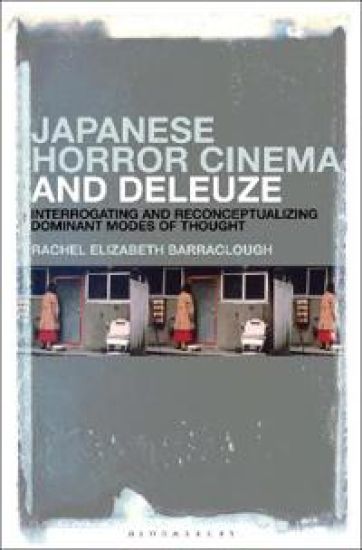
Using theories of national, transnational and world cinema, and genre theories and psychoanalysis as the basis of its argument, Japanese Horror Cinema and Deleuze argues that these understandings of Japanese horror films can be extended in new ways through the philosophy of Deleuze. In particular, the complexities and nuances of how films like Ju-On: The Grudge (2002), Audition (1999) and Kairo (2001) (and beyond) form dynamic, transformative global networks between industries, directors and audiences can be considered. Furthermore, understandings of how key horror tropes and motifs apply to these films (and others more broadly), such as the idea of the “monstrous-feminine”, can be transformed, allowing these models to become more flexible.
Using theories of national, transnational and world cinema, and genre theories and psychoanalysis as the basis of its argument, Japanese Horror Cinema and Deleuze argues that these understandings of Japanese horror films can be extended in new ways through the philosophy of Deleuze. In particular, the complexities and nuances of how films like Ju-On: The Grudge (2002), Audition (1999) and Kairo (2001) (and beyond) form dynamic, transformative global networks between industries, directors and audiences can be considered. Furthermore, understandings of how key horror tropes and motifs apply to these films (and others more broadly), such as the idea of the “monstrous-feminine”, can be transformed, allowing these models to become more flexible.
When is preventive war chosen to counter nuclear proliferation? In All Options on the Table, Rachel Elizabeth Whitlark looks beyond systemic and slow-moving factors such as the distribution of power. Instead, she highlights individual leaders' beliefs to explain when preventive military force is the preferred strategy. Executive perspective—not institutional structure—is paramount. Whitlark makes her argument through archivally based comparative case studies. She focuses on executive decision making regarding nuclear programs in China, North Korea, Iraq, Pakistan, and Syria. This book considers the actions of US presidents John F. Kennedy, Lyndon B. Johnson, George H. W. Bush, Bill Clinton, and George W. Bush, as well as Israeli prime ministers Menachem Begin, Yitzhak Rabin, and Ehud Olmert. All Options on the Table demonstrates that leaders have different beliefs about the consequences of nuclear proliferation in the international system and their state's ability to deter other states' nuclear activity. These divergent beliefs lead to variation in leaders' preferences regarding the use of preventive military force as a counter-proliferation strategy. The historical evidence amassed in All Options on the Table bears on strategic assessments of aspiring nuclear powers such as Iran and North Korea. Whitlark argues that only those leaders who believe that nuclear proliferation is destabilizing for the international system will consider preventive force to counter such challenges. In a complex nuclear world, this insight helps explain why the use of force as a counter-proliferation strategy has been an extremely rare historical event.
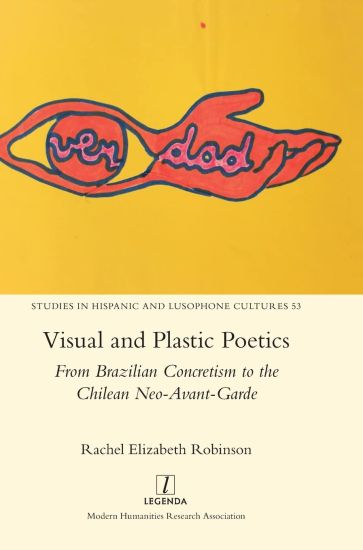
Characteristically a-syntactic and focusing on the word and poem as object, Brazilian concrete poetry (1950s onward) creatively and often playfully performs a critique of the ways in which we interact with language and literature. The concretist techniques move beyond the Brazilian borders to the Chilean neo-avant-garde of the 1970s and 1980s. Robinson for the first time demonstrates how three Chilean experimental poets, Cecilia Vicu a (1947-), Juan Luis Mart nez (1942-1993) and Rodrigo Lira (1949-1981), develop and expand upon Brazilian concrete poetics. Furthermore, the Chilean recovery of the experimentations of concrete poetry transfers the critique of language from an international sphere to the severe political reality of Chilean politics, particularly during or in relation to the dictatorship of Augusto Pinochet.Rachel Robinson has published several articles on the works of Latin American experimental poets. She completed her DPhil at the University of Oxford in 2018 and a postdoctoral fellowship at the Instituto de Estudios Avanzados of the Universidad de Santiago de Chile in 2021. She will begin a Humboldt Foundation postdoctoral fellowship in Berlin this summer.