

Kirjahaku
Etsi kirjoja tekijän nimen, kirjan nimen tai ISBN:n perusteella.
1000 tulosta hakusanalla Elizabeth Stewart


Catastrophe and Survival: Walter Benjamin and Psychoanalysis
Elizabeth Stewart
Continuum Publishing Corporation
2012
nidottu

Elizabeth Stewart is a highly acclaimed singer, pianist and accordionist whose reputation has spread widely not only as an outstanding musician but as the principal inheritor and advocate of her family and their music. First discovered by folklorists in the 1950s, the Stewarts of Fetterangus, including Elizabeth's mother Jean, her uncle Ned, and her aunt Lucy, have had immense musical influence. Lucy in particular became a celebrated ballad singer and in 1961 Smithsonian Folkways released a collection of her classic ballad recordings that brought the family's music and name to an international audienceUp Yon Wide and Lonely Glen is a significant memoir of Scottish Traveller life, containing stories, music, and songs from this prominent Traveller family. The book is the result of a close partnership between Elizabeth Stewart and Scottish folk singer and writer Alison McMorland. It details the ancestral history of Elizabeth Stewart's family, the story of her mother, the story of her aunt, and her own life story, framing and contextualizing the music and song examples and showing how totally integrated these art forms are with daily life. It is a remarkable portrait of a Traveller family from the perspective of its matrilineal line. The narrative, spanning five generations and written in Scots, captures the rhythms and idioms of Elizabeth Stewart's speaking voice and is extraordinary from a musical, cultural, sociological, and historical point of view. The book features 145 songs, eight original piano compositions, folk-tale versions, rhymes and riddles, and eighty fascinating illustrations, from the family of Elizabeth, her mother Jean (1912-1962) and her aunt Lucy (1901-1982). In addition, there are notes on the songs and a series of appendices. Up Yon Wide and Lonely Glen will appeal to those interested in traditional music, folklore, and folk song--and in particular, Scottish tradition.

Elizabeth Stewart is a highly acclaimed singer, pianist and accordionist whose reputation has spread widely not only as an outstanding musician but as the principal inheritor and advocate of her family and their music. First discovered by folklorists in the 1950s, the Stewarts of Fetterangus, including Elizabeth's mother Jean, her uncle Ned, and her aunt Lucy, have had immense musical influence. Lucy in particular became a celebrated ballad singer and in 1961 Smithsonian Folkways released a collection of her classic ballad recordings that brought the family's music and name to an international audienceUp Yon Wide and Lonely Glen is a significant memoir of Scottish Traveller life, containing stories, music, and songs from this prominent Traveller family. The book is the result of a close partnership between Elizabeth Stewart and Scottish folk singer and writer Alison McMorland. It details the ancestral history of Elizabeth Stewart's family, the story of her mother, the story of her aunt, and her own life story, framing and contextualizing the music and song examples and showing how totally integrated these art forms are with daily life. It is a remarkable portrait of a Traveller family from the perspective of its matrilineal line. The narrative, spanning five generations and written in Scots, captures the rhythms and idioms of Elizabeth Stewart's speaking voice and is extraordinary from a musical, cultural, sociological, and historical point of view. The book features 145 songs, eight original piano compositions, folk-tale versions, rhymes and riddles, and eighty fascinating illustrations, from the family of Elizabeth, her mother Jean (1912-1962) and her aunt Lucy (1901-1982). In addition, there are notes on the songs and a series of appendices. Up Yon Wide and Lonely Glen will appeal to those interested in traditional music, folklore, and folk song--and in particular, Scottish tradition.
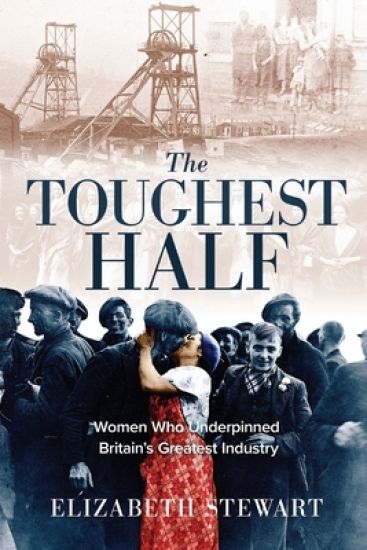
Lasting barely two centuries throughout the 1700s and 1800s, the Industrial Revolution in Britain propelled the country into the role of the world's premier industrial nation. Known as the 'midwife of the Industrial Revolution' coal was, literally, the driving force behind this power.Although referred to as 'the black diamond', coal is not a thing of beauty, yet like the true diamond, it is representative of power and wealth.Coal mining usually evokes images of tough men, glistening with the sweat of underground toil. We talk about man-power and manual labour; the industry has become synonymous with men. Rarely, if ever, do women come to mind, yet, until an Act of 1942 banned them from working down the mines, women worked alongside men, their toil equally as gruelling in conditions jut as appalling. Forbidden by Victorian prudery from working underground, they were replaced, at much greater expense to the mine owners, by ponies.The efforts of these women, every bit as responsible as men for creating Britain's once greatest industry, have rarely been acknowledged.During the 1926 general strike and lockout, Herbert Smith, President of the Miners' Federation of Great Britain, reported that half the attendees at union meetings were women, "And these", he insisted, "are always the toughest half."This book tells of the history of coal and coal mining from mediaeval times to the demise of the industry in Britain in the 1990s, and describes women's role in this history and how it affected their livesThrough a combination of historical narrative, fiction and biography, the book gives a voice to these diminished 'others' - wives, mothers and daughters - whose persistence, courage, pride and sacrifice also contributed to the profits of wealthy mine owners. Their stories are told through the prism of historical events - the frightened little girl forced to work alone in subterranean darkness, the poverty-stricken young woman confronting an unwanted pregnancy, those enduring the loss of sons and partners to a deadly occupation and women who, through adversity, took the opportunity to publicly reveal their collective strength.Gentle and gruff, warm-hearted and implacable, these battlers against grime, beaters of carpets, painters, decorators and cooks, activists and staunch supporters of strikes and lockouts, underpinned the foundations of Britain's coal industry.Woven through this book is the true story of the author's mother, a miner's daughter. Her life too was hard and closely entwined with coal mining to which she made, over many years, a considerable contribution not only to the industry but to the mining communities in which she worked.


Mayo Clinic Guide to Fertility and Conception
Elizabeth Stewart; Jani Jensen; Mayo Clinic
Good Books,U.S.
2015
pokkari
" " "The Mayo Clinic Guide to Fertility and Conception" offers premiere medical knowledge and advice for couples trying to have a baby. The book presents available options in detail. More than that, it gives solid information about which approaches may be most suitable for which couples. The language is accessible; the tone, one of companionship. Full-color throughout, with numerous diagrams, photos, and case studies. ""What options does a couple have when they've been trying to conceive a child, but so far haven't had a baby? "The Mayo Clinic Guide to Fertility and Conception" offers premiere medical knowledge, as well as advice about what to try when. Mayo Clinic has brought a team of physicians to the subject, whose specialties range from the physical to the emotional aspects of the subject. They address readers with humanity, care, and empathy. Tone and Emphasis The book presents in detail the options that are available. But more than that, it helps a couple sort out what methods they should consider based on what is right for "them," rather than highlighting only those approaches with the greatest success rates or the most reasonable costs. Subjects Covered The "Guide" includes these chapters: - Preparing your body for pregnancy - Adjusting your lifestyle - Eating to conceive - Producing healthy sperm - Tips for increased success - The effect of age on pregnancy - Who to see when you need some help - Reproductive assistance - Managing stress and anxiety -Third-party reproduction Timelines and Special Features As many women and men wait longer to start families, fertility and conception are of high and increasing interest. The Mayo Clinic fertility experts recognize the desperation so many couples experience and offer resources for dealing with that. In addition to including reliable and the most current medical information, the book includes stories of those who've struggled with infertility. It addresses Frequently Asked Questions. Beside medical options, it offers alternative approaches, openly giving the pros and cons of each. What Sets This Book Apart? It offers world-class medical information in accessible language with a tone of companionship. It offers gentle advice by discussing which approaches may be most suitable for which couples. And it suggests the order in which couples might want to try various methods if they're not immediately successful. Full-color throughout, with numerous diagrams and photos.

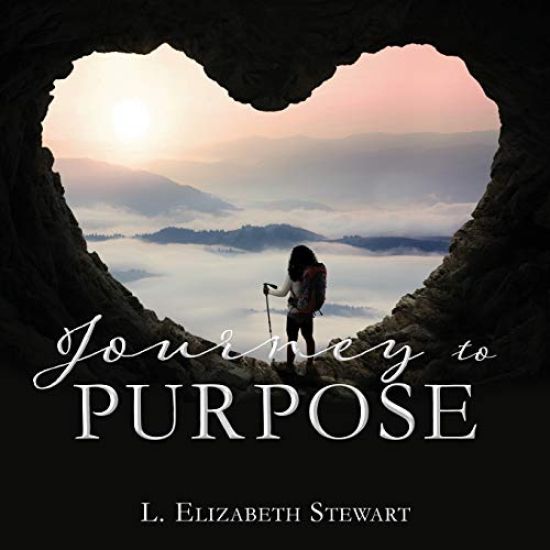
Journey to Purpose seeks to help lead Christians to their God-given purpose. Author L. Elizabeth Stewart seeks not only to help guide you to your purpose in God, but also to help you identify where you are on that path and any distractions that may be leading you away from God's plan. Bible study and inspiration come together with scriptures and the author's personal experiences to show you what finding this path can look like. Everyone has their specific higher purpose ascertained by the Lord because every person was created uniquely by Him. A teacher's guide with handouts are provided for each chapter along with a journal and reflection activity. As each person works to discover their purpose, there will be stumbles, snares, trials, and tribulations. But we must all find our paths in God.
Occupational Therapy Evaluation for Adults
Kerryellen Griffith Vroman; Elizabeth Stewart
Lippincott Williams and Wilkins
2013
pokkari
Master the concepts and skills necessary for effective practice with Occupational Therapy Evaluation for Adults: A Pocket Guide, 2nd Edition . Reflecting the latest AOTA standards, this pocket-sized guide is a quick, comprehensive reference designed to help you learn to perform efficient evaluations of adults, identify problems, and plan and implement interventions to produce optimal therapeutic outcomes. "See how concepts are applied to practice with real world clinical examples in every chapter.Develop your skills and understanding with illustrations and photographs that demonstrate assessment techniques.Broaden your knowledge with easy-to-understand coverage of a client-centered top/down approach using the Occupational Therapy Practice Framework (OTPF).Prepare your students for community-based practice with a range of new evaluation tools.Develop practical skills for the workplace with up-to-date coverage of interview skills, HIPAA guidelines for communication, and more.Access a wide range of useful tools, including tables that capture information in an easy-to-read manner, an appendix on terminology, and online evaluation forms.
This work has been selected by scholars as being culturally important and is part of the knowledge base of civilization as we know it.This work is in the public domain in the United States of America, and possibly other nations. Within the United States, you may freely copy and distribute this work, as no entity (individual or corporate) has a copyright on the body of the work.Scholars believe, and we concur, that this work is important enough to be preserved, reproduced, and made generally available to the public. To ensure a quality reading experience, this work has been proofread and republished using a format that seamlessly blends the original graphical elements with text in an easy-to-read typeface.We appreciate your support of the preservation process, and thank you for being an important part of keeping this knowledge alive and relevant.

This work has been selected by scholars as being culturally important and is part of the knowledge base of civilization as we know it.This work is in the public domain in the United States of America, and possibly other nations. Within the United States, you may freely copy and distribute this work, as no entity (individual or corporate) has a copyright on the body of the work.Scholars believe, and we concur, that this work is important enough to be preserved, reproduced, and made generally available to the public. To ensure a quality reading experience, this work has been proofread and republished using a format that seamlessly blends the original graphical elements with text in an easy-to-read typeface.We appreciate your support of the preservation process, and thank you for being an important part of keeping this knowledge alive and relevant.
Preaching & Teaching LAUDATO SI': On Care for Our Common Home
Elizabeth-Anne Stewart
Createspace Independent Publishing Platform
2015
nidottu
Preaching and Teaching Laudato Si' is not a synopsis of Pope Francis' Encyclical on the Environment, but a simply written primer for those who wish to preach, teach or reflect on the spiritual implications of a green agenda; it is a resource for those of any faith who wish to respond to the Pope's plea for ecological conversion. Though the book is primarily intended for preachers and teachers, it offers basic principles for anyone who wishes to learn more about sustainable living.Beginning with an introductory section which presents the range of ecological crises currently facing humanity, the book includes an Ecological Examination of Conscience based loosely (and somewhat playfully) on the idea of Negative and Positive "Confessions" from the Egyptian Book of the Dead. This Examination is not all-encompassing, but it does open readers to the possibility that their habits and lifestyle may be harming Creation. The intention here is not to create guilt, but to initiate change, however infinitesimal.There are two chapters which address Preachers, though the content may be useful for others as well. "Preaching to the Choir" asks how one should present the Encyclical to those who are already open to its content. In other words, the assembly has no need of conversion, and so the preacher's task is not to inform but to support. Conversely, "Preaching to the Pew" asks how a preacher should approach those who dismiss the document as a "Papal Mistake." In these two chapters, author Elizabeth-Anne Stewart discusses what is liturgically appropriate as well as what is pastorally sensitive: different approaches to "unpacking" the Encyclical may vary according to the constituents one serves. The two chapters which primarily are geared towards teachers explore ways of reaching Millennials and Generation Z-- the two generations that have inherited the ecological mess mostly created by Baby Boomers and their offspring, Gen X. Here, Stewart draws on more than three decades of incorporating social justice issues in Humanities classes, especially social justice and the environment.This little book is not a scholarly work, but a series of reflections meant for every day people who happen to preach, teach or think
A Raging Thirst: My Life in the Chamber of Yearnings
Elizabeth Ann Stewart
Createspace Independent Publishing Platform
2017
nidottu
Mind-Shifting Imagery: Image Guidance for Life Coaches
Elizabeth-Anne Stewart
Createspace Independent Publishing Platform
2018
nidottu
Mind-Shifting Imagery: Image Guidance for Life Coaches provides brief, safe, non-therapeutic applications of Image Guidance for coaches and other life guides such as spiritual directors, pastoral counselors, chaplains, social workers, and therapists. As presented in this book, Image Guidance has powerful implications for life coaching and is fully aligned with the International Coach Federation's core competencies and Code of Ethics. Used briefly, as a forward-focusing tool rather than as a strategy for re-visiting the past, Image Guidance offers a doorway into self-knowledge (I know who I am) and self-awareness (I understand my dreams, desires, fantasies, motivations and purpose, as well as the limiting beliefs that are stopping me from living the life I want to lead). It is not a "coaching method" as such, but a technique for taking clients to the next level, spiritually, emotionally and even physically. It was nearly 30 years ago that Dr. Elizabeth-Anne Stewart's fascination with the symbolic led her to develop a process for accessing the unconscious that she named "Image Guidance." While this process bears similarities to counseling approaches involving guided imagery and the active imagination, it is unique in that clients converse directly with their own imagery in the presence of a supportive guide who offers direction as needed, as well as feedback. Through her explorations-mostly with faculty, staff and students at DePaul University- Dr. Stewart discovered that images function much like dreams in their ability to heal, guide and illumine. Over time, she amassed a series of case studies which Paulist Press published as Image Guidance: A Tool for Spiritual Direction (1992) and Image Guidance and Healing (1994). Mind-Shifting Imagery: Image Guidance for Life Coaches illustrates simple ways in which life coaches can use archetypes, symbols and metaphors in personal guidance, relationship coaching and even in corporate settings; there is also a chapter on the use of religious imagery and one on imagery and physical healing. Throughout the book, the author provides sample transcripts and step-by-step commentary which serve as a "how-to" manual. She also discusses ways of developing the symbolic imagination, so that coaches and other guides can more readily understand and respond to their clients' symbols and metaphors. Though there are many ways of using imagery to open up coaching possibilities and to bring about dramatic "mind-shifts," Image Guidance provides a process for doing so. Applications include, but are not limited to: -Helping clients identify and describe emotions such as fear, frustration, excitement, enthusiasm; -Assisting clients to identify "blocks" to their success, thereby reducing their negative energy, and allowing them to become unstuck; -Assisting clients to imagine new possibilities and outcomes and to work towards these goals; -Helping clients to prioritize, take action and evaluate; -Affirming clients' hopes and dreams while re-enforcing their belief in self; -Encouraging clients to accept new positions of leadership or areas of professional or personal responsibility etc. Mind-Shifting Imagery: Image Guidance for Life Coaches demonstrates that imagery has a place in coaching with clients who are ready to imagine new possibilities, explore options, diffuse negative situations and clarify complexities. In this journey, the guide serves as a companion and facilitator, helping make sense of all that the imagery reveals. By asking powerful questions and using Image Guidance as a brief intervention, the coach assists the client to go deeper, feel more intensely, understand more clearly and be more authentic. Again, Image Guidance is not a method of coaching but a tool to be used selectively and carefully so that clients can experience a "mind shift" and cross the great divide that separates them from where they are today and where they hope to be tomorrow.

Coaching often leads to a mind shift, a change in perspective. It’s not about maintaining the status quo but about diving deeper, gaining clarity, understanding oneself, becoming more authentic, and encountering truth. This mind shift is an epiphany moment - a moment of discovery, good or bad - that shatters old ways of thinking and sets the future in motion. Though typically associated with religious experience or literature, epiphanies are foundational to coaching, ensuring that the coach and client enter a shared transformational process.Unlocking Epiphany Moments: A Primer for Life Coaches and Other Inner Guides represents an unexplored field relevant to anyone who provides inner guidance. Dr. Stewart claims that epiphanies offer a framework for generating meaning, providing a 'GPS' for the maze of life and allowing clients to deepen their exploration into their motivations and options and the forces that block them. This book defines various epiphanies while exploring the skills and strategies that coaches can cultivate to facilitate such powerful moments.