Kirjojen hintavertailu. Mukana 12 496 977 kirjaa ja 12 kauppaa.

Kirjahaku

Etsi kirjoja tekijän nimen, kirjan nimen tai ISBN:n perusteella.

1000 tulosta hakusanalla Elizabeth Thompson; Loring Moody

When God Says Wait: Navigating Life's Detours and Delays Without Losing Your Faith, Your Friends, or Your Mind
A job, a true love, a baby, a cure. . . We're all waiting for something from God. And the place between His answers can feel like a wasteland where dreams--and faith--go to die. When we're waiting, we wonder, "Why?", "Why me?", and "How long?" But the truth? . . . When God says, "Wait," He doesn't tell us for how long. When God says, "Wait," we face one of life's greatest tests. When God says, "Wait," we have decisions to make. When God says, "Wait," we can control only two things: how we wait, and who we become along the way. Author Elizabeth Laing Thompson invites you to walk alongside people of the Bible who had to wait on God. . .imperfect heroes like David, Miriam, Naomi, Sarah, Joseph, and others. Their stories will provide a roadmap for your own story, helping you navigate the painful, lonely territory of waiting, coming out on the other side with your faith, relationships, and sense of humor intact. They might even help you learn to enjoy the ride. This book is about the journey of waiting, the space between answers, and the people we become while we live there.
Colonial Citizens

Colonial Citizens

Elizabeth Thompson

Columbia University Press
1999
sidottu
French rule in Syria and Lebanon coincided with the rise of colonial resistance around the world and with profound social trauma after World War I. In this tightly argued study, Elizabeth Thompson shows how Syrians and Lebanese mobilized, like other colonized peoples, to claim the terms of citizenship enjoyed in the European metropole. The negotiations between the French and citizens of the Mandate set the terms of politics for decades after Syria and Lebanon achieved independence in 1946. Colonial Citizens highlights gender as a central battlefield upon which the relative rights and obligations of states and citizens were established. The participants in this struggle included not only elite nationalists and French rulers, but also new mass movements of women, workers, youth, and Islamic populists. The author examines the "gendered battles" fought over France's paternalistic policies in health, education, labor, and the press. Two important and enduring political structures issued from these conflicts: * First, a colonial welfare state emerged by World War II that recognized social rights of citizens to health, education, and labor protection. * Second, tacit gender pacts were forged first by the French and then reaffirmed by the nationalist rulers of the independent states. These gender pacts represented a compromise among male political rivals, who agreed to exclude and marginalize female citizens in public life. This study provides a major contribution to the social construction of gender in nationalist and postcolonial discourse. Returning workers, low-ranking religious figures, and most of all, women to the narrative history of the region-figures usually omitted-Colonial Citizens enhances our understanding of the interwar period in the Middle East, providing needed context for a better understanding of statebuilding, nationalism, Islam, and gender since World War II.
Colonial Citizens

Colonial Citizens

Elizabeth Thompson

Columbia University Press
1999
pokkari
French rule in Syria and Lebanon coincided with the rise of colonial resistance around the world and with profound social trauma after World War I. In this tightly argued study, Elizabeth Thompson shows how Syrians and Lebanese mobilized, like other colonized peoples, to claim the terms of citizenship enjoyed in the European metropole. The negotiations between the French and citizens of the Mandate set the terms of politics for decades after Syria and Lebanon achieved independence in 1946. Colonial Citizens highlights gender as a central battlefield upon which the relative rights and obligations of states and citizens were established. The participants in this struggle included not only elite nationalists and French rulers, but also new mass movements of women, workers, youth, and Islamic populists. The author examines the "gendered battles" fought over France's paternalistic policies in health, education, labor, and the press. Two important and enduring political structures issued from these conflicts: * First, a colonial welfare state emerged by World War II that recognized social rights of citizens to health, education, and labor protection. * Second, tacit gender pacts were forged first by the French and then reaffirmed by the nationalist rulers of the independent states. These gender pacts represented a compromise among male political rivals, who agreed to exclude and marginalize female citizens in public life. This study provides a major contribution to the social construction of gender in nationalist and postcolonial discourse. Returning workers, low-ranking religious figures, and most of all, women to the narrative history of the region-figures usually omitted-Colonial Citizens enhances our understanding of the interwar period in the Middle East, providing needed context for a better understanding of statebuilding, nationalism, Islam, and gender since World War II.
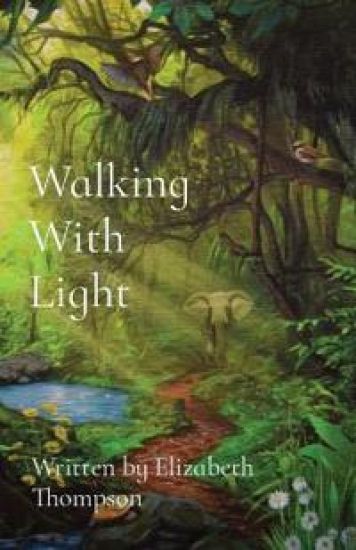
Walking With Light

Walking With Light

Elizabeth Thompson

Elizabeth Thompson
2022
pokkari
A collection of short poems that follow a journey from darkness into light, and the ultimate realization that once we have discovered our own light and power, we have a duty and a privilege to spread this light into the world. "Walking With Light" refers to this state of spreading joy and light, and treading gently in a world desperately in need of healing, spreading light into all the dark corners we find. "Walk with light. Softly, gently Feeling each blade of grass sweep across the soles of your feet Allow your toes to sink deep Into the mud-lined riverbeds Breathe in deep the same air That circulated on this globe for millennia You share the life force of billions." Except from "Walking With Light."
The Pioneer Woman

The Pioneer Woman

Elizabeth Thompson

McGill-Queen's University Press
1991
sidottu
Elizabeth Thompson develops the idea of the pioneer woman as an archetypal character firmly entrenched in Canadian fiction and the Canadian consciousness. Thompson's broad definition of the concept of pioneer can be seen to reflect the history of Canadian women, starting with the pioneers of settlement and continuing through the pioneers of spiritual perfection and psychological liberation. Various versions of the pioneer woman have appeared in English-Canadian fiction since Traill's development of the character type. Sara Jeannette Duncan's The Imperialist and Ralph Connor's The Man From Glengarry and Glengarry School Days feature pioneer women who cope not only with physical frontiers but also with those grounded in social and personal concerns. More recently, Margaret Laurence used this character type in The Stone Angel, A Jest of God, and The Diviners, with characters who inhabit internal, personal frontiers. Thompson argues that the longevity of this character type in English-Canadian fiction reveals an affinity between the pioneer woman and a common conception of the role of women in Canadian society. She suggests that the role for women proposed by the early immigrants was an appropriate choice for the Canadian frontier, regardless of the location and nature of that frontier.
Day by Day - the Chronicles of a Hard of Hearing Reporter

Day by Day - the Chronicles of a Hard of Hearing Reporter

Elizabeth Thompson

Gallaudet University Press,U.S.
2008
nidottu
"The Seventh Volume in the Deaf Lives Series"Elizabeth Thompson s hearing loss was detected when she was in elementary school, and her hearing continued to deteriorate until she became completely deaf. Like many other hard of hearing and late-deafened individuals, her hearing loss complicated the general challenges of life. She struggled through school, worked as a secretary, married, had a daughter, and then found herself living as a single mother. She remarried, and soon after learned that she had contracted Multiple Sclerosis (MS). Despite these hurdles, Thompson always expressed her determination to enjoy the best life had to offer. Her astonishing exuberance might have gone unnoticed if she hadn t accepted a new position as a reporter/columnist in 1998 for the Suburban News Publications (SNP). "Day by Day: The Chronicles of a Hard of Hearing Reporter" presents a marvelous blend of her experiences and best SNP columns that illustrate how she crafted her remarkable outlook. In her columns, Thompson presented how she handled her hearing loss as a personal guide for readers. She used every stratagem available to function full-throttle hearing aids, FM systems, lights for alarms, TTYs, even training her dog Snert. She also gently counseled readers on how to treat deaf and hard of hearing people with practical consideration and respect. Her pursuit of a fully realized life enabled her to do what she loved most, to meet and write about inspiring persons, many of whom are profiled in her memoir. Thompson eventually underwent cochlear implantation that restored 95% of her hearing, an exalting moment for her. Yet, "Day by Day" celebrates the entire arc of her life, a wonderful testament to her joyous resilience."
Lost in Paris

Lost in Paris

Elizabeth Thompson

Gallery Books
2021
nidottu
"A luscious, layered story of inheritance, heartbreak, reinvention, and family. I adored this book." --Kristan Higgins, New York Times bestselling author When a deed to an apartment in Paris turns up in an old attic trunk, an estranged mother and daughter must reunite to uncover the secret life of a family matriarch--perfect for fans of The Little Paris Bookshop and The Beekeeper's Daughter. Hannah Bond has always been a bookworm, which is why she fled Florida--and her unstable, alcoholic mother--for a quiet life leading Jane Austen-themed tours through the British countryside. But on New Year's Eve, everything comes crashing down when she arrives back at her London flat to find her mother, Marla, waiting for her. Marla's brought two things with her: a black eye from her ex-boyfriend and an envelope. Its contents? The deed to an apartment in Paris, an old key, and newspaper clippings about the death of a famous writer named Andres Armand. Hannah, wary of her mother's motives, reluctantly agrees to accompany her to Paris, where against all odds, they discover great-grandma Ivy's apartment frozen in 1940 and covered in dust. Inside the apartment, Hannah and Marla discover mysterious clues about Ivy's life--including a diary detailing evenings of drinking and dancing with Hemingway, the Fitzgeralds, and other iconic expats. Outside, they retrace her steps through the city in an attempt to understand why she went to such great lengths to hide her Paris identity from future generations. A heartwarming and charming saga set in the City of Lights, Lost in Paris is an unforgettable celebration of family and the love between a mother and a daughter.