For many years Pulitzer Prize winner Ellen Glasgow has been regarded as a classic American regional novelist. But Glasgow is far more than a Southern writer, as Linda Wagner demonstrates in this fascinating reassessment of her work. A Virginia lady, Glasgow began to write at a time when the highest praise for a literary woman was to be mistaken for a male writer. In her early fiction, published at the turn of the century, all attention is focused on male protagonists; the strong female characters who do appear early in these novels gradually fade into the background. But Ellen Glasgow grew to become a woman who, born to be protected from the very life she wanted to chronicle, moved “beyond convention” to live her life on her own terms. And as her own self-image changed, the perspective of her novels became more feminine, the female characters moved to center stage, and their philosophies became central to her themes. Glasgow’s best novels, then-Barren Ground, Vein of Iron, and the romantic trilogy that includes The Sheltered Life-came late in her life, when she was no longer content to imitate fashionable male novelists. Glasgow’s increased self-assurance as writer and woman led to a far greater awareness of craft. Her style became more highly imaged, more suggestive, as though she wished to widen the range of resources available to move her readers. She became a writer both popular and respected. Her novels appeared as selections of the Literary Guild and the Book-of-the-Month Club, and one became a best seller. At the same time she was chosen as one of the few female members of the Academy of Arts and Letters, and in 1942 she was awarded the Pulitzer Prize for her novel In This Our Life.
This book reprints contemporaneous reviews of Ellen Glasgow's books as they were published between 1897 and 1943. Book reviews, originally printed in newspapers and other periodicals in the USA and in England, tell the story of Glasgow's critical reception during her long and productive career. Nineteen novels as well as a volume of poetry, one of her short stories, and one of criticism, were published during her lifetime. Her first book, published anonymously in 1897, elicited much attention when it was revealed that the author was a young Richmond woman. By the time of the 1943 publication of her volume of literary criticism, A Certain Measure, she was a much-respected and much-honoured author, winner of a Pulitzer Prize and other awards.
Virginia (1913) is a novel by Ellen Glasgow about a wife and mother who in vain seeks happiness by serving her family. This novel, her eleventh, marked a clear departure from Glasgow's previous work-she had written a series of bestsellers before publishing Virginia-in that it attacked, in a subtle yet unmistakable way, the very layer of society that constituted her readership. Also, as its heroine, though virtuous and god-fearing, is denied the happiness she is craving, its plot did not live up to readers' expectations as far as poetic justice is concerned and was bound to upset some of them. Today, Virginia is seen by many as an outstanding achievement in Glasgow's career, exactly because the author defied literary convention by questioning the foundations of American society around the dawn of the 20th century, be it capitalism, religion or racism. Born in 1864 to a clergyman and his dutiful wife, Virginia grows up as a Southern belle in the town of Dinwiddie, Virginia. Her education is strictly limited to the bare minimum, with anything that might disturb her quiet and comfortable existence vigorously avoided. Thus prepared for life, Virginia falls for the first handsome young man who crosses her path-Oliver Treadwell, the black sheep of a family of capitalist entrepreneurs who, during the time of Reconstruction, brought industry and the railroad to the South. Oliver, who has been abroad and has only recently arrived in Dinwiddie, is a dreamer and an intellectual. An aspiring playwright, his literary ambitions are more important to him than money, and he refuses his uncle's offer to work in his bank. However, when Virginia falls in love with him he realizes that he must be able to support a family, and eventually accepts his uncle's offer to work for the railroad. The young couple get married and have three children, a boy and two girls. Gradually perfecting her household skills, Virginia is able to get by on very little money. When, after many years, Oliver's first play is put on the stage in New York City, his expectations are high. However, the show is a complete failure as the play is far too intellectual and radical for a Broadway audience who wants to be entertained rather than reformed. Reading about the flop in the local newspaper, Virginia for the first time in her life leaves her children, asking her mother to take care of them for a day or two, and takes the night train to New York to be with, and console, her husband-only to be rejected by him, who is in a state of severe depression. When he has recovered from the shock, Oliver makes yet another concession to society and public taste and starts writing "trash". Throughout the years, Virginia leads a vicarious life: She is happy when her husband and children are happy; she makes sure their clothes are in perfect condition while neglecting her own outward appearance; and she is eager to provide for her children the education she herself has been denied. When, at one point, she realizes that the women her age whom she has known since childhood still look quite young while she has aged prematurely, she quickly persuades herself to believe that a life of altruistic subservience is more than worthwhile, that living and acting the way she does is her duty and God's will. Her father's sudden if honourable death-he unsuccessfully tries to prevent the lynching of an innocent young African American and is stabbed in the process by an angry and drunken young man-adds to the gloom that starts creeping into her life, especially when she sees that, as a widow, her mother suddenly loses all her will to live. When she dies only a few months after her husband, Virginia has a premonition that her own fate when losing Oliver could be a similar one.... Ellen Anderson Gholson Glasgow (April 22, 1873 - November 21, 1945) was an American novelist who portrayed the changing world of the contemporary South.
Ellen Glasgow - American Writers 33 was first published in 1964. Minnesota Archive Editions uses digital technology to make long-unavailable books once again accessible, and are published unaltered from the original University of Minnesota Press editions.
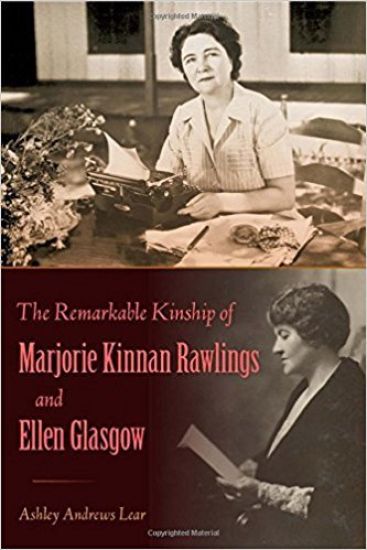
Ashley Lear's The Remarkable Kinship of Marjorie Kinnan Rawlings and Ellen Glasgow examines the documents collected by Rawlings on Glasgow, along with her personal notes, to better understand the experiences that brought these two women writers together and the importance of literary friendships between women writers. This study sheds new light on the complexities of their professional success and personal struggles, both of which led them to find friendship and sympathy with one another.
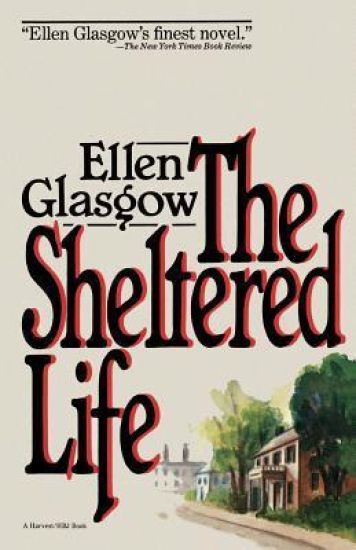
The moving tale of two small-town Virginia families and the crumbling of their shelters--religion, convention, and social prejudice--by a Pulitzer Prize-winning author. A Helen and Kurt Wolff Book.