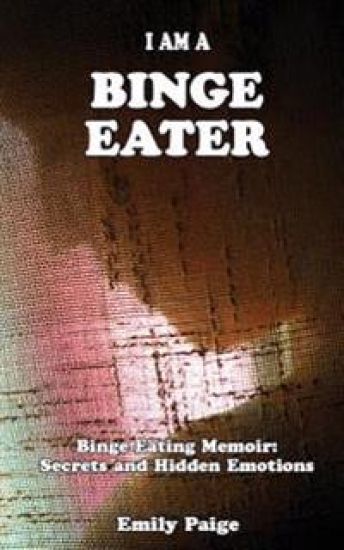
You know how every kid loves sweets well I wasn't an exception. I must admit that many times I even took advantage of my mom's weakness and love for me. It was enough to put my "sad puppy face" on and my mom would immediately respond with "Tess would you like a piece of cake?" and from taking just a piece of cake I end up finishing the whole thing. You probably know that feeling when you just can't stop eating after taking that first bite and the taste is just so heavenly...Understand you may need helpDo you find yourself going through binge eating and dieting cycles? Do you know you're doing wrong each and every time you overeat? Have you ever believed that forcing yourself to vomit is a good option? I ate so much that I felt physical "pain", started vomiting and would repeat the cycle all over, like every bite could be my last. That kind of overeating would happen one day, then the next...Unlock your secret emotions todayIn I am a Binge Eater, Emily Paige understands that you're not alone. This book is a fictional memoir of a self-confessed binge eater, which will help you discover more about your feelings and your hidden emotions. Emily has created an avatar for you to shine a private light on your hidden emotions. Your family and friends may not understand you, but reading this memoir will show that you're not alone in your overcoming binge eating struggle. So, I decided that I will prepare myself physically for the NEXT Monday but again my decision and determination failed me. After a month, I had to admit to myself that I really had a BIG problem...Discover the only thing holding you backEmily will help you to identify secrets you hide from others and then understand how your emotions may be responsible for many of your problems. The worst thing was that with each pound I gained I must have lost a piece of my self-confidence, which at the end was the hardest part to regain, even if I didn't know it at the time...A rewarding, short and easy read awaits youSometimes it's good to find comfort with a likeminded person, so Emily has written this short binge eating memoir to comfort you and not lecture you. This is not a disease of a "coddled person", it is a deep and a more complex problem. It is a disease that can happen to anyone at any time; it appears slowly and creeps up on you, as it did for me...You'll receive all these benefits from this overcoming binge eating story: The Beginning some reasons for starting binge eating]Awakening how to understand you have a problem]Time of StruggleSomething about DepressionMotivation - Why is it so Important?How to Cope with ChallengesSome Tips and TricksConclusion help for you on your struggle with overeating and binge eating]Resources on overcoming binge eating]TestimonialsYou can see for yourself what other people have said about this book: "The whole book's a really powerful metaphor. And it's helped me change how I act around food..." "Truthfully, it does not lecture the readers and make us react into something negative. It comforts us and little by little identify the problems that are hidden..." "I think this book has dealt on a sensitive topic but has done it well. This book must be read by everyone concerned, those who experienced this and those who have loved ones undergoing this situation. I find this profound and inspiring..." Tags: binge eating, binge eating disorder, binge eating cure, binge eating treatment, binge eating solution, overcoming binge eating disorder, binge eating help
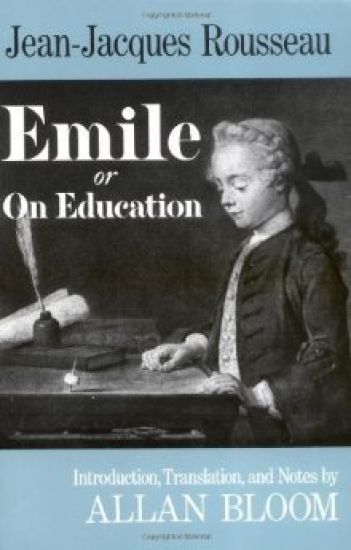
Alan Bloom's new translation of Emile , Rousseau's masterpiece on the education and training of the young, is the first in more than seventy years. In it, Bloom, whose magnificent translation of Plato's Republic has been universally hailed as a virtual rediscovery of that timeless text, again brings together the translator's gift for journeying between two languages and cultures and the philosopher's perception of the true meaning and significance of the issues being examined in the work. The result is a clear, readable, and highly engrossing text that at the same time offers a wholly new sense of the importance and relevance of Rousseau's thought to us.In addition to his translation, Bloom provides a brilliant introduction that relates the structure and themes of the book to the vital preoccupation's of our own age, particularly in the field of education, but also more generally to the current concerns about the limits and possibilities of human nature. Thus in this translation Emile, long a classic in the history of Western thought and educational theory, becomes something more: a prescription, fresh and dazzling, for the bringing up of autonomous, responsible,that is, truly democratic,human beings.
A foundational text of Western education, this 1762 treatise served as a model for a new approach to teaching during the French Revolution. Emile recounts a boy's education, and Rousseau considered it the most important of his writings. With its theories on the retention of innate human goodness and the avoidance of corruption from bourgeois society, the book offers prime examples of the author's philosophy. Rousseau's five-part approach devotes the first three sections to Emile's early education, including the child's interactions with the larger world and the selection of a trade. The fourth part explores the cultivation of sentiment, with particular focus on natural religion. The book concludes with a profile of Emile's prospective bride, Sophie, that emphasizes the role of mothers in educating their children but encourages women to be submissive to their husbands--a view that excited controversy even among Rousseau's contemporaries and helped inspire Mary Wollstonecraft's A Vindication of the Rights of Woman.
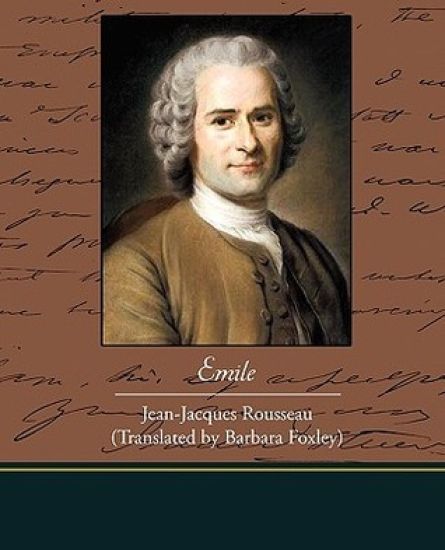
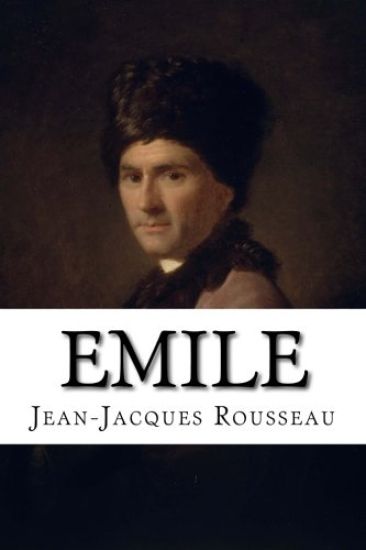
Jean-Jacques Rousseau was a French philosopher, novelist and essayist whose ideas in the areas of science, art, nature, morality, among many others, greatly influenced the late eighteenth century's Romantic Naturalism movement. His philosophies explored the virtue of human beings as being good by nature, the corruption of civil society, individual freedom, and in the case of his 1762 treatise on education, "Emile", allowing children to develop naturally and without the constraint of social conditions. Emile is an imaginary student put forth by Rousseau to illustrate his idea of "negative education", in other words, education in harmony with a child's natural capacity through a process of autonomous discovery. Rousseau removes the authoritative, domineering teacher figure, and instead wants mothers to encourage children's natural tendencies, without coddling or spoiling them. The work was controversial in its own time, but later inspired a new national system of education during the French Revolution, and to some has earned Rousseau the title of "father of modern education". This edition is printed on premium acid-free paper and follows the translation of Barbara Foxley.
Emile, or On Education or mile, Or Treatise on Education (French: mile, ou De l' ducation) is a treatise on the nature of education and on the nature of man written by Jean-Jacques Rousseau, who considered it to be the "best and most important of all my writings". Due to a section of the book entitled "Profession of Faith of the Savoyard Vicar," Emile was banned in Paris and Geneva and was publicly burned in 1762, the year of its first publication. During the French Revolution, Emile served as the inspiration for what became a new national system of education.