Kirjojen hintavertailu. Mukana 11 699 587 kirjaa ja 12 kauppaa.

Kirjahaku

Etsi kirjoja tekijän nimen, kirjan nimen tai ISBN:n perusteella.

1000 tulosta hakusanalla Emilij Metner; Andrej Belyj

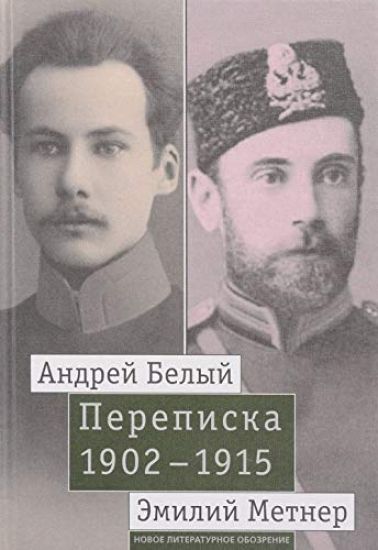
Andrej Belyj i Emilij Metner. Perepiska 1902-1915 gg. Tom 1. 1902-1909 gg

Andrej Belyj i Emilij Metner. Perepiska 1902-1915 gg. Tom 1. 1902-1909 gg

Emilij Metner; Andrej Belyj

Novoe literaturnoe obozrenie
2017
sidottu
Perepiska Andreja Belogo s filosofom, muzykovedom i kulturologom Emiliem Karlovichem Metnerom prinadlezhit k chislu naibolee znachimykh epistoljarnykh pamjatnikov, kharakterizujuschikh istoriju russkogo simvolizma v period ego rastsveta. V pismakh oboikh korrespondentov so vsej polnotoj i jarkostju raskryvaetsja svoeobrazie ikh tvorcheskikh individualnostej, proslezhivajutsja magistralnye filosofsko-esteticheskie idei, opredeljajuschie suschnost etogo kulturnogo javlenija. V perepiske zatragivajutsja mnogie znachimye fakty, dajuschie predstavlenie o povsednevnoj zhizni russkikh literatorov nachala XX veka. Vazhnejshaja tema perepiski - istorija sozdanija i funktsionirovanija krupnejshego moskovskogo simvolistskogo izdatelstva "Musaget", pozvoljajuschaja v podrobnostjakh vosstanovit khroniku ego vnutrennej zhizni. Lish otdelnye pisma korrespondentov ranee publikovalis.V polnom obeme perepiska, soprovozhdaemaja podrobnym kommentariem, predlagaetsja chitatelju vpervye.
Andrej Belyj i Emilij Metner. Perepiska 1902-1915. Tom 2. 1910-1915

Andrej Belyj i Emilij Metner. Perepiska 1902-1915. Tom 2. 1910-1915

Andrej Belyj; Emilij Metner

Novoe literaturnoe obozrenie
2017
sidottu
Perepiska Andreja Belogo (1880-1934) s filosofom, muzykovedom i kulturologom Emiliem Karlovichem Metnerom (1872-1936) prinadlezhit k chislu naibolee znachimykh epistoljarnykh pamjatnikov, kharakterizujuschikh istoriju russkogo simvolizma v period ego rastsveta. V pismakh oboikh korrespondentov so vsej polnotoj i jarkostju raskryvaetsja svoeobrazie ikh tvorcheskikh individualnostej, proslezhivajutsja magistralnye filosofsko-esteticheskie idei, opredeljajuschie suschnost etogo kulturnogo javlenija. V perepiske zatragivajutsja mnogie znachimye fakty, dajuschie predstavlenie o povsednevnoj zhizni russkikh literatorov nachala XX veka. Vazhnejshaja tema perepiski - istorija sozdanija i funktsionirovanija krupnejshego moskovskogo simvolistskogo izdatelstva "Musaget", pozvoljajuschaja v podrobnostjakh vosstanovit khroniku ego vnutrennej zhizni. Lish otdelnye pisma korrespondentov ranee publikovalis. V polnom obeme perepiska, soprovozhdaemaja podrobnym kommentariem, predlagaetsja chitatelju vpervye.

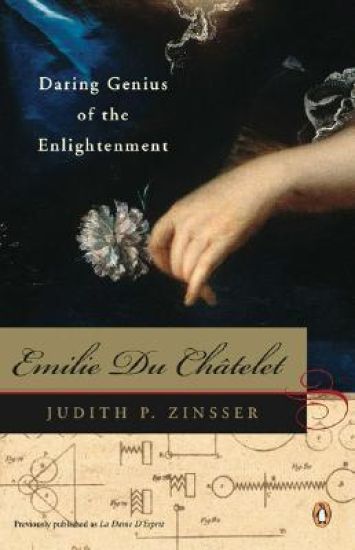
Emilie Du Chatelet

Emilie Du Chatelet

Judith P. Zinsser

Penguin USA
2007
pokkari
The captivating biography of the French aristocrat who balanced the demands of her society with passionate affairs of the heart and a brilliant life of the mind Although today she is best known for her fifteen-year liaison with Voltaire, Gabrielle Emilie le Tonnelier de Breteuil, Marquise Du Châtelet (1706-1749) was more than a great man's mistress. After marrying a marquis at the age of eighteen, she proceeded to fulfill the prescribed-and delightfully frivolous-role of a French noblewoman of her time. But she also challenged it, conducting a highly visible affair with a commoner, writing philosophical works, and translating Newton's Principia while pregnant by a younger lover. With the sweep of Galileo's Daughter, Emilie Du Châtelet captures the charm, glamour, and brilliance of this magnetic woman.
Emilie Davis’s Civil War

Emilie Davis’s Civil War

Pennsylvania State University Press
2014
sidottu
Emilie Davis was a free African American woman who lived in Philadelphia during the Civil War. She worked as a seamstress, attended the Institute for Colored Youth, and was an active member of her community. She lived an average life in her day, but what sets her apart is that she kept a diary. Her daily entries from 1863 to 1865 touch on the momentous and the mundane: she discusses her own and her community’s reactions to events of the war, such as the Battle of Gettysburg, the Emancipation Proclamation, and the assassination of President Lincoln, as well as the minutiae of social life in Philadelphia’s black community. Her diaries allow the reader to experience the Civil War in “real time” and are a counterpoint to more widely known diaries of the period. Judith Giesberg has written an accessible introduction, situating Davis and her diaries within the historical, cultural, and political context of wartime Philadelphia. In addition to furnishing a new window through which to view the war’s major events, Davis’s diaries give us a rare look at how the war was experienced as a part of everyday life—how its dramatic turns and lulls and its pervasive, agonizing uncertainty affected a northern city with a vibrant black community.
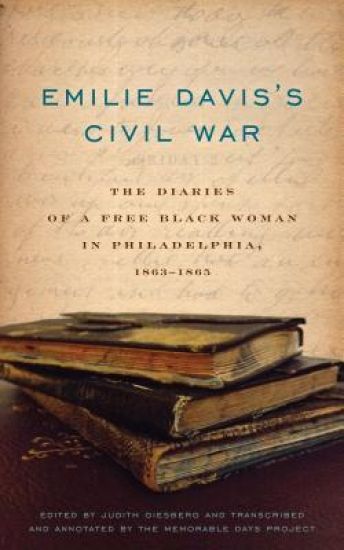
Emilie Davis’s Civil War

Emilie Davis’s Civil War

Pennsylvania State University Press
2014
pokkari
Emilie Davis was a free African American woman who lived in Philadelphia during the Civil War. She worked as a seamstress, attended the Institute for Colored Youth, and was an active member of her community. She lived an average life in her day, but what sets her apart is that she kept a diary. Her daily entries from 1863 to 1865 touch on the momentous and the mundane: she discusses her own and her community’s reactions to events of the war, such as the Battle of Gettysburg, the Emancipation Proclamation, and the assassination of President Lincoln, as well as the minutiae of social life in Philadelphia’s black community. Her diaries allow the reader to experience the Civil War in “real time” and are a counterpoint to more widely known diaries of the period. Judith Giesberg has written an accessible introduction, situating Davis and her diaries within the historical, cultural, and political context of wartime Philadelphia. In addition to furnishing a new window through which to view the war’s major events, Davis’s diaries give us a rare look at how the war was experienced as a part of everyday life—how its dramatic turns and lulls and its pervasive, agonizing uncertainty affected a northern city with a vibrant black community.
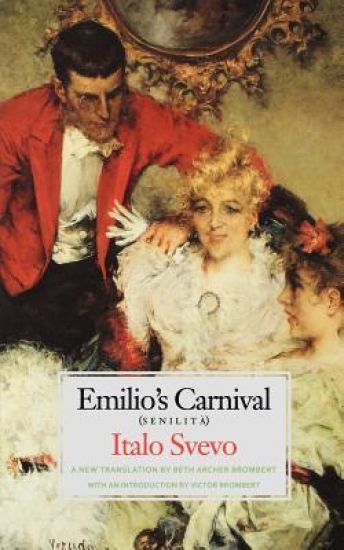
Emilio’s Carnival (Senilità)

Emilio’s Carnival (Senilità)

Italo Svevo

Yale University Press
2001
pokkari
Italo Svevo’s early novel Senilità (1898) remained unknown for many years until James Joyce encountered the novelist in Trieste and came to admire Senilità as a preeminent modern Italian novel. Joyce helped to launch Svevo’s career, and years later Svevo achieved great fame with his masterpiece, Confessions of Zeno. In Senilità, Svevo tells the story of the amorous entanglement of Emilio, a failed writer already old at thirty-five, and Angiolina, a seductively beautiful but promiscuous young woman. A study in jealousy and self-torment, the novel traces the intoxicating effect of a narcissistic and amoral woman on an indecisive daydreamer who vacillates between guilt and moral smugness. The novel is suffused with a tragic sense of existence, and the unbreachable distance between one consciousness and another. Svevo’s unmistakably modern voice subtly captures rapid shifts in mood and intention, exploiting irony, indirection, and multiple points of view to reveal Emilio’s increasing anguish as he comes to recognize the dissonance between himself and his world.
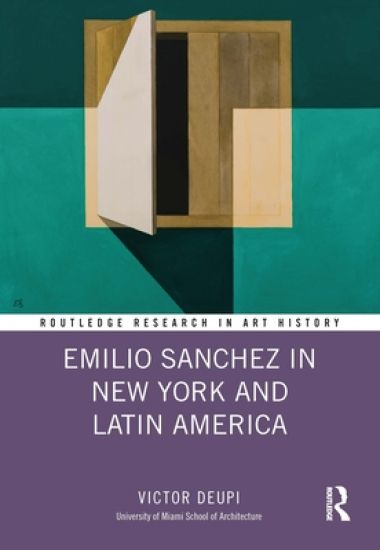
Emilio Sanchez in New York and Latin America
This book focuses on the life and artistic activities of Emilio Sanchez (1921–1999) in New York, and Latin America in the 1940s and 1950s. More specifically, the book will consider Sanchez in the wider context of mid-century Cuban artists, and cross-cultural exchange between New York, Cuba, and the Caribbean. The book reflects on why Sanchez chose to be a mobile observer of the American and Caribbean vernacular at a time when such an approach seemed at odds with the mainstream avant-garde. The book includes a foreword by Dr. Ann Koll, former Executive Director/Curator of the Emilio Sanchez Foundation, and an introduction by Dr. Nathan J. Timpano, University of Miami Department of Art and Art History. This book will be of interest to scholars in modern art, Caribbean studies, architectural history, and Latin American and Hispanic studies.
Emilio Sanchez in New York and Latin America

Emilio Sanchez in New York and Latin America

Victor Deupi

TAYLOR FRANCIS LTD
2023
nidottu
This book focuses on the life and artistic activities of Emilio Sanchez (1921–1999) in New York, and Latin America in the 1940s and 1950s. More specifically, the book will consider Sanchez in the wider context of mid-century Cuban artists, and cross-cultural exchange between New York, Cuba, and the Caribbean. The book reflects on why Sanchez chose to be a mobile observer of the American and Caribbean vernacular at a time when such an approach seemed at odds with the mainstream avant-garde. The book includes a foreword by Dr. Ann Koll, former Executive Director/Curator of the Emilio Sanchez Foundation, and an introduction by Dr. Nathan J. Timpano, University of Miami Department of Art and Art History. This book will be of interest to scholars in modern art, Caribbean studies, architectural history, and Latin American and Hispanic studies.
Emilia Pardo Bazán

Emilia Pardo Bazán

Maurice Hemingway

Cambridge University Press
2009
pokkari
At the end of the nineteenth century Emilia Pardo Bazán was Spain's leading woman novelist and short story writer, and also a critic, journalist and fierce campaigner for women's rights. This book examines Pardo Bazán's growth into maturity as a novelist during the late 1880s and the 1890s. Hemingway argues against the convenient critical division of the author's works into an early 'Naturalist' and later 'spiritual' phase. Concentrating on four novels published during this time the author demonstrates that Pardo Bazán's writing shows an increasing interest in psychology; the ambiguity and irony evident in her treatment of characters' motivation show her a subtle critic of the claims of science to explain human behaviour, illustrated in the work of Zola and his followers. Dr Hemingway stresses Pardo Bazán's originality as a writer, deserving comparison with her compatriot Galdos and with contemporary French and Ruissian novelists. This wider perspective will make the book of interest to students of the European novel generally as well as those is Spanish studies.
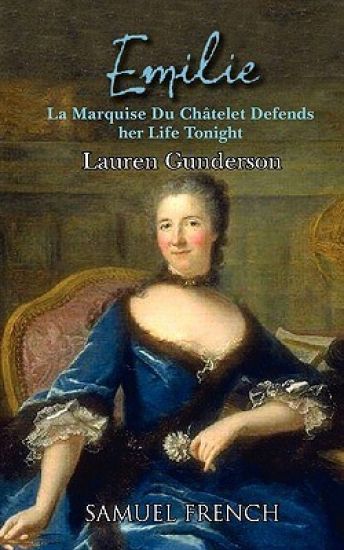
Emilie: La Marquise Du Ch Telet Defends Her Life Tonight
Characters: 2m, 3f / Historic/Docu Drama Passionate. Brilliant. Defiant. Tonight, 18th century scientific genius Emilie du Chatelet is back and determined to answer the question she died with: love or philosophy, head or heart? In this highly theatrical rediscovery of one of history's most intriguing women, Emilie defends her life and loves; and ends up with both a formula and a legacy that permeates history. "Gunderson possesses an antic imagination that seeks to invent its own rules. As soo
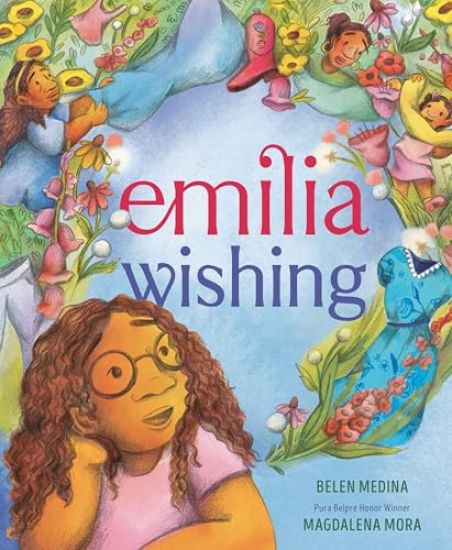
Emilia Wishing

Emilia Wishing

Belen Medina

Random House Studio
2026
sidottu
In this poignant picture book, Emilia wishes for all the things she doesn't have, including her own bed, a new car, and nicer clothes. But as she discovers through her mom's sacrifices, Emilia already has what she needs. Emilia wakes up with hot breath in her face and a sharp knee poking her from behind, wishing she had her own bed. Emilia looks out from the back seat of her old car at her neighborhood, wishing she lived on a tree-lined street in a big house with a swimming pool. And when she gets to the rundown strip mall where the thrift shop is--and not the fancy mall across the street--she models clothes for her Mama and sisters, wishing they could all be hers. But money is tight, and Mama works hard, and so she must wait. And when the day finally comes when they can make the last payment on layaway, Emilia realizes that the clothes don't matter--her Mama's love and joy and radiance is what does. Emilia Wishing is a beautiful tale of gratitude, family bonds, and the realization that true wealth lies in the love and sacrifices of those around us.
Emilia Wishing

Emilia Wishing

Belen Medina

Random House Studio
2026
sidottu
In this poignant picture book, Emilia wishes for all the things she doesn't have, including her own bed, a new car, and nicer clothes. But as she discovers through her mom's sacrifices, Emilia already has what she needs. Emilia wakes up with hot breath in her face and a sharp knee poking her from behind, wishing she had her own bed. Emilia looks out from the back seat of her old car at her neighborhood, wishing she lived on a tree-lined street in a big house with a swimming pool. And when she gets to the rundown strip mall where the thrift shop is--and not the fancy mall across the street--she models clothes for her Mama and sisters, wishing they could all be hers. But money is tight, and Mama works hard, and so she must wait. And when the day finally comes when they can make the last payment on layaway, Emilia realizes that the clothes don't matter--her Mama's love and joy and radiance is what does. Emilia Wishing is a beautiful tale of gratitude, family bonds, and the realization that true wealth lies in the love and sacrifices of those around us.
Emilie

Emilie

Ingrid Ramsdale

Publicious Pty Ltd
2021
pokkari
How much suffering can one person endure? Will it break them or make them stronger?Sixteen-year-old Emilie Lefroy is about to find out as she searches for her identity and sense of self amid the bloody 16th century French Wars of Religion that kills her closest family and friends.Emilie laments being born a female of noble birth. Headstrong and intelligent, she challenges societal and family inequalities. 'Why should I pray to a god that has given me a brain, but then gives me parents that will not let me use it just because I am a daughter and not a son'Emilie's desire is to become a healer, and no one is going to stand in her way. Not her devout Huguenot parents; her malicious brother, Pierre; or the scheming Marcus Daval, her betrothed.Emilie's plans to run away from home and change her identity are disrupted by the St. Bartholomew's Day massacre. As she escapes from one of the heavily guarded gates of Paris, Emilie must decide whether to save herself and flee France forever, or stay and use her newly acquired medical skills to help other Huguenots survive a copycat massacre in Rouen.Emilie is a captivating adventure of self-discovery that is brimming with raw emotions and heartbreak.Can Emilie find herself and true love in a world of hate and violence? This historical romance and adventure novel set in the French Renaissance will keep you spellbound to the end.
Emilio FernáNdez

Emilio FernáNdez

Dolores Tierney

Manchester University Press
2012
nidottu
Emilio Fernández: Pictures in the Margins is the first book-length English language account of Emilio Fernández (1904-1986) the most successful director of classical Mexican Cinema, famed with creating films that embody a loosely defined Mexican school of filmmaking. However, rather than offer an auteurist study this book interrogates the construction of Fernández as both a national and nationalist auteur (including racial and gender aspects e.g. as macho mexicano and indio). It also challenges auteurist readings of the films themselves in order to make new arguments about the significance of Fernández and his work. The aim of this book is to question Mexico’s fetishisation of its own position on the peripheries of the global cultural economy and the similar fetishisation of Fernández’s marginalisation as a mixed race (part white and part indigenous) director. This book argues that, as pictures in the margins, classical Mexican cinema and specifically Fernández’s films are not transparent reflections of dominant post Revolutionary Mexican culture, but annotations and re-inscriptions of the particularities of Mexican society in the post-Revolutionary era.
Emilie Du Châtelet

Emilie Du Châtelet

Voltaire Foundation
2006
nidottu
Until recently, the marquise Du Châtelet (1706-1749) was more remembered as the companion of Voltaire than as an intellectual in her own right. While much has been written about his extraordinary output during the years he spent in her company, her own work has often been overshadowed. This volume brings renewed attention to Du Châtelet's intellectual achievements, including her free translation of selections from Bernard Mandeville's Fable of the bees; her dissertation on the nature and propagation of fire for the 1738 prize competition of the Académie des sciences; the 1740 Institutions de physique and ensuing exchange with the perpetual secretary of the Académie, Dortous de Mairan; her two-volume exegesis of the Bible; the translation of and commentary on Isaac Newton's Principia; and her semi-autobiographical Discours sur le bonheur. It is a measure of the breadth of her interests that the contributions to this volume come from experts in a wide range of disciplines: comparative literature, art history, the history of mathematics and science, philosophy, the history of publishing and translation studies. Du Châtelet's partnership with Voltaire is reflected in a number of the essays; they borrowed from each other's writings, from the discussions they had together, and from their shared readings. Essays examine representations of her by her contemporaries and posterity that range from her inclusion in a German portrait gallery of learned men and women, to the scathing portrait in Françoise de Graffigny's correspondence, and nineteenth-century accounts coloured by conflicted views of the ancien régime. Other essays offer close readings of her work, and set her activities and writings in their intellectual and social contexts. Finally, they speculate on the ways in which she presented herself and what that might tell us about the challenges and possibilities facing an exceptional woman of rank and privilege in eighteenth-century society.