
Kirjahaku
Etsi kirjoja tekijän nimen, kirjan nimen tai ISBN:n perusteella.
1000 tulosta hakusanalla Emmett J. Scott; Lyman Beecher Stowe

Booker T. Washington
Emmett J. (Emmett Jay) Scott; Lyman Beecher Stowe; Theodore Roosevelt
Anson Street Press
2025
nidottu
Discover the inspiring life of one of America's most influential figures in "Booker T. Washington: Builder of a Civilization." This biography chronicles the extraordinary journey of Booker T. Washington, the African American educator who rose from humble beginnings to become a towering force in civil rights and education. Explore Washington's pivotal role in founding the Tuskegee Institute, a landmark institution that empowered generations through practical training and academic excellence. Emmett J. Scott and Lyman Beecher Stowe meticulously detail Washington's tireless dedication to fostering self-reliance and economic opportunity within the African American community. A historical account of a transformative life, this biography offers profound insights into the challenges and triumphs of an era, showcasing Washington's enduring legacy as a builder of not just an institution, but a civilization. A must-read for anyone interested in American history, education, and the ongoing quest for equality.This work has been selected by scholars as being culturally important, and is part of the knowledge base of civilization as we know it.This work is in the public domain in the United States of America, and possibly other nations. Within the United States, you may freely copy and distribute this work, as no entity (individual or corporate) has a copyright on the body of the work.Scholars believe, and we concur, that this work is important enough to be preserved, reproduced, and made generally available to the public. We appreciate your support of the preservation process, and thank you for being an important part of keeping this knowledge alive and relevant.
Booker T. Washington
Emmett J. (Emmett Jay) Scott; Lyman Beecher Stowe; Theodore Roosevelt
Anson Street Press
2025
sidottu
Discover the inspiring life of one of America's most influential figures in "Booker T. Washington: Builder of a Civilization." This biography chronicles the extraordinary journey of Booker T. Washington, the African American educator who rose from humble beginnings to become a towering force in civil rights and education. Explore Washington's pivotal role in founding the Tuskegee Institute, a landmark institution that empowered generations through practical training and academic excellence. Emmett J. Scott and Lyman Beecher Stowe meticulously detail Washington's tireless dedication to fostering self-reliance and economic opportunity within the African American community. A historical account of a transformative life, this biography offers profound insights into the challenges and triumphs of an era, showcasing Washington's enduring legacy as a builder of not just an institution, but a civilization. A must-read for anyone interested in American history, education, and the ongoing quest for equality.This work has been selected by scholars as being culturally important, and is part of the knowledge base of civilization as we know it.This work is in the public domain in the United States of America, and possibly other nations. Within the United States, you may freely copy and distribute this work, as no entity (individual or corporate) has a copyright on the body of the work.Scholars believe, and we concur, that this work is important enough to be preserved, reproduced, and made generally available to the public. We appreciate your support of the preservation process, and thank you for being an important part of keeping this knowledge alive and relevant.

Booker T. Washington, Builder of a Civilization
Emmett J Scott; Lyman Beecher Stowe
ALPHA EDITION
2021
pokkari
The book "" Booker T. Washington, Builder of a Civilization, has been considered important throughout the human history, and so that this work is never forgotten we have made efforts in its preservation by republishing this book in a modern format for present and future generations. This whole book has been reformatted, retyped and designed. These books are not made of scanned copies and hence the text is clear and readable.

Booker T. Washington, Builder of a Civilization
Lyman Beecher Stowe; Emmett J. Scott
Createspace Independent Publishing Platform
2013
nidottu

Emmett J. Scott
Maceo C. Dailey Jr.; David Levering Lewis; Elaine Brown
Texas Tech Press,U.S.
2023
sidottu
Reared in Freedmen's Town, Texas, Emmett J. Scott was a journalist, newspaper editor, government official, author, and chief of staff, adviser, and ghostwriter to Booker T. Washington. He was frequently called "the power broker of the Tuskegee Machine": he was a Renaissance man, scholar, and political fixer. However, his life has not received a full examination until now. Built upon fifty years of research, Maceo C. Dailey's Emmett J. Scott offers fascinating detail by describing Scott's role in promoting the Tuskegee Institute. Before his death, Dailey had nearly singular access to the Scott papers at Morgan State University, which have been officially closed for decades. Readers will finally be exposed to Scott's behind-the-scenes contributions to racial uplift and will see Scott's influential role in advancing not only the Tuskegee Institute but also the Booker T. Washington agenda.Editors Will Guzmán and David H. Jackson lend their own expertise in bringing Dailey's lifetime project to fruition. Two-time Pulitzer Prize-winning historian David Levering Lewis, a close friend of Maceo Dailey, provides a timely foreword. Former Black Panther Party chairwoman Elaine Brown, granddaughter of Emmett J. Scott, reflects on her relationship with Scott and his impact in the afterword.Taken together, this work of biography is an impressive reference and an essential endeavor of recovery, one that restores to prominence the life and legacy of Emmett J. Scott.

The Great Migration was the movement of 1.75 million African Americans out of the Southern United States to the Midwest, Northeast and West from 1910 to 1930.[1] Estimates of the number of migrants vary according to the time frame used. African Americans migrated to escape racism and seek employment opportunities in industrial cities. Some historians differentiate between the First Great Migration (1910-40), numbering about 1.6 million migrants, and the Second Great Migration, from 1940 to 1970. In the Second Migration, 5 million or more people relocated, with the migrants moving to more new destinations. Many moved from Texas and Louisiana to California where there were jobs in the defense industry. From 1965-70, 14 states of the South, especially Alabama, Louisiana and Mississippi, contributed to a large net migration of blacks to the other three Census-designated regions of the United States. This book, "Negro Migration During The War. 1920", by J.S. Emmett, is a replication of a book originally published before 1920. It has been restored by human beings, page by page, so that you may enjoy it in a form as close to the original as possible. This book was created using print-on-demand technology. Thank you for supporting classic literature.

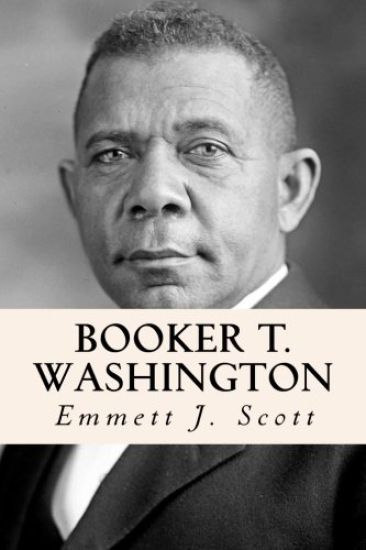
This is not a Booker T. Washington biography in the ordinary sense. The exhaustive "Life and Letters of Booker T. Washington" remains still to be compiled. In this more modest work we have simply sought to present and interpret the chief phases of the life of this man who rose from a slave boy to be the leader of ten millions of people and to take his place for all time among America's great men. Booker Taliaferro Washington (April 5, 1856 - November 14, 1915) was an American educator, author, orator, and advisor to presidents of the United States. Between 1890 and 1915, Washington was the dominant leader in the African-American community. Washington was from the last generation of black American leaders born into slavery and became the leading voice of the former slaves and their descendants. They were newly oppressed in the South by disenfranchisement and the Jim Crow discriminatory laws enacted in the post-Reconstruction Southern states in the late 19th and early 20th centuries. Washington was a key proponent of African-American businesses and one of the founders of the National Negro Business League. His base was the Tuskegee Institute, a historically black college in Alabama. As lynchings in the South reached a peak in 1895, Washington gave a speech, known as the "Atlanta compromise", which brought him national fame. He called for black progress through education and entrepreneurship, rather than trying to challenge directly the Jim Crow segregation and the disenfranchisement of black voters in the South. Washington mobilized a nationwide coalition of middle-class blacks, church leaders, and white philanthropists and politicians, with a long-term goal of building the community's economic strength and pride by a focus on self-help and schooling. But, secretly, he also supported court challenges to segregation and restrictions on voter registration, passing on funds to the NAACP for this purpose. 1] Black militants in the North, led by W. E. B. Du Bois, at first supported the Atlanta compromise but after 1909, they set up the NAACP to work for political change. They tried with limited success to challenge Washington's political machine for leadership in the black community but also built wider networks among white allies in the North. 2] Decades after Washington's death in 1915, the civil rights movement of the 1950s took a more active and militant approach, which was also based on new grassroots organizations based in the South, such as CORE, SNCC and SCLC. Booker T. Washington mastered the nuances of the political arena in the late 19th century, which enabled him to manipulate the media, raise money, develop strategy, network, push, reward friends, and distribute funds, while punishing those who opposed his plans for uplifting blacks. His long-term goal was to end the disenfranchisement of the vast majority of African Americans, who then still lived in the South.

The True Story of the Harlem Hellfighters in World War I
Emmett J. Scott
Createspace Independent Publishing Platform
2016
nidottu
Negro Migration during the War
Emmett J. Scott
Createspace Independent Publishing Platform
2017
nidottu
Preliminary Economic Studies of the War, No. 16. Negro Migration During the War
Emmett J Scott
Trieste Publishing
2018
nidottu

Negro Migration during the War, has been considered an important book throughout the human history. So that this work is never forgotten we have made efforts in its preservation by republishing this book in a modern format for present and future generations. The whole book has been reformatted, retyped and designed. This book is not made of scanned copies and hence the text is clear and readable.
Booker T. Washington, Builder of a Civilization.
Emmett J Scott
Gale, Making of Modern Law
2010
pokkari
The Story of Slavery
Booker T Washington; Emmett J (Emmett Jay) Scott
Anson Street Press
2025
pokkari

Wiley PLUS Stand Alone to Accompany Fundamentals of Risk and Insurance
Emmett J. Vaughan
John Wiley Sons Inc
2018
muu

Surprisingly, A History of Baitcasting in America is the first comprehensive history ever written about this truly original American angling method. It tells the story of a major component of sport fishing, beginning in the days of King James I, when British methods of still-fishing and fly-fishing migrated to the American colonies.The story travels through the frontier days in the Blue Grass Region of Kentucky, where a new kind of fishing reel, handmade by gunsmiths, watchmakers and silversmiths, launched a revolution in sport angling. There, along the shoreline of Kentucky's 62,000 miles of streams, baitcasting was born.Later, baitcasting became a beneficiary of the Industrial Revolution, our country's westward expansion, and the support of some of America's most esteemed and influential citizens who championed the new sport. During the Civil War days in Kentucky, some of the most revered anglers in the country met and fished there and the impetus for transforming American freshwater angling had begun in earnest.Following the Civil War, when the Smith Age of hand-made tackle production ended and mass production methods began; new business models (used by Apple over a century later) facilitated baitcasting's growth and guided it to national prominence. Throughout the latter 19th and early 20th centuries, the sport grew exponentially as new, affordable tackle became available for the everyday person on the street.By the onset of World War II, baitcasting was the most popular angling sport in America. Prior to and following the war, development of newly engineered materials and advanced manufacturing processes further improved the baitcasting system and the watercraft that carried the anglers deploying it.In the twenty-first century, millions of Americans practice the now-global sport.Some major themes addressed in the book: -Colonial and Post Revolutionary Angling -The Legendary Kentucky Reel-Transition from Still-Fishing to Baitcasting-Forging American Angling Ethics-Anglers Making the Most of Possibilities-Mass Production and Advances in Tackle -Fishing Lures that Added Functionality-New Techniques to Improve the Sport-Watercraft from 1881-2017-Coming to Grips with the Baitcasting Reel

The Roman Catholic Hierarchy and the Fall of Parnell
Emmett J. Larkin
Literary Licensing, LLC
2011
nidottu

Defection: A Military Strategy for Wars of Liberation
Emmett J. O'Brien
Createspace Independent Publishing Platform
1971
nidottu
Though defection is not new or foreign to American military strategy, a lack of acceptance exists. Can this lack of acceptance be attributed to the synonymity of desertion and defection? Drawing upon the American Revolutionary War, American Civil War, Philippine Insurgency, Malayan Emergency and Vietnam, the author examines defection as a tool to combat insurgencies. The basic questions about defection are first, are the losses through defection indicative of a major weakness of the enemy in wars of liberation; and second, does the United States have a policy, supporting doctrine and techniques, fixed responsibility and general acceptance of an induced defection strategy?

In 1936 Oakland, California fifteen-year-old Ernest Ballard is part of the burgeoning middle-class families in the United States and has a firm black and white grasp of what he thinks is right. When Ernest's mother, Millie, is mugged on the way home after work, he blames his father, Thomas, for not providing for the family and seeks him out. He attacks his father. When the dust clears, witness to the fight puts Ernest on an outbound freight to escape murder charges. Ernest agrees to go. What else can he do but runaway? Ernest encounters a mentor, revivalists, thieves, and communists. Runaway is a coming of age story of lies, tragedy, murder, redemption, hope and most of all the truth.