Kirjahaku
Etsi kirjoja tekijän nimen, kirjan nimen tai ISBN:n perusteella.
31 tulosta hakusanalla Emyr Price
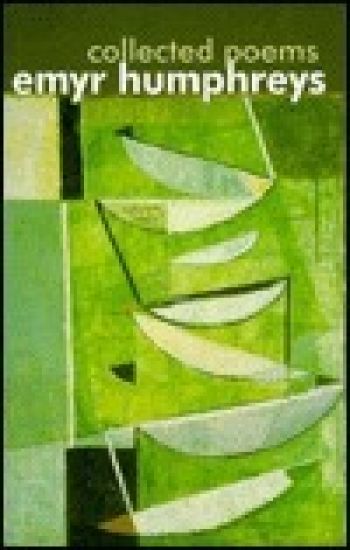
Emyr Humphreys, poet, novelist, short-story writer and dramatist, is one of the foremost literary figures in Wales. For over 40 years he has interpreted the world of Welsh-speaking Wales, sympathetically but without sentiment.
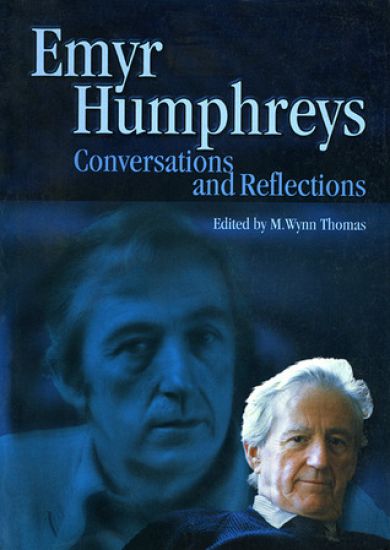
This volume offers a section of the most important essays published by Emyr Humphreys over a 30-year period. The essays are prefaced by a series of discusssions which explore some of the intellectual concerns and motifs that have recurred throughout Humphreys' work.
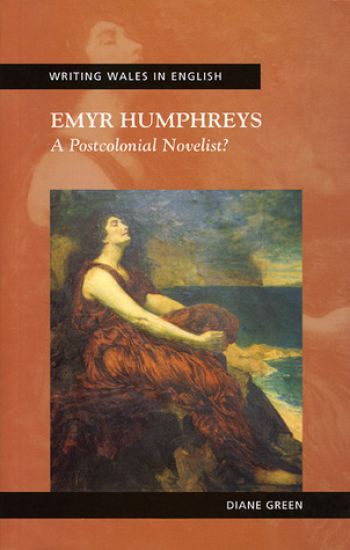
This book is an examination of the novels of Emyr Humphreys in the light of his ideas on Wales: Welsh history, Welsh culture and the importance of a separate Welsh identity. It explores Humphreys' practice in the light both of his own theories of culture and fiction and of a variety of models derived from postcolonial theory. Its main conclusions are that there are two particular techniques, the use of Welsh history and of Celtic myth, that have proved particularly central to Humphreys' purposes throughout his career. These have consistently been the principal ways in which he foregrounds for the reader both what it means to be Welsh and the importance, for the nation, of maintaining an understanding of its heritage. And both these key strategies of his fiction should, it is argued, be read as typical postcolonial devices.
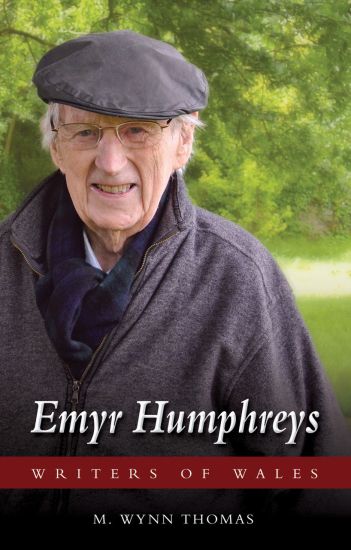
Published to mark the centenary of his birth in 2019, this is the first comprehensive and authoritative study of the life and work (excluding only work for television) of the major Welsh writer Emyr Humphreys. During the course of a career spanning half a century, and dating back to the 1950s when he collaborated with the likes of Graham Greene, Patrick Heron, Saunders Lewis, Richard Burton, Siân Phillips and Peter O’Toole, Humphreys has published some two dozen works of fiction (including Outside the House of Baal, the greatest novel of anglophone Welsh literature) as well as highly distinctive poetry, seminal essays, and a visionary cultural history of Wales. In addition to offering a critical and interpretative survey of this remarkable, distinguished body of work, the present volume also sets Humphreys’s output in the context of the dramatic, transformative decades in recent Welsh history during which it was produced.
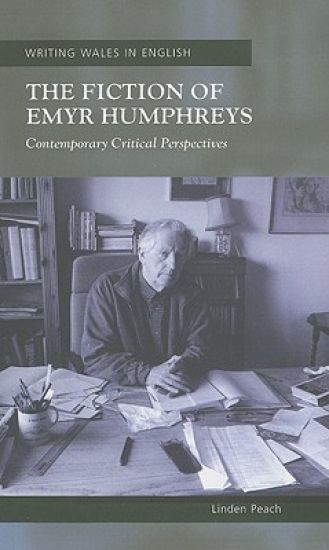
An introduction to the work of one of Wales's leading writers, highlighting his importance to contemporary critical and cultural agendas such as issues of identity, nation, environment and religious conflict.
This story of a child named Amy Parry follows her on a journey to maturity, when she will savour to the full the subtle flavours and rich textures of a way of life that has now all but vanished from the Principality of Wales.
This novel follows Flesh and Blood in the Amy Parry narrative sequence. Amy and Enid go together to university, where the former takes a leading part in the Nationalist campaign against Anglicization. Later Enid pairs off with John Cilydd More, a young solicitor who is also a poet, and Amy with Val Gwyn, an idealistic student leader. But Val dies of tuberculosis and Amy, in the post university world, falls prey to Pen Lewis, Communist and opportunist; Enid also dies. In this section of the narrative Amy loses her way: the props provided by other people's ideals and visions of society (the Communist one proving to be just another exploitation of women) having been removed she is empty of purpose.
Perhaps the key word of the 1930s was 'crisis'. The comfortable world of a bourgeois world had been declared shattered for ever by the Great War: and yet, between recurrent nightmares and dark forebodings for the future, every family continued its individual pursuit of an odd variety of bluebirds of happiness. The Prydderch family for instance, devoted to education and getting on, were very cross when Enid, their youngest and brightest, sacrificed her own promising career in order to marry John Cilydd More, a country solicitor, whom she believes to be a poet of great potential. Now she is pregant. Her aunt Sali Prydderch, particularly yearns for a reconciliation. She approaches Amy Parry, Enid's best friend who is now a County School teacher in the same North Wales seaside town. Salt of the Earth is the third in a sequence of novels which began with Flesh and Blood and The Best of Friends - a sequence which when completed, will have described the processes of growth, change and decay which have made Wales what it is today.

Amy Parry is bereft of her best friend who died in childbirth, unable to marry Val Gwyn who is seriously ill with TB, and determined not to choose poverty and struggle with her former lover Pen Lewis. So she marries John Cilydd More, but her peace is soon shattered by strikes and then Pen returns.

In this novel, Peredur defies both his mother's hostility and his brothers' lack of concern to seek out the truth of his father's death and to take part in a protest against the 1969 Investiture that goes violently wrong. Only at the end when Amy Parry faces death can reconciliation be achieved.

The 5th in a series, this work conveys the conflicts and passions of a small group of individuals in Wales, weighing them against the turmoil caused by war and its effects on a significantly changing Britain.

In National Winner, the sixth novel in the Land of the Living sequence, Amy Parry appears to have reached a summit of affluence and influence. As Lady Brangor, the widow of her third husband, she plans to create a cultural centre for women at Brangor Hall. These ambitious plans are impeded by the obsession of her youngest son, Peredur, with the mysterious death of his father, John Cilydd More, Amy's first husband, the poet and National Winner of the title. Her devoted stepson, Bedwyr, and her other son Gwydion, each with his own agenda and concerns, are also resistant to Amy's enthusiasms and practised charm. This is a family that has emerged from a tightly knit and recognisable society: each now in his or her own way, in spite of obstacles, seeks a path to fulfilment in a post-war period of unprecedented change.
Wittgensteinian Values: Philosophy, Religious Belief and Descriptivist Methodology
Emyr Vaughan Thomas
Routledge
2019
nidottu
This title was first published in 2001. This work examines the self-renouncing dimension which Wittgensteinian philosophy subscribes to ethico-religious ideals. "Wittensteinian values" are explored through a range of literary and cultural illustrations from Wittgenstein's own European milieu. The book also highlights an alternative model of self-renouncing faith, which has methodological implications for how a Wittgensteinian descriptivist approach should be carried out. Wittgensteinian assumptions about the nature of self-renunciation, the religious believer's orientation to the world and the place of the metaphysical in religion are among some of the elements that need to be reappraised.
This title was first published in 2001. This work examines the self-renouncing dimension which Wittgensteinian philosophy subscribes to ethico-religious ideals. "Wittensteinian values" are explored through a range of literary and cultural illustrations from Wittgenstein's own European milieu. The book also highlights an alternative model of self-renouncing faith, which has methodological implications for how a Wittgensteinian descriptivist approach should be carried out. Wittgensteinian assumptions about the nature of self-renunciation, the religious believer's orientation to the world and the place of the metaphysical in religion are among some of the elements that need to be reappraised.


Abstract painting and abstraction can be a daunting and frustrating genre of art. How should you approach a surface? How can you use colour effectively? How can you make better, more expressive paintings? This inspiring book answers these questions and many more. Through a thorough analysis of his own work, Emyr Williams covers practical, theoretical and historical issues of abstract art and explains a wide range of working methods to help develop more demanding personal approaches to the making of abstract painting. He emphasizes the relationship of colour to surface and the importance of seeking a profound connection with your art. Further topics cover: the difference between abstract and abstraction; how an artist has developed expressive art in many different ways; maximize your studio effectiveness and manage your time better; discover how colour can be approached more effectively; learn about other possibilities for making abstract art - such as the role of technology and finally, be more demanding of your painting and make better abstract paintings.
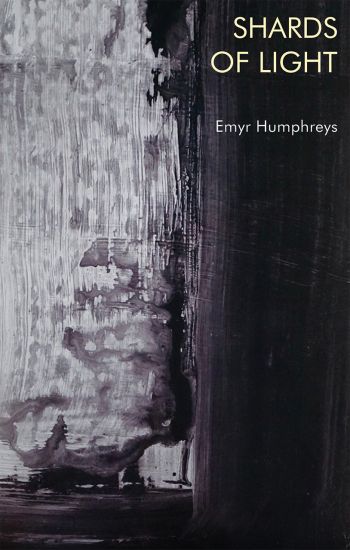
Shards of Light is a collection of previously unpublished poems by Emyr Humphreys. Now in his hundredth year, he has been described as Wales's foremost novelist of his generation. This newly discovered collection of poems has all the sharpness and incisiveness of thought as if they had been written today. Humphreys scrutinises life with a wry humour, coloured by the experience of his great longevity and grounded in Wales. With a sharpness of thought and a sparseness and frugality of expression - a hallmark of his work - the poems contain a profundity which challenges us to think more deeply about the nature of our being. They fearlessly ask difficult questions of ourselves as to the nature of being within the vastness of creation. The subjects are as varied as is man's experience, from the vastness of time, space and God's power, to musings on everyday life leading to old age. Ultimately the reader will find the experience entertaining yet deeply felt, satisfying and rewarding.