Kirjahaku
Etsi kirjoja tekijän nimen, kirjan nimen tai ISBN:n perusteella.
1000 tulosta hakusanalla Enrico Zanoni


La Mente Di Francesco Guicciardini Nelle Opere Politiche E Storiche (1897)
Enrico Zanoni
KESSINGER PUBLISHING, LLC
2010
pokkari
Pagine Di Storia Contemporanea Del Risorgimento Italiano (1876)
Enrico Zanoni
KESSINGER PUBLISHING, LLC
2010
pokkari

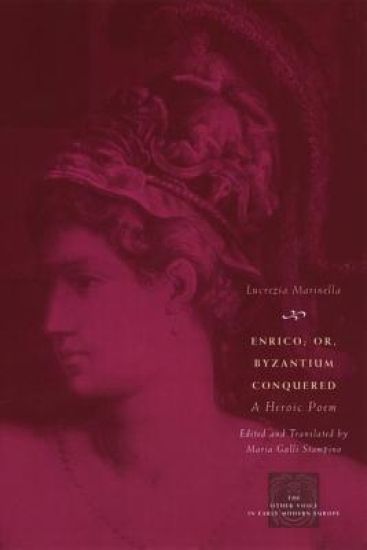
Lucrezia Marinella (1571-1653) is, by all accounts, a phenomenon in early modernity: a woman who wrote and published in many genres, whose fame shone brightly within and outside her native Venice, and whose voice is simultaneously original and reflective of her time and culture. In "Enrico"; or, "Byzantium Conquered", one of the most ambitious and rewarding of her numerous narrative works, Marinella demonstrates her skill as an epic poet. Now available for the first time in English translation, "Enrico" retells the story of the conquest of Byzantium in the Fourth Crusade. Marinella intersperses historical events in her account of the invasion with numerous invented episodes, drawing on the rich imaginative legacy of the chivalric romance. Fast-moving, colorful, and narrated with the zest that characterizes Marinella's other works, this poem is a great example of a woman engaging critically with a quintessentially masculine form and subject matter, writing in a genre in which the work of women poets was typically shunned.
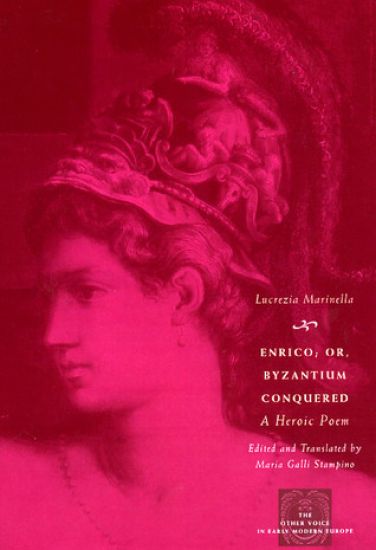
Lucrezia Marinella (1571-1653) is, by all accounts, a phenomenon in early modernity: a woman who wrote and published in many genres, whose fame shone brightly within and outside her native Venice, and whose voice is simultaneously original and reflective of her time and culture. In "Enrico"; or, "Byzantium Conquered", one of the most ambitious and rewarding of her numerous narrative works, Marinella demonstrates her skill as an epic poet. Now available for the first time in English translation, "Enrico" retells the story of the conquest of Byzantium in the Fourth Crusade. Marinella intersperses historical events in her account of the invasion with numerous invented episodes, drawing on the rich imaginative legacy of the chivalric romance. Fast-moving, colorful, and narrated with the zest that characterizes Marinella's other works, this poem is a great example of a woman engaging critically with a quintessentially masculine form and subject matter, writing in a genre in which the work of women poets was typically shunned.
Enrico Caruso Unedited Notes: Unedited Notes
Pasquale J. Simonelli
Sacer Equestris Aureus Ordo Inc
2012
nidottu
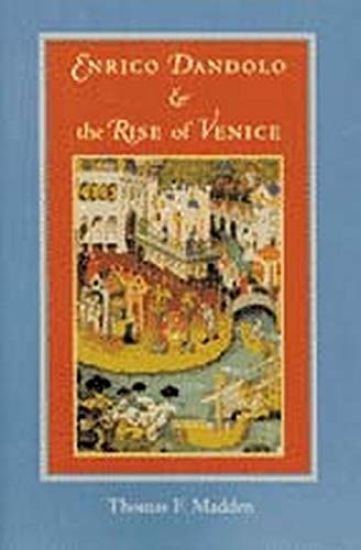
Between the eleventh and thirteenth centuries, Venice transformed itself from a struggling merchant commune to a powerful maritime empire that would shape events in the Mediterranean for the next four hundred years. In this magisterial new book on medieval Venice, Thomas F. Madden traces the city-state's extraordinary rise through the life of Enrico Dandolo (c. 1107-1205), who ruled Venice as doge from 1192 until his death. The scion of a prosperous merchant family deeply involved in politics, religion, and diplomacy, Dandolo led Venice's forces during the disastrous Fourth Crusade (1201-1204), which set out to conquer Islamic Egypt but instead destroyed Christian Byzantium. Yet despite his influence on the course of Venetian history,we know little about Dandolo, and much of what is known has been distorted by myth. The first full-length study devoted to Dandolo's life and times, Enrico Dandolo and the Rise of Venice corrects the many misconceptions about him that have accumulated over the centuries, offering an accurate and incisive assessment of Dandolo's motives, abilities, and achievements as doge, as well as his role-and Venice's-in the Fourth Crusade. Madden also examines the means and methods by which the Dandolo family rose to prominence during the preceding century, thus illuminating medieval Venice's singular political, social, and religious environment. Culminating with the crisis precipitated by the failure of the Fourth Crusade, Madden's groundbreaking work reveals the extent to which Dandolo and his successors became torn between the anxieties and apprehensions of Venice's citizens and its escalating obligations as a Mediterranean power.

Between the eleventh and thirteenth centuries, Venice transformed itself from a struggling merchant commune to a powerful maritime empire that would shape events in the Mediterranean for the next four hundred years. In this magisterial new book on medieval Venice, Thomas F. Madden traces the city-state's extraordinary rise through the life of Enrico Dandolo (c. 1107-1205), who ruled Venice as doge from 1192 until his death. The scion of a prosperous merchant family deeply involved in politics, religion, and diplomacy, Dandolo led Venice's forces during the disastrous Fourth Crusade (1201-1204), which set out to conquer Islamic Egypt but instead destroyed Christian Byzantium. Yet despite his influence on the course of Venetian history,we know little about Dandolo, and much of what is known has been distorted by myth. The first full-length study devoted to Dandolo's life and times, Enrico Dandolo and the Rise of Venice corrects the many misconceptions about him that have accumulated over the centuries, offering an accurate and incisive assessment of Dandolo's motives, abilities, and achievements as doge, as well as his role-and Venice's-in the Fourth Crusade. Madden also examines the means and methods by which the Dandolo family rose to prominence during the preceding century, thus illuminating medieval Venice's singular political, social, and religious environment. Culminating with the crisis precipitated by the failure of the Fourth Crusade, Madden's groundbreaking work reveals the extent to which Dandolo and his successors became torn between the anxieties and apprehensions of Venice's citizens and its escalating obligations as a Mediterranean power.
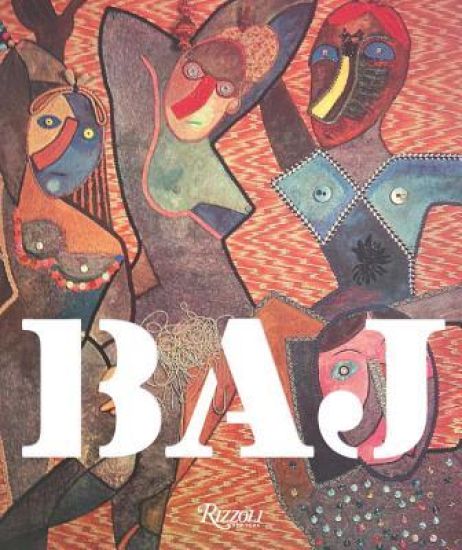
Enrico Baj
Skira Rizzoli
2017
sidottu
Not far from Milan, in the hills of the northern Italian countryside, lies the estate of famed Italian artist Enrico Baj. This jewel of a book offers a unique lens through which to consider a true artistic giant of the late twentieth century associated with Dada, Surrealism, Art Informel, and CoBrA, as well as Nuclear Art, a movement he cofounded. Organized as a tour of the artist s home, from full rooms designed with a great attention to detail to entire walls covered floor to ceiling with paintings by the artist to a headboard carved directly into a wall, almost every surface of the house is covered in work made by Baj himself. While his subject matter may have been deeply serious (many of Baj s works reveal an obsession with nuclear war and the abuse of political power), as this book shows, his work was always playful and vibrant, often incorporating bits of found materials like military medals, seashells, rope, and twine. Whether one focuses on the luxurious trim and tassel of a bedroom curtain or the deeply personal arrangement of treasured sculptures on a dressing room table, every corner of the estate is energized by the element of surprise. This book showcases the artist s individual touch and provides a wealth of playful vignettes to inspire homeowners, collectors, and artists alike.
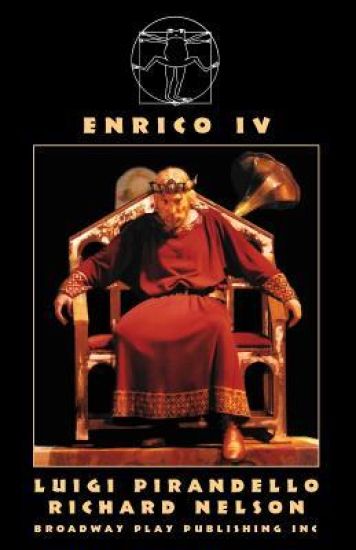
Nobel Prize-winner Luigi Pirandello's ENRICO IV concerns a passionate and despairing 20th-century man who imagines himself to be an 11th-century king. "The time is the early 1920s and the place is an isolated Italian villa, but it might as well be the 12th century. The master of the house bumped his head twenty years ago during a costume ball and has since believed himself to be King Enrico IV of Germany. As the play goes on, perception, reality, fantasy and freedom become confused...an effective new adaptation by Richard Nelson." Chad Jones, The Oakland Tribune "ENRICO IV is about a man who deliberately chooses to dwell in the rich fantasy life of his madness even after he regains his sanity. Pirandello's finely strung paradox probes the issue of what self-concept qualifies as sane. Richard Nelson's beautifully translated script paired with Pirandello's priceless insight into self-image and delusion...make this truly an evening of epiphany." Pamela Fisher, San Francisco Examiner "A sparkling new translation" Pat Craig, San Francisco Times
This work has been selected by scholars as being culturally important and is part of the knowledge base of civilization as we know it.This work is in the public domain in the United States of America, and possibly other nations. Within the United States, you may freely copy and distribute this work, as no entity (individual or corporate) has a copyright on the body of the work.Scholars believe, and we concur, that this work is important enough to be preserved, reproduced, and made generally available to the public. To ensure a quality reading experience, this work has been proofread and republished using a format that seamlessly blends the original graphical elements with text in an easy-to-read typeface.We appreciate your support of the preservation process, and thank you for being an important part of keeping this knowledge alive and relevant.