
Kirjahaku
Etsi kirjoja tekijän nimen, kirjan nimen tai ISBN:n perusteella.
1000 tulosta hakusanalla Enrique Losada
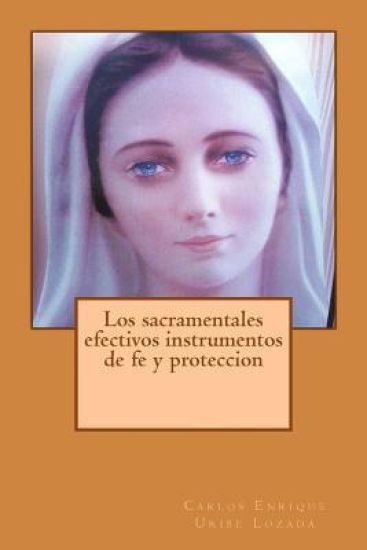
Los Sacramentales Efectivos Instrumentos de Fe Y Proteccion
Carlos Enrique Uribe Lozada
Createspace Independent Publishing Platform
2013
nidottu
Libro con m s de 700 descargas en Free Ebooks. Por milenios, el pueblo cat lico ha usado los sacramentales como signos sagrados que a manera de imitaci n de los sacramentos, aportan al creyente efectos espirituales que santifican diversas esferas y aspectos de su vida. La Virgen Mar a en muchas de sus apariciones aprobadas o npor confirmar por parte de los representantes de la iglesia Cat lica, ha llamado la atenci n sobre la importancia para los cristianos de usar y portar estos signos de fe, sobre todo en los actules tiempos tan llenos de impiedad y faltos de fe.El uso de los sacramentales por parte de los fieles ha sido una constante dentro de la Iglesia que se remonta a sus mismos inicios (ver catatumbas cristianas), tambi n se puede afirmar que esta creencia toma su origen de las pr cticas ceremoniales del Antiguo Testamento.Este libro pretende introducir al lector en el estudio de este interesante tema, d ndole a conocer aspectos como la poca a la cual se remonta estas creencias, sus caracter sticas, formas, clasificaci n y efectos entre otros pormenores. As mismo, nos adentraremos en un an lisis puntual e hist rico de los sacramentales m s conocidos y venerados tales como el Santo Rosario, la medalla de San Benito, la Santa Cruz, el santo escapulario carmelita, las oraciones cat licas, la Medalla Milagrosa, etc.
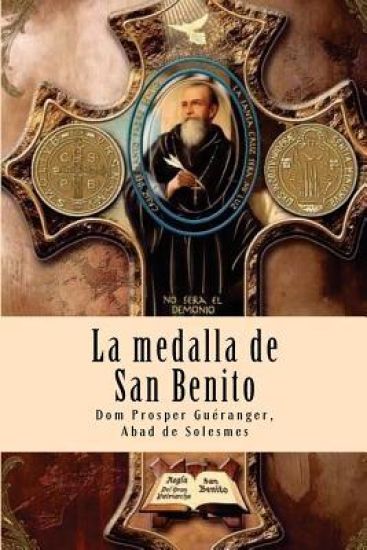
La medalla de San Benito
Carlos Enrique Uribe Lozada
Createspace Independent Publishing Platform
2016
pokkari
Desde centurias, es conocido el poder y la eficacia protectora de este sacramental contra maleficios, brujer as, magia negra, enfermedades del cuerpo y el alma, todo tipo de peligros y accidentes en personas o animales, etc. La medalla de San Benito es uno de los objetos sagrados m s venerados por la cristiandad en general. Su aparici n en Europa inicialmente data de hace m s de tres siglos, los encargados de propagarla por todo el mundo han sido los monjes benedictinos. La presente traducci n de la versi n en franc s sobre el libro que dedico el erudito Abad Prosper Gu ranger al significado de la medalla de San Benito, fruto de diligentes estudios e investigaciones, ha tratado hasta lo posible de conservar intactas sus palabras y particular estilo, por considerarlo propicio ante el hecho de ser una obra de un importante car cter teol gico. A pesar de su antig edad, el presente tratado sigue siendo la m s reconocida gu a sobre el uso de la medalla por parte de fieles cat licos y no cat licos. Sigue a n impresionando las rese as hist ricas y arqueol gicas esmeradamente recopiladas por su autor; al igual que el sin numero de testimonios a favor de la efectividad de este sacramental. Un libro indispensable para todo el que se llame cristiano, que se torna en un importante complemento al uso de la medalla, pues ense a como se debe utilizar en cada acontecimiento angustioso de nuestra existencia, muchas veces amenazada por peligros y males tanto de orden natural como sobrenatural, sobre todo en los actuales tiempos tan negativamente permeabilizados por este ltimo fen meno.


Enrique
Antigonos Verlag
2025
sidottu
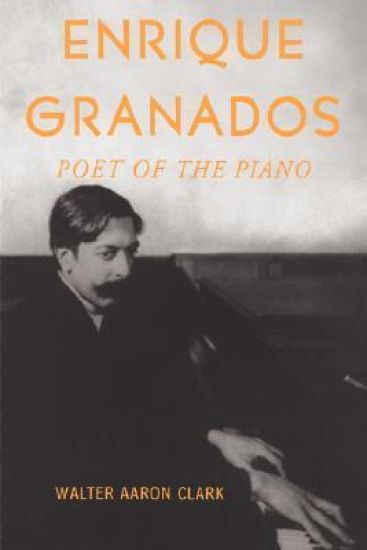
Enrique Granados (1867-1916) is best known for his music inspired by the art of Francisco Goya, especially the monumental Goyescas suite for solo piano. This biography examines Granados's life and music in the context of Spanish art, literature, and history, leading to a fuller understanding of his enduring significance.

Enrique Granados (1867-1916) is one of the most compelling figures of the late-Romantic period in music. During his return voyage to Spain after the premiere of his opera Goyescas in New York, a German submarine torpedoed the ship on which he and his wife were sailing and they perished in the waters of the English Channel. His death was mourned on both sides of the Atlantic as a stunning loss to the music world, for he had died at the pinnacle of his career and his late works held the promise of greater things to come. While Granados's tragic demise casts a pall over his life story, author Walter Clark reveals an artist of remarkable versatility and individuality and sheds new light on his enduring significance.
Enrique Granados (1867-1916) was one of the first modern Spanish composers to achieve international recognition. During a 1916 visit to the United States his opera Goyescas was premiered by the Metropolitan Opera and his symphonic poem, Dante, by the Chicago Symphony. Granados was also especially admired in Paris, where he knew Saint-Saens, d'Indy, and Faure. He had composed a remarkable body of work and was also at the height of his career as a concert pianist at his untimely death while a passenger on a torpedoed British ship.The biographical study, the first in English, draws on primary sources in English, Spanish, French, Catalan, and other languages. This material is carefully documented in the extensive annotated bibliography along with contemporaneous and recent analytical studies and other sources. Granados's oeuvre presents cataloging problems due to his habit of reworking pieces, long-delayed publication, and arbitrary opus numbers. In the Works and Performances section, however, every effort has been made to offer publication dates, manuscript locations, and information on premieres. Representative arrangements of his works by other composers are also given. An appendix classifies the works by scoring. A selective discography is also provided, and all parts of the volume are fully cross-referenced and indexed. Granados is placed in the context of the international artistic scene at the turn of the century, and a chronology notes related events.

Enrique's Journey: The True Story of a Boy Determined to Reunite with His Mother
Sonia Nazario
Ember
2014
nidottu
Adapted for young people, this edition of Enrique's Journey is written by Sonia Nazario and based on the adult book of the same name. It is the true story of Enrique, a teenager from Honduras, who sets out on a journey, braving hardship and peril, to find his mother, who had no choice but to leave him when he was a child and go to the United States in search of work. Enrique's story will bring to light the daily struggles of migrants, legal and otherwise, and the complicated choices they face simply trying to survive and provide for the basic needs of their families. The issues seamlessly interwoven into this gripping nonfiction work for young people are perfect for common core discussion. Includes an 8-page photo insert, as well as an epilogue that describes what has happened to Enrique and his family since the adult edition was published. "A heartwrenching account. Provides a human face, both beautiful and scarred, for the undocumented. A must read."--Kirkus Reviews, Starred "Nazario's straightforward . . . journalistic writing style largely serves the complex, sprawling story effectively. A valuable addition to young adult collections."--School Library Journal "This powerfully written survival story personalizes the complicated, pervasive, and heart-wrenching debates about immigration and immigrants' rights and will certainly spark discussion in the classroom and at home."--Booklist An NCSS-CBC Notable Social Studies Trade Book for Young People A Kirkus Reviews Best Teen Book of the Year A Junior Library Guild Selection

Enrique Alvarez Cordova was the son of one of El Salvador's ruling families. Intelligent, charismatic and above all wealthy, he had nothing to gain--and a great deal to lose--by courting revolution. Yet this young man with all the advantages did just that. Impressed by the poverty and miserable existence of the rural population, Alvarez set about making a change. He spent most of his adult life working for reform within the constraints of the existing system, serving as minister of agriculture under three governments. He turned his own ranch, El Jobo, into a successful workers' cooperative to convince the ruling class that agrarian reform was possible and even profitable. In the end, however, he found that fundamental change was simply beyond the reach of such efforts. Embracing armed struggle as a last resort, he ultimately became one of the revolution's first casualties. Centering on El Salvador's political landscape, this biography details the life of one of the nation's little known revolutionaries. The body examines the motivations behind Alvarez's choice to become a traitor to his class and embrace political reform, first through his work within the government itself and later as president of the Democratic Revolutionary Front (FDR), the country's primary radical movement. Through this lens, the work also describes El Salvador's political evolution, illuminating the country's internal situation during the 1970s and early 1980s. The government-condoned assassination of Alvarez and five of his FDR colleagues in November 1980 ended the last hope of avoiding an armed conflict. Within two months of the assassinations, El Salvador was plunged into a civil war that would last for the next 11 years. Other than a few official legal documents, the work is compiled from interviews and testimony of those who knew Enrique Alvarez Cordova, thus providing a contemporary, firsthand perspective. The work is also indexed.

This collection, spanning two decades of artistic activity, features selections of writings tracing the intellectual influences and development of one of the more formidable and productive minds in the contemporary art world. The writings of Enrique Martínez Celaya comprise public lectures; essays; interviews; correspondence with artists, critics, and scholars; artist statements; blog posts; and journal entries. This selection of writings includes the six public lectures Martínez Celaya delivered during his three-year appointment as the second Visiting Presidential Professor at the University of Nebraska. Marked by an encyclopedic curiosity and considerable knowledge about the world, these lectures explore the nature of photography and painting, the role of the artist as prophet, the relationship of art to the university and the museum, as well as reflections on his own work. Enrique Martínez Celaya: Collected Writings and Interviews, 1990–2010 features seventy-nine photographs from Martínez Celaya's collection; an introduction by Klaus Ottmann, who teaches art history at the School of Visual Arts in New York and is the Robert Lehman Curator for The Parrish Art Museum in Southampton, New York; and a foreword by James B. Milliken, president of the University of Nebraska.

Describes one Honduran boy's difficult and dangerous journey to find his mother, who had made the trek northward to the United States in search of a better life when Enrique had been five years old, but who had never made enough money to return home for her children, in a poignant account that addresses the issues of family and the implications of illegal immigration. Reprint. 30,000 first printing.
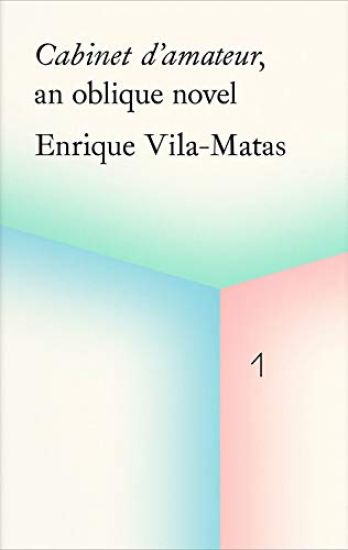
Cabinet d'amateur, an oblique novel: Enrique Vila-Matas
Enrique Vila-Matas
Whitechapel Gallery
2019
nidottu
The first of four special publications to accompany a year-long display of works from Barcelona’s `la Caixa’ Collection at Whitechapel Gallery, selected by and featuring newlycommissioned fictional works by some of the most original English and Spanish-language writers working today. Established in Barcelona in 1985 by Fundación `la Caixa’, the `la Caixa’ Collection of Contemporary Art features over 1,000 works of international contemporary art from the last 30 years, including artists such as Antoni Tàpies, Joseph Beuys, Cornelia Parker and Doris Salcedo. For a major four-part display running from 2019–20, Whitechapel Gallery has partnered with `la Caixa’ Collection to showcase key pieces from the Collection, with each of the four `chapters’ curated by a contemporary writer, who will also contribute a brand new work of fiction in response to their selection. Each display will be accompanied by a fullyillustrated catalogue featuring the works displayed and the new text, accompanied by a foreword and introduction from both institutions.The first chapter, on display in Spring 2019, will be selected by the award-winning Spanish novelist Enrique Vila-Matas (b. Barcelona, 1948; lives and works in Barcelona), who has been described by The New Yorker as `arguably Spain’s most significant contemporary literary figure’. His work is often described as metafiction, a form of writing frequently used to examine the relationship between art and life. Vila-Matas’ books include Because She Never Asked (2015, originally written for Sophie Calle), The Illogic of Kassel (2014), Dublinesque (2010) and Bartleby & Co (2000), and his new book, titled Mac y su contratiempo (Mac’s Problem) will be released in English in April 2019, coinciding with the display at Whitechapel Gallery. Vila-Matas has selected works by Dominique Gonzalez-Foerster, Miquel Barceló, Dora García, Carlos Pazos and Gerhard Richter.
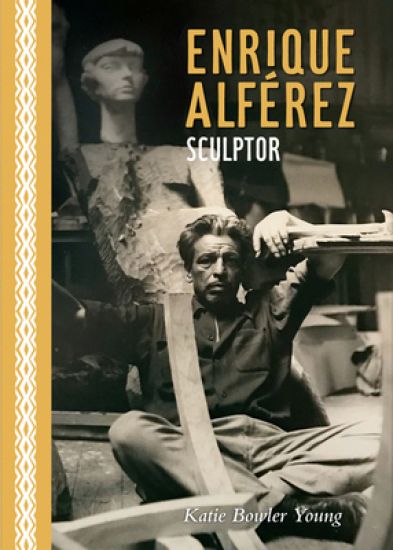

Enrique Norten
Harvard Graduate School of Design
2006
nidottu
"From an interview with Enrique Norten by Brigitte Shim: "Shim: Throughout modern architecture, the house has been a laboratory for invention. It has been a testing ground for architects to explore new ideas using the ordinary program of kitchen, bedroom, bathroom, living space. How is this house used to push your architecture?Norten: What I was looking for with this house was probably a return to the main principles of modernism. I was trying to look for the very basics of architecture: a simple structure, simple construction methods, and straightforward spatial conditions that would satisfy the needs of our family. The house was a laboratory where I was looking back to where the tradition of modernity started, and I tried to recapture that.

