Kirjojen hintavertailu. Mukana 12 400 029 kirjaa ja 12 kauppaa.

Kirjahaku

Etsi kirjoja tekijän nimen, kirjan nimen tai ISBN:n perusteella.

1000 tulosta hakusanalla Enver Khurshut

Aryens d'Asie

Aryens d'Asie

Enver Khurshut

Editions Notre Savoir
2023
pokkari
Le livre se compose de 10 articles interd pendants. L'article "Aryens d'Europe" est consacr une question aussi importante que la classification des peuples en fonction de leur langue. L'article "Aryens d'Asie" est consacr l' tude de la m me question, mais uniquement sur l'exemple des peuples galement aryens: les Indiens et les Iraniens, qui, un certain stade historique, formaient un seul et m me peuple appel proto-Indo-Iraniens, Indo-Iraniens ou Aryens. L'article "Keep to the West " traite d'une question aussi fondamentale que la migration des tribus aryennes, de la pr histoire aux premiers si cles de notre re, de l'Asie vers l'Europe. L'article ponyme est consacr aux tribus turques, finno-ougriennes et tataro-mongoles des IVe et XIIIe si cles, qui ont voyag de l'Asie vers l'Europe en suivant la m me route que les peuples aryens avaient emprunt e auparavant. L'article "North-Eastern Neighbours of the Scythians" montre qu'une partie des Scythes avait migr d'Asie vers les steppes du nord de la mer Noire bien avant notre re. L'article "Sacral Categories of Shamanism" (Cat gories sacr es du chamanisme) pr sente galement de nombreux faits et preuves. Dans l'article "T rks Aryans, or Transformed Aryans", l'auteur exprime l'opinion qu'une partie importante de l'ethnie turque est repr sent e par d'anciens Aryens.
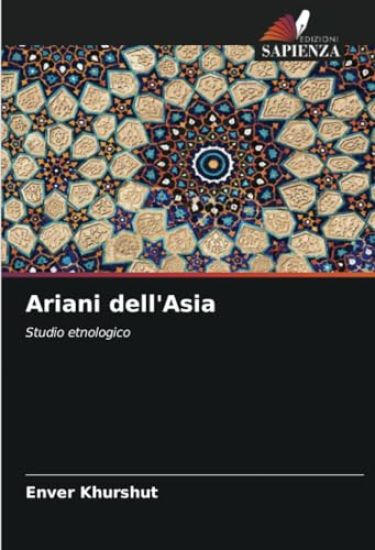
Ariani dell'Asia

Ariani dell'Asia

Enver Khurshut

Edizioni Sapienza
2023
pokkari
Il libro composto da 10 articoli collegati tra loro. L'articolo "Ariani d'Europa" dedicato a una questione importante come la classificazione dei popoli in base alla lingua. L'articolo "Ariani d'Asia" dedicato allo studio della stessa questione, ma solo sull'esempio di altri popoli ariani: indiani e iraniani, che in una certa fase storica erano un unico popolo chiamato proto-indo-iraniano, indo-iraniano o ariano. L'articolo "Keep to the West " affronta una questione fondamentale come la migrazione delle trib ariane dalla preistoria ai primi secoli dopo Cristo dall'Asia all'Europa. L'articolo omonimo "Keep to the West " dedicato alle trib turche, ugro-finniche e tataro-mongole del IV-XIII secolo, che si spostarono dall'Asia all'Europa lungo la stessa strada percorsa in precedenza dai popoli ariani. L'articolo "I vicini nord-orientali degli Sciti" mostra che una parte degli Sciti era migrata dall'Asia alle steppe del Mar Nero settentrionale molto prima dell'era moderna. Anche l'articolo "Categorie sacrali dello sciamanesimo" fornisce molti fatti e prove a riguardo. Nell'articolo "T rks Aryans, or Transformed Aryans" l'autore esprime l'opinione che una parte significativa dell'ethnos turco sia rappresentata da ex ariani.
Arianos da Ásia

Arianos da Ásia

Enver Khurshut

Edicoes Nosso Conhecimento
2023
pokkari
O livro composto por 10 artigos inter-relacionados. O artigo "Arianos da Europa" dedicado a uma quest o t o importante como a classifica o dos povos pela l ngua. O artigo "Arianos da sia" dedicado ao estudo da mesma quest o, mas apenas com base no exemplo de povos tamb m arianos: indianos e iranianos, que numa determinada fase hist rica constitu ram um nico povo chamado proto-indo-iraniano, indo-iraniano ou ariano. O artigo "Keep to the West " trata de uma quest o t o fundamental como a migra o das tribos arianas, desde a pr -hist ria at aos primeiros s culos d.C., da sia para a Europa. O artigo ep nimo "Keep to the West " dedicado s tribos turcas, fino- gricas e t rtaro-mong is nos s culos IV - XIII, que viajaram da sia para a Europa ao longo da mesma rota que os povos arianos tinham tomado anteriormente. O artigo "Vizinhos nordestinos dos citas" mostra que uma parte dos citas tinha migrado da sia para as estepes do Norte do Mar Negro muito antes da Idade M dia. O artigo "Sacral Categories of Shamanism" tamb m apresenta muitos factos e provas disso. No artigo "T rks Aryans, or Transformed Aryans", o autor expressa a opini o de que uma parte significativa da etnia turca representada por antigos arianos.
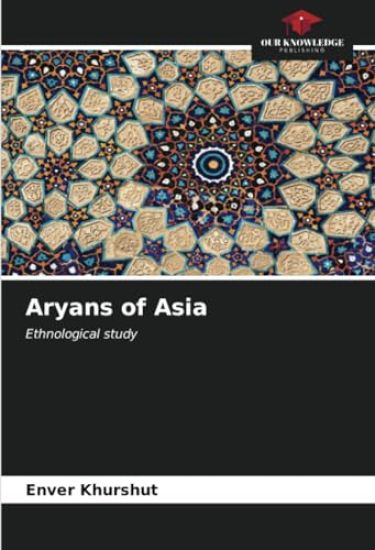
Aryans of Asia

Aryans of Asia

Enver Khurshut

Our Knowledge Publishing
2023
pokkari
The book consists of 10 interrelated articles. The article "Aryans of Europe" is devoted to such an important issue as the classification of peoples by language. The article "Aryans of Asia" is devoted to the study of the same question, but only on the example of also Aryan peoples: Indians and Iranians, who at a certain historical stage were a single people called proto-Indo-Iranians, Indo-Iranians or Aryans. The article "Keep to the West " deals with such a fundamental issue as the migration of Aryan tribes from prehistoric times to the first centuries A.D. from Asia to Europe. The eponymous article "Keep to the West " is devoted to the Turkic, Finno-Ugric and Tatar-Mongol tribes in the IV - XIII centuries, who passed from Asia to Europe along the same route that the Aryan peoples had traveled before. In the article "Northeastern Neighbors of the Scythians" it is shown that a part of the Scythians migrated from Asia to the Northern Black Sea steppes long before AD. The article "Sacral Categories of Shamanism" also gives many facts and proofs of it. In the article "T rks Aryans, or Transformed Aryans" the author expresses the opinion that a significant part of the Turkic ethnos is represented by former Aryans.
Arier in Asien

Arier in Asien

Enver Khurshut

Verlag Unser Wissen
2023
pokkari
Das Buch besteht aus 10 zusammenh ngenden Artikeln. Der Artikel "Die Arier Europas" ist einem so wichtigen Thema wie der Klassifizierung der V lker nach ihrer Sprache gewidmet. Der Artikel "Die Arier Asiens" ist der Untersuchung derselben Frage gewidmet, jedoch nur am Beispiel der ebenfalls arischen V lker: Inder und Iraner, die in einer bestimmten historischen Phase ein einziges Volk waren, das als Proto-Indianer, Indo-Iraner oder Arier bezeichnet wurde. Der Artikel "Keep to the West " befasst sich mit einem so grundlegenden Thema wie der Wanderung der arischen St mme von der Vorgeschichte bis in die ersten Jahrhunderte nach Christus von Asien nach Europa. Der gleichnamige Artikel "Keep to the West " ist den t rkischen, finno-ugrischen und tatarisch-mongolischen St mmen im IV. bis XIII. Jahrhundert gewidmet, die auf demselben Weg von Asien nach Europa zogen, den zuvor die arischen V lker genommen hatten. Der Artikel "Nord stliche Nachbarn der Skythen" zeigt, dass ein Teil der Skythen schon lange vor unserer Zeitrechnung aus Asien in die Steppe am n rdlichen Schwarzen Meer eingewandert ist. Der Artikel "Sakrale Kategorien des Schamanismus" enth lt ebenfalls viele Fakten und Beweise daf r. In dem Artikel "T rks Aryans, or Transformed Aryans" vertritt der Autor die Meinung, dass ein bedeutender Teil der t rkischen Ethnie von ehemaligen Ariern repr sentiert wird.
Enver_hoxha_speeches_1961-1962

Enver_hoxha_speeches_1961-1962

Enver Hoxha

Hassell Street Press
2021
nidottu
This work has been selected by scholars as being culturally important and is part of the knowledge base of civilization as we know it.This work is in the public domain in the United States of America, and possibly other nations. Within the United States, you may freely copy and distribute this work, as no entity (individual or corporate) has a copyright on the body of the work.Scholars believe, and we concur, that this work is important enough to be preserved, reproduced, and made generally available to the public. To ensure a quality reading experience, this work has been proofread and republished using a format that seamlessly blends the original graphical elements with text in an easy-to-read typeface.We appreciate your support of the preservation process, and thank you for being an important part of keeping this knowledge alive and relevant.
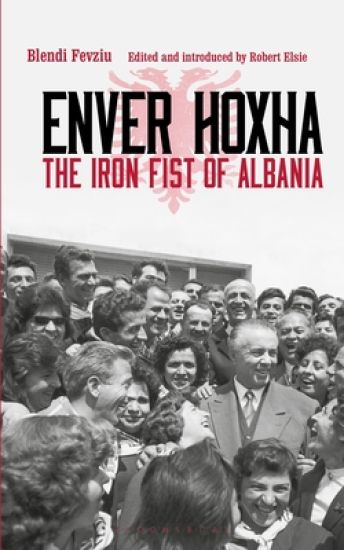
Enver Hoxha

Enver Hoxha

Blendi Fevziu

BLOOMSBURY PUBLISHING PLC
2022
nidottu
Stalinism, that particularly brutal phase of communism, came to an end in most of Eastern Europe with the death of Josef Stalin in 1953 or at least with the Khrushchev reforms that began in the Soviet Union in 1956. However, in one country - Albania - Stalinism survived virtually unscathed until 1990. The regime that the Albanian dictator Enver Hoxha led from the time of the communist takeover in 1944 until his death in 1985, and that continued unabated under his successor Ramiz Alia until 1990, was incomparably severe. Such was the reign of terror that no audible voice of opposition or dissent ever arose in the Balkan state, a European country that became as isolated from the rest of the world as North Korea is today. When the Albanian communist system finally imploded, it left behind a weary population, frightened and confused after decades of purges and political terror. It also left behind a country with a weak and fragile economy, a country where extreme poverty was the norm. In the decades since Hoxha's death, Albania has made substantial progress in political and economic terms, yet the spectre of Hoxha still lingers over the country.Despite this, many people - inside and outside Albania - know little about the man who ruled the country with an iron fist for so many decades. This book provides the first biography of Enver Hoxha available in English, from his birth in GjirokastEr in southern Albania, then still under Ottoman rule, to his death in 1985 at the age of 76. Using archival documents and first-hand interviews, Albanian journalist Blendi Fevziu pieces together the life of this tyrannical ruler, in a biography which will be essential reading for anyone interested in Balkan history and communist studies.
Enver Hoxha

Enver Hoxha

Fevziu Blendi

I.B. Tauris
2016
sidottu
Stalinism, that particularly brutal phase of the Communist experience, came to an end in most of Europe with the death of Stalin in 1953. However, in one country - Albania - Stalinism survived virtually unscathed until 1990. The regime that the Albanian dictator Enver Hoxha led from 1944 until his death in 1985 was incomparably severe. Such was the reign of terror that no audible voice of opposition or dissent ever arose in the Balkan state and Albania became isolated from the rest of the world and utterly inward-looking. Three decades after his death, the spectre of Hoxha still lingers over the country, yet many people - inside and outside Albania - know little about the man who ruled the country with an iron fist for so many decades. This book provides the first biography of Hoxha available in English. Using unseen documents and first-hand interviews, journalist Blendi Fevziu pieces together the life of a tyrannical ruler in a biography which will be essential reading for anyone interested in Balkan history and communist studies.
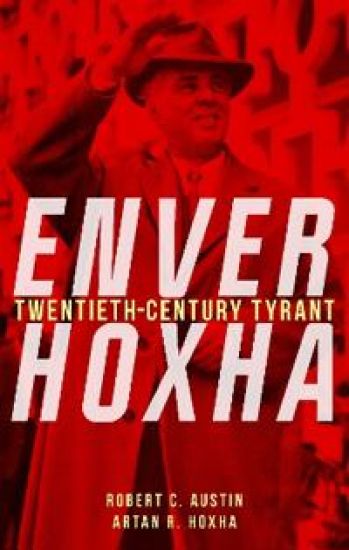
Enver Hoxha

Enver Hoxha

Robert C. Austin; Artan R. Hoxha

REAKTION BOOKS
2026
sidottu
This is the first full-length biography of the extraordinary Enver Hoxha, the communist dictator who ruled Albania for nearly half a century.Hoxha was an unreformed Stalinist who was propelled to power with Soviet and Yugoslav help following the defeat of the Axis powers, though he soon broke with his former allies and built a Chairman Mao-like political cult in his tiny and impoverished nation.In this fluent and far-reaching account, Hoxha emerges as a paranoid megalomaniac, interested in maintaining control above all else, who excelled at manipulating his comrades and outsmarting his domestic and international enemies. This important book shines a light on the nature of dictatorship, and a lesser known chapter in the history of the Cold War.
Enver Hoxha's Long Shadow

Enver Hoxha's Long Shadow

John Watkins; Miranda Vickers

SIGNAL BOOKS LTD
2023
nidottu
Communist Albania was unlike any other European nation. It was a 'hermit state' ruled by a dictator, Enver Hoxha, who presided over a repressive Stalinist regime. When John Watkins visited Albania in the late 1980s, he saw peasants toiling in the fields and enormous state-owned factories scarred the landscape. In 1991, the old regime was overthrown. Hoxha's statues were pulled down and his books burned. But reminders of his Albania were everywhere: in the monotonous apartment blocks and derelict factories; in the old collective farms and irrigation channels; in the thousands of bunkers that still dotted the landscape. But how much deeper did Hoxha's influence go? What marks had he left on the political system and on the nation's psyche? To answer these questions, the author returned to the places he had visited in the 1980s. He started in Shkoder and travelled south through Durres and Tirana to Sarande. He had taken photos on those first tours. He wanted to find the exact spots where he had taken them, so he could use them as a barometer of change. But the real power of the images lay not just in their evocation of the past, but in the connections they allowed him to make in the present. Through the photos, he was able to talk to Albanians from different generations and walks of life. For those born after 1991, they were revelatory, images of a world they knew little about. For older people, they were a key that unlocked memories, both good and bad. These exchanges, together with eyewitness research over thirty years, have given the author an in-depth insight into how Albanians are coping with the transition from dictatorship to an often-chaotic free market economy. As Albania emerges as a modern democratic state, this book reveals that it is still struggling with the legacy of its traumatic past. 'Enver Hoxha's Long Shadow,' a colourful account of this enigmatic country's landscapes and people, is essential reading for anyone wanting a fuller understanding of contemporary Albania.
Adegreesmail Enver

Adegreesmail Enver

VDM Publishing House
2010
nidottu
Observera att förlaget som ger ut denna produkt baserar innehållet i sina produkter på fria källor som Wikipedia. Boken är med stor sannolikhet endast ett utdrag ur dessa informationskällor, alltså inte en vanlig bok i den bemärkelsen.
Bosnia and Herzegovina in the Second World War
Five major groups fought one another in Bosnia and Herzegovina during the Second World War: The German and Italian occupiers, the Serbian Chetniks, the Ustasha of the Independent State of Croatia, the Bosnian Muslims, and the Tito-led Partisans. The aims, policies, and actions of each group are examined in light of their own documents and those of rival groups. This work shows how the Partisans prevailed over other groups because of their ideological appeal, superior discipline, and success in winning the support of large numbers of uncommitted Bosnians, particularly the Bosnian Muslims.
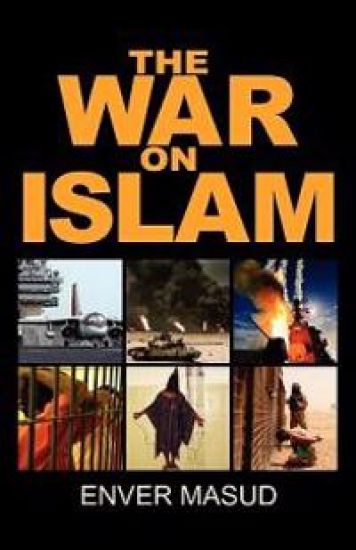
The War on Islam

The War on Islam

Enver Masud

Wisdom Fund
2010
nidottu
In this fifth edition of The War on Islam, Enver Masud -- recipient of the Human Rights Foundation, 2002 Gold Award -- provides valuable insights on the conflict between Islam and the West, beginning with the Gulf War of 1991 to America's recent financial debacle stemming (in part) from America's unnecessary wars. Impact International (England), in its review of The War on Islam, wrote, "Enver Masud gives example after example of disinformation and lies, cover-ups and double standards." The All India Conference of Intellectuals wrote, "the contents of the book are an eye opener." The U.S. based Muslim Observer wrote, "he brings balanced analysis of world affairs amidst the chaos of doctored evidence and complacent media." Mumia Abu Jamal, "perhaps the best known Death-Row prisoner in the world", wrote, "his thoughts may prove valuable to thinking people in America". For those who seldom venture beyond mainstream news media, The War on Islam serves as a concise introduction to the wars for resources and markets which are likely to escalate in the future. Since its first release in 2000, 10,000 copies of The War on Islam have been sold, and 190,000 downloaded. More on the book at The Wisdom Fund (TWF.org) -- a nonprofit corporation founded by the author in 1995.
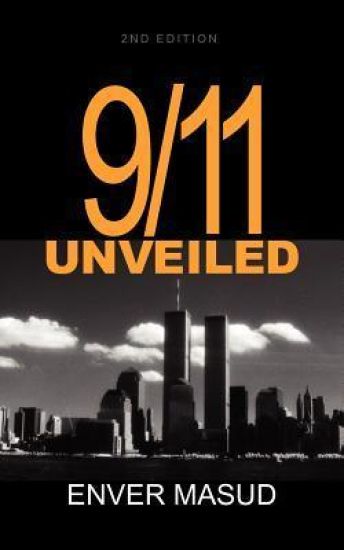
9/11 Unveiled

9/11 Unveiled

Enver Masud

Wisdom Fund
2012
nidottu
2000+ military, intelligence, industry professionals do not believe the official account of 9/11 9/11 Unveiled . . . is the best short summary of what most Americans and virtually all of the rest of the world consider to be the "9/11 mystery"-Robert D. Crane, Co-founder, Center for Strategic and International Studies, Washington, D.C., and Principal Foreign Policy Adviser to Richard Nixon 9/11 Unveiled . . . demonstrates the author's extensive research and knowledge regarding events on 9/11-Robert Balsamo, Founder, Pilots for 9/11 Truth The book In December 1989, the Washington Post reported, "Military experts from previous administrations told Congress today that the $300 billion annual Pentagon budget could be safely cut in half over the next decade". In September 2000, The Project for the New American Century wrote, "Preserving the desirable strategic situation in which the United States now finds itself requires a globally preeminent military capability . . . the process of transformation . . . is likely to be a long one, absent some catastrophic and catalyzing event-like a new Pearl Harbor." On September 11, 2001, tragedy struck. Was 9/11 the "new Pearl Harbor"? 9/11 Unveiled leads the reader to the inescapable conclusion: the official account of 9/11 is fatally flawed. The author Enver Masud is the founder of The Wisdom Fund (est. 1995). His articles on national and world affairs have appeared in news papers and magazines in the U.S. and overseas. He is the author of an award-winning book-The War on Islam, and a contributing author of 9/11 and American Empire and Islam: Opposing Viewpoints. He has lectured widely on 9/11. An engineer by profession, he managed research programs, the National Power Grid Study, and the National Electric Reliability Study for the U.S. Department of Energy, and set up and directed the Operations Review Division at the Iowa Commerce Commission. As an engineering management consultant, he has worked for the U.S. Agency for International Development, and the World Bank-in Albania, Egypt, Ethiopia, Ghana, Indonesia, Latvia, Pakistan, Russia, and Tanzania. Shortly after 9/11, when Enver looked toward the Pentagon, the first question he asked was, "Where's the plane?"
The State, Education and Equity in Post-Apartheid South Africa
This title was first published in 2002: Has the South African post-apartheid state been able to achieve its stated goals? What has been the relationship between the process of educational reform and the impact on the state of the Constitution and other laws? This seminal book responds to these questions by examining the development and implementation of social policy in South Africa during the first years of democratic government, particularly in relation to education. The post-apartheid state was immediately faced with a broad spectrum of political, social, economic and human rights issues. The research analyzes whether the aims and objectives of the new administration were achieved; no other single collection of research in South Africa collectively explores the issues raised in this endeavour. The book will appeal to a wide range of professionals including researchers, academics, planners, policy makers, public servants and postgraduate students.
The State, Education and Equity in Post-Apartheid South Africa
This title was first published in 2002: Has the South African post-apartheid state been able to achieve its stated goals? What has been the relationship between the process of educational reform and the impact on the state of the Constitution and other laws? This seminal book responds to these questions by examining the development and implementation of social policy in South Africa during the first years of democratic government, particularly in relation to education. The post-apartheid state was immediately faced with a broad spectrum of political, social, economic and human rights issues. The research analyzes whether the aims and objectives of the new administration were achieved; no other single collection of research in South Africa collectively explores the issues raised in this endeavour. The book will appeal to a wide range of professionals including researchers, academics, planners, policy makers, public servants and postgraduate students.