This issue of Hematology/Oncology Clinics will feature articles such as: Anaplastic large cell lymphomaj; New agents; Transplant, Uncommon variants; ATLL, CD30+ LPD of skin; NK/T, MF/SS; and many more!
Swallowing her pride, Rhonda auditioned for an opening at Sugar Daddy's Gentlemen's Club as an exotic dancer. Rhonda felt it was degrading, but what other option did she have? The only downfall with her plan of being a stripper was... "I honestly had no clue what dropping it, making it clap, and shaking it until it's hot or whatever they said they had to do to get paid even meant. What I did know for certain is that I was determined to learn." Rhonda
As the sophistication of cyber-attacks increases, understanding how to defend critical infrastructure systems—energy production, water, gas, and other vital systems—becomes more important, and heavily mandated. Industrial Network Security, Second Edition arms you with the knowledge you need to understand the vulnerabilities of these distributed supervisory and control systems. The book examines the unique protocols and applications that are the foundation of industrial control systems, and provides clear guidelines for their protection. This how-to guide gives you thorough understanding of the unique challenges facing critical infrastructures, new guidelines and security measures for critical infrastructure protection, knowledge of new and evolving security tools, and pointers on SCADA protocols and security implementation.
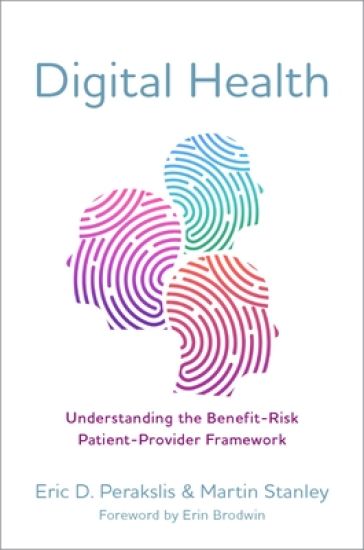
Digital health represents the fastest growing sector of healthcare. From internet-connected wearable sensors to diagnostics tests and disease treatments, it is often touted as the revolution set to solve the imperfections in healthcare delivery worldwide. While the health value of digital health technology includes greater convenience, more personalized treatments, and more accurate data capture of fitness and wellness, these devices also carry the concurrent risks of technological crime and abuses pervasive to cyber space. Even today, the medical world has been slow to respond to these emerging risks, despite the growing permanence of digital health technology within daily medical practice. With over 30 years of joint experience across the medical and cybersecurity industries, Eric D. Perakslis and Martin Stanley provide in this volume the first reference framework for the benefits and risks of digital health technologies in practice. Drawing on expert interviews, original research, and personal storytelling, they explore the theory, science, and mathematics behind the benefits, risks, and values of emerging digital technologies in healthcare. Moving from an overview of biomedical product regulation and the evolution of digital technologies in healthcare, Perakslis and Stanley propose from their research a set of ten categories of digital side effects, or "toxicities," that must be managed for digital health technology to realize its promise. These ten toxicities consist of adversary-driven threats to privacy such as physical security, cybersecurity, medical misinformation, and charlatanism, and non-adversary-driven threats such as deregulation, cyberchondria, over-diagnosis/over-treatment, user error, and financial toxicity. By arming readers with the knowledge to mitigate digital health harms, Digital Health empowers health practitioners, patients, and technology providers to move beyond fear of the unknown and embrace the full potential of digital health technology, paving the way for more conscientious digital technology use of the future.
Scientists, theologians, and philosophers have all sought to answer the questions of why we are here and where we are going. Finding this natural basis of life has proved elusive, but in the eloquent and creative Into the Cool, Eric D. Schneider and Dorion Sagan look for answers in a surprising place: the second law of thermodynamics. This second law refers to energy's inevitable tendency to change from being concentrated in one place to becoming spread out over time. In this scientific tour de force, Schneider and Sagan show how the second law is behind evolution, ecology,economics, and even life's origin. Working from the precept that "nature abhors a gradient," Into the Cool details how complex systems emerge, enlarge, and reproduce in a world tending toward disorder. From hurricanes here to life on other worlds, from human evolution to the systems humans have created, this pervasive pull toward equilibrium governs life at its molecular base and at its peak in the elaborate structures of living complex systems. Schneider and Sagan organize their argument in a highly accessible manner, moving from descriptions of the basic physics behind energy flow to the organization of complex systems to the role of energy in life to the final section, which applies their concept of energy flow to politics, economics, and even human health. A book that needs to be grappled with by all those who wonder at the organizing principles of existence, Into the Cool will appeal to both humanists and scientists. If Charles Darwin shook the world by showing the common ancestry of all life, so Into the Cool has a similar power to disturb—and delight—by showing the common roots in energy flow of all complex, organized, and naturally functioning systems.“Whether one is considering the difference between heat and cold or between inflated prices and market values, Schneider and Sagan argue, we can apply insights from thermodynamics and entropy to understand how systems tend toward equilibrium. The result is an impressive work that ranges across disciplinary boundaries and draws from disparate literatures without blinking.”—Publishers Weekly
How does the regime of Slobodan Miloševic and his Socialist Party of Serbia (SPS) remain in power? Since legitimizing its power in 1990, the SPS has never received a majority of votes in an election. Furthermore, it has been defeated in three military conflicts, produced more than 500,000 refugees, presided over the most extreme hyperinflation in modern times, and failed in its original defining promise to see "all Serbs in one state." In The Culture of Power in Serbia, Eric Gordy explores how the Miloševic government prolongs its tenure despite failures and setbacks that would have brought down most other regimes. Gordy finds the answer in everyday life. The Miloševic regime has largely succeeded in making alternatives to its rule unavailable. By controlling key aspects of daily life, including politics, media, and popular music, it has undermined opposition by closing off alternative voices. The result is an atmosphere in which people feel they have lost control over their private life and cultural environment.Nevertheless, Gordy finds reason to be optimistic about the long-term prospects for Serbia. The regime's forays into popular music have largely failed, and it has had only partial success in controlling the media, suggesting that the present strategy will not work forever. In Gordy's judgment, the Miloševic regime has a limited future.The Culture of Power in Serbia provides fresh perspective for readers interested in contemporary Eastern Europe, in the strategies and tactics of authoritarian regimes, in the sociology of everyday life, and in the political potential of culture.
Though scholars of political science and moral philosophy have long analyzed the justifications for and against waging war as well as the ethics of warfare itself, the problem of ending wars has received less attention. In the first book to apply just war theory to this phase of conflict, Eric Patterson presents a three-part view of justice in end-of-war settings involving order, justice, and reconciliation. Patterson’s case studies range from successful applications of jus post bellum, such as the U.S. Civil War or Kosovo, to challenges such as present-day Iraq.
This book aims to produce a monograph evaluating the extent to which direct foreign investment in developing countries is related to structural change in the Asia-Pacific region. It is useful for economists, public policymakers, graduates or undergraduates.
This book is the result of a project organized by the Resource Systems Institute of the East-West Center. The goal of the project is to produce a monograph evaluating the extent to which direct foreign investment in developing countries is related to structural change in the Asia-Pacific region.
In recent years there has been an explosion of network data – that is, measu- ments that are either of or from a system conceptualized as a network – from se- ingly all corners of science. The combination of an increasingly pervasive interest in scienti c analysis at a systems level and the ever-growing capabilities for hi- throughput data collection in various elds has fueled this trend. Researchers from biology and bioinformatics to physics, from computer science to the information sciences, and from economics to sociology are more and more engaged in the c- lection and statistical analysis of data from a network-centric perspective. Accordingly, the contributions to statistical methods and modeling in this area have come from a similarly broad spectrum of areas, often independently of each other. Many books already have been written addressing network data and network problems in speci c individual disciplines. However, there is at present no single book that provides a modern treatment of a core body of knowledge for statistical analysis of network data that cuts across the various disciplines and is organized rather according to a statistical taxonomy of tasks and techniques. This book seeks to ll that gap and, as such, it aims to contribute to a growing trend in recent years to facilitate the exchange of knowledge across the pre-existing boundaries between those disciplines that play a role in what is coming to be called ‘network science.
This book presents a comprehensive, systematic analysis of Russia– Iran relations in the period following the collapse of the Soviet Union in 1991. It discusses the key areas – such as trade, arms sales, nuclear developments, and potential areas of friction in the Caspian Sea – where co-operation is possible; charts different phases of increasing and declining co-operation; and relates these changes to security considerations and domestic factors in both countries. Throughout, the book argues that the potential for co-operation between the two countries is much greater than people realize, and it concludes by assessing how Russia–Iran relations are likely to develop in future.
Part of the popular Foundations in Diagnostic Pathology Series, Hematopathology, Fourth Edition, is a practical and affordable resource that is ideal for study and review as well as everyday clinical practice. With its highly templated format, clearly written text, and concise summary tables, this user-friendly reference helps both trainees and practicing pathologists form accurate diagnoses, avoid pitfalls, and confidently sign out pathology reports on these often difficult and challenging cases. Uses a highly templated format that includes clinical, imaging, and management/prognostic features; pathologic features; ancillary studies; differential diagnosis; and selected bibliography Focuses on the specific features of various entities, including differential diagnoses Supplements traditional morphologic diagnostic pathology with clinical, immunohistochemical, and molecular genetic information throughout Includes new information on the molecular biology of benign and malignant hematologic disorders Contains numerous quick-reference summary boxes that provide concise and handy key points on the clinical features and pathological features of each disease within hematopathology Features hundreds of full-color photomicrographs and gross photographs that depict important pathologic features, enabling you to form a differential diagnosis and compare your findings with actual cases Reflects updated disease classifications according to the 5th edition of World Health Organization (WHO) and The International Consensus Classification (ICC) Offers contributions from internationally recognized pathologists, keeping you up to date with the latest information in the field An eBook version is included with purchase. The eBook allows you to access all of the text, figures and references, with the ability to search, customize your content, make notes and highlights, and have content read aloud. Additional digital ancillary content may publish up to 6 weeks following the publication date
As the sophistication of cyber-attacks increases, understanding how to defend critical infrastructure systems—energy production, water, gas, and other vital systems—becomes more important, and heavily mandated. Industrial Network Security, Third Edition arms you with the knowledge you need to understand the vulnerabilities of these distributed supervisory and control systems. Author Eric Knapp examines the unique protocols and applications that are the foundation of Industrial Control Systems (ICS) and provides clear guidelines for their protection. This comprehensive reference gives you thorough understanding of the challenges facing critical infrastructures, new guidelines and security measures for infrastructure protection, knowledge of new and evolving security tools, and pointers on SCADA protocols and security implementation.
The rise of Trumpism and the Covid-19 pandemic have galvanized debates about globalization. Eric D. Larson presents a timely look at the last time the concept spurred unruly agitation: the late twentieth century. Offering a transnational history of the emergence of the global justice movement in the United States and Mexico, he considers how popular organizations laid the foundations for this “movement of movements.” Farmers, urban workers, and Indigenous peoples grounded their efforts to confront free-market reforms in frontline struggles for economic and racial justice. As they strove to change the direction of the world economy, they often navigated undercurrents of racism, nationalism, and neoliberal multiculturalism, both within and beyond their networks. Larson traces the histories of three popular organizations, examining the Mexican roots of the idea of food sovereignty; racism and whiteness at the momentous Battle of Seattle protests outside the 1999 World Trade Organization meetings; and the rise of dramatic street demonstrations around the globe. Juxtaposing these stories, he reinterprets some of the crucial moments, messages, and movements of the era.
The rise of Trumpism and the Covid-19 pandemic have galvanized debates about globalization. Eric D. Larson presents a timely look at the last time the concept spurred unruly agitation: the late twentieth century. Offering a transnational history of the emergence of the global justice movement in the United States and Mexico, he considers how popular organizations laid the foundations for this “movement of movements.” Farmers, urban workers, and Indigenous peoples grounded their efforts to confront free-market reforms in frontline struggles for economic and racial justice. As they strove to change the direction of the world economy, they often navigated undercurrents of racism, nationalism, and neoliberal multiculturalism, both within and beyond their networks. Larson traces the histories of three popular organizations, examining the Mexican roots of the idea of food sovereignty; racism and whiteness at the momentous Battle of Seattle protests outside the 1999 World Trade Organization meetings; and the rise of dramatic street demonstrations around the globe. Juxtaposing these stories, he reinterprets some of the crucial moments, messages, and movements of the era.
Modern astronomical research is beset with a vast range of statistical challenges, ranging from reducing data from megadatasets to characterizing an amazing variety of variable celestial objects or testing astrophysical theory. Linking astronomy to the world of modern statistics, this volume is a unique resource, introducing astronomers to advanced statistics through ready-to-use code in the public domain R statistical software environment. The book presents fundamental results of probability theory and statistical inference, before exploring several fields of applied statistics, such as data smoothing, regression, multivariate analysis and classification, treatment of nondetections, time series analysis, and spatial point processes. It applies the methods discussed to contemporary astronomical research datasets using the R statistical software, making it invaluable for graduate students and researchers facing complex data analysis tasks. A link to the author's website for this book can be found at www.cambridge.org/msma. Material available on their website includes datasets, R code and errata.
A congregation wants the feeling of belonging and believing but is not sure what to believe. Led by a team of craven materialists, the church resorts to a concert and talk show format instead of normal worship services. This strategy fails and the church resorts to a prosperity ministry and a dubious insurance sales scheme to stay solvent.The church learns that Barack Obama plans a visit to honor "The Mother of the Church" who he considers his social justice inspiration, but leadership has no idea who or what the Mother of the Church is. Seeing the visit as a financial windfall, church leaders charge a young minister with finding The Mother. Assisted by an ex- hip hop video vixen, and a mystical Silent Deacon, chaos ensues as the minister attempts to find The Mother while fending off a dangerous assortment of eccentric adversaries.
Percy Wants to be a Politician is a story of a young boy who asks his dad, a politician, what it means to be a politician. His dad uses this as a teaching opportunity by taking his son around town to essentially teach what it means to be a good human being and share how that ties into being a politician. Percy is more than the main character in this story, but a movement. P.E.R.C.Y. represents Peace, Equality, Respect, Courage & Youthfulness and is about encouraging all people to do their part and to love one another to make the world a better place.