Kirjojen hintavertailu. Mukana 11 213 693 kirjaa ja 11 kauppaa.

Kirjahaku

Etsi kirjoja tekijän nimen, kirjan nimen tai ISBN:n perusteella.

1000 tulosta hakusanalla Eric Evans

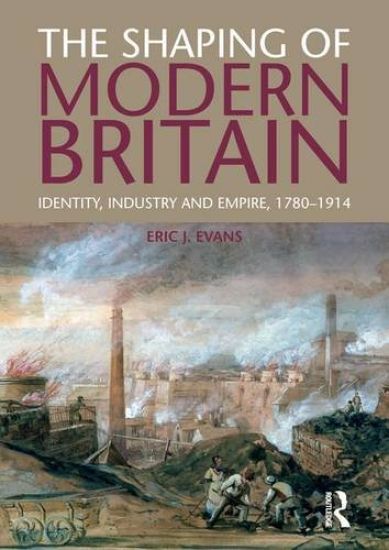
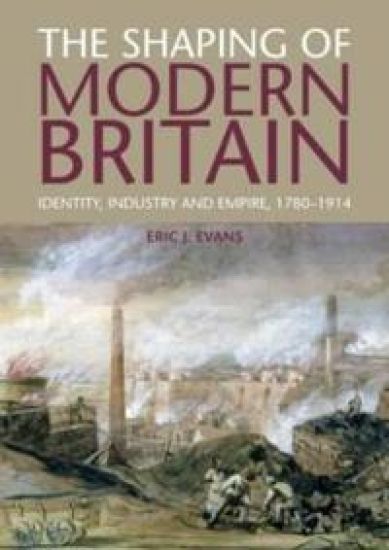
The Shaping of Modern Britain

The Shaping of Modern Britain

Eric Evans

Routledge
2014
sidottu
In this wide-ranging history of modern Britain, Eric Evans surveys every aspect of the period in which Britain was transformed into the world's first industrial power. By the end of the nineteenth century, Britain was still ruled by wealthy landowners, but the world over which they presided had been utterly transformed. It was an era of revolutionary change unparalleled in Britain - yet that change was achieved without political revolution. Ranging across the developing empire, and dealing with such central institutions as the church, education, health, finance and rural and urban life, The Shaping of Modern Britain provides an unparallelled account of Britain's rise to superpower status. Particular attention is given to the Great Reform Act of 1832, and the implications of the 1867 Reform Act are assessed. The book discusses:- the growing role of the central state in domestic policy making- the emergence of the Labour party- the Great Depression- the acquisition of a vast territorial empire Comprehensive, informed and engagingly written, The Shaping of Modern Britain will be an invaluable introduction for students of this key period of British history.
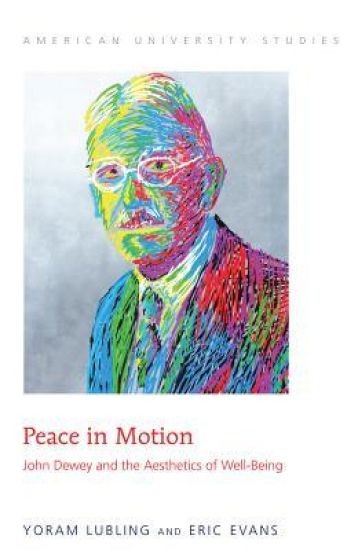
Peace in Motion

Peace in Motion

Yoram Lubling; Eric Evans

Peter Lang Publishing Inc
2016
sidottu
In this book Yoram Lubling and Eric Evans offer a Deweyan reconstruction of our philosophical understanding of well-being. They begin with Dewey’s critique of the «philosophical fallacy» to examine the legitimacy and value of theories of well-being offered by traditional philosophy. However, such theories fail to provide an authentic account of well-being due to a false understanding of experience as either epistemic or cognitive. Next, using Dewey’s theory of experience, they reconstruct «happiness» as the target for evaluation of well-being. This leads them to reject the traditional view of a private encapsulated self, and to offer in its place a transactionally situated self which is an embodied, enculturated agent. Through their emphasis on the importance of the qualitative aspects of Dewey’s understanding of a situation, the pervasive quality of the situation emerges as the most plausible criterion for the evaluation of well-being. The authors use Dewey’s theories of inquiry, ethics, value and art to establish the naturalistic conditions under which such pervasive quality enters into a situation as either settled or unsettled, in other words, as peace in motion. Consequently, a problematic situation becomes the primary condition under which all inquiry initiates whether it is in the context of science, ethics, values, art or ordinary living. Lubling and Evans conclude that a Deweyan account of well-being involves embodied knowing instead of the traditional view of cognitive knowledge. By using such an account, it is possible to explain the conditions and mechanisms under which well-being contributes to the enlargement and enrichment of individual and collective human experience.
Social Policy 1830-1914

Social Policy 1830-1914

Eric J Evans

Routledge
2016
sidottu
First published in 1978, this book gathers an extensive range of documents which illuminate the complex and important process by which the State in Britain has taken on increased responsibility for the health and welfare of its citizens. It uses extracts from a variety of sources, including reports, debates, speeches, articles and reviews, and commentary from leading figures of the period, such as Disraeli, Dickens, Edwin Chadwick and Churchill. The book begins with a discussion of the notion of an ‘age of laissez-faire’ in the mid-nineteenth century, and an examination of the extent to which the Liberal government embarked on a conscious policy of ‘welfarism’ between 1906 and 1914. The extracts themselves cover the entire field of social policy, including factory legislation, public health, housing, education, poverty, pensions and unemployment. This book will be of interest to those studying the history of social welfare and social policy.
Social Policy 1830-1914

Social Policy 1830-1914

Eric J Evans

Routledge
2018
nidottu
First published in 1978, this book gathers an extensive range of documents which illuminate the complex and important process by which the State in Britain has taken on increased responsibility for the health and welfare of its citizens. It uses extracts from a variety of sources, including reports, debates, speeches, articles and reviews, and commentary from leading figures of the period, such as Disraeli, Dickens, Edwin Chadwick and Churchill. The book begins with a discussion of the notion of an ‘age of laissez-faire’ in the mid-nineteenth century, and an examination of the extent to which the Liberal government embarked on a conscious policy of ‘welfarism’ between 1906 and 1914. The extracts themselves cover the entire field of social policy, including factory legislation, public health, housing, education, poverty, pensions and unemployment. This book will be of interest to those studying the history of social welfare and social policy.
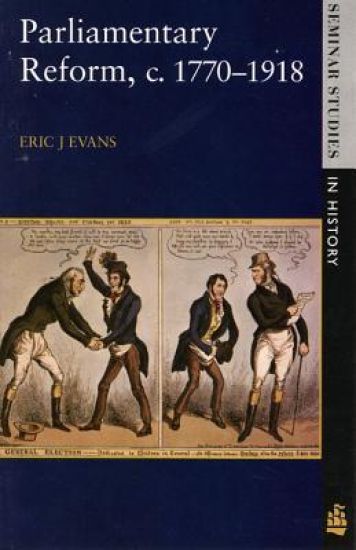
Parliamentary Reform in Britain, c. 1770-1918
Covers the momentous reforms in the British electoral system during the period from the Great Reform Act of 1832 to 1918 when women were given the vote. The study charts the series of Reform Acts right through the period, involving rather more attention to those important changes in the 1880s which are often underplayed.
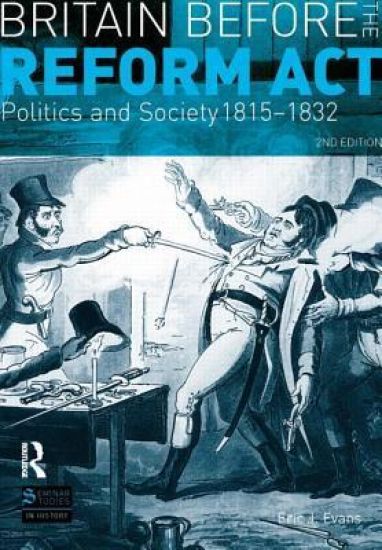
Britain before the Reform Act

Britain before the Reform Act

Evans Eric J.

Longman
2008
nidottu
In the years1815-1832, Britain came close to revolution. Fewer than twenty years separate the Battle of Waterloo from the passing of the ‘Great’ Reform Act but during this period Britain’s political elite was challenged as never before. In rising to that challenge, the political elite attempted, with considerable success, to ensure that Britain engineered that most perilous of transitions, from a less complex and more deferential society into a modern urban and industrial one, while avoding political revolution. In this extensively revised 2nd edition Evans engages with a welter of new material and fresh interpretations. The book sheds light both on the challenges to existing political and social authority and why those challenges were seen off. Evans examines: · The composition of Britain’s political elite and how this elite coped with the problems thrown up by a society urbanising and modernising at an unprecedented rate. · How Britain reacted to the longer-term implications of the French Revolution, including the development of a more cohesive national identity. · How the elite attempted to maintain public order in this period – and with what success. · The extent of change in Britain’s political system brought about by political, religious and administrative reforms Written in accessible style, with a rich collection of documents, chronology, glossary, a guide to further reading,and a ‘Who’s Who’ which summarises the careers and contributions of the main figures, this new edition is essential for all those interested in understanding Britain at this most crucial turning point in its history.
The Shaping of Modern Britain

The Shaping of Modern Britain

Evans Eric

Routledge
2011
nidottu
In this wide-ranging history of modern Britain, Eric Evans surveys every aspect of the period in which Britain was transformed into the world's first industrial power. By the end of the nineteenth century, Britain was still ruled by wealthy landowners, but the world over which they presided had been utterly transformed. It was an era of revolutionary change unparalleled in Britain - yet that change was achieved without political revolution. Ranging across the developing empire, and dealing with such central institutions as the church, education, health, finance and rural and urban life, The Shaping of Modern Britain provides an unparallelled account of Britain's rise to superpower status. Particular attention is given to the Great Reform Act of 1832, and the implications of the 1867 Reform Act are assessed. The book discusses: - the growing role of the central state in domestic policy making- the emergence of the Labour party- the Great Depression- the acquisition of a vast territorial empire Comprehensive, informed and engagingly written, The Shaping of Modern Britain will be an invaluable introduction for students of this key period of British history.
Eric Hobsbawm: A Life in History

Eric Hobsbawm: A Life in History

Richard J. Evans

Oxford University Press
2019
sidottu
Eric Hobsbawm's works have had a nearly incalculable effect across generations of readers and students, influencing more than the practice of history but also the perception of it. Born in Alexandria, Egypt, of second-generation British parents, Hobsbawm was orphaned at age fourteen in 1931. Living with an uncle in Berlin, he experienced the full force of world economic depression, and in the charged reaction to it in Germany was forced to choose between Nazism and Communism, which was no choice at all. Hobsbawm's lifelong allegiance to Communism inspired his pioneering work in social history, particularly the trilogy for which he is most famous--The Age of Revolution, The Age of Capital, and The Age of Empire--covering what he termed "the long nineteenth century" in Europe. Selling in the millions of copies, these held sway among generations of readers, some of whom went on to have prominent careers in politics and business. In this comprehensive biography of Hobsbawm, acclaimed historian Richard Evans (author of The Third Reich Trilogy, among other works) offers both a living portrait and vital insight into one of the most influential intellectual figures of the twentieth century. Using exclusive and unrestricted access to the unpublished material, Evans places Hobsbawm's writings within their historical and political context. Hobsbawm's Marxism made him a controversial figure but also, uniquely and universally, someone who commanded respect even among those who did not share-or who even outright rejected-his political beliefs. Eric Hobsbawm: A Life in History gives us one of the 20th century's most colorful and intellectually compelling figures. It is an intellectual life of the century itself.
Eric Hobsbawm: A Life in History

Eric Hobsbawm: A Life in History

Richard J. Evans

Abacus
2020
nidottu
At the time of his death at the age of 95, Eric Hobsbawm (1917-2012) was the most famous historian in the world. His books were translated into more than fifty languages and he was as well known in Brazil and Italy as he was in Britain and the United States. His writings have had a huge and lasting effect on the practice of history. More than half a century after it appeared, his books remain a staple of university reading lists.He had an extraordinarily long life, with interests covering many countries and many cultures, ranging from poetry to jazz, literature to politics. He experienced life not only as a university teacher but also as a young Communist in the Weimar Republic, a radical student at Cambridge, a political activist, an army conscript, a Soho 'man about town', a Hampstead intellectual, a Cambridge don, an influential journalist, a world traveller, and finally a Grand Old Man of Letters.In A Life in History, Richard Evans tells the story of Hobsbawm as an academic, but also as witness to history itself, and of the twentieth century's major political and intellectual currents. Eric not only wrote and spoke about many of the great issues of his time, but participated in many of them too, from Communist resistance to Hitler to revolution in Cuba, where he acted as an interpreter for Che Guevara. He was a prominent part of the Jazz scene in Soho in the late 1950s and his writings played a pivotal role in the emergence of New Labour in the late 1980s and early 1990s.This, the first biography of Eric Hobsbawm, is far more than a study of a professional historian. It is a study of an era.
Eric Hobsbawm: A Life in History

Eric Hobsbawm: A Life in History

Richard J. Evans

Little, Brown
2019
sidottu
At the time of his death at the age of 95, Eric Hobsbawm (1917-2012) was the most famous historian in the world. His books were translated into more than fifty languages and he was as well known in Brazil and Italy as he was in Britain and the United States. His writings have had a huge and lasting effect on the practice of history. More than half a century after it appeared, his books remain a staple of university reading lists.He had an extraordinarily long life, with interests covering many countries and many cultures, ranging from poetry to jazz, literature to politics. He experienced life not only as a university teacher but also as a young Communist in the Weimar Republic, a radical student at Cambridge, a political activist, an army conscript, a Soho 'man about town', a Hampstead intellectual, a Cambridge don, an influential journalist, a world traveller, and finally a Grand Old Man of Letters.In A Life in History, Richard Evans tells the story of Hobsbawm as an academic, but also as witness to history itself, and of the twentieth century's major political and intellectual currents. Eric not only wrote and spoke about many of the great issues of his time, but participated in many of them too, from Communist resistance to Hitler to revolution in Cuba, where he acted as an interpreter for Che Guevara. He was a prominent part of the Jazz scene in Soho in the late 1950s and his writings played a pivotal role in the emergence of New Labour in the late 1980s and early 1990s.This, the first biography of Eric Hobsbawm, is far more than a study of a professional historian. It is a study of an era.
The Great Reform Act of 1832

The Great Reform Act of 1832

Eric J. Evans

Routledge
1994
nidottu
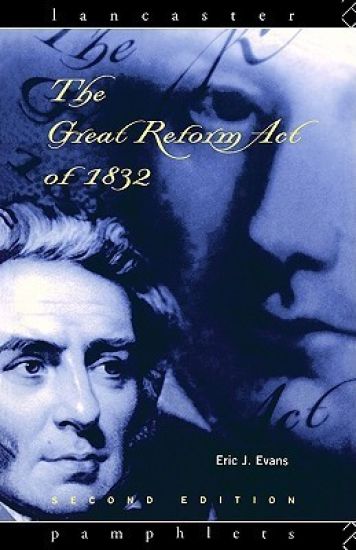
The 1832 Reform Act was a watershed in the history of modern Britain, profoundly affecting the composition of parliament and the course of all subsequent legislation.This new edition of The Great Reform Act of 1832 extends and updates Eric J. Evans's classic account of the crucial political and economic issues and:* highlights the travails of Toryism at the end of the 1820s* clarifies complex questions of policy* shows the connections between the Reform Act of 1832 and subsequent radical activity and reform legislation* presents revised electoral statistics.An accessible and stimulating guide to the student of modern political history, students of history and political history will find this invaluable to their studies.
William Pitt the Younger

William Pitt the Younger

Eric J. Evans

Routledge
1999
nidottu
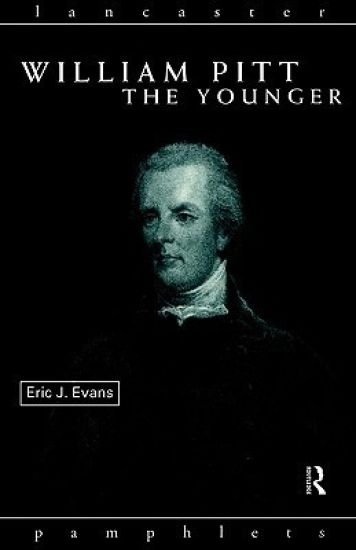
William Pitt the Younger re-examines Pitt's career in the light of recent research and emphasizes that it should not be stereotyped as having a `reformist' phase in the years to 1793 and a `reactionary' phase thereafter.His treatment includes explanation of:* Pitt's rapid rise to power* the importance of his relations with George III* contemporary party politics, including his own description of himself as an `independent Whig'* his administrative and financial reforms in the 1780s* his foreign policy and war strategy* his plans for assuring a satisfactory political union with Ireland and why they were frustrated.This volume by Eric J. Evans, includes a complete historical background to the leader's political career and analyses his achievements. The author outlines Pitt's economic, domestic and foreign policy as well as detailing the changes in party politics and monarchy during the period.
Sir Robert Peel

Sir Robert Peel

Eric J. Evans

Routledge
2006
nidottu
Sir Robert Peel provides an accessible and concise introduction to the life and career of one of the most political leaders of the nineteenth century. Perhaps best known for seeing through the Repeal of the Corn Laws, Peel had an enormous impact on political life of his age and beyond. Eric J. Evans reassesses Peel's career, arguing that although Peel's executive and administrative strengths were great, his arrogance, lack of empathy with the development of political parties and his inflexible commitment to economic liberalism presented political problems which he was incapable of solving.This expanded and fully revised second edition:fully engages with the extensive new historical work on Sir Robert Peel published since the first edition appeared fifteen years agoincludes a glossary of key terms plus an updated and expanded bibliography, including listing useful websites. Sir Robert Peel is the perfect introduction for all students of nineteenth-century history.
Political Parties in Britain 1783-1867
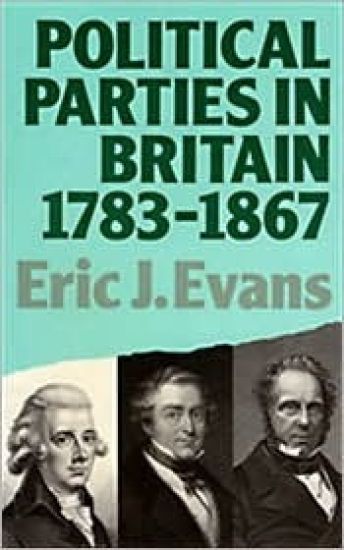
The theme of Professor Evan's book is the growth of a recognizable modern party system from the much looser and often family-based attachments of the eighteenth century. He examines the significance of the terms 'Whig' and 'Tory' in the later eighteenth century and the growth of a party aligment between 1788 and 1812 - a period in which war was a major factor in polarization. He discusses the years of Tory hegemony under Liverpool and the decline of the independent member, and then takes as his main themes the transition from Whigs to Liberals and from Tories to Conservatives in the period of 1830-46 which saw so much concern both with political reform and with social questions. He also examines the substantial growth of political organizations. Professor Evans goes on to deal with the paradox that though the Tory party was shattered by the corn law crisis, the subsequent period to 1867 saw an increasing importance being attached to party allegiance. He also discusses the waning power of the Crown, the growing importance of general elections, and various areas of divergence between parties. Although the emphasis of this book is necessarily thematic, a firm sense of chronology is always maintained.
Thatcher and Thatcherism

Thatcher and Thatcherism

Eric J. Evans

CRC Press Inc
2018
nidottu
This revised, expanded and updated fourth edition of Thatcher and Thatcherism examines the origins and impact of ‘Thatcherism’ both as a cultural construct and an economic creed from the 1970s to the formation of a coalition government in 2010. New to this edition is an extended exploration of Thatcher’s impact outside of the UK, as well as an examination of the assessments published following her death in 2013, providing students with a greater understanding of the legacy of Thatcherism within the modern political landscape.Focusing on the career of Margaret Thatcher, Eric J. Evans questions both the originality and the ideological coherence of what came to be called ‘Thatcherism’ and considers to what extent it met, or failed to meet, its main objectives. Key topics discussed within the book include: Privatisation policies and the attack on trade union power and influence; How Thatcher changed and controlled the late twentieth-century Conservative Party; The legacy of the Falklands War; Thatcher’s relations with Europe – East and West; Thatcher’s approach to the professional ethic; The influence of Thatcherism on succeeding governments: Major and ‘New Labour’; Neo-liberalism and its influence on, and under, Thatcher.With comprehensive suggestions for further reading and explanation of the economic, social and historical context of Britain in the late 1970s and 1980s, Thatcher and Thatcherism is an invaluable guide to the complexities and paradoxes of Britain from the late 1970s to the second decade of the twenty-first century.
Thatcher and Thatcherism

Thatcher and Thatcherism

Eric J. Evans

CRC Press Inc
2018
sidottu
This revised, expanded and updated fourth edition of Thatcher and Thatcherism examines the origins and impact of ‘Thatcherism’ both as a cultural construct and an economic creed from the 1970s to the formation of a coalition government in 2010. New to this edition is an extended exploration of Thatcher’s impact outside of the UK, as well as an examination of the assessments published following her death in 2013, providing students with a greater understanding of the legacy of Thatcherism within the modern political landscape.Focusing on the career of Margaret Thatcher, Eric J. Evans questions both the originality and the ideological coherence of what came to be called ‘Thatcherism’ and considers to what extent it met, or failed to meet, its main objectives. Key topics discussed within the book include: Privatisation policies and the attack on trade union power and influence; How Thatcher changed and controlled the late twentieth-century Conservative Party; The legacy of the Falklands War; Thatcher’s relations with Europe – East and West; Thatcher’s approach to the professional ethic; The influence of Thatcherism on succeeding governments: Major and ‘New Labour’; Neo-liberalism and its influence on, and under, Thatcher.With comprehensive suggestions for further reading and explanation of the economic, social and historical context of Britain in the late 1970s and 1980s, Thatcher and Thatcherism is an invaluable guide to the complexities and paradoxes of Britain from the late 1970s to the second decade of the twenty-first century.
The Great Reform Act of 1832

The Great Reform Act of 1832

Eric J. Evans

Routledge
2016
sidottu
The 1832 Reform Act was a watershed in the history of modern Britain, profoundly affecting the composition of parliament and the course of all subsequent legislation.This new edition of The Great Reform Act of 1832 extends and updates Eric J. Evans's classic account of the crucial political and economic issues and:* highlights the travails of Toryism at the end of the 1820s* clarifies complex questions of policy* shows the connections between the Reform Act of 1832 and subsequent radical activity and reform legislation* presents revised electoral statistics.An accessible and stimulating guide to the student of modern political history, students of history and political history will find this invaluable to their studies.
William Pitt the Younger

William Pitt the Younger

Eric J. Evans

Routledge
2015
sidottu
William Pitt the Younger re-examines Pitt's career in the light of recent research and emphasizes that it should not be stereotyped as having a `reformist' phase in the years to 1793 and a `reactionary' phase thereafter.His treatment includes explanation of:* Pitt's rapid rise to power* the importance of his relations with George III* contemporary party politics, including his own description of himself as an `independent Whig'* his administrative and financial reforms in the 1780s* his foreign policy and war strategy* his plans for assuring a satisfactory political union with Ireland and why they were frustrated.This volume by Eric J. Evans, includes a complete historical background to the leader's political career and analyses his achievements. The author outlines Pitt's economic, domestic and foreign policy as well as detailing the changes in party politics and monarchy during the period.