Kirjojen hintavertailu. Mukana 11 224 866 kirjaa ja 12 kauppaa.

Kirjahaku

Etsi kirjoja tekijän nimen, kirjan nimen tai ISBN:n perusteella.

1000 tulosta hakusanalla Eric J Butler Jr

Winter Monster

Winter Monster

Eric J. Butler

Createspace Independent Publishing Platform
2018
nidottu
This kids book deals with emotions; sadness and happiness. A Winter Monster is happy in the snow and cold and is often sad and blue throughout the year. They are only happy when Christmas is near.
Eric J. Hanson's Financial History of Alberta, 1905-1950

Eric J. Hanson's Financial History of Alberta, 1905-1950

Eric J. Hanson

University of Calgary Press
2003
sidottu
Eric Hanson—Alberta's first, and arguably greatest, economist—wrote a number of influential books on federal--provincial relations, education finance, health care finance, and energy economics. In 1949, he took a leave from the University of Alberta, where he was a lecturer, to write his PhD at Clark University in Worchester, Massachusetts. His doctoral thesis was entitled A Financial History of Alberta, 1905--1950 and was found by Paul Boothe at the University of Alberta library while Boothe was doing research on Alberta government spending almost forty--five years after it was written. Upon reading the thesis, Boothe quickly became aware of the enormous value of Hanson's work as a source of data and as a chronicle of Alberta's history. This forgotten gem sheds light on the institutional, economic, and public development of the province from a financial perspective and documents many of the early financial decisions of the Alberta government, including the railway scandal, the rise of Social Credit, and the province's default in the Great Depression. With a detailed and analytical introduction, this edited work provides historical perspective on the perennial problems facing Alberta's fiscal managers: wildly fluctuating revenues, in--migration, seemingly insatiable demands for infrastructure, high-quality public services, and resistance to taxes while exuding an optimistic attitude for the future. Providing institutional, political, and social background needed to better understand current institutions, political choices, and societal biases and anxieties, this book should be required reading for present-day policy-makers, elected provincial officials, teachers, and students of public finance.
Doctoring

Doctoring

Eric J. Cassell

Oxford University Press Inc
1997
sidottu
Assessing the good and the bad in primary-care medicine, the author explains why primary care is unsuited to the needs of an aging population and shows how medical schools can better train doctors to keep their focus on patients. UP.
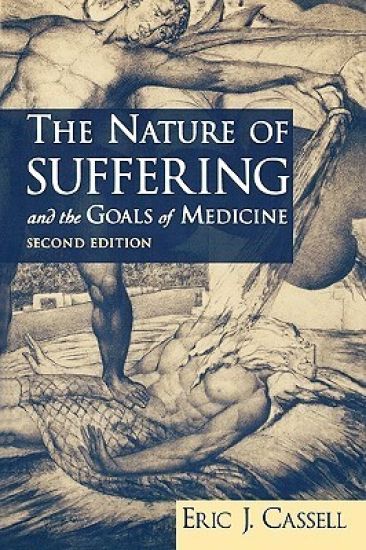
The Nature of Suffering and the Goals of Medicine

The Nature of Suffering and the Goals of Medicine

Eric J. Cassell

Oxford University Press Inc
2004
nidottu
This is a revised and expanded edition of a classic in palliative medicine, originally pulished in 1991. With three new chapters and a new preface summarizing the progress in the area of pain management, this is a must-have for those in palliative medicine and hospice care. The obligation of physicians to relieve human suffering stretches back into antiquity. But what exactly is suffering? One patient with metastatic cancer of the stomach, from which he knew he would shortly die, said he was not suffering. Another, someone who had been operated on for a minor problem - in little pain and not seemingly distressed, said that even coming into the hospital had been a source of pain and suffering. With such varied responses to the problem of suffering, inevitable questions arise. Is it the doctor's responsbility to treat the disease or the patient? What is the relationship between suffering and the goals of medicine? According to Dr Eric Cassell these are cruical questions, but unfortunately have remained only queries void of adequate solutions. It is time for the sick person, Cassell believes, to be not merely an important concern for physicians but the central focus of medicine. With this in mind, Cassell argues for an understanding of what changes should be made in order to successfully treat the sick while alleviating suffering, and how to actually go about making these changes with the methods and training techniques firmly rooted in the doctor's relationship with the patient. Dr Cassell offers an incisive critique of the approach of modern medicine. Drawing on a number of evocative patient narratives, he writes that the goal of medicine must be to treat an individual's suffering, and not just the disease. In addition, Cassell's thoughtful and incisive argument will appeal to psychologists and psychiatrists interested in the nature of pain and suffering.
Doctoring

Doctoring

Eric J. Cassell

Oxford University Press Inc
2002
nidottu
American medicine attracts some of the brightest and most motivated people the country has to offer, and it boasts the most advanced medical technology in the world, a wondrous parade of machines and techniques such as PET scans, MRI, angioplasty, endoscopy, bypasses, organ transplants, and much more besides. And yet, writes Eric Cassell, what started out early in the century as the exciting conquest of disease, has evolved into an overly expensive, over technologized, uncaring medicine, poorly suited to the health care needs of a society marked by an aging population and a predominance of chronic diseases. In Doctoring: The Nature of Primary Care Medicine, the author shows convincingly how much better fitted advanced concepts of primary care medicine are to America's health care needs. He offers valuable insights into how primary care physicians can be better trained to meet the needs of their patients, both well and sick, and to keep these patients as the focus of their practice. Modern medical training arose at a time when medical science was in ascendancy, Cassell notes. Thus the ideals of science, objectivity and rationality became the ideals of medicine, and disease, the target of most medical research, became the logical focus of medical practice. When clinicians treat a patient with pneumonia, they are apt to be thinking about pneumonia in general, which is how they learn about the disease, rather than this person's pneumonia. This objective, rational approach has its value, but when it dominates a physician's approach to medicine, it can create problems. For instance, treating chronic disease, such as rheumatoid arthritis, diabetes, stroke, emphysema, and congestive heart failure, is not simply a matter of medical knowledge, for it demands a great deal of effort by the patients themselves: they have to keep their doctor appointments, take their medication, do their exercises, stop smoking. The patient thus has a profound effect on the course of the disease, and so for a physician to succeed, he or she must also be familiar with the patient's motivations, values, concerns, and relationship with the doctor. Many doctors eventually figure out how to put the patient at the center of their practice, but they should learn to do this at the training level, not haphazardly over time. To that end, the training of primary care physicians must recognize a distinction between doctoring itself and the medical science on which it is based, and should try to produce doctors who rely on both their scientific and subjective assessments of their patients' overall needs. There must be a return to careful observational and physical examination skills and finely tuned history taking and communication skills. Cassell also advocates the need to teach the behavior of both sick and well persons, evaluation of data from clinical epidemiology, decision making skills, and preventive medicine, as well as actively teaching how to make technology the servant rather than the master, and offers practical tips for instruction both in the classroom and in practice. Most important, Doctoring argues convincingly that primary care medicine should become a central focus of America's health care system, not merely a cost-saving measure as envisioned by managed care organizations. Indeed, Cassell shows that the primary care physician can fulfill a unique role in the medical community, and a vital role in society in general. He shows that primary care medicine is not a retreat from scientific medicine, but the natural next step for medicine to take in the coming century.
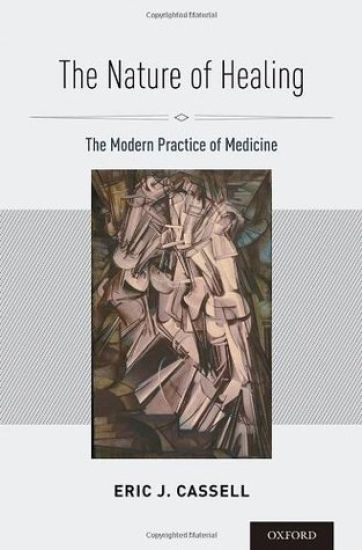
The Nature of Healing

The Nature of Healing

Eric J. Cassell

Oxford University Press Inc
2012
sidottu
Currently and for centuries past, sickness has been understood to be primarily the physical result of bodily disease. Yet this definition of illness is out-of-date and untrue to life at a time when chronic illness and the problems of disability and aging are increasingly common. When persons are sick, it pervades their whole being. The Nature of Healing is based on a different definition of sickness, one that recognizes persons as sick when they cannot achieve their goals and purposes because of impairments of function, ranging from the molecular to the spiritual, which they believe to fall under the scope of medicine. Such impairments may result from disease, but certainly not all. As the sick person has increasingly become the focus of medicine, there have been repeated but mostly failed attempts to achieve both technological and humanistic goals in caring for patients. This approach is flawed because there is only one ultimate goal -- the well-being of the patient. Whether it involves the personal action of the clinician or the use of technology, everything done toward the goal of well-being is part of the healing enterprise. In this book, Eric Cassell explores what sickness is, what persons are, and how to understand function and its impairments. He explains healing skills and actions, as well as the nature of healing for sick and suffering patients. This book concludes with a discussion of the moral basis of the relationship between patient and healer, as well as the goals of healing.
Unity and Catholicity in Christ

Unity and Catholicity in Christ

Eric J. DeMeuse

OXFORD UNIVERSITY PRESS INC
2022
sidottu
Debates concerning the relationship between Tridentine Catholicism and Catholicism after Vatican II dominate theological conversation today, particularly with regard to the Church and its engagement with the world. Current historical narratives paint ecclesiology after the Council of Trent as dominated by juridical concerns, uniformity, and institutionalism. Purportedly neglected are the spiritual, diverse, and missional aspects of the Church. This book challenges such narratives by investigating the theology of ecclesial unity and catholicity of the renowned Spanish Jesuit Francisco Suárez (1548-1617). Analyzing standard as well as overlooked sources of Suárez's ecclesiology, Eric J. DeMeuse shows how Suárez wrestles with the new demands of his time and anticipates later ecumenical developments in twentieth-century Catholic ecclesiology. Early modern expansion prompted theologians after Trent to reckon with the ecclesial status of baptized Protestants, the Greek Orthodox, and non-believers in the New World. It further prompted reflection on the universality, or catholicity, of the Church, and how the Church's mission to the nations serves her greater unity in Christ. DeMeuse demonstrates Suárez's vision of the Church to be deeply spiritual, diverse, and missional--not at the expense of the institutional, but as its necessary and life-giving source. This book further explores not only Suárez's speculative ecclesiology, but how the unity and catholicity of the body of Christ are lived out in practice: in the worship and works of the faithful, and, most notably, in the charism of his own religious order, the Society of Jesus. Suárez's theology shows what the spiritual dynamic between Christic unity and missional catholicity should look like in the Church.
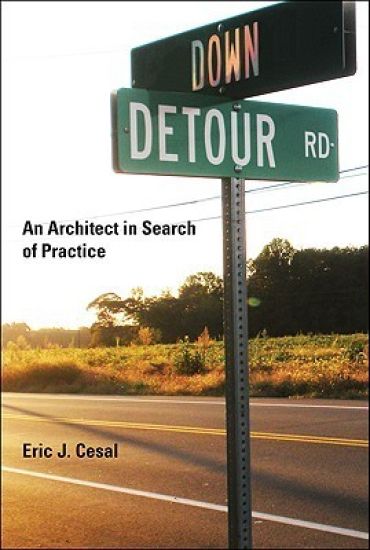
Down Detour Road

Down Detour Road

Eric J. Cesal

MIT Press
2010
pokkari
A young architect's search for new architectural values in a time of economic crisis.I paused at the stoop and thought this could be the basis of a good book. The story of a young man who went deep into the bowels of the academy in order to understand architecture and found it had been on his doorstep all along. This had an air of hokeyness about it, but it had been a tough couple of days and I was feeling sentimental about the warm confines of the studio which had unceremoniously discharged me upon the world.-from Down Detour RoadWhat does it say about the value of architecture that as the world faces economic and ecological crises, unprecedented numbers of architects are out of work? This is the question that confronted architect Eric Cesal as he finished graduate school at the onset of the worst financial meltdown in a generation. Down Detour Road is his journey: one that begins off-course, and ends in a hopeful new vision of architecture. Like many architects of his generation, Cesal confronts a cold reality. Architects may assure each other of their own importance, but society has come to view architecture as a luxury it can do without. For Cesal, this recognition becomes an occasion to rethink architecture and its value from the very core. He argues that the times demand a new architecture, an empowered architecture that is useful and relevant. New architectural values emerge as our cultural values shift: from high risks to safe bets, from strong portfolios to strong communities, and from clean lines to clean energy.This is not a book about how to run a firm or a profession; it doesn't predict the future of architectural form or aesthetics. It is a personal story-and in many ways a generational one: a story that follows its author on a winding detour across the country, around the profession, and into a new architectural reality.
Talking with Patients

Talking with Patients

Eric J. Cassell

MIT Press
1985
pokkari
Spoken language is the most important diagnostic and therapeutic tool in medicine, and, according to Dr. Cassell, "we must be as precise with it as a surgeon with a scalpel." In these two volumes, he analyzes doctor-patient communication and shows how doctors can use language for the maximum benefit of their patients. Throughout, Dr. Cassell stresses that patients are complex, changing, psychological, social and physical beings whose illnesses are well represented by their own communication. He proposes that both listening and speaking are arts that can be learned best when they are based on the way that spoken language functions in medicine. Accordingly, Volume I focuses on the workings of spoken language in the clinical setting. It analyzes such important aspects of speech as paralanguage (non-word phenomenon like pause, pitch, and speech rate), how patients describe themselves and their illnesses, the logic of conversation, and the levels of meanings of words. Volume II is a practical, detailed, how to guide that demonstrates the process of history taking and how the doctor can learn the most from the information that the patient has to offer. His arguments are amply illustrated in both volumes by transcripts of real interactions between patients and their doctors.
Talking with Patients

Talking with Patients

Eric J. Cassell

MIT Press
1985
pokkari
Spoken language is the most important diagnostic and therapeutic tool in medicine, and, according to Dr. Cassell, "we must be as precise with it as a surgeon with a scalpel." In these two volumes, he analyzes doctor-patient communication and shows how doctors can use language for the maximum benefit of their patients. Throughout, Dr. Cassell stresses that patients are complex, changing, psychological, social and physical beings whose illnesses are well represented by their own communication. He proposes that both listening and speaking are arts that can be learned best when they are based on the way that spoken language functions in medicine.Accordingly, Volume I focuses on the workings of spoken language in the clinical setting. It analyzes such important aspects of speech as paralanguage (non-word phenomenon like pause, pitch, and speech rate), how patients describe themselves and their illnesses, the logic of conversation, and the levels of meanings of words.Volume II is a practical, detailed, how to guide that demonstrates the process of history taking and how the doctor can learn the most from the information that the patient has to offer. His arguments are amply illustrated in both volumes by transcripts of real interactions between patients and their doctors.
Vietnam, We've All Been There

Vietnam, We've All Been There

Eric J. Schroeder

Praeger Publishers Inc
1992
sidottu
Vietnam, We've All Been There is a unique collection of interviews with noted American writers who made the Vietnam war a subject of their work. The writers represented here were chosen by Dr. Schroeder because their books, plays, poems and reportage are among the best of the particular genre in which each one works--Norman Mailer, David Rabe, and Michael Herr among them. Provocative not only for the opinions and memories of the interviewees, this book is also interesting for its focus on the variety of literary forms and styles that emerged from the Vietnam experience.The author makes the point that the more successful literature to come out of the war was from writers who stretched the limits of particular forms, giving birth to narratives that broke all the rules. For example, where journalism usually demands facts, Michael Herr, the author of Dispatches, insisted on much more. He described psychological states, assessed personal losses and personified the war in ways that were radically different from accepted reporting. As Dr. Schroeder reminds us, Vietnam deeply affected everyone who lived through it--thus there were many cultural effects that still beg for examination and thought. He spent nine years gathering these interviews and during that time the war was a constant presence in his life. For many Americans even a lifetime may not make it possible to come to terms with the war. And while it is important not to forget where we've been, it is also important to move forward. In this book, the writers we hear from, like the works they created, help us to remember the past with a reflective wisdom that is essential to informing our future.
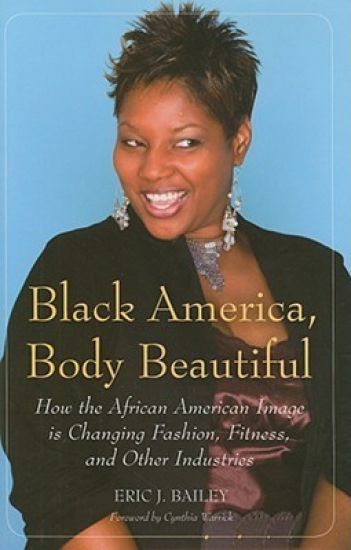
Black America, Body Beautiful

Black America, Body Beautiful

Eric J. Bailey

Praeger Publishers Inc
2008
sidottu
Despite all the medical and media attention focused on the rate of overweight and obesity in the African American population, African American images and body types are greatly influencing changes in the fashion, fitness, advertising, television and movie industries. This is because overweight, like beauty, can be in the eye of the beholder. Most research studies investigating attitudes about body image and body type among African Americans have shown they are more satisfied with their bodies than are their white counterparts and that there appears to be a wider range of acceptable body shapes and weights, and a more flexible standard of attractiveness, among black Americans as compared to whites. That fact is not being lost on leaders of industries that might profit from understanding this wider range of beauty, as well as playing to it. In this book, medical anthropologist Eric Bailey introduces and explains the self-acceptance and body image satisfaction of African Americans, and traces how that has spurred changes in industry. His book fills the void of scientific evidence to enhance the understanding of African Americans' perceptions related to body image and beauty—and is the first to document these issues from the perspective of an African American male.Despite all the medical and media attention focused on the rate of overweight and obesity in the African American population, African American images and body types are greatly influencing changes in the fashion, fitness, advertising, television, and movie industries. This is because overweight, like beauty, can be in the eye of the beholder. Most research studies investigating attitudes about body image and body type among African Americans have shown they are more satisfied with their bodies than are their white counterparts. Most black women, for example, are of course concerned with how they look, but do not judge themselves in terms of their weight and do not believe they are valued mostly on the basis of their bodies. Black teen girls most often say being thick and curvaceous with large hips and ample thighs is seen as the most desirable body shape. Thus, there appears to be a wider range of acceptable body shapes and weights, and a more flexible standard of attractiveness, among black Americans as compared to whites. That fact is not lost on leaders of industries that might profit from understanding this wider range of beauty, as well as playing to it. Voluptuous supermodel Tyra Banks is just one African American who's broken the mold in that industry. The effects have been seen right down to department and local clothes stores, where lines of larger and plus-size fashions are expanding, becoming more colorful and more ornate. In the fitness industry, health gurus Madonna Grimes and Billy Blanks have been revolutionizing how people get fit and how fitness needs to be redeveloped for the African American population. Advertising has taken a similar turn, not the least manifestation of which were the major campaigns Dove and Nike ran in 2005 with plus-sized actresses (who continue to appear in promotions for both companies). In movies and on television shows, the African American beautiful body image has followed suit.In this book, medical anthropologist Eric Bailey introduces and explains the self-acceptance and body image satisfaction of African Americans, and traces how that has spurred changes in industry. His book fills the void of scientific evidence to enhance the understanding of African Americans' perceptions related to body image and beauty—and is the first to document these issues from the perspective of an African American male.
Land and Revolution in Iran, 1960–1980

Land and Revolution in Iran, 1960–1980

Eric J. Hooglund

University of Texas Press
1982
nidottu
Carried out by the government of the shah between 1962 and 1971, the Iranian land reform was one of the most ambitious such undertakings in modern Middle Eastern history. Yet, beneath apparent statistical success, the actual accomplishments of the program, in terms of positive benefits for the peasantry, were negligible. Later, the resulting widespread discontent of thousands of Iranian villagers would contribute to the shah's downfall. In the first major study of the effects of this widely publicized program, Eric Hooglund's analysis demonstrates that the primary motives behind the land reform were political. Attempting to supplant the near-absolute authority of the landlord class over the countryside, the central government hoped to extend its own authority throughout rural Iran. While the Pahlavi government accomplished this goal, its failure to implement effective structural reform proved to be a long-term liability. Hooglund, who conducted field research in rural Iran throughout the 1970s and who witnessed the unfolding of the revolution from a small village, provides a careful description of the development of the land reform and of its effects on the main groups involved: landlords, peasants, local officials, merchants, and brokers. He shows how the continuing poverty in the countryside forced the migration of thousands of peasants to the cities, resulting in serious shortages of agricultural workers and an oversupply of unskilled urban labor. When the shah's government was faced with mass opposition in the cities in 1978, not only did a disillusioned rural population fail to support the regime, but thousands of villagers participated in the protests that hastened the collapse of the monarchy.