Kirjojen hintavertailu. Mukana 11 244 527 kirjaa ja 12 kauppaa.

Kirjahaku

Etsi kirjoja tekijän nimen, kirjan nimen tai ISBN:n perusteella.

1000 tulosta hakusanalla Eric R. Kandel

Reductionism in Art and Brain Science

Reductionism in Art and Brain Science

Eric R. Kandel

Columbia University Press
2018
pokkari
Are art and science separated by an unbridgeable divide? Can they find common ground? In this new book, neuroscientist Eric R. Kandel, whose remarkable scientific career and deep interest in art give him a unique perspective, demonstrates how science can inform the way we experience a work of art and seek to understand its meaning. Kandel illustrates how reductionism—the distillation of larger scientific or aesthetic concepts into smaller, more tractable components—has been used by scientists and artists alike to pursue their respective truths. He draws on his Nobel Prize-winning work revealing the neurobiological underpinnings of learning and memory in sea slugs to shed light on the complex workings of the mental processes of higher animals. In Reductionism in Art and Brain Science, Kandel shows how this radically reductionist approach, applied to the most complex puzzle of our time—the brain—has been employed by modern artists who distill their subjective world into color, form, and light. Kandel demonstrates through bottom-up sensory and top-down cognitive functions how science can explore the complexities of human perception and help us to perceive, appreciate, and understand great works of art. At the heart of the book is an elegant elucidation of the contribution of reductionism to the evolution of modern art and its role in a monumental shift in artistic perspective. Reductionism steered the transition from figurative art to the first explorations of abstract art reflected in the works of Turner, Monet, Kandinsky, Schoenberg, and Mondrian. Kandel explains how, in the postwar era, Pollock, de Kooning, Rothko, Louis, Turrell, and Flavin used a reductionist approach to arrive at their abstract expressionism and how Katz, Warhol, Close, and Sandback built upon the advances of the New York School to reimagine figurative and minimal art. Featuring captivating drawings of the brain alongside full-color reproductions of modern art masterpieces, this book draws out the common concerns of science and art and how they illuminate each other.
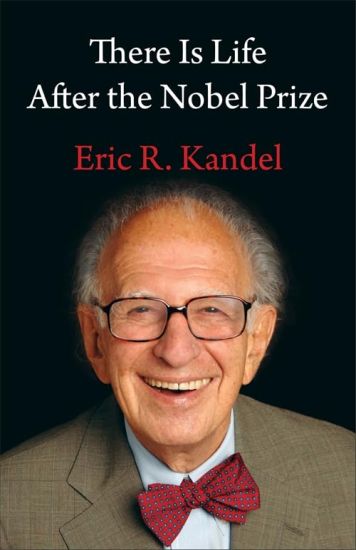
There Is Life After the Nobel Prize

There Is Life After the Nobel Prize

Eric R. Kandel

Columbia University Press
2021
sidottu
One day in 1996, the neuroscientist Eric R. Kandel took a call from his program officer at the National Institute of Mental Health, who informed him that he had been awarded a key grant. Also, the officer said, he and his colleagues thought Kandel would win the Nobel Prize. “I hope not soon,” Kandel’s wife, Denise, said when she heard this. Sociologists had found that Nobel Prize winners often did not contribute much more to science, she explained.In this book, Kandel recounts his remarkable career since receiving the Nobel in 2000—or his experience of proving to his wife that he was not yet “completely dead intellectually.” He takes readers through his lab’s scientific advances, including research into how long-term memory is stored in the brain, the nature of age-related memory loss, and the neuroscience of drug addiction and schizophrenia. Kandel relates how the Nobel Prize gave him the opportunity to reach a far larger audience, which in turn allowed him to discover and pursue new directions. He describes his efforts to promote public understanding of science and to put brain science and art into conversation with each other. Kandel also discusses his return to Austria, which he had fled as a child, and observes Austria’s coming to terms with the Nazi period. Showcasing Kandel’s accomplishments, erudition, and wit, There Is Life After the Nobel Prize is a candid account of the working life of an acclaimed scientist.
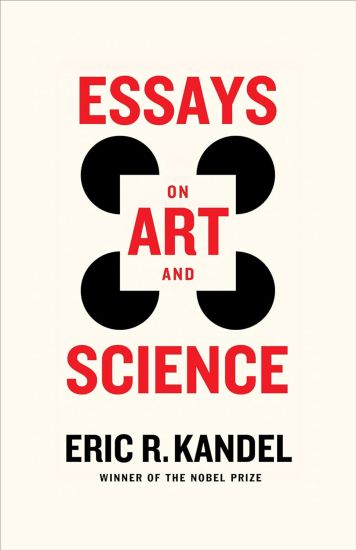
Essays on Art and Science

Essays on Art and Science

Eric R. Kandel

Columbia University Press
2024
sidottu
When we view a work of art, we often experience an emotional response, but the causes of our reactions are complex. Our knowledge of why we respond to art as we do is rooted in science—in psychology and biology. Eric R. Kandel traces the origins of this understanding to early twentieth-century Vienna, which gave rise to the concept of the “beholder’s share,” the realization that art is incomplete without the perceptual and emotional involvement of the viewer—that is, without our responses to it.But what causes our response? Our brain is a creativity machine that brings to bear on any image—including a painting—certain innate, universal processes related to sensory perception as well as higher-order processes related to our personal experiences, memories, and emotions. Understanding how these unconscious processes in the brain interact to create the beholder’s share is one of the great challenges currently confronting brain science.The essays on art and science in this book vary widely in subject matter, including the angst-ridden portraits of Soutine, conflicting views of women’s sexuality, Cubism’s challenge to our innate visual processes, and why we react differently to abstract versus figurative art. But each essay focuses on the interaction of art and science. Woven throughout are the many notable scientists, art historians, artists, and others, both Jewish and non-Jewish, who contributed to our understanding of how we experience art.
Essays on Art and Science

Essays on Art and Science

Eric R. Kandel

Columbia University Press
2025
pokkari
When we view a work of art, we often experience an emotional response, but the causes of our reactions are complex. Our knowledge of why we respond to art as we do is rooted in science—in psychology and biology. Eric R. Kandel traces the origins of this understanding to early twentieth-century Vienna, which gave rise to the concept of the “beholder’s share,” the realization that art is incomplete without the perceptual and emotional involvement of the viewer—that is, without our responses to it.But what causes our response? Our brain is a creativity machine that brings to bear on any image—including a painting—certain innate, universal processes related to sensory perception as well as higher-order processes related to our personal experiences, memories, and emotions. Understanding how these unconscious processes in the brain interact to create the beholder’s share is one of the great challenges currently confronting brain science.The essays on art and science in this book vary widely in subject matter, including the angst-ridden portraits of Soutine, conflicting views of women’s sexuality, Cubism’s challenge to our innate visual processes, and why we react differently to abstract versus figurative art. But each essay focuses on the interaction of art and science. Woven throughout are the many notable scientists, art historians, artists, and others, both Jewish and non-Jewish, who contributed to our understanding of how we experience art.
There Is Life After the Nobel Prize

There Is Life After the Nobel Prize

Eric R. Kandel

Columbia University Press
2026
pokkari
One day in 1996, the neuroscientist Eric R. Kandel took a call from his program officer at the National Institute of Mental Health, who informed him that he had been awarded a key grant. Also, the officer said, he and his colleagues thought Kandel would win the Nobel Prize. “I hope not soon,” Kandel’s wife, Denise, said when she heard this. Sociologists had found that Nobel Prize winners often did not contribute much more to science, she explained. In this book, Kandel recounts his remarkable career since receiving the Nobel in 2000—or his experience of proving to his wife that he was not yet “completely dead intellectually.” He takes readers through his lab’s scientific advances, including research into how long-term memory is stored in the brain, the nature of age-related memory loss, and the neuroscience of drug addiction and schizophrenia. Kandel relates how the Nobel Prize gave him the opportunity to reach a far larger audience, which in turn allowed him to discover and pursue new directions. He describes his efforts to promote public understanding of science and to put brain science and art into conversation with each other. Kandel also discusses his return to Austria, which he had fled as a child, and observes Austria’s coming to terms with the Nazi period. Showcasing Kandel’s accomplishments, erudition, and wit, There Is Life After the Nobel Prize is a candid account of the working life of an acclaimed scientist.
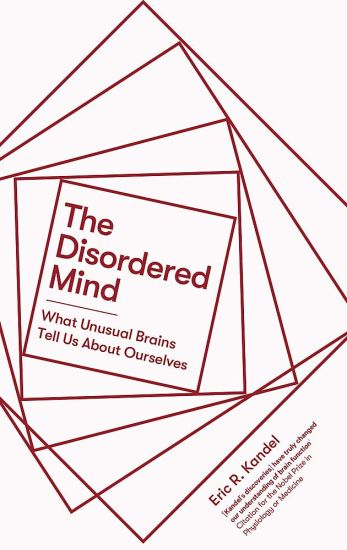
The Disordered Mind: What Unusual Brains Tell Us about Ourselves
A Nobel Prize-winning neuroscientist's probing investigation of what brain disorders can tell us about human nature Eric R. Kandel, the winner of the Nobel Prize in Physiology or Medicine for his foundational research into memory storage in the brain, is one of the pioneers of modern brain science. His work continues to shape our understanding of how learning and memory work and to break down age-old barriers between the sciences and the arts. In his seminal new book, The Disordered Mind, Kandel draws on a lifetime of pathbreaking research and the work of many other leading neuroscientists to take us on an unusual tour of the brain. He confronts one of the most difficult questions we face: How does our mind, our individual sense of self, emerge from the physical matter of the brain? The brain's 86 billion neurons communicate with one another through very precise connections. But sometimes those connections are disrupted. The brain processes that give rise to our mind can become disordered, resulting in diseases such as autism, depression, schizophrenia, Parkinson's, addiction, and post-traumatic stress disorder. While these disruptions bring great suffering, they can also reveal the mysteries of how the brain produces our most fundamental experiences and capabilities--the very nature of what it means to be human. Studies of autism illuminate the neurological foundations of our social instincts; research into depression offers important insights on emotions and the integrity of the self; and paradigm-shifting work on addiction has led to a new understanding of the relationship between pleasure and willpower. By studying disruptions to typical brain functioning and exploring their potential treatments, we will deepen our understanding of thought, feeling, behavior, memory, and creativity. Only then can we grapple with the big question of how billions of neurons generate consciousness itself.
The Disordered Mind: What Unusual Brains Tell Us about Ourselves
A Nobel Prize-winning neuroscientist's probing investigation of what brain disorders can tell us about human nature Eric R. Kandel, the winner of the Nobel Prize in Physiology or Medicine for his foundational research into memory storage in the brain, is one of the pioneers of modern brain science. His work continues to shape our understanding of how learning and memory work and to break down age-old barriers between the sciences and the arts. In his seminal new book, The Disordered Mind, Kandel draws on a lifetime of pathbreaking research and the work of many other leading neuroscientists to take us on an unusual tour of the brain. He confronts one of the most difficult questions we face: How does our mind, our individual sense of self, emerge from the physical matter of the brain? The brain's 86 billion neurons communicate with one another through very precise connections. But sometimes those connections are disrupted. The brain processes that give rise to our mind can become disordered, resulting in diseases such as autism, depression, schizophrenia, Parkinson's, addiction, and post-traumatic stress disorder. While these disruptions bring great suffering, they can also reveal the mysteries of how the brain produces our most fundamental experiences and capabilities--the very nature of what it means to be human. Studies of autism illuminate the neurological foundations of our social instincts; research into depression offers important insights on emotions and the integrity of the self; and paradigm-shifting work on addiction has led to a new understanding of the relationship between pleasure and willpower. By studying disruptions to typical brain functioning and exploring their potential treatments, we will deepen our understanding of thought, feeling, behavior, memory, and creativity. Only then can we grapple with the big question of how billions of neurons generate consciousness itself.
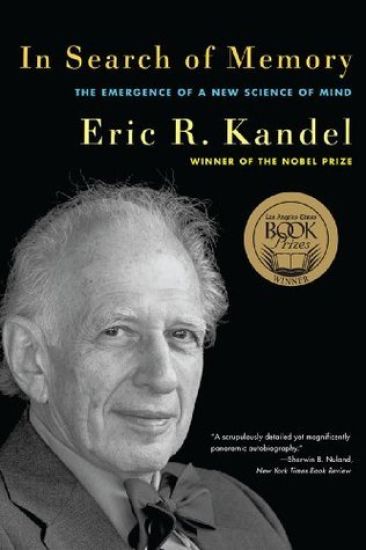
In Search of Memory

In Search of Memory

Eric R. Kandel

WW Norton Co
2007
nidottu
Memory binds our mental life together. We are who we are in large part because of what we learn and remember. But how does the brain create memories? Nobel Prize winner Eric R. Kandel intertwines the intellectual history of the powerful new science of the mind—a combination of cognitive psychology, neuroscience, and molecular biology—with his own personal quest to understand memory. A deft mixture of memoir and history, modern biology and behavior, In Search of Memory brings readers from Kandel's childhood in Nazi-occupied Vienna to the forefront of one of the great scientific endeavors of the twentieth century: the search for the biological basis of memory.
The Disordered Mind

The Disordered Mind

Eric R. Kandel

Robinson
2021
nidottu
Neurological and psychiatric disorders have long been regarded as fundamentally different, depending on whether they appear to affect the brain or the mind. In reality, the brain and the mind are inseparable. Both types of disorder can affect every aspect of brain function: from perception, action, memory and emotion to empathy, social interaction, attention and consciousness. It is easy to view brain disorders as simply tragic or frightening. However, studying where these functions go wrong provides a window on the workings of the healthy brain, and makes it more likely that scientists and clinicians will be able to develop effective treatments or preventative strategies. As individuals, and as a society, we are also able to better empathise with people with disorders of the mind.Building on his pioneering research, Eric R. Kandel illustrates how breakthrough studies of brain disruptions can deepen our understanding of thought, feeling, behaviour, memory and creativity, and perhaps in the future will transform medical care and lead to the development of a unified theory of mind.
Psychiatrie, Psychoanalyse und die neue Biologie des Geistes
Dem Nobelpreisträger Eric Kandel gebührt das Verdienst, das bis dahin gänzlich unerkundete Gebiet der Beziehungen zwischen Neurobiologie und Psychoanalyse erschlossen zu haben. Heute ist es eines der spannendsten und zugleich innovativsten Felder der Wissenschaften überhaupt. Die vorliegende Sammlung von Aufsätzen Eric Kandels lädt den Leser zu "einer der wichtigsten, bedeutsamsten und aufregendsten Forschungsreisen unserer Zeit ein" (Stuart C. Yudofsky) - zu einer Erkundung der Funktionsweise des menschlichen Gehirns und der Möglichkeiten, durch die Psychoanalyse und die Psychiatrie auf diese Einfluß zu nehmen. Der Band, den der Protagonist der deutschen Hirnforschungsdebatte, Gerhard Roth, einleitet und der mit einer sehr persönlichen Einführung Eric Kandels beginnt, bietet einen konzisen Überblick dieser Revolution der psychiatrischen Forschung.
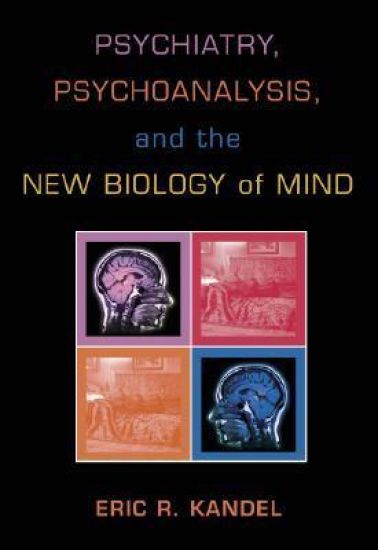
Psychiatry, Psychoanalysis, and the New Biology of Mind

Psychiatry, Psychoanalysis, and the New Biology of Mind

Eric R. Kandel; Herbert Pardes

American Psychiatric Association Publishing
2005
sidottu
Brought together for the first time in a single volume, these eight important and fascinating essays by Nobel Prize-winning psychiatrist Eric Kandel provide a breakthrough perspective on how biology has influenced modern psychiatric thought. Complete with commentaries by experts in the field, Psychiatry, Psychoanalysis, and the New Biology of Mind reflects the author's evolving view of how biology has revolutionized psychiatry and psychology and how potentially could alter modern psychoanalytic thought. The author's unique perspective on both psychoanalysis and biological research has led to breakthroughs in our thinking about neurobiology, psychiatry, and psychoanalysis—all driven by the central idea that a fuller understanding of the biological processes of learning and memory can illuminate our understanding of behavior and its disorders. These wonderful essays cover • the mechanisms of psychotherapy and medications, showing that both work at the same level of neural circuits and synapses, and the implications of neurobiological research for psychotherapy;• the ability to detect functional changes in the brain after psychotherapy, which enables us, for the first time, to objectively evaluate the effects of psychotherapy on individual patients;• the need for animal models of mental disorders; for example, learned fear, to show how molecules and cellular mechanisms for learning and memory can be combined in various ways to produce a range of adaptive and maladaptive behaviors;• the unification of behavioral psychology, cognitive psychology, neuroscience, and molecular biology into the new science of the mind, charted in two seminal reports on neurobiology and molecular biology given in 1983 and 2000;• the critical role of synapses and synaptic strength in both short- and long-term learning;• the biological and social implications of the mapping of the human genome for medicine in general and for psychiatry and mental health in particular; The author concludes by calling for a revolution in psychiatry, one that can use the power of biology and cognitive psychology to treat the many mentally ill persons who do not benefit from drug therapy. Fascinating reading for psychiatrists, psychoanalysts, social workers, residents in psychiatry, and trainees in psychoanalysis, Psychiatry, Psychoanalysis, and the New Biology of Mind records with elegant precision the monumental changes taking place in psychiatric thinking. It is an invaluable reference work and a treasured resource for thinking about the future.
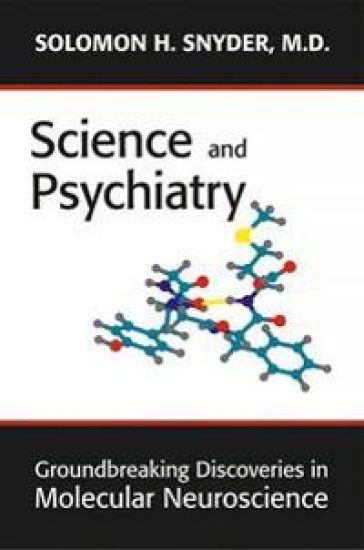
Science and Psychiatry

Science and Psychiatry

Solomon H. Snyder; Eric R. Kandel

American Psychiatric Association Publishing
2008
sidottu
Solomon Snyder has been instrumental in the establishment of modern psychopharmacology—as a pioneer in the identification of receptors for neurotransmitters and drugs and in the explanation of the actions of psychotropic agents. Science and Psychiatry is a collection of some of his best scientific papers, publications ranging over forty years that represent important advances in psychopharmacology and molecular biology. Audacious and unanticipated when they first appeared, these papers opened up new areas of understanding and revolutionized the modern study of the brain. Republished here, they show why fundamental research into the "messengers of the mind" is as essential for clinicians as for researchers. Many of these papers have clear clinical relevance, offering insight into modern neuroscience to help make sense of the bewildering array of available psychotropic medications and point the way toward more effective and safer agents. Others describe the underpinnings of psychopharmacology that practitioners need to know, especially regarding the role of receptors in drug action. Each of the nine groups of research articles is accompanied by a commentary by a well-known authority, putting the discoveries in perspective and providing a broad overview of subjects ranging from characterization of the enkephalins to serotonin receptor subtypes. The final set of papers focuses on apoptosis, the general process of cell suicide, where Snyder's work with bilirubin holds promise for treating neurodegenerative disorders. And in a closing piece, "The Audacity Principle in Science," Snyder speculates about factors conducive to creativity and efficacy in scientific discovery. The articles particularly describe four groups of extraordinary discoveries for which Snyder is widely recognized: • Identification of opiate receptors, providing keys to understanding pain perception• Characterization of the IP3 receptor, exploring its role as a target for lithium treatment in manic-depressive disorders• Establishment of nitric oxide as a transmitter in the brain, radically transforming conceptualizations of neurotransmission• Discovery that D-serine is the normal stimulus for the glycine site of the NMDA receptor, providing new insight into the regulation of the receptor important for learning and memory Hailed as one of the preeminent scientists of the past twenty years, Snyder is a consummate researcher who confesses to remaining obsessed with the need to "think thoughts no one else has thought before." Science and Psychiatry clearly shows how that urge accounts for the diversity of challenges he has taken on as it conveys the origins of modern psychopharmacologic practice.
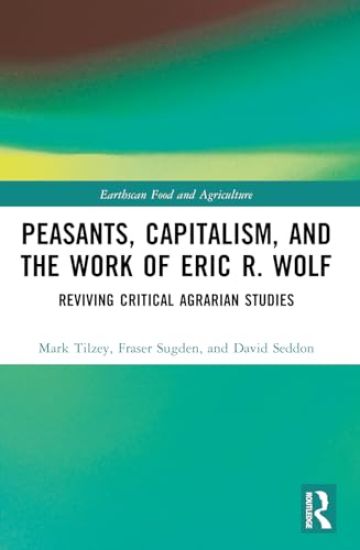
Peasants, Capitalism, and the Work of Eric R. Wolf

Peasants, Capitalism, and the Work of Eric R. Wolf

Mark Tilzey; Fraser Sugden; David Seddon

TAYLOR FRANCIS LTD
2024
nidottu
Fifty years after the publication of Eric Wolf’s celebrated Peasant Wars of the Twentieth Century, and forty years after the publication of his path-breaking Europe and the People Without History, this book offers a much-needed critical assessment and update of Wolf’s contribution to the study of the peasantry and its relationship to capitalism, the state, and imperialism.This book provides a comprehensive evaluation of Wolf’s premises, methodology, and understanding of the peasantry, and its relationship to the rise of capitalism and the modern state. The authors analyse Wolf’s theoretical approach and, by building on his work in Europe and the People Without History especially, argue their own position concerning the dynamics of the peasantry in relation to capitalism, state, class, and imperialism. Further, the text aims to answer the agrarian question more widely, focusing on agrarian society and the political role of the peasantry in contested transitions to capitalism and to modes beyond capitalism. This requires, the authors argue, an analysis of class struggle and of the resources, material and discursive, that different classes can bring to bear on this struggle. Based on well-founded theoretical premises, the book focuses on the contested rise of capitalism in the global North, the development of core–periphery relations in the global political economy, and the place of the peasantry in these dynamics. The book presents case studies of transitions to agrarian capitalism in the British Isles, France, Germany, Japan, and the USA.The book will be of great interest to students and researchers in the areas of peasant studies, rural politics, agrarian studies, development, and political ecology.
Peasants, Capitalism, and the Work of Eric R. Wolf

Peasants, Capitalism, and the Work of Eric R. Wolf

Mark Tilzey; Fraser Sugden; David Seddon

TAYLOR FRANCIS LTD
2023
sidottu
Fifty years after the publication of Eric Wolf’s celebrated Peasant Wars of the Twentieth Century, and forty years after the publication of his path-breaking Europe and the People Without History, this book offers a much-needed critical assessment and update of Wolf’s contribution to the study of the peasantry and its relationship to capitalism, the state, and imperialism.This book provides a comprehensive evaluation of Wolf’s premises, methodology, and understanding of the peasantry, and its relationship to the rise of capitalism and the modern state. The authors analyse Wolf’s theoretical approach and, by building on his work in Europe and the People Without History especially, argue their own position concerning the dynamics of the peasantry in relation to capitalism, state, class, and imperialism. Further, the text aims to answer the agrarian question more widely, focusing on agrarian society and the political role of the peasantry in contested transitions to capitalism and to modes beyond capitalism. This requires, the authors argue, an analysis of class struggle and of the resources, material and discursive, that different classes can bring to bear on this struggle. Based on well-founded theoretical premises, the book focuses on the contested rise of capitalism in the global North, the development of core–periphery relations in the global political economy, and the place of the peasantry in these dynamics. The book presents case studies of transitions to agrarian capitalism in the British Isles, France, Germany, Japan, and the USA.The book will be of great interest to students and researchers in the areas of peasant studies, rural politics, agrarian studies, development, and political ecology.
Global Power and Local Struggles in Developing Countries: Contemporary Perspectives On: Europe and the People Without History, by Eric R. Wolf at 40
The volume challenges dominant narratives of progress with a rich range of investigations of local struggles from the Global south which are based on original ethnographic research. The chapters take a point of departure in ideas and concepts developed by the pioneering anthropologist Eric R. Wolf in 'Europe and the People Without History', and emphasize the relevance and usefulness of applying Wolf to contemporary contexts. As such, the collection contributes to knowledge of dynamic relationships between local agency in the Global south, and broader political and economic processes that make 'people without history.' This shows global power as both excluding local groups at the same time as conditioning local struggles and the forms that social organization takes. Contributors are: Paul Stacey, Joshua Steckley, Nixon Boumba, Marylynn Steckley, Ismael Garc a Col n, Inge-Merete Hougaard, Gustavo S. Azenha, Ioannis Kyriakakis, Raquel Rodrigues Machaqueiro, Tirza van Bruggen, and Masami Tsujita.
The Politics of Energy Crises

The Politics of Energy Crises

Eric R.A.N. Smith; Juliet E. Carlisle; Jessica T. Feezell; Kristy E.H. Michaud

Oxford University Press Inc
2016
sidottu
Energy crises, which amount to painful combinations of energy shortages and soaring prices, have struck the United States several times in recent decades. Each time they have resulted in political and economic shockwaves because, when gasoline becomes more expensive, the American public tends to react with anger and suspicion. Energy crises instantly put related issues at the top of the nation's agenda, sometimes with dramatic consequences for public policy. What can we learn from recent history, particularly as it may predict the role that volatile public opinion will play throughout the energy policy making process? As The Politics of Energy Crises demonstrates, one can discern patterns in politics and policymaking when looking at the cycles of energy crises in the United States. As such it is the first systematic historical study of political conflict, public opinion, and organized interest group and presidential and congressional action on energy issues, starting with the 1973 OPEC boycott and continuing through the present day. By charting the commonalities in political battles during energy crises, the authors make prognoses about what future energy crises will mean for United States policy.
The Politics of Energy Crises

The Politics of Energy Crises

Eric R.A.N. Smith; Juliet E. Carlisle; Jessica T. Feezell; Kristy E.H. Michaud

Oxford University Press Inc
2016
nidottu
Energy crises, which amount to painful combinations of energy shortages and soaring prices, have struck the United States several times in recent decades. Each time they have resulted in political and economic shockwaves because, when gasoline becomes more expensive, the American public tends to react with anger and suspicion. Energy crises instantly put related issues at the top of the nation's agenda, sometimes with dramatic consequences for public policy. What can we learn from recent history, particularly as it may predict the role that volatile public opinion will play throughout the energy policy making process? As The Politics of Energy Crises demonstrates, one can discern patterns in politics and policymaking when looking at the cycles of energy crises in the United States. As such it is the first systematic historical study of political conflict, public opinion, and organized interest group and presidential and congressional action on energy issues, starting with the 1973 OPEC boycott and continuing through the present day. By charting the commonalities in political battles during energy crises, the authors make prognoses about what future energy crises will mean for United States policy.
The Periodic Table

The Periodic Table

Eric R. Scerri

Oxford University Press Inc
2006
sidottu
The periodic table is one of the most potent icons in science. It lies at the core of chemistry and embodies the most fundamental principles of the field. The one definitive text on the development of the periodic table by van Spronsen (1969), has been out of print for a considerable time. The present book provides a successor to van Spronsen, but goes further in giving an evaluation of the extent to which modern physics has, or has not, explained the periodic system. The book is written in a lively style to appeal to experts and interested lay-persons alike. The Periodic Table begins with an overview of the importance of the periodic table and of the elements and it examines the manner in which the term 'element' has been interpreted by chemists and philosophers. The book then turns to a systematic account of the early developments that led to the classification of the elements including the work of Lavoisier, Boyle and Dalton and Cannizzaro. The precursors to the periodic system, like Döbereiner and Gmelin, are discussed. In chapter 3 the discovery of the periodic system by six independent scientists is examined in detail. Two chapters are devoted to the discoveries of Mendeleev, the leading discoverer, including his predictions of new elements and his accommodation of already existing elements. Chapters 6 and 7 consider the impact of physics including the discoveries of radioactivity and isotopy and successive theories of the electron including Bohr's quantum theoretical approach. Chapter 8 discusses the response to the new physical theories by chemists such as Lewis and Bury who were able to draw on detailed chemical knowledge to correct some of the early electronic configurations published by Bohr and others. Chapter 9 provides a critical analysis of the extent to which modern quantum mechanics is, or is not, able to explain the periodic system from first principles. Finally, chapter 10 considers the way that the elements evolved following the Big Bang and in the interior of stars. The book closes with an examination of further chemical aspects including lesser known trends within the periodic system such as the knight's move relationship and secondary periodicity, as well at attempts to explain such trends.
A Tale of Seven Elements

A Tale of Seven Elements

Eric R. Scerri

OXFORD UNIVERSITY PRESS INC
2025
nidottu
In 1913, English physicist Henry Moseley transformed our understanding of the elements by organizing them by atomic number, from hydrogen to uranium. However, it soon became obvious that researchers had yet to discover seven completely unknown elements. In this updated and expanded edition of his acclaimed book, Eric Scerri presents the intriguing stories of these elements--protactinium, hafnium, rhenium, technetium, francium, astatine, and promethium. It follows their discoveries through the two world wars, starting with protactinium in 1917 and ending with promethium in 1945. Scerri details the research leading to each discovery, the pivotal experiments, the chemists involved, the properties of each element, and their applications. For example, hafnium alloys, named after Copenhagen (hafnia), have some of the highest boiling points and are used in rocket thrusters like those on the Apollo Lunar Modules. Scerri then examines the integration of twenty-five new elements into the periodic table over the past fifty years and concludes with a new chapter on rare earth elements and the histories of their discoveries. The Second Edition of A Tale of Seven Elements vividly portrays the journey of chemical research, from missteps and disputes to the thrill of discovery, illuminating the researchers behind the elements, as much as their breakthroughs.