
Kirjahaku
Etsi kirjoja tekijän nimen, kirjan nimen tai ISBN:n perusteella.
1000 tulosta hakusanalla Eric V E Norton

Life reflected off the surface of Dark Waters creates distorted and disturbing images. Images made more frightening when the view is from below. Watching as rising bubbles of hope break just out of reach. Kicking to reach the surface, desperate to tread water, not even daring to consider the dream of making it Upstream.Catch a breath, look left and begin to swim.

"Eric " The Emperor's voice reverberated around the room, forcing Eric's eyes toward the throne. His Father stared at him, wide-eyed, body ridged, his fair-colored skin a deep shade of red.Prince Eric Alexander von Battenburg is the middle son of the Emperor and Empress of the Moon Empire. The vast Empire spans hundreds of solar systems across the universe. Yet for young Prince Eric it doesn't matter his royal position, he is constantly in trouble. Nothing ever goes right for the young Prince. His world is constantly in turmoil. Emperor Archibald reminds Eric of his faults and how he doesn't measure up to Charles. Charles, Eric's older Brother and future Emperor is constantly bullying Eric. "Why is everything I do always going wrong?" Eric always asks himself. "Nothing ever goes right." At the important loyalty ceremony, in front of the royal court, and the entire Empire's ruling class, Eric humiliates his Father. As punishment and over the objection of his Mother, Eric is sent to the Moon Castle's Dungeon as punishment. However, fate takes a turn. Promised an adventure by a wayward prisoner desperate to escape. Eric is whisked away from the Moon Castle, his home, and everything he knows. He is taken to the infamous Vulcury.At Vulcury Eric learns the Moon Empire and his Family are under vicious attack. A powerful enemy is intent on crushing everyone Eric loves. There is only one-way to save the Empire and his Family. Prince Eric must enter the Vulcury military academy to become a Warlord and lead the Empire's Armies to victory.To become a Warlord, Eric must go into Earth's past and survive five deadly Events. The young Eric agrees without truly understanding the consequences of his decision to join the First Event. On the primitive plain and hills of North America, the difficult, strenuous and demanding life of the American Indian attacks the pampered Prince. Now Eric must survive deadly attacks by Crow, Cherokee and Ute warriors, enormous stampeding buffalo and endure the endless torment of the Amazon girl, Karro. With death at every turn, will the misfortune prone Prince survive his First Event? Join in the adventure of Prince Eric Alexander and his quest to become a Warlord and against all odds begin the journey to save the Moon Empire and his Family.
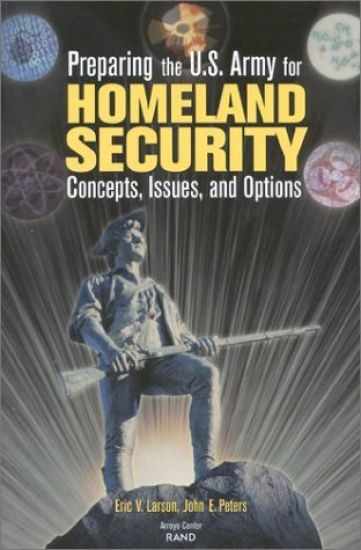
Although military policy seems focused on overseas threats, defending the homeland is, of course, the ultimate objective. This guide examines emergent threats to the USA homeland such as speciality weapons, cyber attacks and ballistic missiles and delineates the army's responsibilities.
Foundations of Effective Influence Operations
Eric V. Larson; Richard E. Darilek; Daniel Gibran; Brian Nichiporuk; Amy Richardson
RAND
2009
pokkari
Defense Planning in a Time of Conflict
Eric V Larson; Derek Eaton; Michael E Linick
RAND
2018
nidottu
This report presents a comparative historical analysis of the four Quadrennial Defense Reviews (QDRs) conducted after 1997 (in 2001, 2006, 2010, and 2014) and identifies trends, implications, and recommendations for the Army and U.S. Department of Defense in order to shape the conduct of and improve future reviews.
Defense Planning in a Time of Conflict
Eric V Larson; Derek Eaton; Michael E Linick
RAND
2021
nidottu
This Executive Summary highlights findings from a comparative historical analysis of the four Quadrennial Defense Reviews conducted after 1997 (in 2001, 2006, 2010, and 2014), identifying trends, implications, and recommendations for the Army and Defense Department in order to shape the conduct of and improve future reviews.
Strategy-Policy Mismatch
Timothy M. Bonds; Eric V. Larson; Derek Eaton; Richard E. Darilek
RAND
2014
pokkari
Although two successive presidents have determined that weapons of mass destruction (WMD) pose the greatest threat to the American people and have listed countering their proliferation as a top strategic priority, neither administration has followed through by allocating appropriate budgetary resources to it. This report addresses and analyzes the ground force capacity and capabilities needed to perform WMD elimination missions and tasks.
The U.S. Department of Defense's Planning Process
Michael J Mazarr; Katharina Ley Best; Burgess Laird; Eric V Larson; Michael E Linick; Dan Madden
RAND
2019
nidottu
This report--Phase Two of a three-phase project--describes the current defense planning process used by the U.S. Department of Defense, with a focus on how scenarios are developed and employed to support defense planning. It examines and critiques how scenarios are used in current planning processes, based on an assessment of unclassified documents and dialogues with current and former participants in the process.
Regression Methods in Biostatistics
Eric Vittinghoff; David V. Glidden; Stephen C. Shiboski; Charles E. McCulloch
Springer-Verlag New York Inc.
2011
sidottu
This new book provides a unified, in-depth, readable introduction to the multipredictor regression methods most widely used in biostatistics: linear models for continuous outcomes, logistic models for binary outcomes, the Cox model for right-censored survival times, repeated-measures models for longitudinal and hierarchical outcomes, and generalized linear models for counts and other outcomes. Treating these topics together takes advantage of all they have in common. The authors point out the many-shared elements in the methods they present for selecting, estimating, checking, and interpreting each of these models. They also show that these regression methods deal with confounding, mediation, and interaction of causal effects in essentially the same way. The examples, analyzed using Stata, are drawn from the biomedical context but generalize to other areas of application. While a first course in statistics is assumed, a chapter reviewing basic statistical methods is included. Some advanced topics are covered but the presentation remains intuitive. A brief introduction to regression analysis of complex surveys and notes for further reading are provided.
Regression Methods in Biostatistics
Eric Vittinghoff; David V. Glidden; Stephen C. Shiboski; Charles E. McCulloch
Springer-Verlag New York Inc.
2014
nidottu
This new book provides a unified, in-depth, readable introduction to the multipredictor regression methods most widely used in biostatistics: linear models for continuous outcomes, logistic models for binary outcomes, the Cox model for right-censored survival times, repeated-measures models for longitudinal and hierarchical outcomes, and generalized linear models for counts and other outcomes. Treating these topics together takes advantage of all they have in common. The authors point out the many-shared elements in the methods they present for selecting, estimating, checking, and interpreting each of these models. They also show that these regression methods deal with confounding, mediation, and interaction of causal effects in essentially the same way. The examples, analyzed using Stata, are drawn from the biomedical context but generalize to other areas of application. While a first course in statistics is assumed, a chapter reviewing basic statistical methods is included. Some advanced topics are covered but the presentation remains intuitive. A brief introduction to regression analysis of complex surveys and notes for further reading are provided.

CENTRALES HIDROELÉCTRICA PARA SUMINISTRO ENERGÉTICO
Ordaz Rangly; Eric S. Clark V.; Angel E. Lum Fatt
Editorial Académica Española
2024
nidottu
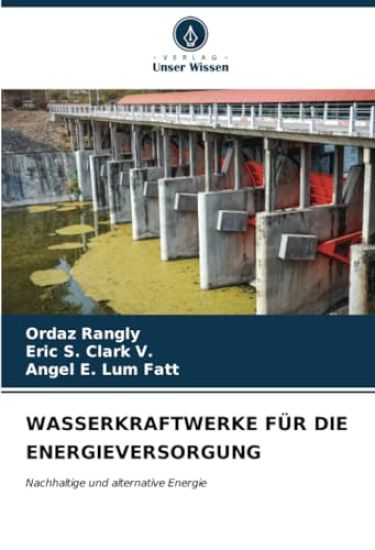
WASSERKRAFTWERKE FÜR DIE ENERGIEVERSORGUNG
Ordaz Rangly; Eric S. Clark V.; Angel E. Lum Fatt
Verlag Unser Wissen
2024
nidottu

HYDROELECTRIC POWER PLANTS FOR ENERGY SUPPLY
Ordaz Rangly; Eric S. Clark V.; Angel E. Lum Fatt
Our Knowledge Publishing
2024
nidottu

CENTRALES HYDROÉLECTRIQUES POUR L'APPROVISIONNEMENT EN ÉNERGIE
Ordaz Rangly; Eric S. Clark V.; Angel E. Lum Fatt
Editions Notre Savoir
2024
nidottu

CENTRALI IDROELETTRICHE PER L'APPROVVIGIONAMENTO ENERGETICO
Ordaz Rangly; Eric S. Clark V.; Angel E. Lum Fatt
Edizioni Sapienza
2024
nidottu

CENTRAIS HIDROELÉCTRICAS PARA ABASTECIMENTO DE ENERGIA
Ordaz Rangly; Eric S. Clark V.; Angel E. Lum Fatt
Edições Nosso Conhecimento
2024
nidottu
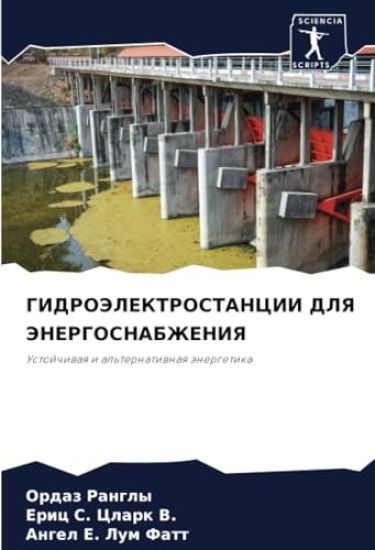
GIDROJeLEKTROSTANCII DLYa JeNERGOSNABZhENIYa
Ordaz Rangly; Eric S. Clark V.; Angel E. Lum Fatt
Sciencia Scripts
2024
nidottu

Each precious thing I show you in this book is a holy relic from the night we both perished-the night when I combed you from my hair and watered the moon with your blood.You've lost a lot of blood . . .