Kirjahaku
Etsi kirjoja tekijän nimen, kirjan nimen tai ISBN:n perusteella.
1000 tulosta hakusanalla Eric W. K. Tsang
One key objective of management research is to explain business phenomena. Yet understanding the nature of explanation is essentially a topic in philosophy. This is the first book that bridges the gap between a technical, philosophical treatment of the topic and the more practical needs of management scholars, as well as others across the social sciences. It explores how management phenomena can be explained from a philosophical perspective, and renders sophisticated philosophical arguments understandable by readers without specialized training. Covering virtually all the major aspects of the nature of explanation, this work will enhance empirical and theoretical research, as well as approaches combining the two. With many examples from management literature and business news, this study helps scholars in those fields to improve their research outcomes.
The field of management research is commonly regarded as or aspires to be a science discipline. As such, management researchers face similar methodological problems as their counterparts in other science disciplines. There are at least two ways that philosophy is connected with management research: ontological and epistemological. Despite an increasing number of scattered philosophy-based discussions of research methodology, there has not been a book that provides a systematic and more comprehensive treatment of the subject. This book addresses this gap in the market and provides new ideas and arguments for guiding management researchers.
Ocenka stoimosti lecheniq äpilepsii w stranah Afriki k ügu ot Sahary
Éric Gueumekane Bila Lamou
Sciencia Scripts
2022
nidottu
Any Fundraiser will learn how to develop a highly functional fundraising operation, how to engage donors in respectful, graceful and meaningful ways to create lasting, difference-making philanthropic mutual outcomes and impacts. As a non-profit organization, you will also learn how to practically build donor portfolios, fundraising teams, understand emerging donor personalities, and ultimately design a philanthropic culture where the fundraiser becomes the donor advisor and the donor is always treated as the NPO's investor, partner, and - in reality - the hero of the story What others are saying... "Eric Hogue shows us how to build sustainable fundraising practices on bedrock values, how to develop a vocabulary and nomenclature consistent with those values, how to organize and weigh a highly functional and adaptive advancement operation, and how to engage prospects and donors in respectful, graceful and meaningful ways to create lasting, difference-making philanthropic compacts." Jim LangleyPresidentLangley Innovations "Hogue gives both the seasoned and beginning fundraising professional guidance and courage to go beyond the well-worn path of ordinary fundraising to the narrower path to fundraising excellence. Ignore these lessons to your professional peril " R. Mark Dillon, PhDSenior VP and FounderTotal Advancement Solutions "Eric Hogue expresses the way in which each of us prefers and appreciates to be invited into the philanthropic process. Eric's acumens provide luscious morsels of professional development. His insights and pertinent data are also applicable, actionable, and beneficial to leaders in any capacity. He demonstrates visionary leadership that transforms old perceptions of organizational constituents." Dr. Carol SummersProfessor of Education EmeritusOlivet Nazarene University
Progress in Drug Research/Fortschritte der Arzneimittelforschung/Progrès des recherches pharmaceutiques
Norman K. Hollenberg; Steven W. Graves; Robert B. McCall; William T. Jackson; Jerome H. Fleisch; M. Margaglione; E. Grandone; F. P. Mancini; G. Di Minno; N. Seiler; A. Hardy; J. P. Moulinoux; James Claghorn; Michael D. Lesem; Eric J. Lien; Arima Das; Linda L. Lien
Springer Basel
2011
nidottu
Volume 46 of "Progress in Drug Research" contains seven reviews and the various indexes which facilitate its use and establish the connection with the previous volumes. The articles in this volume deal with endo- genous sodium pump inhibition, with neurotransmitters involved in the central regulation of the cardiovascular system, with leukotrienes and development of novel anti-inflammatory agents, with antithrombotic stra- tegies and drugs affecting the plasma fibrinogen levels, with natural ami- noglycosides and polyamines and their effects in the mammalian orga- nism, with the latest developments in antidepressant agents and with immunopharmacological and biochemical bases of Chinese herbal medi- cine. These reviews provide valuable information on several new deve- lopments in the complex domain of drug research. In the 37 years that PDR has existed, the Editor has enjoyed the valua- ble help and advice of many colleagues. Readers, the authors of the reviews and, last but not least, the reviewers have all contributed greatly to the success of this series of monographs. Although the comments received so far have generally been favorable, it is nevertheless necessary to analyze and to reassess the current position and the future direction of such publi- cations.
Eric W. Harris
VDM Publishing House
2010
nidottu
Observera att förlaget som ger ut denna produkt baserar innehållet i sina produkter på fria källor som Wikipedia. Boken är med stor sannolikhet endast ett utdrag ur dessa informationskällor, alltså inte en vanlig bok i den bemärkelsen.
Snowballed: The Truth About Eric Warren Bright v. Mercer Advisors, Inc.
Eric W. Bright
Createspace Independent Publishing Platform
2014
nidottu
Business firms are ubiquitous in modern society, but an appreciation of how they are formed and for what purposes requires an understanding of their legal foundations. This book provides a scholarly and yet accessible introduction to the legal framework of modern business enterprises. It explains the legal ideas that allow for the recognition of firms as organizational "persons" having social rights and responsibilities. Other foundational ideas include an overview of how the laws of agency, contracts, and property fit together to compose the organized "persons" known as business firms. The institutional legal theory of the firm developed embraces both a "bottom-up" perspective of business participants and a "top-down" rule-setting perspective of government. Other chapters in the book discuss the features of limited liability and the boundaries of firms. A typology of different kinds of firms is presented ranging from entrepreneurial one-person start-ups to complex corporations, as well as new forms of hybrid social enterprises. Practical applications include contribution to the debates surrounding corporate executive compensation and political free-speech rights of corporations.
What is a business corporation and where do they come from? This book provides an account of the nature of the business enterprise (including the corporation) as a social institution that has become as important as political states and families in modern society. Written in jargon-free language, the book provides a guide to general readers who are interested to know how business enterprises arose historically, how they are legally regulated, what economic dynamics explain the changing size and internal organization of modern enterprises, and how the political dimension is important. Essential reading for managers and policy makers, as well as academics and students in many fields, this book provides the first contemporary interdisciplinary theory of business enterprises. It provides a foundation for further thinking about the social purpose of a business enterprise, which includes not only the primary economic objective of wealth creation but also a larger role in the basic structure of modern society. The book will also inform those engaged in debates about how business enterprises should be regulated and toward what ends.
Canonizing Paul explores how ancient editorial practices utilized in the publication of corpora (e.g. preparation of texts, selection and arrangement of tracts, and composition and deployment of paratexts) were not only employed to shape editions of Paul's letters (i.e. the Marcionite, Euthalian, and Vulgate), but also their interpretation. By considering the deployment of ancillary materials alongside other editorial practices and exploring the interpretive interplay (and sometimes uneasy negotiation) of text and paratexts, this study fills an often overlooked gap in the field of New Testament textual criticism. Investigation into the Marcionite edition shows how its paratexts introduced Marcion's hermeneutic and, in some measure, justified his editorial principles. The Euthalian edition preferred instead a catechetical and pedagogical goal extending from the deployment of paratexts to the organization of the tracts and a textual arrangement for ease of comprehension. The exploration of text and sometimes disparate paratexts culminates in an investigation of Codex Fuldensis, which transmits the Vulgate textual revision of Paul's letters and its Primum Quaeritur prologue alongside numerous other paratexts such as the Marcionite prologues, Old Latin capitula, capitula drawn from the Euthalian edition, and sundry other paratexts. The incorporation of such diverse paratexts, loosed from their original editions and juxtaposed with later editorial products founded on alternative hermeneutical presuppositions, resulted in interpretive tensions that testify to the physical manuscript as a locus of authority, over which many early Christians were trying to gain interpretive control, if not by altering the text, then by furnishing paratexts. By demonstrating how these practices and interpretive concerns left their mark on these editions of the Corpus Paulinum, this study reveals that editorial practices and hermeneutics were deeply, sometimes inextricably, intertwined.
In Inequality in Canada Eric Sager considers one of the defining – but hardest to define – ideas of our era and traces its different meanings and contexts across the nineteenth and twentieth centuries.Sager shows how the idea of inequality arose in the long evolution in Britain and the United States from classical economics to the emerging welfare economics of the twentieth century. Within this transatlantic frame, inequality took a distinct form in Canada: different iterations of the idea appear in Protestant critiques of wealth, labour movements, farmer-progressive politics, the social gospel, social Catholicism in Quebec, English-Canadian political economy, and political and intellectual justifications of the social security state. A tradition of idealist thought persisted in the twentieth century, sustaining the idea of inequality despite deep silences among Canadian economists. Sager argues that inequality goes beyond the distribution of income and wealth: it is the idea that there are wide gaps between rich and poor, that the gaps are both an economic problem and a social injustice, and that when inequality appears, it is as a problem that can be either eliminated or reduced.It is precisely because inequality appears in different contexts, and because it changes, Sager reasons, that we can begin to perceive the contours and cleavages of inequality in our time. In our century, a political solution to inequality may rest on the recovery of an ethical ideal and egalitarian politics that have long preoccupied the history of Canadian thought.
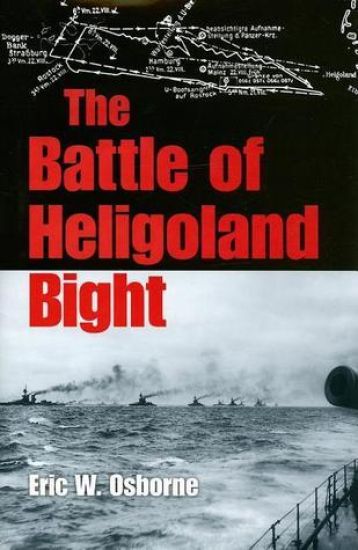
The battle of Heligoland Bight was the first major action between the British and German fleets during World War I. The British orchestrated the battle as a warning to the German high command that any attempt to operate their naval forces in the North Sea would be met by strong British resistance. Heligoland Island guarded the entrance to the main German naval anchorage at Kiel. Fought on August 28, 1914, the engagement was complicated by dense fog, the piecemeal engagement of German forces, and the unexpected appearance in the area of additional British ships, which were hard to distinguish from foe. Initial British damage was significant; however, fearing that the protracted battle would allow the bulk of the German fleet to join the battle, the British brought in their battle cruiser reinforcements and won the day, inflicting heavy losses on the Germans. The battle was significant for its political and strategic ramifications for the two sides. The Germans became reluctant to engage large forces in an attempt to gain a decisive maritime victory. After this defeat, any plans for large-scale fleet operations had to be approved by the Kaiser, which hampered the German fleet's effectiveness. This left the North Sea to Great Britain for much of the war.
Edgar Allan Poe has firmly established himself as one of the most studied 19th-century American writers, a pioneer in the theory of the short story, and a hauntingly lyrical poet whose works continue to capture the imagination of modern readers. Because of his preeminence in the world of letters, Poe has generated a tremendous amount of scholarship, and critics continue to engage in disputes over his varied writings. Through chapters written by expert contributors, this reference synthesizes the vast body of material about Poe's works and addresses topics of central importance to Poe studies. Best known as the author of poems such as The Raven and short stories such as The Fall of the House of Usher, Edgar Allan Poe is now firmly established as one of the most significant 19th-century American writers. Since 1845, when his work was recognized in France by Baudelaire, his critical reception has endured a history of fluctuation and controversy. During the last 50 years, research on Poe has grown so much that it now rivals or possibly exceeds the renaissance of interest in Emerson, Melville, and Henry James. His work has been adapted for popular consumption through several films; and early editions of his works, printed in small quantities, continue to command high prices. This reference companion, the third in a series with others on Melville and Henry James, is a guide to the tremendous amount of scholarship Poe has generated. Through chapters written by expert contributors, this volume reviews and represents Poe biography, criticism, aesthetics, philosophy, and influence. The first section of the book includes chapters on Poe's life and discusses the problems confronting Poe's biographers. The second section primarily offers textual criticism of his individual works, while the third and fourth sections treat broad topics related to his philosophical views and aesthetic theory. The fifth section consists of chapters on the legacy of Poe as a world author and his lasting influence on literature, popular culture, and fine arts. Chapters include extensive documentation, and a bibliography at the end of the volume lists the most significant resources for the study of Poe.
This timely volume illustrates how and why the fight against quackery in modern America has largely failed, laying the blame on an unlikely confluence of scientific advances, regulatory reforms, changes in the medical profession, and the politics of consumption.Throughout the 20th century, anti-quackery crusaders investigated, exposed, and attempted to regulate allegedly fraudulent therapeutic approaches to health and healing under the banner of consumer protection and a commitment to medical science. Quack Medicine: A History of Combating Health Fraud in Twentieth-Century America reveals how efforts to establish an exact border between quackery and legitimate therapeutic practices and medications have largely failed, and details the reasons for this failure.Digging beneath the surface, the book uncovers the history of allegedly fraudulent therapies including pain medications, obesity and asthma cures, gastrointestinal remedies, virility treatments, and panaceas for diseases such as arthritis, asthma, diabetes, and HIV/AIDS. It shows how efforts to combat alleged medical quackery have been connected to broader debates among medical professionals, scientists, legislators, businesses, and consumers, and it exposes the competing professional, economic, and political priorities that have encouraged the drawing of arbitrary, vaguely defined boundaries between good medicine and "quack medicine."
Experienced Guidance on the Technical Issues of Decommissioning ProjectsWritten by one of the original MARSSIM authors, Decommissioning Health Physics: A Handbook for MARSSIM Users, Second Edition is the only book to incorporate all of the requisite technical aspects of planning and executing radiological surveys in support of decommissioning. Extensively revised and updated, it covers survey instrumentation, detection sensitivity, statistics, dose modeling, survey procedures, and release criteria.New to the Second Edition Chapter on hot spot assessment that recognizes appropriate dosimetric significance of hot spots when designing surveys and includes a new approach for establishing hot spot limitsChapter on the clearance or release of materials, highlighting aspects of the MARSAME manualRevised chapter on characterization survey design to reflect guidance in ANSI N13.59 on the value of data quality objectives (DQOs)Updated regulations and guidance documents throughout Updated survey instrumentation used to support decontamination and decommissioning (D&D) surveys, including expanded coverage of in situ gamma spectrometersRevised statistics chapter that includes an introduction to Bayesian statistics and additional double sampling and ranked set sampling statistical approachesMore case studies and examples throughout Implement the Surveys Effectively and Avoid Common PitfallsWith more than 20 years of experience as a practitioner in the decommissioning survey field, author Eric W. Abelquist prepares you for the technical challenges associated with planning and executing MARSSIM surveys. He discusses the application of statistics for survey design and data reduction and addresses the selection of survey instrumentation and detection sensitivity. He presents final status survey
Sievers draws on his experience of Central Asia to take on the task of explaining the remarkable economic declines of the post-Soviet Central Asian states (Kazakhstan, Kyrgystan, Tajikistan, Turkmenistan and Uzbekistan) in the past decade, and the turn of these states towards despotism.
Great Britain's economic blockade of Germany in World War I was one of the key elements to the victory of the Entente. Though Britain had been the leading exponent of blockades for two centuries, the World War I blockade was not effective at the outbreak of hostilities. Pre-war changes had led to the Admiralty supplanting the Royal Navy's leadership role in favour of direction from the civilian branch of government on the basis of international law. The struggle between the primacy of international law and military expediency lasted for nearly two years, as the British tried to reconcile their pre-war stance as champion of neutral rights with measures necessary for a successful blockade. Not until 1916 did the operation have the potential to be a decisive factor in the defeat of Germany, when pressure from France, the Royal Navy, Parliament, British popular opinion, and the Admiralty forced the British government to abandon its defence of neutral rights over the interests of the state. The arrival of the United States as an ally in April 1917 initiated the final evolution of the blockade. The Entente and the United States tightened the blockade with crushing effect on Germany, and by November 1918, it was evidently one of the chief factors behind the victory. This knowledge reinforced the decision to retain the blockade in the months following the armistice in order to force favourable terms from Germany. In both the war and in the peace, the economic blockade performed a critical role in World War I.