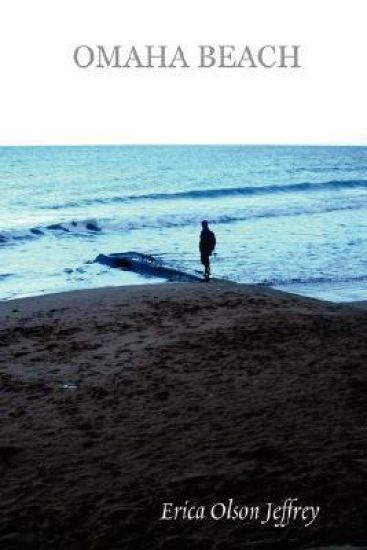
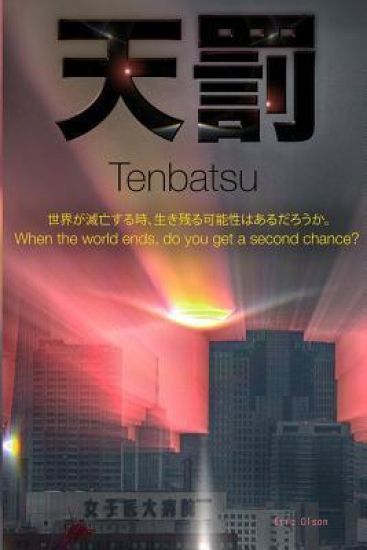
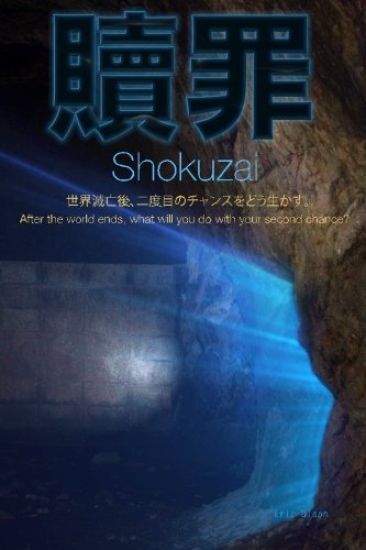
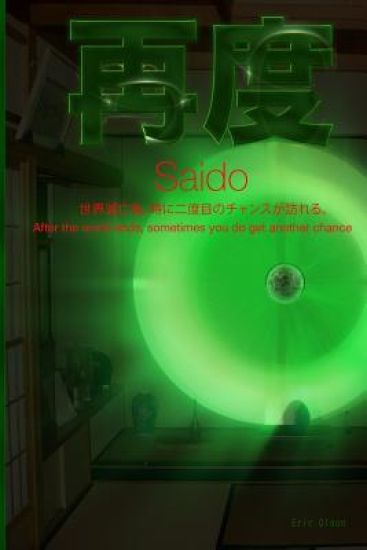
Omaha Beach is a collection of short stories, many of them set near a fictitious lake outside of Omaha, Nebraska. Like the more famous setting of the World War II D-Day battles, Omaha Beach and its environs have their tales of survival. Omaha Beach is the debut short-fiction collection of writer and editor Erica Olson Jeffrey.
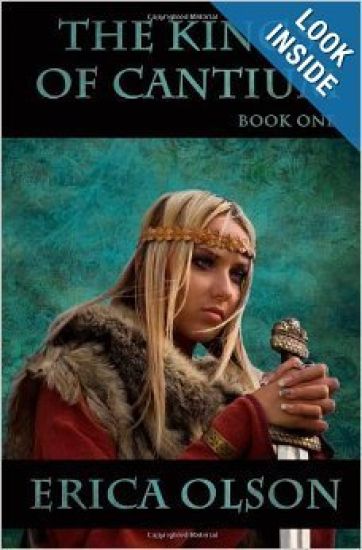
In the Iron Age, the world is changing. At night, Isa Uliac lays down her scythe and dances by the fire, her reward for long hours in the fields. The land of June never changes - until the Remi come. These strangers solve problems that should have taken years to unravel. Soon they build roads through the fields and demand tribute. The people of June no longer dance and sing. When the Remi nearly kill Isa's brother, she knows that she must act. She sets off for Cantium, an old ally of June that no one has visited for generations. Only this legendary kingdom could defeat the Remi. But Cantium isn't what Isa expected. Can she overcome her horror at what she finds there and convince the Cantians to help June, before it's too late? Fiction / Fantasy / Historical Approximately 27,000 words (Novella) Book 1 of The Kings of Cantium quartet www.erica-olson.com From Author's End Note: Cantium, though fictionalized here, was a real place: the present-day county of Kent in southeast England. I took the name from Julius Caesar's Gallic Wars, which mentions four kings of Cantium who ruled at the time of Caesar's expedition to Britain in 54 BC. These were Iron Age kings, each ruling from a hill-fort - a fortified center of population, production, and culture. Of all the British tribes, Caesar says, the Cantians were the most civilized. The Remi in The Kings of Cantium are rather like the Romans: foreign invaders with superior weapons and equipment and more systematized ways of doing things. Rome had conquered Iron Age Britain by the end of the first century AD. The real-life Remi were a people of northeastern Gaul (modern France). Allying themselves with Julius Caesar, they fought other Gallic tribes when most of the tribes rebelled against Rome. The Remi were a warlike people, famous for their horses. Later, after they were absorbed into the Roman Empire, Remi troops fought in many of Rome's campaigns, including, probably, the conquest of Britain. The events of this book, though, are entirely of my own invention. I could have written a strictly historical novel, but wanted to allow my imagination free room to play.
Throughout our lives, we are faced with defining moments. In those moments, we have the power of choice to become successful women in our chosen paths. The opportunities out there may not find us so easily and we must decide to seek them out for ourselves. When faced with a defining moment, will you choose to overcome what lies ahead or give up on your dream? Isn't the vision you carry for your life worth taking a leap into a brighter future? Follow along with the stories of these women who choose not to be a victim of circumstance and be encouraged that you're making the right choice every time. Ambitious Women Rise, empowering tales of women overcoming obstacles to live their dreams, is the book you need. Inspire yourself to overcome your battles and pursue your dreams. Rise, like these role models, to the woman you were meant to be.
Create a roadmap for your company’s future success—the For Dummies way Strategic Planning Kit For Dummies not only teaches you how to build a solid business strategy, but it gives you the tools to do it. Checklists, worksheets, and real-life examples guide you through answering your most pressing questions. Plus, all-new online resources make creating a lasting strategy easier than ever. Build a company vision statement, assess your strategic position, engage your team, and execute your plan—with easy-to-understand instructions and explanations that anyone can follow. This revised edition shows you how to adapt your strategy, plan for the unknown, and stay resilient through all the changes facing today’s businesses. Advice from For Dummies experts will make any business leader’s strategic dreams a reality. Learn the basics of how to create a long-term business strategy Create your mission and vision statements and a strategic frameworkGet organized, engage your team, and deploy your strategy through objectives and key resultsAccess resources, worksheets, checklists and more—in the book and onlineThis is the For Dummies guide for business owners and C-suite executives who are building or rethinking their company’s strategy and planning a path for growth. It’s a big job, but you don’t have to do it alone. Dummies has your back.
Follow Kenichi, Haruko, Mayako, and their friends through the underbelly of Tokyo as they continue their quest to find and defeat the Big Cheese. Discover the super-villain's horrible plan as our unlikely heroes finally learn the secret identity of their quarry, and get their chance to grill the Big Cheese.
These poems are written through the struggles each of us may face and how we learn to let go. From certain people to places, A Heart Bled Through Ink is the stories and memories I carry - written feeling on a page.
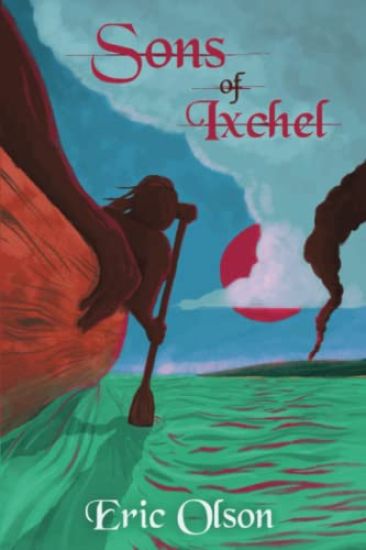
It is the Year of Ix-a year of bad omens. For twins Chan and Kan, it's a normal year of helping their parents and having fun with their friends. But then their family's store of balch is destroyed, meaning they cannot pay their taxes to the king. Chan and his friend Pakal are accused of attempted murder by the king's spoiled nephew. Now, Chan is a slave, assigned a near impossible task to free his friend, and Kan is conscripted for a war party on the mainland. Amid the constant threat of war and hushed rumors of pirates on the coast, the twins must race against time to restore their family's honor... before it's too late. Experience the rich history of Maya culture through the eyes of its people in this stunning historical fiction debut from author, archeologist, and professor Eric Olson.
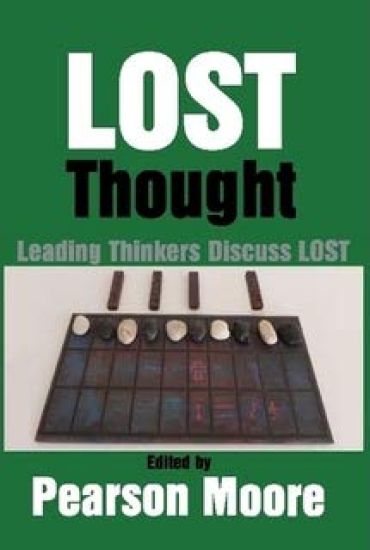
LOST Thought is a lively collaboration between 22 leading experts in the online LOST world and the academic community. Every contributor brings unrestrained passion to these 25 wide-ranging and vital discussions of the personal, cultural, social, and literary implications of the most fascinating, multi-faceted creation ever presented on television. LOST is approached as living, breathing text whose mythology, themes, and theses challenge our culture and our society at every level. Scholars specializing in literary theory, English literature, film theory, art history, LOST studies, theology, pop culture, music theory, art, religious studies, and theater have come together to produce the most extensive analysis of LOST ever presented in a single volume. These 22 experts discuss LOST from 25 different perspectives, taking on issues ranging from the cultural impact of the series as a whole to the social implications of specific characters.
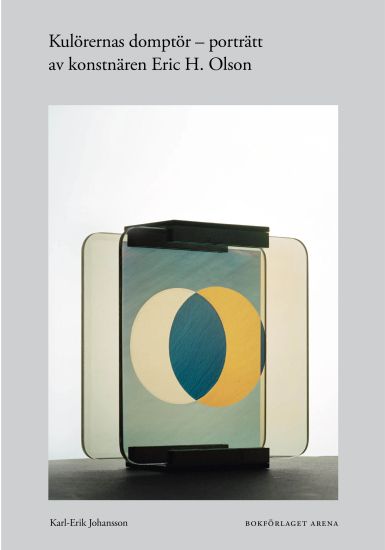
Eric H. Olson var en särling inom svensk 1900- talskonst. Som bildkonstnär utvecklades han från traditionell naturskildrare till att söka motiv där geometri och illusion av rörelse var allenarådande. Med sina optochromier åstadkom han något unikt i konstvärlden. Han lät oss se vad våra ögon i vanliga fall inte uppfattar och han trollade fram färger genom att använda ljusbrytande folier som framkallade naturenliga färgsensationer.I Kulörernas domptör - porträtt av konstnären Eric H. Olson dokumenteras Eric H. Olsons liv och konstnärliga gärningar i en bildrik och unik sammanställning.Karl-Erik Johansson (1934-2019) var en svensk tidningsman och konsthandlare. Han var son till tidningsmannen Karl Witus Johansson och Ruth Karlsson. Han blev journalist som sin far och övertog 1967 den av fadern grundade Värnamo Nyheter. Johansson var tidningens verkställande direktör, chefredaktör och ansvarig utgivare 1967-1981. Vid sidan av arbetet som tidningsman startade han konstgalleriet Liljan i Värnamo tillsammans med systern Sonia Wänestig. År 1981 sålde syskonparet Värnamo Nyheter till Hallpressen och Johansson flyttade till Paris där han verkade som konsthandlare. Han har gett ut flertalet böcker, bland andra Ragnar Person berättar med färg och ljus (1991), Samla sitt liv - konstälskarens bilderbok (2010) och Teckna sitt liv -tidsdokument & fotobok (2017).
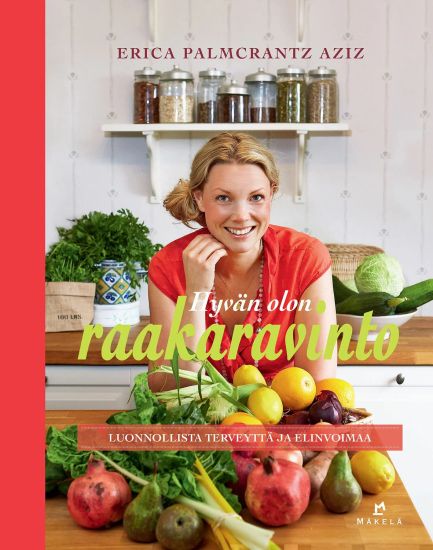
Raakaravinto joustavasti osaksi omaa ruokavaliota!Raakaravinto on tavallista, puhdasta ja luonnollista ruokaa, jossa kaikki ravintoaineet ovat tallella. Hyvän olon raakaravinto esittelee laajan kattauksen raakaruokaa aamu- ja välipaloista ateriakokonaisuuksiin.Mukana on 250 ruokaohjetta arjen pika-annoksista juhlapöydän herkkuihin: kehoa helliviä smoothieita ja mehuja, wrappeja, salaatteja, torttuja ja piiraita sekä makeita suupaloja. Niissä käytetään eri vuodenaikojen tarjoamia raaka-aineita, joita maustetaan kekseliäästi. Kirjan ohjeet palvelevat sekä laadukkaasta ruoasta kiinnostunutta kokeilijaa että uusia ideoita etsivää harrastajaa. Raakaravinto on myös mainio vaihtoehto, jos haluaa puhdistaa elimistöään kuuriluonteisesti tai syödä kevyemmin muutamana päivänä viikossa.
Most philosophers writing about personal identity in recent years claim that what it takes for us to persist through time is a matter of psychology. In this groundbreaking new book, Eric Olson argues that such approaches face daunting problems, and he defends in their place a radically non-psychological account of personal identity. He defines human beings as biological organisms, and claims that no psychological relation is either sufficient or necessary for an organism to persist. Rejecting several famous thought experiments dealing with personal identity, he instead argues that one could survive the destruction of all of one's psychological contents and capabilities as long as the human organism remains alive.
From the time of Locke, discussions of personal identity have often ignored the question of our basic metaphysical nature: whether we human people are biological organisms, spatial or temporal parts of organisms, bundles of perceptions, or what have you. The result of this neglect has been centuries of wild proposals and clashing intuitions. What Are We? is the first general study of this important question. It beings by explaining what the question means and how it differs from others, such as questions of personal identity and the mind-body problem. It then examines in some depth the main possible accounts of our metaphysical nature, detailing both their theoretical virtues and the often grave difficulties they face. The book does not endorse any particular account of what we are, but argues that the matter turns on more general issues in the ontology of material things. If composition is universal--if any material things whatever make up something bigger--then we are temporal parts of organisms. If things never compose anything bigger, so that there are only mereological simples, then we too are simples--perhaps the immaterial substances of Descartes--or else we do not exist at all (a view Olson takes very seriously). The intermediate view that some things compose bigger things and others do not leads almost inevitably to the conclusion that we are organisms. So we can discover what we are by working out when composition occurs.
Are we made entirely of matter, like sticks and stones? Or do we have a soul—a nonphysical entity—where our mental lives take place?The authors Eric T. Olson and Aaron Segal begin this accessible and wide-ranging debate by looking at the often-overlooked question of whether we appear in ordinary experience to be material things. Olson then argues that the dependence of our mental lives on the condition of our brains—the fact that general anesthesia causes complete unconsciousness, for instance—is best explained by saying that our mental lives are physical activities in our brains rather than nonphysical activities in the soul. Segal objects that this view is incompatible with two obvious and important facts about ourselves: that there is only one of you rather than trillions of almost identical beings now thinking your thoughts, and that we exist and remain conscious for more than an instant. These facts, he claims, are presupposed in our practical and moral judgments—but they require us to be immaterial things. Olson is forced to concede that there is no easy and uncontroversial answer to these objections but doubts whether taking us to be immaterial would be any help. The debate takes in large philosophical questions extending well beyond dualism and materialism.The book features clear statements of each argument, responses to counter-arguments, in-text definitions, a glossary of key terms, and section summaries. Scholars and students alike will find it easy to follow the debate and learn the key concepts from metaphysics, philosophy of mind, and other areas necessary to understand each position.Key Features Is the only introductory book devoted to the debate between substance dualism and materialism Discusses both traditional and novel arguments for each position Debates important but infrequently discussed questions, including: do we appear, in ordinary experience, to be material? should materialism be the default view? is there a good probabilistic argument for materialism? Written in a lively and accessible style Uses only a limited number of technical terms and defines all of them in the glossary