Robbie and the sugar bug family were the best of friends It was always sprinkle donuts for breakfast, lollipops for lunch, and gummies for dinner. But then things started to go rotten... Get ready for the bite-size story of Robbie and the Sugar Bug family. Written by Libertyville Dentist, Dr. Sam Weisz, for the tiniest of patients, to get them ready to brush their pearly whites and take a seat in the dentist chair. With vibrant illustrations, this sweet storybook serves up a positive message for brushing, flossing, and eating healthy foods. Perfect for shared reading with your two-minute brusher in and out of the classroom
In Conscientious Objectors in Israel, Erica Weiss examines the lives of Israelis who have refused to perform military service for reasons of conscience. Based on long-term fieldwork, this ethnography chronicles the personal experiences of two generations of Jewish conscientious objectors as they grapple with the pressure of justifying their actions to the Israeli state and society-often suffering severe social and legal consequences, including imprisonment. While most scholarly work has considered the causes of animosity and violence in the Israeli-Palestinian conflict, Conscientious Objectors in Israel examines how and under what circumstances one is able to refuse to commit acts of violence in the midst of that conflict. By exploring the social life of conscientious dissent, Weiss exposes the tension within liberal citizenship between the protection of individual rights and obligations of self-sacrifice. While conscience is a strong cultural claim, military refusal directly challenges Israeli state sovereignty. Weiss explores conscience as a political entity that sits precariously outside the jurisdictional bounds of state power. Through the lens of Israeli conscientious objection, Weiss looks at the nature of contemporary citizenship, examining how the expectations of sacrifice shape the politics of both consent and dissent. In doing so, she exposes the sacrificial logic of the modern nation-state and demonstrates how personal crises of conscience can play out on the geopolitical stage.
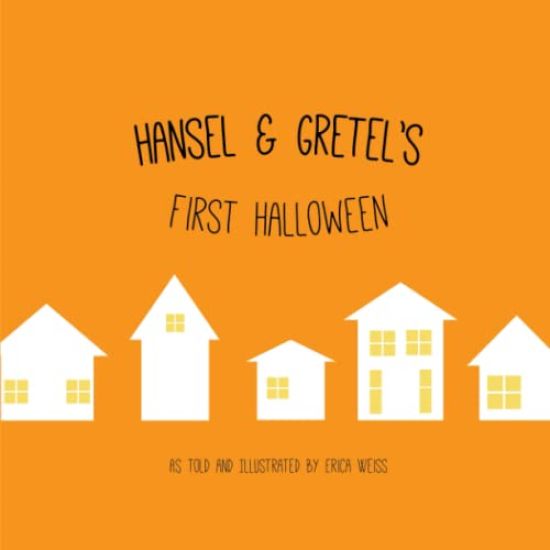
This book is a fun-filled retelling of the Grimm's fairytale of Hansel and Gretel, with a Halloween twist! Follow Hansel and Gretel as they venture into an enchanted forest in search of a magical candy cottage and face an evil witch! Will they have what it takes to escape? Find out in Hansel and Gretel's First Halloween.
Aufgrund der stetig wachsenden Absatzzahlen des Internethandels ist ein dement-sprechend synchrones Wachstum des Onlinemarketings zu verzeichnen. Da der Onlinemarketing-Kanal Affiliate-Marketing prim r performanceorientiert verg tet wird, kann er nahezu jedem Unternehmen dienen, das ber das Internet Waren und Dienstleistungen (E-Commerce) verkauft und keine Marketingkosten ohne realen Mehrwert riskieren m chte. Wieso dennoch ein Gro teil der KMU den Einsatz des Affiliate-Marketings kaum oder gar nicht in Erw gung zieht, kann damit begr ndet werden, dass die Unternehmen weder Kompetenzen noch Erfahrungswerte ber das Vorgehen bei der Einf hrung einer Affiliate-Marketing-Strategie verf gen und allgemeine Erfolgsfaktoren unbekannt sind. Durch die Anwendung von prim ren und sekund ren Methoden wurden mittels Empirie die Bedeutung und Erfolgsfaktoren zur Einf hrung einer solchen Strategie erarbeitet, um daraus resultierend Unternehmen einen Leitfaden bzw. eine Handlungsempfehlung zu bieten und in diesem Schriftwerk zu finden ist.
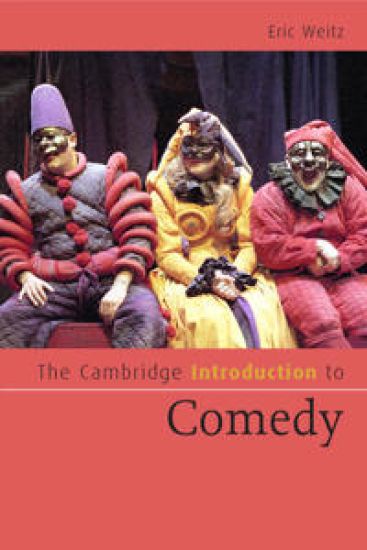
'Laughter', says Eric Weitz, 'may be considered one of the most extravagant physical effects one person can have on another without touching them'. But how do we identify something which is meant to be comic, what defines something as 'comedy', and what does this mean for the way we enter the world of a comic text? Addressing these issues, and many more, this is a 'how to' guide to reading comedy from the pages of a dramatic text, with relevance to anything from novels and newspaper columns to billboards and emails. The book enables you to enhance your grasp of the comic through familiarity with characteristic structures and patterns, referring to comedy in literature, film and television throughout. Perfect for drama and literature students, this Introduction explores a genre which affects the everyday lives of us all, and will therefore also capture the interest of anyone who loves to laugh.
This stimulating introduction to laughter in theatre and performance examines laughter among actors, among audience, and the interaction between the two. Exploring the many uses and effects of laughter in theatre, Eric Weitz considers laughter as a tool of political resonance, as social commentary, and as one of the oldest rhetorical devices.
Many of the financial problems facing the U.S. can be traced to financial illiteracy among large segments of the population. Consider: 1. If people understood the relation between the economy and monetary policy they probably would not have taken out adjustable rate mortgages at precisely the time the Federal Reserve was set to raise interest rates. 2. If people understood the difference between the effective annual and the annual percentage rate they would likely incur less high cost credit card debt. 3. If people understood the benefits of tax-deferred compounding they likely would begin contributing to their retirement plan earlier in life -- resulting in substantially more wealth when they retire. Financial Illiteracy in America argues that financial illiteracy derives from the absence of personal finance instruction in most U.S. public high schools and a mistaken reliance, on the part of many, that the best way to learn about financial topics is through one's parents or life experiences. The problem is that most parents do not have the financial background to impart financial knowledge to their children, while learning through life experiences often results in costly mistakes or realizing a problem when it is too late. Financial Illiteracy in America outlines what young people need to know to get a head start in putting their lives on a sound financial footing including topics such as: - Using financial services intelligently - Does a young person need insurance? - Opening and operating a brokerage account - Investments a young person should make - Globalization effects on the prices of goods and services purchased by young people Finally, Financial Illiteracy in America presents a curriculum for teaching personal finance to high school students. Financial Illiteracy in America was written by Eric J. Weiss, Certified Financial Planner PROFESSIONAL who also teaches an "Introduction to Finance" course to college students. Mr. Weiss's experience with clients and students sparked the idea for this book and has convinced him of the paramount importance of increasing financial literacy in the U.S.
Everyone experiences happiness and sorrow, anger, joy, fear, surprise, loneliness. Kids on the spectrum feel just as deeply, but they often sound different, have more issues with confidence, and they don’t know what comes after “hi,” making their ability to focus and succeed in social situations hard. With Marston, I’d start every morning believing today was the day he was going to look into my eyes and really want me. He’d reach for me, smile for the first time. Walk. He’d say, “Mama,” “Daddy,” or even “ball.” By 1998, when he turned three, I’d uttered that same old prayer a thousand times, and I was more determined than ever to shatter the glass wall that separated my son from the rest of the world. Autism wasn’t widely talked about back then, and Facebook (networking) didn’t exist. Eric and I were on our own. This memoir is our journey of educating Marston through programs like The Institutes for the Achievement of Human Potential, Vision Therapy, the Tomatis® Method, Marion Blank’s approach to reading, hypotherapy, balloon dancing, and the list goes on…until we discovered stem cell replacement therapy. Love, faith, hard work, and teamwork have taught Marston how to strike up a
As government-sponsored enterprises (GSEs), Fannie Mae and Freddie Mac are hybrids: created and chartered by Congress for specific public policy purposes, they are nonetheless private, profit-seeking businesses whose shares are traded on the New York Stock Exchange. Their "government-sponsored" nature confers certain advantages over their purely private competitors. As a result, their operations have expanded rapidly over the years and they long ago assumed and continue to play critical roles in the residential mortgage market. This book provides background on the GSE reform issue, summarises the provisions of H.R. 1427 and S. 1100, and compares them to legislation passed by the House in the 109th Congress.