

Kirjahaku
Etsi kirjoja tekijän nimen, kirjan nimen tai ISBN:n perusteella.
1000 tulosta hakusanalla Erich Petzet






The twentieth century was defined by far-reaching social changes, and this fresh insight into the life and works of Erich Fromm offers a compelling overview of his observations. Fromm's views on personal relationships, therapy, and his critique of society were closely tied to his astute analysis of the changes he witnessed and made him into a highly influential social and political commentator. In this absorbing introduction, Thomson considers how Fromm's early experiences influenced his enquiry into the human condition and examines what relevance his ideas still hold for students and readers today.
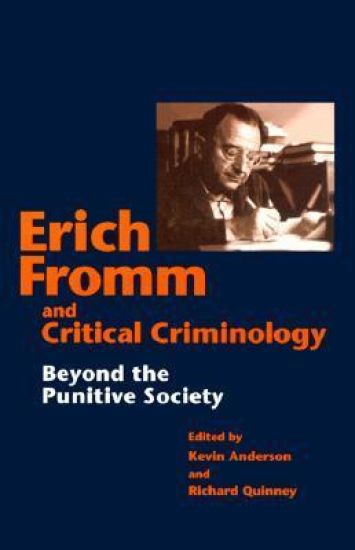
Erich Fromm and Critical Criminology
University of Illinois Press
1999
nidottu
Linking the writings of the great humanist psychologist Erich Fromm to criminology, this collection shows how viewing crime patterns and the criminal justice system from Fromm's humanist perspective opens a path to more effective and more humane ways of understanding and dealing with crime and criminals. Contributors to Erich Fromm and Critical Criminology draw on Fromm's writings on alienation, sadomasochism, and patriarchal/matriarchal values to assess the kinds of crimes being committed and the kinds of people committing them. They explore the spiritual and intellectual sources of Fromm's thought--including Jewish theology, Freudian psychoanalysis, Marxism, and Buddhism--and demonstrate how his socialist humanism points toward a society free of crime and violence. This volume also includes translations of two of Fromm's early articles on criminal justice, never before available in English, in which he develops a psychoanalytic Marxist critique of the role of criminal justice in a class society. At a time when American society seems bent, to an unprecedented degree, on imprisonment, executions, and other violent responses to the problem of crime, Fromm's humanist critique offers a unique vantage point from which to renew and develop a critical criminology.

Erich Przywara, S.J.
University of Notre Dame Press
2002
sidottu
Erich Przywara, S.J. (1889–1972), is one of the important Catholic intellectuals of the twentieth century. Yet, in the English-speaking world Przywara remains largely unknown. Few of his sixty books or six hundred articles have been translated. In this engaging new book, Thomas O’Meara offers a comprehensive study of the German Jesuit Erich Przywara and his philosophical theology. Przywara’s scholarly contributions were remarkable. He was one of three theologians who introduced the writings of John Henry Cardinal Newman into Germany. From Przywara’s position at the Jesuit journal in Munich, Stimmen der ZeitSpiritual Exercises of Ignatius Loyola. Przywara was also deeply engaged in the ideas and authors of his times. He was the first Catholic dialogue partner of Karl Barth and Paul Tillich. Edmund Husserl was counted among Przywara’s friends, and Edith Stein was a close personal and intellectual friend. Through his interactions with important figures of his age and his writings, ranging from speculative systems to liturgical hymns, Przywara was of marked importance in furthering a varied dialogue between German Catholicism and modern culture. Following a foreword by Michael A. Fahey, S.J., O’Meara presents a chapter on Pryzwara’s life and a chronology of his writings. O’Meara then discusses Pryzwara’s philosophical theology, his lecture-courses at German universities on Augustine and Aquinas, his philosophy of religion, and his influence on important intellectual contemporaries. O’Meara concludes with an in-depth analysis of Pryzwara’s theology—focusing particularly on his Catholic views on person, liturgy, and church.

Erich Przywara, S.J.
Thomas F. O’Meara; Michael A. Fahey
University of Notre Dame Press
2009
nidottu
Erich Przywara, S.J. (1889–1972), is one of the important Catholic intellectuals of the twentieth century. Yet, in the English-speaking world Przywara remains largely unknown. Few of his sixty books or six hundred articles have been translated. In this engaging new book, Thomas O'Meara offers a comprehensive study of the German Jesuit Erich Przywara and his philosophical theology. Przywara's scholarly contributions were remarkable. He was one of three theologians who introduced the writings of John Henry Cardinal Newman into Germany. From his position at the Jesuit journal in Munich, Stimmen der Zeit, he offered an open and broad Catholic perspective on the cultural, philosophical, and theological currents of his time. As one of the first Catholic intellectuals to employ the phenomenologies of Edmund Husserl and Max Scheler, he was also responsible for giving an influential, more theological interpretation of the Spiritual Exercises of Ignatius Loyola. Przywara was also deeply engaged in the ideas and authors of his times. He was the first Catholic dialogue partner of Karl Barth and Paul Tillich. Edmund Husserl was counted among Przywara's friends, and Edith Stein was a close personal and intellectual friend. Through his interactions with important figures of his age and his writings, ranging from speculative systems to liturgical hymns, Przywara was of marked importance in furthering a varied dialogue between German Catholicism and modern culture. Following a foreword by Michael A. Fahey, S.J., O'Meara presents a chapter on Pryzwara's life and a chronology of his writings. O'Meara then discusses Pryzwara's philosophical theology, his lecture-courses at German universities on Augustine and Aquinas, his philosophy of religion, and his influence on important intellectual contemporaries. O'Meara concludes with an in-depth analysis of Pryzwara's theology—focusing particularly on his Catholic views on person, liturgy, and church.
Erich Przywara and Postmodern Natural Law
Graham James McAleer
University of Notre Dame Press
2019
sidottu
Graham McAleer's Erich Przywara and Postmodern Natural Law is the first work to present in an accessible way the thinking of Erich Przywara (1889-1972) for an English-speaking audience. Przywara's work remains little known to a broad Catholic audience, but it had a major impact on many of the most celebrated theologians of the twentieth century, including Hans Urs von Balthasar, Karl Rahner, Edith Stein, and Karl Barth. Przywara's ground-breaking text Analogia Entis (The analogy of being) brought theological metaphysics into the modern era. While the concept of "analogy of being" is typically understood in static terms, McAleer explores how Przywara transformed it into something dynamic. McAleer shows the extension of Przywara's thought into a range of disciplines: from a new theory of natural law to an explanation of how misunderstanding the analogy of being lies at the foundation of the puzzles of modernity and postmodernity. He demonstrates, through Przywara's conceptual framework, how contemporary moral problems, such as those surrounding robots, Islam and sumptuary laws, Nazism (including fascism and race), embryos, migration, and body modification, among others, are shaped by the failure of Western thought to address metaphysical quandaries. McAleer updates Przywara for a new audience searching for solutions to the failing humanism of the current age. This book will be of interest to intellectuals and scholars in a wide range of disciplines within philosophy or theology, and will appeal especially to those interested in systematic and moral theology.

Erich Przywara and Postmodern Natural Law
Graham James McAleer
University of Notre Dame Press
2019
nidottu
Graham McAleer's Erich Przywara and Postmodern Natural Law is the first work to present in an accessible way the thinking of Erich Przywara (1889-1972) for an English-speaking audience. Przywara's work remains little known to a broad Catholic audience, but it had a major impact on many of the most celebrated theologians of the twentieth century, including Hans Urs von Balthasar, Karl Rahner, Edith Stein, and Karl Barth. Przywara's ground-breaking text Analogia Entis (The analogy of being) brought theological metaphysics into the modern era. While the concept of "analogy of being" is typically understood in static terms, McAleer explores how Przywara transformed it into something dynamic. McAleer shows the extension of Przywara's thought into a range of disciplines: from a new theory of natural law to an explanation of how misunderstanding the analogy of being lies at the foundation of the puzzles of modernity and postmodernity. He demonstrates, through Przywara's conceptual framework, how contemporary moral problems, such as those surrounding robots, Islam and sumptuary laws, Nazism (including fascism and race), embryos, migration, and body modification, among others, are shaped by the failure of Western thought to address metaphysical quandaries. McAleer updates Przywara for a new audience searching for solutions to the failing humanism of the current age. This book will be of interest to intellectuals and scholars in a wide range of disciplines within philosophy or theology, and will appeal especially to those interested in systematic and moral theology.
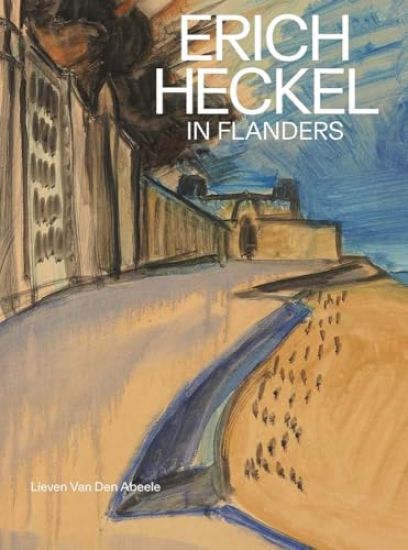
A monograph on one of the leading figures of German Expressionism, Erich Heckel and on artistic exchange in wartime Europe This book illuminates a less well-known yet coherent and deeply familiar period in the artistic career of the German expressionist Erich Heckel (1883–1970). The book contextualises the beginnings and the evolution of his work in the years from 1905 to 1918. In 1914 Heckel volunteered to go to the front, ending up on a hospital train that took him to Flanders. He remained there until the end of the First World War, working as an orderly in Roeselare, Ostend and Ghent. In Flanders, Heckel sketched daily events in the emergency hospital, of the places he visited and the people he encountered. He made woodcuts depicting expressive heads of the orderlies and their patients and of biblical subjects such as The Madonna of Ostend and The Good Samaritan. As a painter, Heckel was impressed by the landscape and the sea, and the unusual cloud formations. His landscapes and seascapes are an important highlight from this period of his work. The works included are romantic and expressive, natural and symbolic, spiritual, tangible and nostalgic.
From Love Story in 1970 to Prizes, his most recent bestseller, Erich Segal has created a body of fiction that testifies to the importance of traditional values and virtues in contemporary life. To drive home his views, Segal revitalizes the sentimental novel, which evokes emotion to assert moral precepts. This study, the first full-length examination of his work, explores the development of his art and analyzes each of his seven novels in turn. Pelzer shows how Segal's novels explore the parent-child relationship, the price of success, the importance of love, marriage, and human commitment, and the temptations and pressures that make it difficult for the individual to live rightly.A biographical chapter discusses Segal's career as a novelist and an academic. A chapter on genre examines his fiction in the tradition of the sentimental novel. Each novel is discussed in a separate chapter and analyzed for plot structure, characterization, thematic elements, literary devices, and style. In addition, Pelzer defines and applies a variety of alternative critical approaches to the novels to widen the reader's perspective. A complete bibliography of Segal's work as well as selected reviews and criticism complete the volume. In this study Pelzer shows how both Segal's short, sentimental tales of love and loss and his multi-character sagas, which range wide in time and place, tap into the deeply held beliefs of his readers and assert traditional values. It is this reaffirmation of values that is the source of his popular appeal to American readers.
Auerbach was one of the foremost literary critics of the 20th century whose work has relevance within the fields of literary criticism, historiography and postcolonial theory. The opening chapter of this book explains how he understood the task of interpretation and his role as an interpreter. The following chapter outlines the important phases in his life with reference to the writers and thinkers who influenced him in his thinking and practice. The central chapters of the book focus on specific themes in his work: the historical grounding of the ‘figural’ imagination; the relation between the secular and the sacred; the emergence of tragic realism; and the notion of ‘inner history’ as a defining feature of early 20th-cenntury modernism. The final two chapters focus on broader issues relating to the development of Auerbach’s understanding of the development of an educated readership within Europe and of his concerns regarding the emergence of what he terms ‘a world literature’.
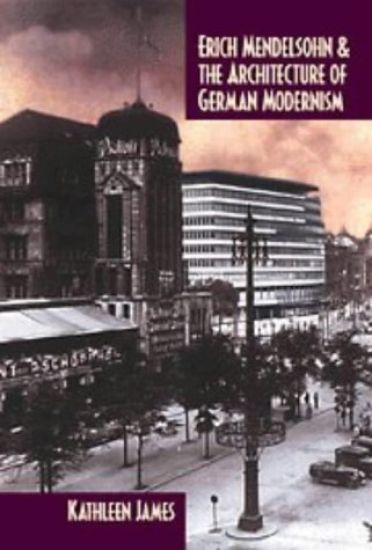
Erich Mendelsohn and the Architecture of German Modernism
Kathleen James
Cambridge University Press
1997
sidottu
Erich Mendelsohn’s buildings, erected throughout Germany between 1920 and 1932, epitomised architectural modernity for his countrymen. This study examines his department stores, office buildings, and cinemas, counterparts to the famous housing projects built during the same years in Frankfurt and Berlin. Demonstrating the degree to which their dynamic presence stemmed from Mendelsohn’s attention to their consumer-oriented functions, James shows Mendelsohn to be more than an Expressionist, as he is usually characterised. James recounts how his architecture closely reflects the controversies over modernity, including relativity, consumerism, and urban planning, that raged during the years of the Weimar Republic. She also illustrates how much Mendelsohn’s thriving practice depended on the patronage of fellow German Jews, many of whom shared his commitment to creating alternatives to the nationalistic historicism of the late Wilhelmine period.
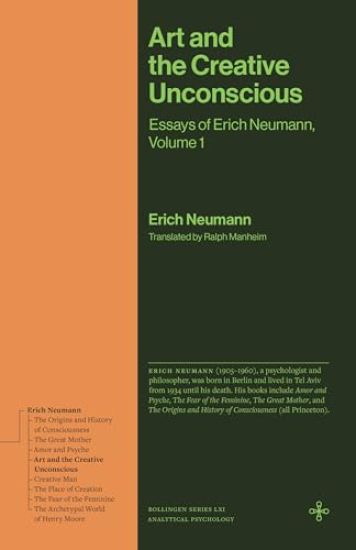
Art and the Creative Unconscious: The Collected Essays of Erich Neumann, Volume 1
Erich Neumann
PRINCETON UNIVERSITY PRESS
2026
sidottu
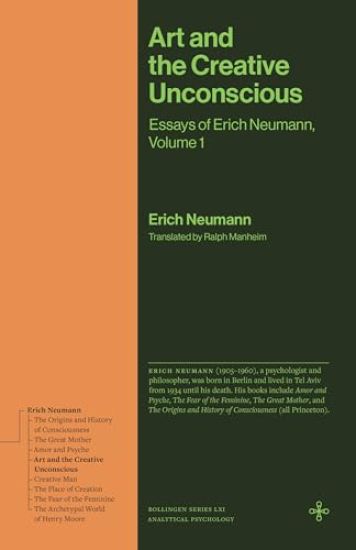
Art and the Creative Unconscious: The Collected Essays of Erich Neumann, Volume 1
Erich Neumann
PRINCETON UNIVERSITY PRESS
2026
nidottu