This book is my attempt to answer that question. It's a story about supply chains, but it's also a story about how we think. How do we balance speed with resilience? Efficiency with equity? Certainty with uncertainty? As I've learned, the answers to these questions lie not just in technology or policy but in trust.
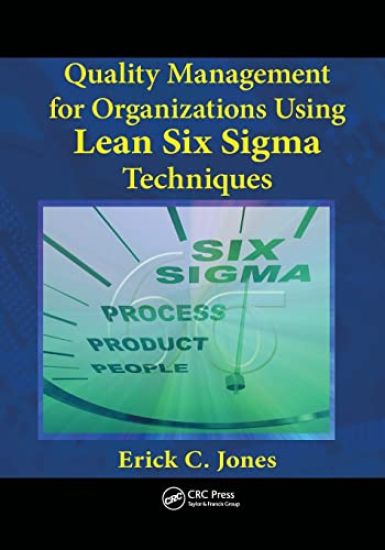
The next step in the evolution of the organizational quality field, Lean Six Sigma (LSS) has come of age. However, many challenges to using LSS in lieu of, in conjunction with, or integrated with other quality initiatives remain. An update on the current focus of quality management, Quality Management for Organizations Using Lean Six Sigma Techniques covers the concepts and principles of Lean Six Sigma and its origins in quality, total quality management (TQM), and statistical process control (SPC), and then explores how it can be integrated into manufacturing, logistics, and healthcare operations. The book presents the background on quality and Lean Six Sigma (LSS) techniques and tools, previous history of LSS in manufacturing, and current applications of LSS in operations such as logistics and healthcare. It provides a decision model for choosing whether to use LSS or other quality initiatives, which projects should be selected and prioritized, and what to do with non-LSS projects. The author also details an integration model for integrating and developing integrated LSS and other quality initiatives, and common mathematical techniques that you can use for performing LSS statistical calculations. He describes methods to attain the different Six Sigma certifications, and closes with discussion of future directions of Lean Six Sigma and quality.Case studies illustrate the integration of LSS principles into other quality initiatives, highlighting best practices as well as successful and failed integrations. This guide gives you a balanced description of the good, bad, and ugly in integrating LSS into modern operations, giving you the understanding necessary to immediately apply the concepts to your quality processes.
The next step in the evolution of the organizational quality field, Lean Six Sigma (LSS) has come of age. However, many challenges to using LSS in lieu of, in conjunction with, or integrated with other quality initiatives remain. An update on the current focus of quality management, Quality Management for Organizations Using Lean Six Sigma Techniques covers the concepts and principles of Lean Six Sigma and its origins in quality, total quality management (TQM), and statistical process control (SPC), and then explores how it can be integrated into manufacturing, logistics, and healthcare operations. The book presents the background on quality and Lean Six Sigma (LSS) techniques and tools, previous history of LSS in manufacturing, and current applications of LSS in operations such as logistics and healthcare. It provides a decision model for choosing whether to use LSS or other quality initiatives, which projects should be selected and prioritized, and what to do with non-LSS projects. The author also details an integration model for integrating and developing integrated LSS and other quality initiatives, and common mathematical techniques that you can use for performing LSS statistical calculations. He describes methods to attain the different Six Sigma certifications, and closes with discussion of future directions of Lean Six Sigma and quality.Case studies illustrate the integration of LSS principles into other quality initiatives, highlighting best practices as well as successful and failed integrations. This guide gives you a balanced description of the good, bad, and ugly in integrating LSS into modern operations, giving you the understanding necessary to immediately apply the concepts to your quality processes.
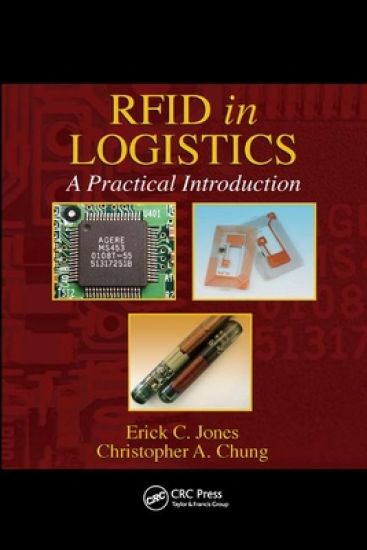
Radio Frequency Identification (RFID) tagging is now mandated by the department of defense and many of the world’s largest retailers including Wal-Mart. In order to stay competitive, more than 200,000 manufacturers and suppliers must develop strategies for integrating RFID technologies into their supply chains.RFID in Logistics: A Practical Introduction provides businesses and other relevant concerns with an authoritative step-by-step guide to the implementation and diverse applications of this revolutionary communications technology.Survey RFID applications in entertainment, credit devices, wireless communications, healthcare, and librariesLearn about both active and passive system components testing modelsExamine best practices for integrating RFID technology into the supply chainCombining techniques from computer, electrical, and industrial engineering, RFID in Logistics: A Practical Introduction supplies the basic instruction needed to develop and implement RFID technology.
Radio Frequency Identification (RFID) tagging is now mandated by the department of defense and many of the world’s largest retailers including Wal-Mart. In order to stay competitive, more than 200,000 manufacturers and suppliers must develop strategies for integrating RFID technologies into their supply chains.RFID in Logistics: A Practical Introduction provides businesses and other relevant concerns with an authoritative step-by-step guide to the implementation and diverse applications of this revolutionary communications technology.Survey RFID applications in entertainment, credit devices, wireless communications, healthcare, and librariesLearn about both active and passive system components testing modelsExamine best practices for integrating RFID technology into the supply chainCombining techniques from computer, electrical, and industrial engineering, RFID in Logistics: A Practical Introduction supplies the basic instruction needed to develop and implement RFID technology.
This handbook begins with the history of Supply Chain (SC) Engineering, it goes on to explain how the SC is connected today, and rounds out with future trends. The overall merit of the book is that it introduces a framework similar to sundial that allows an organization to determine where their company may fall on the SC Technology Scale. The book will describe those who are using more historic technologies, companies that are using current collaboration tools for connecting their SC to other global SCs, and the SCs that are moving more towards cutting edge technologies. This book will be a handbook for practitioners, a teaching resource for academics, and a guide for military contractors.Some figures in the eBook will be in color.Presents a decision model for choosing the best Supply Chain Engineering (SCE) strategies for Service and Manufacturing Operations with respect to Industrial Engineering and Operations Research techniquesOffers an economic comparison model for evaluating SCE strategies for manufacturing outsourcing as opposed to keeping operations in-houseDemonstrates how to integrate automation techniques such as RFID into planning and distribution operationsProvides case studies of SC inventory reductions using automation from AIT and RFID researchCovers planning and scheduling, as well as transportation and SC theory and problems
This handbook begins with the history of Supply Chain (SC) Engineering, it goes on to explain how the SC is connected today, and rounds out with future trends. The overall merit of the book is that it introduces a framework similar to sundial that allows an organization to determine where their company may fall on the SC Technology Scale. The book will describe those who are using more historic technologies, companies that are using current collaboration tools for connecting their SC to other global SCs, and the SCs that are moving more towards cutting edge technologies. This book will be a handbook for practitioners, a teaching resource for academics, and a guide for military contractors.Some figures in the eBook will be in color.Presents a decision model for choosing the best Supply Chain Engineering (SCE) strategies for Service and Manufacturing Operations with respect to Industrial Engineering and Operations Research techniquesOffers an economic comparison model for evaluating SCE strategies for manufacturing outsourcing as opposed to keeping operations in-houseDemonstrates how to integrate automation techniques such as RFID into planning and distribution operationsProvides case studies of SC inventory reductions using automation from AIT and RFID researchCovers planning and scheduling, as well as transportation and SC theory and problems
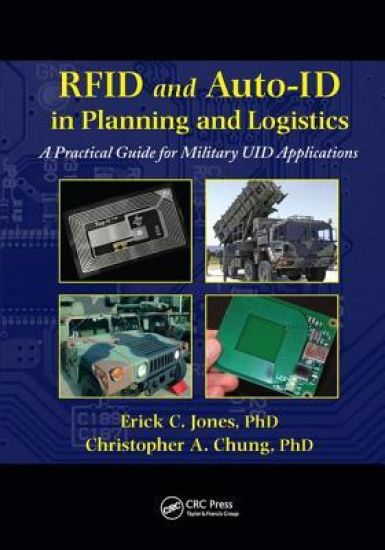
As RFID technology is becoming increasingly popular, the need has arisen to address the challenges and approaches to successful implementation. RFID and Auto-ID in Planning and Logistics: A Practical Guide for Military UID Applications presents the concepts for students, military personnel and contractors, and corporate managers to learn about RFID and other automatic information capture technologies, and their integration into planning and logistics functions. The text includes comparisons of RFID with technologies such as bar codes, satellite tags, and global positioning systems and provides a decision model for choosing the appropriate technology for a given application.By providing the histories, current use, and future applications of RFID and automatic identification technologies (AIT), the book discusses supply chain planning and logistics uses for these technologies. It addresses the fundamental relationships in RFID, including how antennae, integrated circuitry, and substrate work together. The text provides detailed information for troubleshooting design issues and an understanding of passive, semi-passive, and active tags, so an informed choice of technology type can be made. It describes the unique identification (UID) standards necessary for military contractors and how to use RFID and AIT to meet those requirements.This book is unique in the depth of material presented, making it appropriate for engineers, students, and operational personnel as a resource for foundational concepts for integrating logistics and RFID. A comprehensive reference, this volume can is an academic text, a practitioner’s handbook, and a military contractor’s UID guide for using RFID and AIT technologies.
As RFID technology is becoming increasingly popular, the need has arisen to address the challenges and approaches to successful implementation. RFID and Auto-ID in Planning and Logistics: A Practical Guide for Military UID Applications presents the concepts for students, military personnel and contractors, and corporate managers to learn about RFID and other automatic information capture technologies, and their integration into planning and logistics functions. The text includes comparisons of RFID with technologies such as bar codes, satellite tags, and global positioning systems and provides a decision model for choosing the appropriate technology for a given application.By providing the histories, current use, and future applications of RFID and automatic identification technologies (AIT), the book discusses supply chain planning and logistics uses for these technologies. It addresses the fundamental relationships in RFID, including how antennae, integrated circuitry, and substrate work together. The text provides detailed information for troubleshooting design issues and an understanding of passive, semi-passive, and active tags, so an informed choice of technology type can be made. It describes the unique identification (UID) standards necessary for military contractors and how to use RFID and AIT to meet those requirements.This book is unique in the depth of material presented, making it appropriate for engineers, students, and operational personnel as a resource for foundational concepts for integrating logistics and RFID. A comprehensive reference, this volume can is an academic text, a practitioner’s handbook, and a military contractor’s UID guide for using RFID and AIT technologies.
The smaller countries of Western Europe have a reputation for being more successful than their larger neighbours. They are wealthier per capita, they are more stable politically, and they are more flexible economically. The secret to this success lies in their consensual style of politics and their corporatist style of decision-making. Unfortunately, however, that may be about to change. A political transformation underway in small states is undermining the politics of consensus and breakdown the effectiveness of corporatist institutions. Small countries are becoming increasingly vulnerable to the vicissitudes of world markets as a result. Belgium and the Netherlands offer clear examples of the problem at hand. The political societies of both countries were tightly organized to avoid conflict and to promote consensus. Over time, however, this tight organization has broken down, politicians have opted for conflict over consensus, and elections have become more volatile as a result. In turn, this political transformation of Belgium and the Netherlands has undermined their traditional approach to economic policymaking and economic adjustment. Belgium and the Netherlands are now more vulnerable to world market forces than at any time since the end of the 1970s. Their relative economic and political success can no longer be taken for granted. The relative success of other small states should be brought into question as well.
This is an authoritative, one-volume, and independent treatment of the history, functioning and nature of the European integration. Written by a selection of leading scholars. It covers the major institutions, policies, and events in the history of integration, whilst also providing a guide to the major theoretical approaches that have been used to study it over time. By bringing together such a distinguished cast covering such a wide array of themes, the Handbook is intended as a one stop shop for all those interested in the European Union and its predecessors. Written in an accessible style, the volume is intended to shape the discipline of EU studies, and to establish itself as the essential point of reference for all those interested in European integration, both in universities and more broadly. It represents a timely guide to an institution that is much discussed but often only imperfectly understood.
Analyzing the long-term, historical development of the major economies around the Pacific Rim in language aimed at the general reader, Coming Full Circle throws light on the most important relationships in the region today as well as on the prospects for future economic development and political cooperation. The authors begin with a critique of the popular notion of an integrated "Pacific region," paying particular attention to the influence of geography and environment on population distribution and patterns of regional economic activity. Their study covers the diverse indigenous development of pre-European times, later periods of direct European influence, and the evolution of modern-day urban societies in the region. Finally, they track the rise of the United States and Japan as the dominant regional economic powers and forecast changes we can expect to see in the years ahead, noting in particular the increasing importance of China.
Analyzing the long-term, historical development of the major economies around the Pacific Rim in language aimed at the general reader, this book throws light on the most important relationships in the region today as well as on the prospects for future economic development and political cooperation.
Survival, the bi-monthly publication from The International Institute for Strategic Studies, is a leading forum for analysis and debate of international and strategic affairs. With a diverse range of authors, thoughtful reviews and review essays, Survival is scholarly in depth while vivid, well-written and policy-relevant in approach. Shaped by its editors to be both timely and forward-thinking, the publication encourages writers to challenge conventional wisdom and bring fresh, often controversial, perspectives to bear on the strategic issues of the moment.
This book provides a balanced introduction to diverse political economy perspectives on different aspects of European integration, demonstrating both the importance and the potential of research in this area. The volume includes three types of chapters: broad literature reviews, narrower applications of existing arguments, and new syntheses of competing claims. The authors also present a critical appraisal of how scholars in the EU and US use theory to understand European integration, and examine issues such as citizens' attitudes, perceptions and preferences of actors, the role of non-state actors, principle-agent questions, and the role and the autonomy of European institutions.This empirically informed and methodologically rigorous volume will be of great interest to students and researchers in the fields of comparative political economy, EU studies, international political economy and international organizations.
This book provides a balanced introduction to diverse political economy perspectives on different aspects of European integration, demonstrating both the importance and the potential of research in this area. The volume includes three types of chapters: broad literature reviews, narrower applications of existing arguments, and new syntheses of competing claims. The authors also present a critical appraisal of how scholars in the EU and US use theory to understand European integration, and examine issues such as citizens' attitudes, perceptions and preferences of actors, the role of non-state actors, principle-agent questions, and the role and the autonomy of European institutions.This empirically informed and methodologically rigorous volume will be of great interest to students and researchers in the fields of comparative political economy, EU studies, international political economy and international organizations.
Why did modern states and economies develop first in the peripheral and late-coming culture of Europe? This historical puzzle looms behind every study of industrialization and economic development. In this analytical and comparative work Eric Jones sees the economic condition forming where natural environments and political systems meet: Europe’s economic rise is explained as a favoured interaction between them, contrasting with the frustrating pattern of their interplay in the Ottoman empire, India and China. For the third edition Professor Jones has added a new Preface and Afterword.
Why did modern states and economies develop first in the peripheral and late-coming culture of Europe? This historical puzzle looms behind every study of industrialization and economic development. In this analytical and comparative work Eric Jones sees the economic condition forming where natural environments and political systems meet: Europe's economic rise is explained as a favoured interaction between them, contrasting with the frustrating pattern of their interplay in the Ottoman empire, India and China. For the third edition Professor Jones has added a new Preface and Afterword.