Kirjahaku
Etsi kirjoja tekijän nimen, kirjan nimen tai ISBN:n perusteella.
1000 tulosta hakusanalla Erik Satie

Trois Veritables Preludes Flasques By Erik Satie For Solo Piano (1912)
Erik Satie
READ BOOKS
2010
pokkari
This wonderful work by Erik Satie contains a score for the solo piano. It is a fine example of the composer's work and a fantastic addition to any classical musician's repertoire. Many of the earliest books, particularly those dating back to the 1900s and before, are now extremely scarce. We are republishing these classic works in affordable, high quality, modern editions, using the original text and artwork.



Croquis Et Agaceries D'un Gros Bonhomme En Bois By Erik Satie For Solo Piano (1913)
Erik Satie
Read Books
2010
pokkari

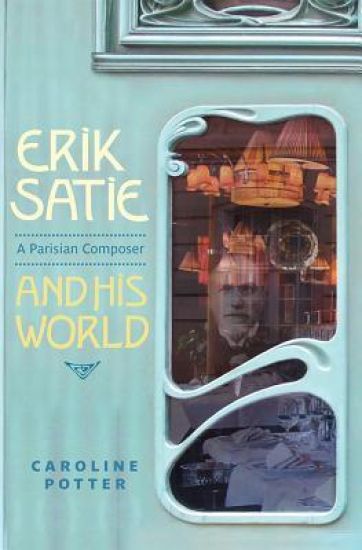
Satie's music and ideas are inextricably linked with the City of Light. This book situates Satie's work within the context and sonic environment of contemporary Paris. Sunday Times Classical Music Book of the Year Erik Satie's (1866-1925) music appeals to wide audiences and has influenced both experimental artists and pop musicians. Little about Satie was conventional, and he resists classification under easy headings such as "classical music". Instead of pursuing the path of a professional composer, Satie initially earned a living as a café pianist and moved in bohemian circles which prized satire, popular culture and experiment. Small wonder that his music is fundamentally new in conception. It is music which is not always designed to be listened to attentively: music which can be machine-like but is to be played by humans. For Satie, music was part of a wider concept of artistic creation, as evidenced by his collaborations with leading avant-garde artists and in works which cross traditional genre boundaries such as his texted piano pieces. His music was created in some of the most exciting and creatively stimulating environments of the late nineteenth and early twentieth century: Montmartre and Montparnasse. Paris was the artistic centre of Europe, and Satie was a notorious figure whose music and ideas are inextricably linked with the City of Light. This book situates Satie's work within the context and sonic environment of contemporary Paris. It shows that the influence of street music, musicians and poets interested in new technology, contemporary innovations and radical politics are all crucial to an understanding of Satie. Music from the ever-popular Gymnopédies to newly discovered works are discussed, and an online supplement features rare pieces recorded especially for the book. CAROLINE POTTER is Reader in Music at Kingston University London. A graduate in both French and Music, she has published widely on French music since Debussy and was Series Advisor to the Philharmonia Orchestra's Paris 2014-15 season.

A musical composer who dabbled in the Dada movement, a Bohemian ‘gymnopédiste’ of fin-de-siècle Montmartre, and a legendary dresser known as ‘The Velvet Gentleman’ for his sartorial choices, Erik Satie was nearly unprecedented in technique, style and philosophy among European composers in the early twentieth century. Yet his legacy has largely languished in the shadows of Stravinsky, Debussy and Ravel. Mary E. Davis now brings Satie to life in this fascinating new biography that demonstrates that his musical innovations reached as far as his influence.Satie redefined the boundaries of the composer’s art, devising new methods of artistic expression that melded ordinary elements and rarefied genres of words, visual art and music. Davis argues that Satie’s modernist aesthetic was grounded in the contradictions apparent in his life – such as enrolling in the conservative Schola Cantorum after working as a cabaret performer – and is reflected in his irreverent essays, drawings and music.Erik Satie explores how the composer was embraced by both the avant-garde and Parisian elite, an experience that immersed him in the worlds of high fashion and cutting-edge modernist art, and subsequently gave him the aesthetic impetus to create the new musical style of Neoclassicism. Satie also crucially employed the power of the image through his infamous fashion statements, Davis contends, to establish his place in the art world, and in this connection between couture and culture, Satie was at the heart of a nascent celebrity culture.A fascinating and informative portrait, with numerous illustrations that include art by Satie himself, Erik Satie reassesses the accepted history of modernist music and restores the composer to his rightful pioneering status.
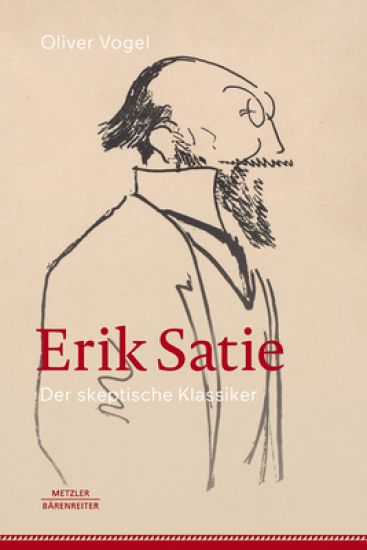
Erik Satie (1866-1925) gilt allgemein als eine Ikone der Moderne. Nach mehreren Jahrzehnten erscheint nun erstmals wieder eine deutschsprachige Gesamtdarstellung seines Lebens und Schaffens. Der auf dem Montmartre sozialisierte Musikpionier war ein Fragender. In skeptischer Absicht schärfte er seinen Humor, um auch seine Zeitgenossen nach sokratischer Manier zu prüfen. Unbefangen stellte er sich nach Art eines Amateurs immer wieder neuen Voraussetzungen. Von den autoritären Zügen der musikalischen Tradition dagegen nahm er Abstand, ohne doch den Anspruch aufzugeben, gelegentlich – in Resonanz mit den anderen Künsten – klassische Modelle vorzulegen. Vom Symbolismus bis zum Dadaismus wirkte er inmitten der Besten, weswegen diese neue Biographie zugleich auch in die Mitte des Pariser Künstlerkosmos eintaucht. Aus dem reichen Journalismus des 19. und 20. Jahrhunderts fördert Oliver Vogel eine Vielzahl unbekannter Anekdoten zutage und verdichtet die Stimmen derer, die dabei waren, zu einem lebendigen Konzert. Hörbeispiele: https://satieheute.de/bonusmaterial-der-skeptische-klassiker-vogel/Podcast des Autors: https://youtu.be/9fh6J7aTHqQ
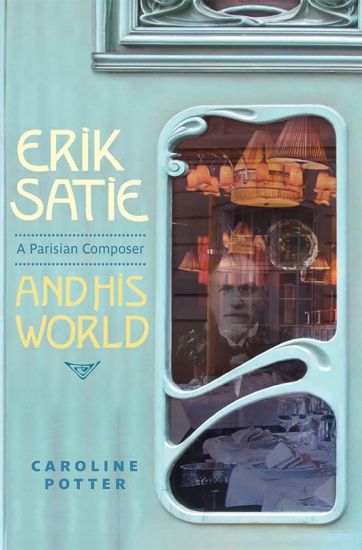
Satie's music and ideas are inextricably linked with the City of Light. This book situates Satie's work within the context and sonic environment of contemporary Paris. Sunday Times Classical Music Book of the Year Erik Satie's (1866-1925) music appeals to wide audiences and has influenced both experimental artists and pop musicians. Little about Satie was conventional, and he resists classification under easy headings such as "classical music". Instead of pursuing the path of a professional composer, Satie initially earned a living as a café pianist and moved in bohemian circles which prized satire, popular culture and experiment. Small wonder that his music is fundamentally new in conception. It is music which is not always designed to be listened to attentively: music which can be machine-like but is to be played by humans. For Satie, music was part of a wider concept of artistic creation, as evidenced by his collaborations with leading avant-garde artists and in works which cross traditional genre boundaries such as his texted piano pieces. His music was created in some of the most exciting and creatively stimulating environments of the late nineteenth and early twentieth century: Montmartre and Montparnasse. Paris was the artistic centre of Europe, and Satie was a notorious figure whose music and ideas are inextricably linked with the City of Light. This book situates Satie's work within the context and sonic environment of contemporary Paris. It shows that the influence of street music, musicians and poets interested in new technology, contemporary innovations and radical politics are all crucial to an understanding of Satie. Music from the ever-popular Gymnopédies to newly discovered works are discussed, and an online supplement features rare pieces recorded especially for the book.