Kirjojen hintavertailu. Mukana 12 408 339 kirjaa ja 12 kauppaa.

Kirjahaku

Etsi kirjoja tekijän nimen, kirjan nimen tai ISBN:n perusteella.

1000 tulosta hakusanalla Erik Seedhouse

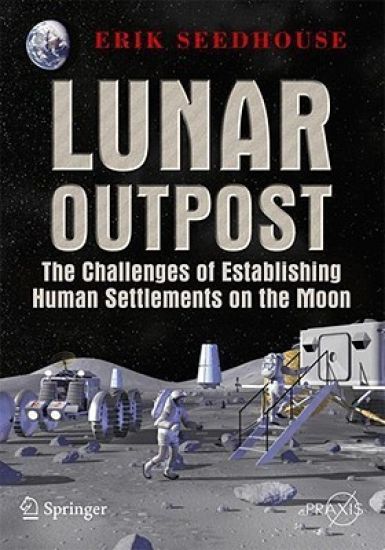
Lunar Outpost

Lunar Outpost

Erik Seedhouse

Springer-Verlag New York Inc.
2008
nidottu
Lunar Outpost provides a detailed account of the various technologies, mission architectures, medical requirements and training needed to return humans to the Moon within the next decade. It focuses on the means by which a lunar outpost will be constructed and also addresses major topics such as the cost of the enterprise and the roles played by private companies and individual countries. The return of humans to the surface of the Moon will be critical to the exploration of the solar system. The various missions are not only in pursuit of scientific knowledge, but also looking to extend human civilization, economic expansion, and public engagement beyond Earth. As well as NASA, China’s Project 921, Japan’s Aerospace Exploration Agency, Russia, and the European Space Agency are all planning manned missions to the Moon and, eventually, to Mars. The Ares-I and Ares-V are the biggest rockets since the Saturn V and there is much state-of-the-art technology incorporated into the design of Orion, the spacecraft that will carry a crew of four astronauts to the Moon. Lunar Outpost also describes the human factors, communications, exploration activities, and life support constraints of the missions.
Tourists in Space

Tourists in Space

Erik Seedhouse

Springer-Verlag New York Inc.
2008
nidottu
Recent surveys have provided new and updated information into public insights of the nascent space tourism industry. Erik Seedhouse uniquely explores in detail the cutting-edge technologies, spacecraft capabilities, launch vehicles and the training that will define this commercial enterprise and also provides a manual for future suborbital and orbital private space explorers. This overview of the space tourism market is based upon choices the spaceflight participant must make, such as choice of agency, mode and spaceport. A detailed explanation is given of the medical requirements for spaceflight participants, with special reference to potential waiver criteria. Over half of the book is a comprehensive astronaut training/instructional manual that addresses each of the 15 subjects required for suborbital and orbital flight.
Martian Outpost

Martian Outpost

Erik Seedhouse

Springer-Verlag New York Inc.
2009
nidottu
Mars Outpost provides a detailed insight into the various technologies, mission architectures, medical requirements, and training needed to send humans to Mars. It focuses on mission objectives and benefits, and the risks and complexities that are compounded when linked to an overall planet exploration program involving several expeditions and setting up a permanent presence on the surface. The first section provides the background to sending a human mission to Mars. Analogies are made with early polar exploration and the expeditions of Shackleton, Amundsen, and Mawson. The interplanetary plans of the European Space Agency, NASA, and Russia are examined, including the possibility of one or more nations joining forces to send humans to Mars. Current mission architectures, such as NASA’s Constellation, ESA’s Aurora, and Ross Tierney’s DIRECT, are described and evaluated. The next section looks at how humans will get to the Red Planet, beginning with the preparation of the crew. The author examines the various analogues to understand the problems Mars-bound astronauts will face. Additional chapters describe the transportation hardware necessary to launch 4-6 astronauts on an interplanetary trajectory to Mars, including the cutting edge engineering and design of life support systems required to protect crews for more than a year from the lethal radiation encountered in deep space. NASA’s current plan is to use standard chemical propulsion technology, but eventually Mars crews will take advantage of advanced propulsion concepts, such as the Variable Specific Impulse Magnetoplasma Rocket, ion drives and nuclear propulsion. The interplanetary options for reaching Mars, as well as the major propulsive maneuvers required and the trajectories and energy requirements for manned and unmanned payloads, are reviewed . Another chapter addresses the daunting medical problems andavailable countermeasures for humans embarking on a mission to Mars: the insidious effects of radiation on the human body and the deleterious consequences of bone and muscle deconditioning. Crew selection will be considered, bearing in mind the strong possibility that they may not be able to return to Earth. Still another chapter describes the guidance, navigation, and control system architecture, as well as the lander design requirements and crew tasks and responsibilities required to touch down on the Red Planet. Section 3 looks at the surface mission architectures. Seedhouse describes such problems as radiation, extreme temperatures, and construction challenges that will be encountered by colonists. He examines proposed concepts for transporting cargo and astronauts long distances across the Martian surface using magnetic levitation systems, permanent rail systems, and flying vehicles. In the penultimate chapter of the book, the author explains an adaptable and mobile exploration architecture that will enable long-term human exploration of Mars, perhaps making it the next space-based tourist location.
The New Space Race: China vs. USA
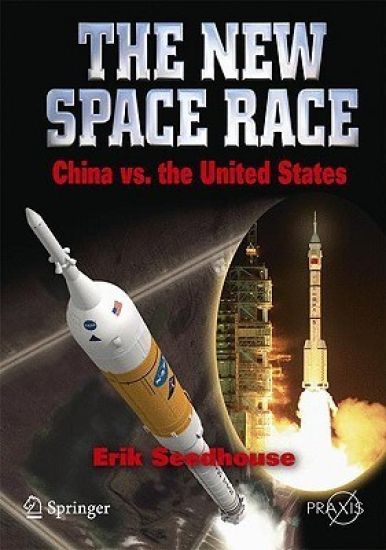
The world’s most populous nation views space as an asset, not only from a technological and commercial perspective but also from a political one. The repercussions of this ideology already extend far beyond Washington. China vs. the United States explores future Chinese aspirations in space and the implications of a looming space race.Dr. Seedhouse provides background information on the fifteen-year history of the China National Space Administration and its long list of accomplishments. Sino-U.S. technological and commercial interests in space are discussed, including their interest in encouraging a potential space race. The national security objectives of the U.S. and China are also examined.
Prepare for Launch

Prepare for Launch

Erik Seedhouse

Praxis
2010
nidottu
Today's astronauts require many different abilities. They must not only be expert in performing flight simulations but must also be proficient in such dissimilar subjects as photography, thermodynamics, electrical repairs, flight procedures, oceanography, public affairs, and geology. In Prepare for Launch, the author introduces the technologies and myriad activities that constitute or affect astronaut training, such as the part-task trainers, emergency procedures, the fixed-based and motion-based simulators, virtual environment training, and the demands of training in the Weightless Environment Training Facility. With plans to return to the Moon and future missions to Mars, the current selection criteria and training are very different from those used for short duration mission Space Shuttle crews. Dr. Erik Seedhouse in this book focuses on how astronaut candidates are taught to cope with different needs and environments (for example, hibernation, artificial gravity, and bioethics issues) and also includes brief discussions of the astronaut application and selection process.
Ocean Outpost

Ocean Outpost

Erik Seedhouse

Springer-Verlag New York Inc.
2010
nidottu
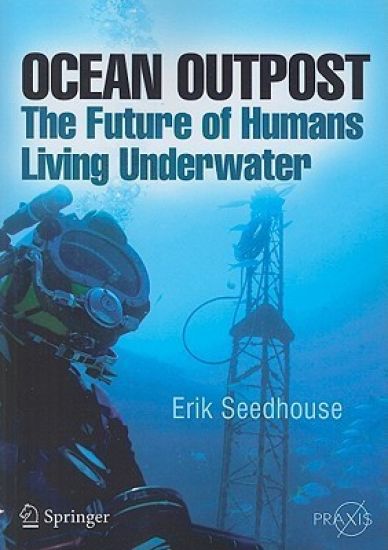
One of the greatest scientific and technological achievements of the 21st century will be to cast a light on the eternal darkness of the deep ocean and this book identifies the key determinants of life or death in its extreme environment. Dr. Erik Seedhouse examines how individuals survive free dives to 200m, how humans adapt to breathing exotic gas mixes at depths exceeding 700m, and how technological innovation will enable humans to enter unendurable realms. The book describes the problems unique to the hostile environment of the deep ocean, such as decompression sickness, discusses how the human body responds to increased pressure, and what happens when adaptive mechanisms fail. Ocean Outpost describes how the technology will evolve, how crews will be selected and trained and what a typical underwater mission will entail. The book also chronicles the frontiers of diving medicine that will eventually take humans into the midst of a world we could once only guess at.
Trailblazing Medicine

Trailblazing Medicine

Erik Seedhouse

Springer-Verlag New York Inc.
2011
nidottu
Space medicine has been an important component of the success of human spaceflight and will continue to play a critical role in the future ventures. To prepare for the day when astronauts will leave low Earth orbit for long-duration exploration missions, space medicine experts must develop a thorough understanding of the effects of microgravity on the human body, as well as ways of migrating these effects. To gain a complete understanding of the effects of space on the human body and to create the tools and technologies required for successful exploration, space medicine will become an increasingly collaborative discipline incorporating the skills of physicians, biomedical scientists, engineers, and mission planners. In this work, Dr. Erik Seedhouse examines the future of space medicine in relation to human space exploration. He describes what is necessary to keep a crew alive in space, how it will be accomplished in the future, and the medical challenges faced by interplanetary astronauts. The book is divided into three sections. The first looks at space medicine on board the ISS, where astronaut stays are often of long duration. The second section considers the Exploration Class medical dangers, beginning with radiation and the consequent Acute Radiation Syndrome (ARS). The final section looks at future developments and the importance of telemedicine and how revolutionary technologies will protect interplanetary astronauts from the space environment. The book ends with a description of the kind of hibernation necessary to insure the well being of interplanetary astronauts.
Interplanetary Outpost

Interplanetary Outpost

Erik Seedhouse

Springer-Verlag New York Inc.
2011
nidottu
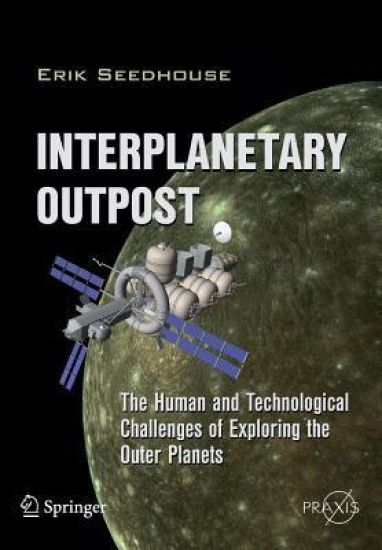
"Interplanetary Outpost" follows the mission architecture template of NASA's plan for Human Outer Planet Exploration (HOPE), which envisions sending a crew to the moon Callisto to conduct exploration and sample return activities. To realize such a mission, the spacecraft will be the most complex interplanetary vehicle ever built, representing the best technical efforts of several nations. A wealth of new technologies will need to be developed, including new propulsion systems, hibernation strategies, and revolutionary radiation shielding materials. Step by step, the book will describe how the mission architecture will evolve, how crews will be selected and trained, and what the mission will entail from launch to landing. However, the focus of "Interplanetary Outpost" is on the human element. The extended duration, logistical challenges, radiation concerns, communication lag times, isolation, and deleterious effects on the human body will conspire to not only significantly impair human performance but also affect the behavior of crewmembers. This book addresses each of these issues in detail while still providing the reader with a background to the necessary elements comprising such a mission.
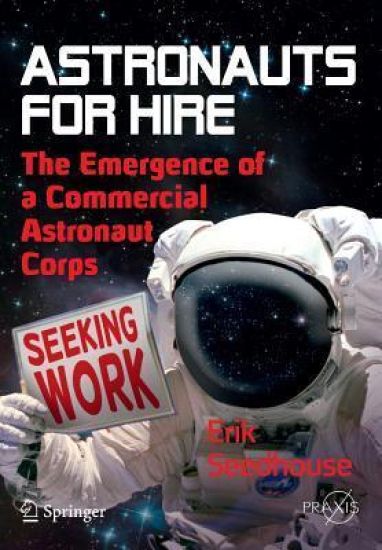
Astronauts For Hire

Astronauts For Hire

Erik Seedhouse

Springer-Verlag New York Inc.
2012
nidottu
'Astronauts For Hire' is a comprehensive and authoritative study of the increasing need for commercial astronauts. Erik Seedhouse provides unique insights into the burgeoning new field of commercial space operation and the individuals who will run these missions. Section I begins by describing how Astronauts for Hire (A4H) was created in 2010 by Brian Shiro, a highly qualified NASA astronaut candidate, and a group of other astronaut candidates. Erik introduces A4H's vision for opening the space frontier to commercial astronauts and describes the tantalizing science opportunities offered when suborbital and orbital trips become routine. Section II describes the vehicles astronauts will use. Anticipation is on the rise for the new crop of commercial suborbital and orbital spaceships that will serve the scientific and educational market. These reusable rocket-propelled vehicles are expected to offer quick, routine, and affordable access to the edge of space, along with the capability to carry research and educational crew members. The quick turnaround of these vehicles is central to realizing the profit-making potential of repeated sojourns by astronauts to suborbital and orbital heights. Section III describes the various types of missions this new corps of astronauts will fly and who will hire them. For example, suborbital flights may be used to do high altitude astronomy, life science experiments, and microgravity physics. This section continues with an examination of the types of missions that will accelerate human expansion outward, to Exploration Class missions through lunar bases, the establishment of interplanetary spaceports, and outposts on the surface of Mars. Along the way it describes the tasks commercial astronauts will perform, ranging from mining asteroids to harvesting helium.
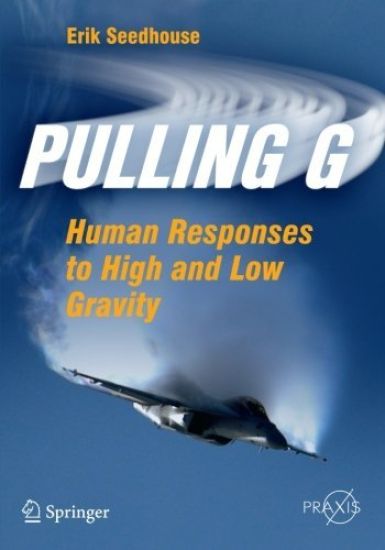
Pulling G

Pulling G

Erik Seedhouse

Springer-Verlag New York Inc.
2012
nidottu
Performing in a high G environment is extremely demanding on the body: pulling G forces blood to the body’s extremities, putting the pilot, astronaut or driver at risk of G-Induced Lack of Consciousness (G-LOC). In “Pulling G” Erik Seedhouse describes what it feels like to pull 7 G in a fighter plane and the G pressures on the body when driving a Formula 1 car and many other gravity-defying vehicles. The book relates, for the first time, the effects of G in both hyper-gravity and microgravity. It describes the human response to increased and decreased G and the potentially dangerous effects of high G, with particular reference to dynamic injuries sustained in high acceleration environments. “Pulling G” provides an overview of G-related research and the development of intervention methods to mitigate the effects of increased and reduced G. As well as relating the training required to overcome G-forces on the Formula 1 track, Erik Seedhouse looks at the G forces encountered in such G environments as ejection from an aircraft, launch/re-entry, and zero-G. The book also considers how artificial gravity can be used to prevent bone demineralization and to reduce the effects of de-conditioning in astronauts. Erik Seedhouse is eminently qualified to describe the effects of large accelerations on the body. In addition to being the author of several previously published Springer Praxis books, he has developed astronaut-training protocols and is the training director for Astronauts for Hire (A4H). He is also the Canadian Forces’ High Risk Acceleration Training Officer.
Terminal Reality

Terminal Reality

Erik Seedhouse

Xlibris Us
2020
pokkari
The spaceship is the Halo Genera. Its occupants, which include four humans, two bio-engineered synthetics, and an obstreperous robotic assistant named Larry, represent mankind's last-ditch, desperate but bold attempt to save the human race from extinction. Their destination: Despond 5, a planet light-years away from what was once home. But, as so often happens when manned spaceflight is matched with cutting-edge exploration, things don't go according to plan. Plagued by system malfunctions, subterfuge, sabotage and malevolent aliens, the Genera's crew race towards their destination. But can they reach it in time to save the human race?
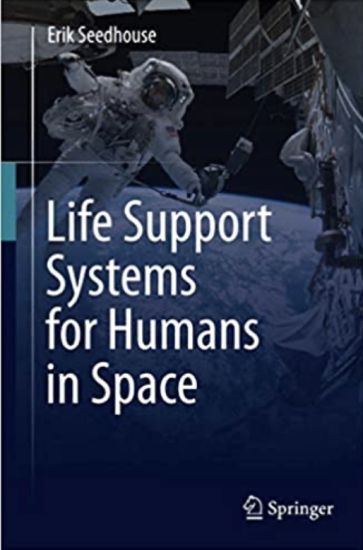
Life Support Systems for Humans in Space

Life Support Systems for Humans in Space

Erik Seedhouse

Springer Nature Switzerland AG
2020
nidottu
Life support systems are an integral part of crewed spacecraft designs and habitation systems. This textbook introduces the LSS capabilities that sustain humans who live and work in space, and it is written at a level appropriate for both undergraduate and postgraduate students.The book begins with the basics of space physiology before detailing the features that make up different kinds of life support systems. It includes concise descriptions of how atmospheric pressure is monitored, how oxygen levels are maintained, how waste management is achieved and how water is recycled, and also describes the processes of fire detection and suppression. Several chapters are devoted to chronicling the evolution of life support systems through the decades. Each chapter includes a list of learning objectives, summary sections and review questions. Additionally, various analogs for spaceflight life support systems are examined, including nuclear submarines and our natural life support system here on Earth! Overall, this book serves as an approachable primer for any student seeking to understand the intricacies of spacecraft life support systems.
SpaceX

SpaceX

Erik Seedhouse

Springer Nature Switzerland AG
2022
nidottu
Learn about commercial spaceflight’s most successful startup in this fully updated book, which follows the extraordinary feats of engineering and human achievement that have placed SpaceX at the forefront of the launch industry and positioned it as the most likely candidate for transporting humans to Mars. This second edition emphasizes SpaceX's much-hyped manned mission to the Red Planet. With a plethora of new material gathered from 2013 to the present, the text offers the most up-to-date portrait of the maverick band of scientists and engineers producing some of the most spectacular aviation triumphs of the 21st century. Topics covered in this book include: all CRS flights, the challenges of developing retro-propulsion, and the pathway towards realizing the Falcon Heavy and BFR. In addition, the chapters describe SpaceX’s emphasis on simplicity, low-cost, and reliability, and the methods the company employs to reduce its costs while speeding up decision-making and delivery. Detailing the Falcon 1, Falcon 9 and Falcon Heavy launch vehicles, the book shows how SpaceX is able to offer a full spectrum of light, medium, and heavy lift launch capabilities to its customers and how it is able to deliver spacecraft into any inclination and altitude, from low Earth orbit to geosynchronous orbit to planetary missions. This book is the perfect go-to guide on SpaceX for anybody working or interested in the commercial space arena.
Commercial Astronauts

Commercial Astronauts

Erik Seedhouse

Springer International Publishing AG
2024
sidottu
The beginning of the 2020’s witnessed dozens of commercial astronauts fly to space on a variety of vehicles. These spacecraft included SpaceX’s Crew Dragon, which supported the Inspiration4 and Axiom Space missions, Virgin Galactic’s SpaceShipTwo, which supported several suborbital science flights, and Blue Origin’s New Shepard spacecraft, which not only flew celebrities but also its fair share of commercial astronauts. The story of this new breed of spacefarer has only just begun. As evidenced by these missions, commercial spaceflight has grown beyond passengers simply traveling to space just for the ride. With orbital flights involving commercial astronauts staying in space for several days and weeks, companies such as Sierra Space, Axiom Space and Blue Origin are preparing for the next steps in commercial space travel which include the construction of orbiting habitats. But how will the opportunities for commercial astronauts develop, how will they be trained, and will this new group of astronauts evolve? This book describes how the commercial spaceflight industry is evolving, how it will continue to evolve as barriers to entry are reduced, competition grows, and costs are lowered, and how, because of these efforts, opportunities for commercial astronauts will increase.
Suborbital

Suborbital

Erik Seedhouse

Springer International Publishing AG
2014
nidottu
The nascent commercial suborbital spaceflight industry will soon open the space frontier to commercial astronauts, payload specialists, scientists and of course, tourists. This book describes the tantalizing science opportunities to be offered when suborbital trips become routine within the next 12 to 18 months. It describes the difference in training and qualification necessary to become either a spaceflight participant or a fully-fledged commercial suborbital astronaut and it describes the vehicles this new class of astronauts will use.Anticipation is on the rise for the new crop of commercial suborbital spaceships that will serve the scientific and educational market. These reusable rocket-propelled vehicles are expected to offer quick, routine and affordable access to the edge of space along with the capability to carry research and educational crew members. Yet to be demonstrated is the hoped-for flight rates of suborbital vehicles.Quick turnaround of these craft is central to realizing the profit-making potential of repeated sojourns to suborbital heights. As this book outlines, vehicle builders still face rigorous shake-out schedules, flight safety hurdles as well as extensive trial-runs of their respective craft before suborbital space jaunts become commonplace. The book examines some of these ‘cash and carry’ suborbital craft under development by such groups as Blue Origin, Masten Space Systems, Virgin Galactic and XCOR Aerospace and describes the hurdles the space industry is quickly overcoming en-route to the industry developing into a profitable economic entity.Seedhouse also explains how the commercial suborbital spaceflight industry is planning and preparing for the challenges of marketing and financing and how it is marketing the hiring of astronauts. It examines the role of commercial operators as enablers accessing the suborbital frontier and how a partnership with governments and the private sector will eventuallypermanently integrate the free market’s innovation of commercial suborbital space activities.
Tourists in Space

Tourists in Space

Erik Seedhouse

Springer International Publishing AG
2014
nidottu
Forget Hawaii or the Mediterranean. Soon – very soon – you’ll be able to add a much more exotic stamp to your passport: space. How will you get there, what will the trip be like and how much training will you need? All you need to know is right here in this guide. Tourists in Space: A Practical Guide supplies all the advice and information you need to make your spaceflight the most rewarding experience of your life. This definitive, real-world guide is packed with helpful facts and suggestions on everything from training, equipment, safety and in-flight procedures to techniques for avoiding space motion sickness and bone demineralization. You’ll also find: • Advice on choosing your training agency • Techniques for minimizing the risk of space motion sickness • Information you need to prepare for your medical examination, training and flight • Tips on activities near your training location and much more.
Bigelow Aerospace

Bigelow Aerospace

Erik Seedhouse

Springer International Publishing AG
2014
nidottu
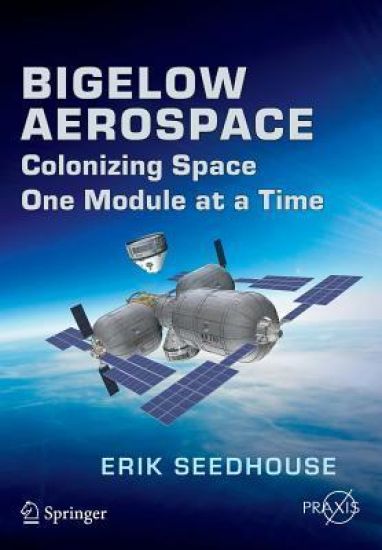
Here for the first time you can read:how a space technology start-up is pioneering work on expandable space station moduleshow Robert Bigelow licensed the TransHab idea from NASA, and how his company developed the technology for more than a decadehow, very soon, a Bigelow expandable module will be docked with the International Space Station.At the core of Bigelow's plan is the inflatable module technology. Tougher and more durable than their rigid counterparts, these inflatable modules are perfectly suited for use in the space, where Bigelow plans to link them together to form commercial space stations. This book describes how this new breed of space stations will be built and how the link between Bigelow Aerospace, NASA and private companies can lead to a new economy—a space economy. Finally, the book touches on Bigelow's aspirations beyond low Earth orbit, plans that include the landing of a base on the lunar surface and the prospect of missions to Mars.
Virgin Galactic

Virgin Galactic

Erik Seedhouse

Springer International Publishing AG
2015
nidottu
Thirty years ago when Sir Richard Branson called up Boeing and asked if they had a spare 747, few would have predicted the brash entrepreneur would so radically transform the placid business of air travel. But today, Branson flies airlines on six continents, employs hundreds of jets and, in 2014, was predicting that his spaceship company – Virgin Galactic – would soon open the space frontier to commercial astronauts, payload specialists, scientists and space tourists. With more than 600 seats sold at $250,000 each, what started off as a dream to send people just for the excitement to look back and marvel at Earth, was on the cusp of finally being turned into a business. Then, on October 21, 2014, tragedy struck. SpaceShipTwo was on its most ambitious test flight to date. Seconds after firing its engine, Virgin Galactic’s spaceship was breaking through the sound barrier. In just the three seconds that it took for the vehicle to climb from Mach 0.94 to Mach 1.02, co-pilot Mike Alsbury made what many close to the event believe was a fatal mistake that led to his death and the disintegration of SpaceShipTwo. Miraculously, the pilot, Peter Siebold, survived the 16-km fall back to Earth. Soon after the event Branson vowed to continue his space tourism venture in spite of this. Already a second SpaceShipTwo is being built, and ticket-holders eagerly await the day when Virgin Galactic offers quick, routine and affordable access to the edge of space. This book explains the hurdles Virgin Galactic had and still has to overcome en route to developing suborbital space travel as a profitable economic entity, and describes the missions that will be flown on board SpaceShipTwo Mk II, including high-altitude science studies, astronomy, life sciences, and microgravity physics.
Survival and Sacrifice in Mars Exploration

Survival and Sacrifice in Mars Exploration

Erik Seedhouse

Springer International Publishing AG
2015
nidottu
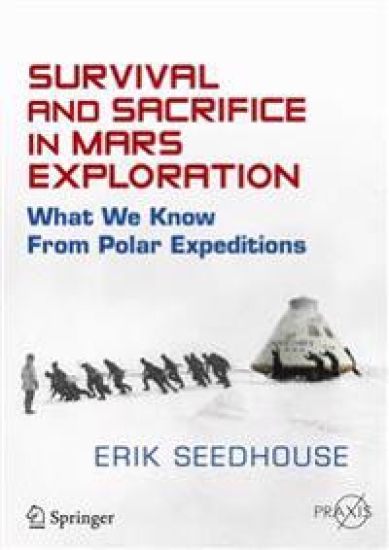
With current technology, a voyage to Mars and back will take threeyears. That’s a lot of time for things to go wrong. But sooner or latera commercial enterprise will commit itself to sending humans to Mars.How will the astronauts survive? Some things to consider are:ith current technology, a voyage to Mars and back will take threeyears. That’s a lot of time for things to go wrong. But sooner or latera commercial enterprise will commit itself to sending humans to Mars.How will the astronauts survive? Some things to consider are:• Who decides what medical resources are used for whom?Who decides what medical resources are used for whom?• What is the relative weight of mission success and the health of thecrew?What is the relative weight of mission success and the health of thecrew?• Do we allow crewmembers to sacrifi ce their lives for the good of themission?Do we allow crewmembers to sacrifi ce their lives for the good of themission?• And what if a crewmember does perish? Do we store the body forreturn to Earth or give the member a burial in space?Questions like these, and hundreds of others, have been explored byscience fi ction, but scant attention has been paid by those designingmissions. Fortunately, the experience gained in polar exploration morethan 100 years ago provides crews and mission planners with a frameworkto deal with contingencies and it is this that forms the core of this book.Why the parallels between polar and space exploration? Because polarexploration offers a better analogy for a Mars mission today than thoseinvoked by the space community. Although astronauts are routinelycompared to Lewis and Clark, Mars-bound astronauts will be closer in theirroles to polar explorers. And, as much as space has been described as aNew Frontier, Mars bears greater similarity to the polar regions, which iswhy so much can be learned from those who ventured there.And what if a crewmember does perish? Do we store the body forreturn to Earth or givethe member a burial in space?Questions like these, and hundreds of others, have been explored byscience fi ction, but scant attention has been paid by those designingmissions. Fortunately, the experience gained in polar exploration morethan 100 years ago provides crews and mission planners with a frameworkto deal with contingencies and it is this that forms the core of this book.Why the parallels between polar and space exploration? Because polarexploration offers a better analogy for a Mars mission today than thoseinvoked by the space community. Although astronauts are routinelycompared to Lewis and Clark, Mars-bound astronauts will be closer in theirroles to polar explorers. And, as much as space has been described as aNew Frontier, Mars bears greater similarity to the polar regions, which iswhy so much can be learned from those who ventured there.