
Kirjahaku
Etsi kirjoja tekijän nimen, kirjan nimen tai ISBN:n perusteella.
1000 tulosta hakusanalla Erin N Griswold

Where Do All The Pets Go? A Coloring Book to Help Kids with Pet Loss.
Erin N Johnson
Pet Loss Light
2022
pokkari
Where Do All the Pets Go? An inclusive coloring book with interactive activities to help children navigate the loss of a beloved animal companion. Where Do All the Pets Go? Good Question One day our pets will leave us, and it's ok to feel sad or mad or even bad. Our pets are our best friends and family, and it's always sad when our family have to go away. Let's read and color all the places they might go and talk about their journey along the way. Are you ready?So many of us have gone through the journey of loss of a beloved pet when we were younger and really struggled with the sadness and many questions afterwards. Questions maybe our family couldn't or didn't want to answer because lots of us were taught never to talk about death in an open and honest way - let alone about our animal companions. Sadly there is still so much shame and stigma around pet loss which we hope to change by offering coloring books like "Where Do All the Pets Go?" to help kids understand all the different feelings and questions about this deep loss. For many people, the death of a pet is one of the first significant losses they experience and it sets the tone for how they deal with future losses going forward (and this doesn't even have to be related specifically to death). We wanted to create an inclusive and easy to follow coloring book for kids age (around 4-12) to walk through the process of losing a pet which will allow children and families to create a dialogue around this really difficult, yet beautiful, process. We believe that the activity of coloring the pages and completing interactive games (with help if needed) will allow children to open up more about their feelings, provide validation, and allow them to ask questions and talk about their pet in a way that makes them feel like they are ok no matter how they are feeling. There is no shying away from talking about death and labeling it as such with this book. We believe that being honest with children is so important in helping them process the loss, and the many losses they will experience in their lifetime. This book will help set the tone for how they process grief and loss as they continue to grow. Included: A place to dedicate the book to your own petsColoring book pagesInteractive puzzlesSelf-Expression journal page"Where Do All the Pets Go?" was written and designed by founder of Pet Loss Light and Shop Modern Pet Loss (coming soon), a Pet Loss Grief Support Specialist and Certified Coach, Erin N. Johnson. She is a huge animal lover and supports people going through the difficult, yet beautiful process of losing a pet. The bonds with our animals are so special and it is truly a gift that we get to have them as part of our families, albeit for too short a time.

Mathematics for the Life Sciences
Erin N. Bodine; Suzanne Lenhart; Louis J. Gross
Princeton University Press
2014
sidottu
The life sciences deal with a vast array of problems at different spatial, temporal, and organizational scales. The mathematics necessary to describe, model, and analyze these problems is similarly diverse, incorporating quantitative techniques that are rarely taught in standard undergraduate courses. This textbook provides an accessible introduction to these critical mathematical concepts, linking them to biological observation and theory while also presenting the computational tools needed to address problems not readily investigated using mathematics alone. Proven in the classroom and requiring only a background in high school math, Mathematics for the Life Sciences doesn't just focus on calculus as do most other textbooks on the subject. It covers deterministic methods and those that incorporate uncertainty, problems in discrete and continuous time, probability, graphing and data analysis, matrix modeling, difference equations, differential equations, and much more. The book uses MATLAB throughout, explaining how to use it, write code, and connect models to data in examples chosen from across the life sciences. * Provides undergraduate life science students with a succinct overview of major mathematical concepts that are essential for modern biology* Covers all the major quantitative concepts that national reports have identified as the ideal components of an entry-level course for life science students* Provides good background for the MCAT, which now includes data-based and statistical reasoning* Explicitly links data and math modeling* Includes end-of-chapter homework problems, end-of-unit student projects, and select answers to homework problems* Uses MATLAB throughout, and MATLAB m-files with an R supplement are available online* Prepares students to read with comprehension the growing quantitative literature across the life sciences* A solutions manual for professors and an illustration package is available
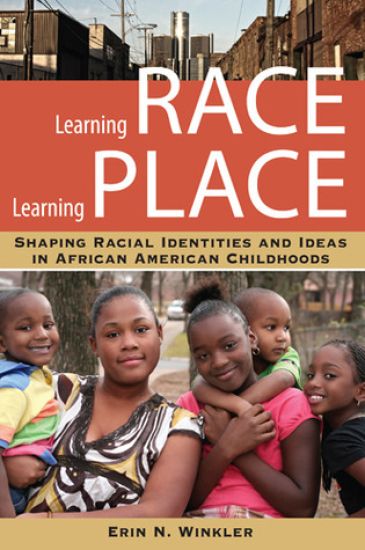
In an American society both increasingly diverse and increasingly segregated, the signals children receive about race are more confusing than ever. In this context, how do children negotiate and make meaning of multiple and conflicting messages to develop their own ideas about race? Learning Race, Learning Place engages this question using in-depth interviews with an economically diverse group of African American children and their mothers.Through these rich narratives, Erin N. Winkler seeks to reorient the way we look at how children develop their ideas about race through the introduction of a new framework—comprehensive racial learning—that shows the importance of considering this process from children’s points of view and listening to their interpretations of their experiences, which are often quite different from what the adults around them expect or intend. At the children’s prompting, Winkler examines the roles of multiple actors and influences, including gender, skin tone, colorblind rhetoric, peers, family, media, school, and, especially, place. She brings to the fore the complex and understudied power of place, positing that while children’s racial identities and experiences are shaped by a national construction of race, they are also specific to a particular place that exerts both direct and indirect influence on their racial identities and ideas.
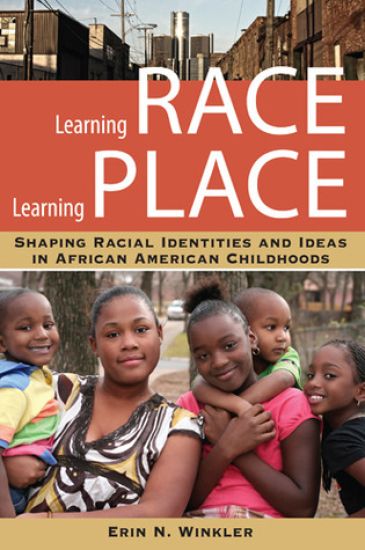
In an American society both increasingly diverse and increasingly segregated, the signals children receive about race are more confusing than ever. In this context, how do children negotiate and make meaning of multiple and conflicting messages to develop their own ideas about race? Learning Race, Learning Place engages this question using in-depth interviews with an economically diverse group of African American children and their mothers.Through these rich narratives, Erin N. Winkler seeks to reorient the way we look at how children develop their ideas about race through the introduction of a new framework—comprehensive racial learning—that shows the importance of considering this process from children’s points of view and listening to their interpretations of their experiences, which are often quite different from what the adults around them expect or intend. At the children’s prompting, Winkler examines the roles of multiple actors and influences, including gender, skin tone, colorblind rhetoric, peers, family, media, school, and, especially, place. She brings to the fore the complex and understudied power of place, positing that while children’s racial identities and experiences are shaped by a national construction of race, they are also specific to a particular place that exerts both direct and indirect influence on their racial identities and ideas.
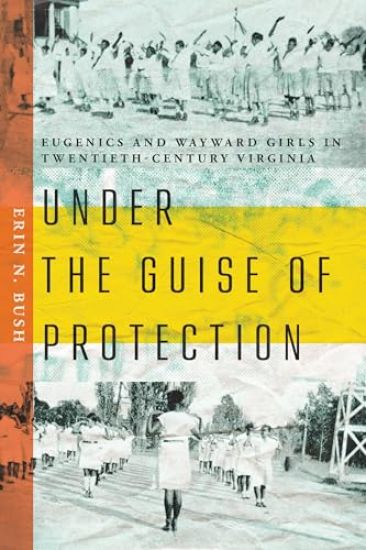
A shocking story of social engineering in the era of Jim Crow The eugenics movement, in which the state arrogated to itself the right to determine who could and who could not have children, was a dark, shameful chapter in American history. Virginia was infamous as an epicenter of eugenic thought; the case of Buck v. Bell, which resulted in one of the Supreme Court's most notorious decisions, originated there. In Under the Guise of Protection, Erin Bush describes how state programs designed for "delinquent" young women like Carrie Buck—whose sterilization took place while she was an inmate at the Virginia State Colony for Epileptics and Feebleminded—developed in Virginia's distinctive environment of "progressive" ideology and racial segregation. Buck was far from alone. Between 1910 and 1942, the commonwealth's public welfare bureaucrats and charity workers confined more than 2,300 adolescent white and African American girls at juvenile reformatories. By examining the programs developed at these segregated institutions, in both rural and urban areas, this groundbreaking book sheds new light on the connections between juvenile justice, racial politics, and the tendentious use of "science" in the development of social reforms in the early twentieth century.
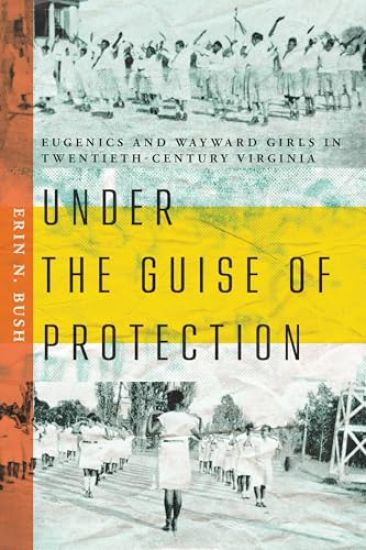
A shocking story of social engineering in the era of Jim Crow The eugenics movement, in which the state arrogated to itself the right to determine who could and who could not have children, was a dark, shameful chapter in American history. Virginia was infamous as an epicenter of eugenic thought; the case of Buck v. Bell, which resulted in one of the Supreme Court's most notorious decisions, originated there. In Under the Guise of Protection, Erin Bush describes how state programs designed for "delinquent" young women like Carrie Buck—whose sterilization took place while she was an inmate at the Virginia State Colony for Epileptics and Feebleminded—developed in Virginia's distinctive environment of "progressive" ideology and racial segregation. Buck was far from alone. Between 1910 and 1942, the commonwealth's public welfare bureaucrats and charity workers confined more than 2,300 adolescent white and African American girls at juvenile reformatories. By examining the programs developed at these segregated institutions, in both rural and urban areas, this groundbreaking book sheds new light on the connections between juvenile justice, racial politics, and the tendentious use of "science" in the development of social reforms in the early twentieth century.
Luminescence Studies of Ion-Implanted Gallium Nitride and Alluminum Gallium Nitride
Erin N Claunch
Hutson Street Press
2025
sidottu

Luminescence Studies of Ion-Implanted Gallium Nitride and Alluminum Gallium Nitride
Erin N Claunch
Hutson Street Press
2025
pokkari
Luminescence Studies of Ion-Implanted Gallium Nitride and Alluminum Gallium Nitride
Erin N Claunch
Biblioscholar
2012
pokkari
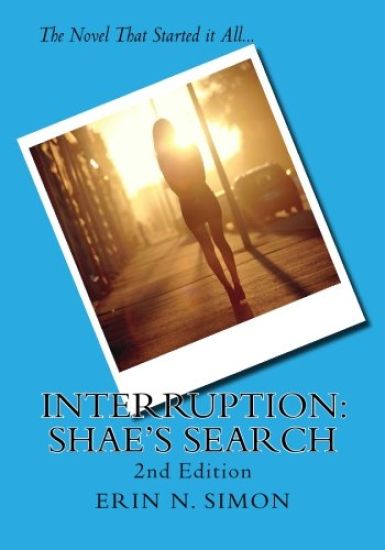
Interruption: : Shae's Search
Erin N. Simon
Createspace Independent Publishing Platform
2014
nidottu
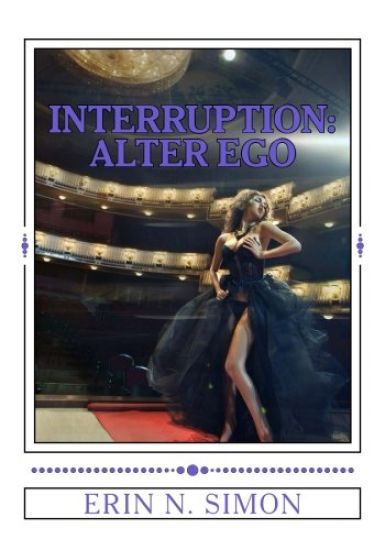
Interruption: : Alter Ego - The Final Installment
Erin N. Simon
Createspace Independent Publishing Platform
2015
nidottu
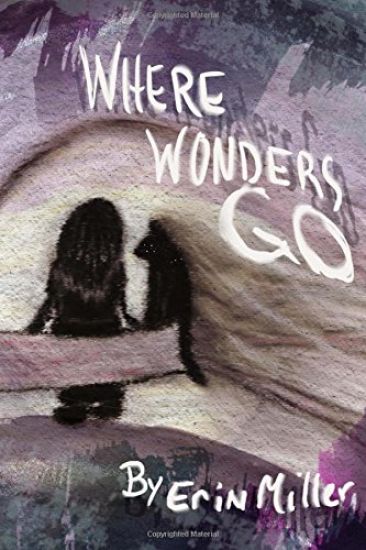
Erin Miller first began writing as a young child. She carried a diary with her wherever she went in order to capture the poetic thoughts that lingered in her head. Her entries were not first-person narrative accounts of her day like most kids would have written. Instead, she would write poetry to express how she or others felt in situations she came in contact with during her day. These are just a few of those writings. What the critics are saying, "Creative, thoughtful, vulnerable, touching, funny, wonderful...all words that describe Erin Miller's new book of poetry, "Where Wonders Go". If you're in the mood for a moving & emotional experience, pick yourself up a copy, grab your favorite hot beverage, curl up under a lamp and lose yourself in its pages." -Mcgillustrator.com
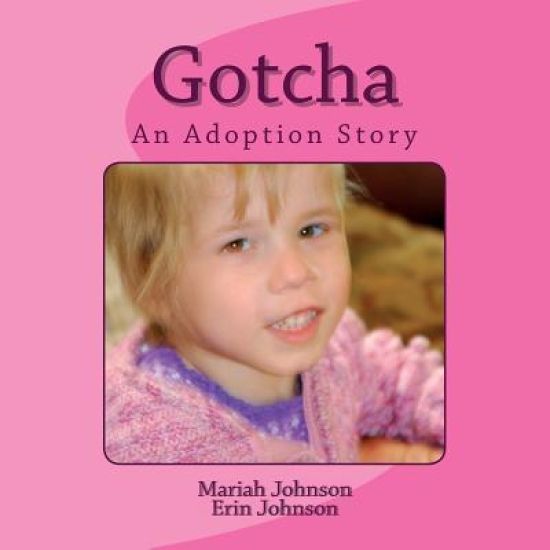
Gotcha: A Ukrainian Adoption Story
Erin N. Johnson; Mariah K. Johnson
Createspace Independent Publishing Platform
2017
nidottu
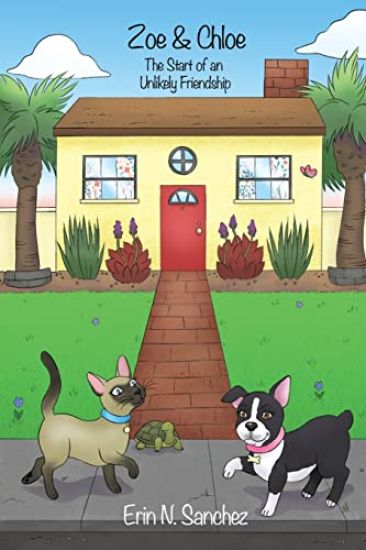
Zoe & Chloe: The Start of an Unlikely Friendship
Erin N. Sanchez
Dorrance Publishing Co.
2022
nidottu
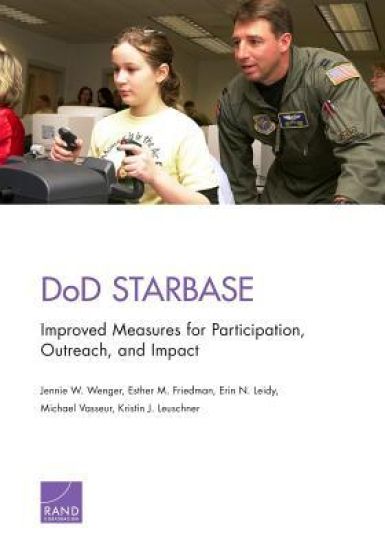
DoD STARBASE
Jennie W Wenger; Esther M Friedman; Erin N Leidy; Michael Vasseur; Kristin J Leuschner
RAND
2018
nidottu
Research-Portfolio Performance Metrics
Marjory S Blumenthal; Jirka Taylor; Erin N Leidy; Brent Anderson; Diana Gehlhaus; John Bordeaux; Michael G Shanley
RAND
2019
nidottu
RAND Corporation researchers reviewed metrics for evaluating research portfolios used by medical research organizations and appraised their characteristics and trade-offs associated with their use. This report presents the results, categorized using a logic-model approach, to help organizations responsible for research portfolios to select, develop, and revise the metrics they use in their evaluations.

One- To Four-Family Properties with Multiple Losses Insured by the National Flood Insurance Program
Noreen Clancy; Lloyd Dixon; Erin N Leidy; Michael T Wilson; Rahim Ali; Bruce Bender; Tucker Reese; Peggy Wilcox
RAND Corporation
2023
pokkari

Reducing the Time Burdens of Army Company Leaders
Lisa Saum-Manning; Tracy C Krueger; Matthew W Lewis; Erin N Leidy; Tetsuhiro Yamada; Rick Eden; Andrew Lewis; Ada L Cotto; Ryan Haberman; Robert Dion; Stacy L Moore; Michael Shurkin; Michael Lerario
RAND
2020
nidottu
Company leaders in the U.S. Army have long been recognized as overworked, partly because of the number of requirements imposed on them by higher headquarters. This report is intended to help the Army identify ways to reduce and manage the time burdens on Active Component company leaders in garrison by addressing the challenges of reducing time burdens at both organizational and individual worker levels.