Kirjahaku
Etsi kirjoja tekijän nimen, kirjan nimen tai ISBN:n perusteella.
1000 tulosta hakusanalla Ernesto Masi
Fra Libri E Ricordi Di Storia Della Rivoluzione Italiana (1887)
Ernesto Masi
KESSINGER PUBLISHING, LLC
2010
pokkari
Matteo Bandello O Vita Italiana In Un Novelliere Del Cinquecento (1900)
Ernesto Masi
KESSINGER PUBLISHING, LLC
2010
pokkari



Ernesto er den italienske poeten Umberto Sabas eneste roman og regnes som hans prosamesterverk. Den er en selvbiografisk roman, skrevet i 1953, mens forfatteren var innlagt på en nerveklinikk. Umberto Saba ønsket ikke å publisere romanen, den var kun ment til å sirkulere blant venner og nær familie. Likevel ble den utgitt i 1975, etter forfatterens død, og vakte oppsikt med sine skildringer av en ung gutts seksuelle oppvåkning og homoseksuelle erfaringer, skildret på en lett og elegant måte, fri for den angst og skyld som så ofte preget samtidens litteratur.
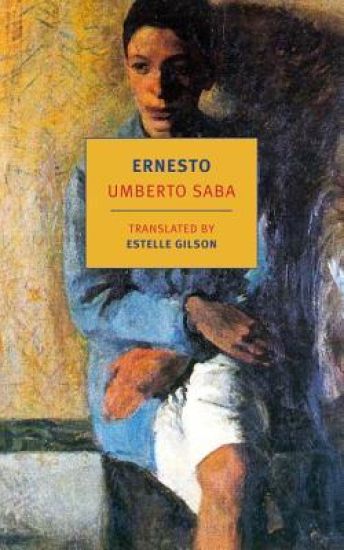
A coming of age story that is a classic of gay literature, now in English for the first time An NYRB Classics Original Ernesto is a classic of gay literature, a tender and complex tale of sexual awakening by one of Italy's most admired poets. Ernesto is a sixteen-year-old boy from an educated family who lives with his mother in Trieste. His mother is eager for him to get ahead and has asked a local businessman to give him some workplace experience in his warehouse. One day a workingman makes advances to Ernesto, who responds with willing curiosity. A month of trysts ensues before the boy begins to tire of the relationship, finally escaping it altogether by engineering his own dismissal. And yet his experience has changed him, and as Umberto Saba's unfinished, autobiographical story breaks off, Ernesto has struck up a new, oddly romantic attachment to a boy his own age.
Ernesto Laclau
Routledge
2014
sidottu
Ernesto Laclau has blazed a unique trail in political theory and philosophy since the early 1970s. In so doing, he has articulated a range of philosophical and theoretical currents into a coherent alternative to mainstream models and practices of conducting social and political science. The editors have focused on work in three key areas:Post-Marxist Political Theory: Discourse, Hegemony, SignificationLaclau has developed an original conception of post-Marxist political theory that is grounded on a materialist theory of discourse. The latter is constructed from a range of theoretical and philosophical sources, including poststructuralism, psychoanalysis, linguistic theory and post-analytical philosophy. The centerpiece of this approach is the category of hegemony, which develops Antonio Gramsci’s seminal contribution to Marxist theory, and is in turn connected to a web of related concepts, including articulation, dislocation, the logics of equivalence and difference, political identification, myth and social imaginary. These ideas have informed a number of empirical and theoretical studies associated with the Essex School of Discourse Theory.Analyzing PopulismA central concern of Laclau’s writings has been the question of populism, both in Latin America where hebegan his interrogation of the phenomenon (especially the experience of Peronism), and then in his engagement with the "new social movements" and socialist strategy more generally. The concept of populism becomes a general way of exploring the "primacy of politics" in society.Critical EngagementsLaclau is first and foremost an engaged intellectual who has consistently sought to theorize contemporary events and reality, and to debate with the leading intellectual figures of the day, with respect to questions of political principle and strategy. His recent debates with Judith Butler and Slavoj Žižek in Contingency, Hegemony, Universality: Contemporary Dialogues on the Left, published in 2011 (London: Verso), exemplify this critical ethos. He continues to elaborate his approach by challenging and articulating related approaches, and by situating his work in connection to the democratic Left.
Ernesto Laclau
Routledge
2014
nidottu
Ernesto Laclau has blazed a unique trail in political theory and philosophy since the early 1970s. In so doing, he has articulated a range of philosophical and theoretical currents into a coherent alternative to mainstream models and practices of conducting social and political science. The editors have focused on work in three key areas:Post-Marxist Political Theory: Discourse, Hegemony, SignificationLaclau has developed an original conception of post-Marxist political theory that is grounded on a materialist theory of discourse. The latter is constructed from a range of theoretical and philosophical sources, including poststructuralism, psychoanalysis, linguistic theory and post-analytical philosophy. The centerpiece of this approach is the category of hegemony, which develops Antonio Gramsci’s seminal contribution to Marxist theory, and is in turn connected to a web of related concepts, including articulation, dislocation, the logics of equivalence and difference, political identification, myth and social imaginary. These ideas have informed a number of empirical and theoretical studies associated with the Essex School of Discourse Theory.Analyzing PopulismA central concern of Laclau’s writings has been the question of populism, both in Latin America where hebegan his interrogation of the phenomenon (especially the experience of Peronism), and then in his engagement with the "new social movements" and socialist strategy more generally. The concept of populism becomes a general way of exploring the "primacy of politics" in society.Critical EngagementsLaclau is first and foremost an engaged intellectual who has consistently sought to theorize contemporary events and reality, and to debate with the leading intellectual figures of the day, with respect to questions of political principle and strategy. His recent debates with Judith Butler and Slavoj Žižek in Contingency, Hegemony, Universality: Contemporary Dialogues on the Left, published in 2011 (London: Verso), exemplify this critical ethos. He continues to elaborate his approach by challenging and articulating related approaches, and by situating his work in connection to the democratic Left.
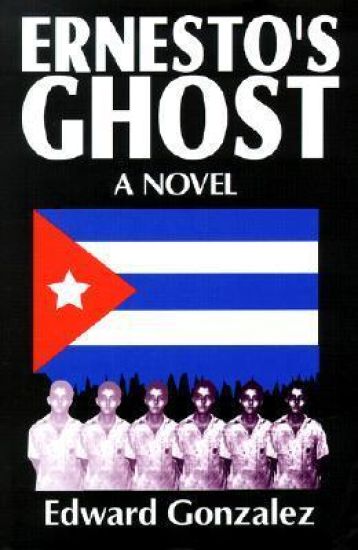
Set against a backdrop of real people and events, Ernesto's Ghost is more than an espionage thriller or historical novel about Cuba. It is about moral choices-the moral choices made by the novel's central character, Professor David Diamond, when he discovers the dark side of the revolution, and the choices made by the other principal characters regarding their revolutionary commitment, their loved ones, and their professionalism. The time is 1974. A possible rapprochement between the United States and Cuba is in the offing following Nixon's resignation. But Henry Kissinger and the State Department are receiving mixed signals from Havana. On the eve of his trip to Cuba, the CIA tries to enlist Diamond in sorting out Fidel Castro's real intentions. The novel follows Diamond in Cuba as he begins to doubt the revolution only to fall in love with the stunning Catalina Cruz. It traces Catalina's own struggle in getting over the death of her beloved Ernesto, the epitome of Cuba's new man, and in ultimately questioning her government's policies. And it is a tale of the two lovers fending off Cuba's all-powerful state and the Comandante himself. On still other levels Ernesto's Ghost follows the dedication and courage of two intelligence officers-the CIA's Rudy Garcya and Joaquyn Acosta of Cuba's State Security-who are guided more by their own moral compasses than by the dictates of their governments. It is also about a revolution gone astray and the conceit of idealism that blinded so many of its followers. Finally, Ernesto's Ghost takes the reader through a labyrinth of political intrigue, with its concluding chapters full of unexpected twists and revelations, with mounting tension and suspense. It will appeal to those who enjoy popular fiction, as well as those interested in learning more about international politics and a major political phenomenon of our times.