Kirjojen hintavertailu. Mukana 11 342 296 kirjaa ja 12 kauppaa.

Kirjahaku

Etsi kirjoja tekijän nimen, kirjan nimen tai ISBN:n perusteella.

1000 tulosta hakusanalla Ernst Wilhelm Kanitz

Ein Mahnwort zu Gunsten der Nachwelt an die historische Literatur der Gegenwart. Nebst einem Auszuge aus dem 'Zeugenverhör' von Prediger Diestel
Unver nderter Nachdruck der Originalausgabe von 1868. Der Verlag Antigonos spezialisiert sich auf die Herausgabe von Nachdrucken historischer B cher. Wir achten darauf, dass diese Werke der ffentlichkeit in einem guten Zustand zug nglich gemacht werden, um ihr kulturelles Erbe zu bewahren.
Ernst Wilhelm Hengstenberg

Ernst Wilhelm Hengstenberg

Matthias A. Deuschle

Mohr Siebeck
2013
sidottu
Ernst Wilhelm Hengstenberg (1802-1869), Professor für Altes Testament an der Berliner Universität und Herausgeber der einflussreichen Evangelischen Kirchenzeitung, war im 19. Jahrhundert einer der profiliertesten und umstrittensten Vertreter des kirchlich-konservativen Lagers. Matthias A. Deuschle untersucht in der vorliegenden Studie auf breiter Quellenbasis die Entwicklung von Hengstenbergs Denken und analysiert die Motive seines Handelns. Er beleuchtet Hengstenbergs Verhältnis zur Erweckungsbewegung, stellt sein Verständnis von Theologie und Kirche dar und geht der Frage nach, welche Rolle die Politik für ihn spielte und welche Stellung er zum politischen Zeitgeschehen einnahm. Die Untersuchung leistet damit einen gewichtigen Beitrag zur Erforschung des seit dem ersten Drittel des 19. Jahrhunderts erstarkenden kirchlichen Konservatismus.
Ernst Wilhelm Baader (1892-1962) und die Arbeitsmedizin im Nationalsozialismus
Arbeit, Leistung und Gesundheit wurden im Nationalsozialismus ideologisch gefasst. E.W. Baader (1892-1962) setzte sich fur eine fachliche Expansion und politische Aufwertung der Arbeitsmedizin ein. Er profitierte davon, dass renommierte Fachkollegen judischer Herkunft vertrieben wurden. Indem er seine klinisch-kasuistische Sichtweise gesundheitspolitisch und universitar zu verankern suchte, schloss er sich auf verschiedenen Handlungsfeldern der NS-Ideologie an, war in den Kriegsjahren als Sanitatsoffizier auch fur die gesundheitlichen Verhaltnisse in dem belgischen KZ Breendonk zustandig und liess Menschenversuche an Zwangsarbeitern in Berlin durchfuhren. Die Studie wertet umfangreiches Archivmaterial aus und gelangt zu einer differenzierten Sicht auf Baader, der in den fruhen Jahren der Bundesrepublik die pragende Kraft und das internationale Gesicht der deutschen Arbeitsmedizin werden sollte.
Ernst Wilhelm Nay (German Edition)

Ernst Wilhelm Nay (German Edition)

Magdalene Claesges

Hatje Cantz
2012
sidottu
The three-volume catalogue raisonné of the works on paper by E. W. Nay (1902–1968) will provide art historians, art dealers, and every art lover with a long-awaited chance to survey Nay’s oeuvre and gain an understanding of his art.With more than six thousand watercolors, gouaches, and drawings, Nay’s works on paper far outnumber his oil paintings. He was an indefatigable artist who persistently put down on paper his ideas about form and color. The sheaves embody a “journal” of his work and allow the reader to draw conclusions about his work methods. While they document the processes behind his artistic activities and research, these works are at the same time autonomous creations. They impressively elucidate the artist’s ambition and development.
Ernst Wilhelm Nay

Ernst Wilhelm Nay

Siegfried Gohr

DCV
2026
sidottu
Ernst Wilhelm Nay (b. Berlin, 1902; d. Cologne, 1968) was one of the most interesting painters of European modernism. Spanning the decades from the 1930s to his death in Cologne in 1968, his output encompasses paintings as well as an abundance of works on paper. The new monograph surveys all periods in Nay's oeuvre, from the " Fishermen paintings" to the striking late pictures, which leave no doubt about the artist's outstanding gift for color. Nay's evolution is embedded in the history and ideas of his time, on which he reflected in lectures, writings, and notes. The volume unlocks a wide spectrum of fresh insights into Nay's life and art.
Gedichtinterpretation mit Fokus auf Stilmittel & Expressionismus. Exemplarisch an "Die Nächte explodieren in den Städten" von Ernst Wilhelm Lotz
Facharbeit (Schule) aus dem Jahr 2013 im Fachbereich Deutsch - Literatur, Werke, Sprache: Deutsch, Abstract: Bei der Gedichtinterpretation haben mich seit dem Deutschunterricht immer die ungeheure F lle an Stilmitteln interessiert, die man speziell zur Analyse von literarischen Texten zuziehen kann, leider werden diese, auch nach eigener Erfahrung, in vielen Unterrichten immer wieder vernachl ssigt. Da Gedichte hermetische, also innerlich verschl sselte Texte sind, ist es besonders wichtig das jedes einzelne Wort, in diesen recht kurzen Texten, interpretiert werden muss, ohne nat rlich das Thema, also den Inhalt zu vernachl ssigen. Ich m chte also hier den Sch lern, speziell denen der gymnasialen Oberstufe, aber nat rlich auch denen anderer Jahrgangstufen, eine umfangreiche Liste an Stilmitteln pr sentieren, viele die ich im Deutschunterricht kennen lernen musste, aber auch einige die ich mir selbst zu Klausurvorbereitungen erarbeitet habe und die wohl recht umfassend f r Gedichtinterpretationen an Gymnasien ausreichen werden. Zu den aufgelisteten Stilmitteln werde ich Erkl rungen, vereinzelt auch Beispiele liefern. Den zweiten Teil der Arbeit stellt die praktische Anwendung in der Gedichtinterpretation/analyse, am Beispiel des expressionistischen Gedichts "Die N chte explodieren in den St dten" von Ernst Wilhelm Lotz, das ich in einer Deutschklausur bearbeitet habe, und dabei eine gute Note erzielte. Nach entsprechenden Verbesserungsvorschl ge meiner Deutschlehrerin habe ich diese Interpretation bearbeitet. Zus tzlich m chte ich noch einen Einblick in die Hintergr nde der Kulturepoche Expressionismus liefern, falls man die Epochen/Zeitumst nden in eine Interpretation mit einflie en lassen will, Informationen zur Biographie des Autors werde ich aber bewusst auslassen. Mit diesem Werk m chte ich das oft abgelehnte Thema Gedichte den Lesern n her bringen, wobei dieser Aufsatz von einem Sch ler f r Sch ler geschrieben wurde.
Graha Sutras

Graha Sutras

Ernst Wilhelm

Createspace Independent Publishing Platform
2016
nidottu
Graha Sutras is the first Volume of a series of Jyoitsh texts dealing with the predictive methods and principles found in Brihat Parashara Hora Shastra. 384 pages of Grahas, Planets and more Grahas make Graha Sutras the most thorough text available on the Planets.Contains Sanskrit Astrological Sutras with original and precise translations that will bring the planets to life in a profound manner. Original artwork portrays the images of the planets in accordance with the precise descriptions found in Brihat Parashara Hora Shastra. There is even a chapter devoted to Graha Shanti - pacifying the planets. This Vedic Astrology text is largely a commentary of Brihat Parashara Hora Shastras Sutras on the Grahas. The translation will often be found to be slightly different than what is in the available translations as I have striven to give a more precise and literal and, as mentioned, more accurate translation than most. Where my translations differ on significant points I have explained my reasoning as to the correctness of my translation. In addition to the Sutras provided by Brihat Parashara Hora Shastra, I have found it worthwhile to add a few Sutras from other important texts such as Jataka Parijata and Yavana Jataka. Lastly I have included two chapters entirely my own: one on Grahas and numbers and the other on the myths surrounding the Grahas. My intention is thus to present an entirely complete manual for the study of the Grahas, after which you will only be in need of deepening your contemplations on this vast subject.
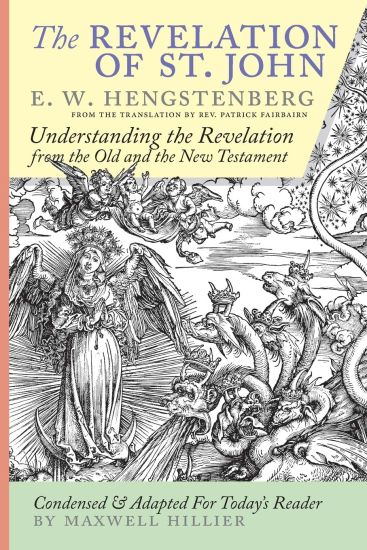
The Revelation of St. John

The Revelation of St. John

Ernst Wilhelm Hengstenberg

Maxwell Hillier
2017
pokkari
Here is a book that will find interest among all students of the Revelation. Here you will find explanations you will not find anywhere else. The Revelation is full of Old Testament references, it requires an Old Testament scholar to understand them. Eminent Old Testament Lutheran scholar E. W. Hengstenberg approaches the book with a comparative approach and with a certainty borne of intimate understanding of the Old Testament, clearly explaining the mysteries of the Apocalypse. This book has been lost to the public discourse for 170 years, but here it is now available in this condensation and adaptation. Riddles that still evade the grasp of modern scholars are unravelled in this book. Difficulties that continue to baffle scholars have been solved here. In explaining the mysteries, new levels of meaning are opened up to the reader, which serve to further glorify the wisdom and wonder of the scriptures. The name and number of the beast is explained by the genealogies of Ezra, which in turn explains the nature of the blasphemy of the beast. Heathenism is the enemy with which the book concerns itself, and us today. Its view on the millennium is rooted in scripture and in fulfilled history, and forms a unique understanding of the thousand years. The fall of Rome, the power that oppressed the church in John's day, is explained. That the beast cannot be Nero or the Papacy is clearly explained. The seven heads of the beast find their fulfilment in ancient history. The ten horns have been conquered by Christ, with a subsequent millennia in Christian Europe, which now remains behind us. Gog and Magog is now on the world stage, its character already informed by John's account of the three enemies of God's kingdom, the dragon, the beast from the sea- the worldly heathen power, and the beast from the earth, which is explained as earthly, physical, demoniacal wisdom. The cherubim are seen as the ideal representation of all that is living, the angels often form an intimation of Christ. The book is seen, not as a progressive chronology but a number of independent groups, each supplementing the others. Some are general in nature, explaining the nature of God's judgments, others are more detailed and specific. This is a full orbed understanding of the Revelation that serves as an alternative to preterism, futurism, and a-millennialism today. Although written 170 years ago, the conclusions the author came to have been confirmed by the passing of modern history, proving them just as relevant to us as it was for him. The naive literalism that blights popular Revelation teaching today, finds a cure here with an understanding of scripture that understands the role of metaphor and poetry, and symbolism in the Bible. The original lengthy commentary of 1100 pages has been condensed, rearranged and typeset to make it more accessible to a modern audience.
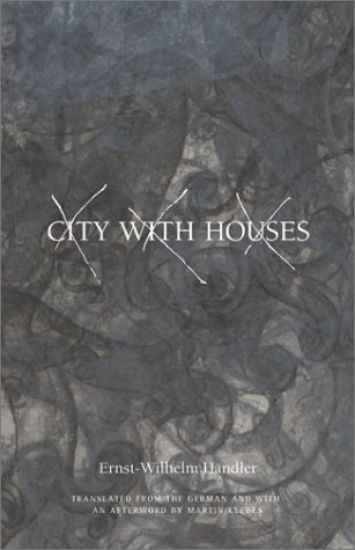
City with Houses

City with Houses

Ernst-Wilhelm Handler

Northwestern University Press
2002
sidottu
A city with deteriorating houses. A pristine house seemingly without inhabitants. Inhabitants of a world no longer human. In a remarkable collection of stories, Ernst-Wilhelm Handler conducts us into a world where nothing is quite as we know it, or quite what we might expect. In these stories, Handler creates a series of possible worlds, some resembling those we experience on an regular basis, some existing in startling opposition to everyday life. Among them: Eastern Germany after the fall of the Berlin Wall; Austria during World War II; a dystopia of a dyslexic matriarchal society; and a world where states of affairs come into being through writing. Narrated by businessmen, a philosopher, a prostitute who has undergone a sex change, an old woman suffering from Alzheimer's disease, and disembodied units of consciousness, these stories unfold through experiments of thought, language, and voice that illustrate, reflect on, and reconfigure the philosophical problems that shape and unsettle our lives. First published in German in 1995, City with Houses announced the arrival of a major talent and has since been followed by two related volumes. At home in many spheres - business dealings, academic abstractions, nitty-gritty romance, practical hells - Handler writes as a literary ""outsider,"" a businessman intimately familiar with contemporary philosophical and scientific movements. This unique perspective, whether applied to the activities of a broker, the paradoxes of a diarist, the sexual education of a history student, or post-apocalyptic children, shakes us from the slumber of our own houses - and wakes us to the realities, the possibilities, and the wonders of our day.
City with Houses

City with Houses

Ernst-Wilhelm Handler

Northwestern University Press
2002
nidottu
A city with deteriorating houses. A pristine house seemingly without inhabitants. Inhabitants of a world no longer human. In a remarkable collection of stories, Ernst-Wilhelm Handler conducts us into a world where nothing is quite as we know it, or quite what we might expect. In these stories, Handler creates a series of possible worlds, some resembling those we experience on an regular basis, some existing in startling opposition to everyday life. Among them: Eastern Germany after the fall of the Berlin Wall; Austria during World War II; a dystopia of a dyslexic matriarchal society; and a world where states of affairs come into being through writing. Narrated by businessmen, a philosopher, a prostitute who has undergone a sex change, an old woman suffering from Alzheimer's disease, and disembodied units of consciousness, these stories unfold through experiments of thought, language, and voice that illustrate, reflect on, and reconfigure the philosophical problems that shape and unsettle our lives. First published in German in 1995, City with Houses announced the arrival of a major talent and has since been followed by two related volumes. At home in many spheres - business dealings, academic abstractions, nitty-gritty romance, practical hells - Handler writes as a literary ""outsider,"" a businessman intimately familiar with contemporary philosophical and scientific movements. This unique perspective, whether applied to the activities of a broker, the paradoxes of a diarist, the sexual education of a history student, or post-apocalyptic children, shakes us from the slumber of our own houses - and wakes us to the realities, the possibilities, and the wonders of our day.