
Kirjahaku
Etsi kirjoja tekijän nimen, kirjan nimen tai ISBN:n perusteella.
1000 tulosta hakusanalla Ethel Houston Brunner

Pioneer, activist, environmentalist, poet. Ethel Haythornthwaite is virtually unknown, even in her home town of Sheffield – the UK’s outdoor city – yet her tireless campaigning led to the National Parks and Access to the Countryside Act 1949 and the creation of the Peak District National Park, protecting a wild and varied landscape so many have fallen in love with. Founder of a local society to protect rural scenery in 1924, she went on to join the Council for the Preservation of Rural England (CPRE) and become its wartime director. Saviour of the beautiful Longshaw estate, her achievements also include establishing the first green belt in the UK. In Ethel, award-winning author Helen Mort explores the life of this countryside revolutionary who has been overlooked by history. Born into wealth yet frugal, ever restless but infinitely patient, widowed at twenty-two, independent and thoroughly ahead of her time, Ethel Haythornthwaite helped save the British countryside at a time when simply to be a woman was challenge enough. Having been given unrestricted access to Ethel’s archive, including hundreds of meticulously written letters, in Ethel, Helen Mort has written letters to Ethel’s memory and a paean to her legacy. The beauty and accessibility of the British countryside is the result of passionate campaigning during the inter- and post-war years by groundbreaking figures such as Ethel Haythornthwaite.

Ethel
Harpercollins
2026
sidottu

"Kellow's chronology is dishy and seamless; he understands the dynamics of the theater world and makes you feel the exhilaration of an evolving hit and the frustrations inherent in working with a performer like Merman."--The New York Times Book Review " Kellow] has painted a vivid portrait of a Broadway diva who shone brighter and sang louder than anyone else."--The Washington Post BookWorld More than twenty years after her death, Ethel Merman continues to set the standard for American musical theater. The stories about the supremely talented, famously strong-willed, fearsomely blunt, and terrifyingly exacting woman are stuff of legend. But who was Ethel Agnes Zimmermann, really? Brian Kellow's definitive biography of the great Merman is superb, and the first account to examine both the artist and the woman with as much critical rigor as empathy. Through dozens of interviews with her colleagues, friends, and family members, Kellow (author of Can I Go Now?: The Life of Sue Mengers, Hollywood's First Superagent) traces the arc of her life and her thirty-year singing career to reveal many surprising facts about Broadway's biggest star.

When Ethel's grandmother dies, Ethel goes to live with her father, brother, and the stepmother and little siblings she has never met. She also must live with, and endure, the spitefulness of Aunt Sophie, who rules the house under a cloud of bad-temper and bitterness.Ethel's Text is a Victorian story edited gently for a modern audience. It is a simple, heart-warming tale of overcoming grief and adversity through the guiding lights of past love, new friends and family and the words of the Scriptures.Also available in large print.

This new book contains the most comprehensive bibliography of Ethel Merman's work and materials written on this great American entertainer. She dominated the American musical stage as no other performer has, yet she appeared in only fifteen Broadway productions between 1930 and 1970. The book details the 55-year career encompassing cabaret, vaudeville, recordings, radio, televisions, films and the concert stage.This reference book presents the facts and some observations about Merman's life and career in an easily accessible format. The first section consists of a narrative biographical essay. A chronology of the major episodes of the Merman story precedes sections devoted to her work in films, the stage, radio and television, and recordings. The largest components of the book, however, is the annotated bibliography which represents the most extensive list of materials on Merman yet published. An index completes the volume.

Dame Ethel Smyth (1858-1944) was an exceptional woman in an age rich in strong personalities. Best known for her opera The Wreckers, her music, long neglected, is gradually winning new friends. A feminist, intrepid traveller and sportswoman, she wrote nine volumes of autobiography, vividly recounting a life packed with incident.Aged nineteen, in the face of fierce opposition from her father, she went to Germany to study and 'plunged joyfully into the dear old sea of German music which surged about the feet of Brahms', befriending Schumann's widow, Clara, and the composer Heinrich von Herzogenberg and his wife, Lisl, the first of many women to whom Ethel was passionately attached.Her writings, abridged by Ronald Crichton, and including a catalogue of her music, are full of brilliant portraits - Brahms, Mahler, Beecham, Emmeline Pankhurst and Queen Victoria - all described in uncompromising detail. Numerous anecdotes range from hurling a brick through a cabinet minister's window, resulting in two months in Holloway prison - where she was observed, leaning through the bars, conducting her March of the Women with a toothbrush - to an Egyptian visit where she sought out a hermaphrodite in order to make an anatomical examination.


Ethel Carrick
National Library of Australia
2024
sidottu
A striking retrospective catalog This publication explores and celebrates a remarkable artist who contributed significantly to Australian and international art for over fifty years. Carrick's work radiates with luminous light, color, and energy, predominantly focusing on crowds in all their diversity and interconnection. Ethel Carrick is published in conjunction with an exhibition of the same name, the first retrospective of her work in over forty years--the most comprehensive to date--and will shine new light on her life and works.A truly transnational artist, Carrick (1872-1952) was born in Britain and lived and worked primarily in France and Australia. She was one of the first postimpressionist artists to exhibit in Australia, and yet her significant artistic contributions and amazing life story are not known to a wide audience.Deborah Hart passionately guides the reader through an absorbing, thorough, and richly visual exploration of Carrick's life and art. Seven focus essays by expert contributors cover such diverse topics as Carrick's affectionate and iconic portrayals of Manly Beach and the modern surfer girl, her North African travels, and her remarkable artistic records and philanthropy during World War II. New research illuminates an artist who has been too long overshadowed.Bursting with the vibrant color that so characterizes her work, this gorgeous, oversize, and generously illustrated volume is designed with Carrickesque modernity. Large reproductions and details of paintings allow the reader to appreciate these stunning works to full effect.

The Ethel the Echidna series are childrens' books with simple stories that gently show both personal and social boundaries encouraging the healthy development of children. These stories introduce the practice of mindfulness, emphasizing the importance of awareness about choice when it comes to our behaviour.

The Ethel the Echidna series are childrens' books with simple stories that gently show both personal and social boundaries encouraging the healthy development of children. These stories introduce the practice of mindfulness, emphasizing the importance of awareness about choice when it comes to our behaviour. This story was designed to address the concepts of managing complicated emotions and meeting individual needs. Recognising individual needs and explaining appropriate boundaries are fundamental to a child's wellbeing and self-esteem.Ethel feels physical discomfort and uses this as a cue to pause and unpack her feelings.By reflecting on her initial response, Ethel considers how her emotions might affect herself and Claudia. Ethel recognises her individual need for alone time and clearly expresses herself. The honest exchange between the two echidnas sets up the opportunity for an authentic relationship.

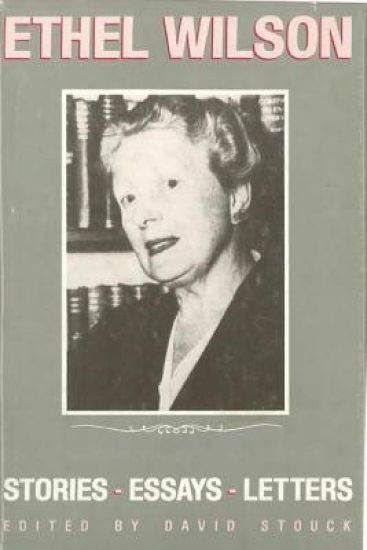
When Ethel Wilson published her first novel, Hetty Dorval,in 1947, she was nearly sixty years old. With her following books, sheestablished herself as British Columbia's most distinguishedfiction writer and one of Canada's best loved and most studiedauthors. Although she enjoyed and even encouraged her reputation as anunambitious latecomer who wrote for her own pleasure, she was, as DavidStouck reveals in this book, a person who took her writing veryseriously. Drawing on the Wilson papers held at the University of BritishColumbia, Stouck provides an important survey of Wilson's talentswhile at the same time offering the fullest biography of the author todate. Especially interesting is Wilson's previously unpublishedcorrespondence with her editor John Gray and with fellow writers suchas Mazo de la Roche, Earle Birney, Dorothy Livesay, and MargaretLaurence. Nine short stories are included in this volume, eight of which arepreviously unpublished and one which is reprinted for the first time ina collection of Wilson's work.

When Ethel Wilson published her first novel, Hetty Dorval, she was in her sixtieth year. With her subsequent books, among them the widely read Swamp Angel (1954), she established herself as one of Canada's most important writers. Although she fostered a reputation for being an unambitious latecomer, a happily married doctor's wife who wrote for her own pleasure, she in fact took her writing very seriously, trying for several years to place her work with major American publishers. David Stouck's engaging biography of this elusive Canadian writer draws on archival material and interviews to describe, in detail, her early life as an orphan in England and Vancouver and her long writer's apprenticeship, spanning from the publication of some children's stories in 1919 to the appearance of Hetty Dorval in 1947. Stouck's narrative charts the resistance among publishers, critics, and readers to the curious mixture in her work of an Edwardian sensibility and a postmodern intelligence. He also documents her own resistance to both literary nationalism and creative writing classes as strategies for promoting literature. She was nevertheless one of the few Canadian women writers to emerge from the 1950s, and she is still being read - all her books remaining in print. Stouck observes that Wilson's writing is marked by epistemological and ethical uncertainties that are rooted in the contingencies of language, because, as Wilson herself liked to quote from Lewis Carroll, the 'meaning [of words] depends on who is the master.' Ethel Wilson: A Critical Biography is the story of a distinguished writer whose works are rightly considered classics of Canadian literature.

Ethel Waters overcame her disadvantaged childhood to become the most famous African American actress, singer, and entertainer of her time. Her critically acclaimed move to Broadway in the mid 1920s—after having first triumphed in Black vaudeville during the Harlem Renaissance—brought the startlingly innovative and subtle character of Black Theatre into the mainstream. Ethel transformed such songs as "Dinah," "Am I Blue?," "Stormy Weather," and Irving Berlin's "Heat Wave" into classics and inspired the next generation of Black female vocalists. She gave sophistication and class to the blues and American popular song, and she influenced countless singers including Judy Garland and Frank Sinatra. Tough, uncompromising, courageous, and ambitious, Ethel Waters became one of the first African American women to be given equal billing with white stars on the Broadway stage. In 1943, the film version of her Broadway success, Cabin in the Sky, established her as Hollywood's first Black-leading lady. In such plays as Mamba's Daughters and films including The Member of the Wedding, she shattered the myth that Black women could perform only as singers. For her work in Pinky, she received an Academy Award nomination for Best Supporting Actress, the second African American to be so honored. Although she was arguably the most influential female blues and jazz singer of the 1920s and 1930s, as well as a major Black figure in 20th century theatre, cinema, radio, and television, she is now the least remembered. In Ethel Waters: Stormy Weather, Stephen Bourne documents the career of this monumental figure in American popular culture, offering new insights into the work of this forgotten legend. Supplemented by fourteen photographs, this biography leaves little doubt as to why—for decades—no other Black star was held in such high regard.
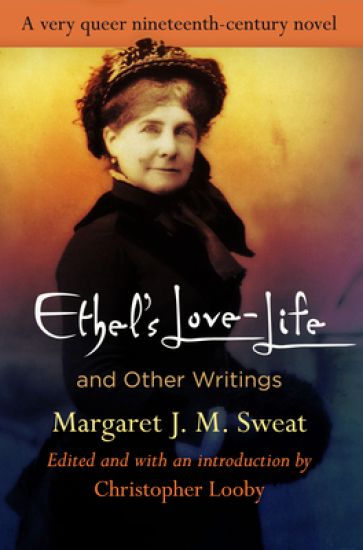
"Ethel's Love-Life" and Other Writings
Margaret J. M. Sweat
University of Pennsylvania Press
2020
pokkari
In a series of lengthy letters, the unsettled and unruly Ethel Sutherland writes to an initially unnamed and ungendered correspondent, and patiently discloses the troubled history of her past romantic attachments to both men and women. Not until the third letter does she reveal that her correspondent is Ernest, the man to whom she is engaged to be married. Wanting to make him understand how all of her past loves are included and sublimated in her love for him, she especially wants to explain how "women often love each other with as much fervor and excitement as they do men"; and although this love is curiously "freed from all the grosser elements of passion, as it exists between sexes," nevertheless it "retains its energy, its abandonment, its flush, its eagerness, its palpitation, and its rapture." Margaret Jane Mussey Sweat (1823-1908), a native of Portland, Maine, and wife of a United States congressman, published Ethel's Love-Life in 1859. The book is sometimes credited as an early-even the first-"lesbian" American novel, but such a label, Christopher Looby observes in his Introduction, somewhat misrepresents what is distinctive and surprising about the book. Ethel's Love-Life confounds our received binary distinctions between the spiritual and the carnal and, indeed, between the sexual and the nonsexual-the boundaries between such categories being not nearly as well-policed at the time as they later became. It is here reprinted, along with Sweat's Verses (1890) and five of her published essays, on Charlotte BrontË, George Sand, the contemporary novel, and the friendships of women.
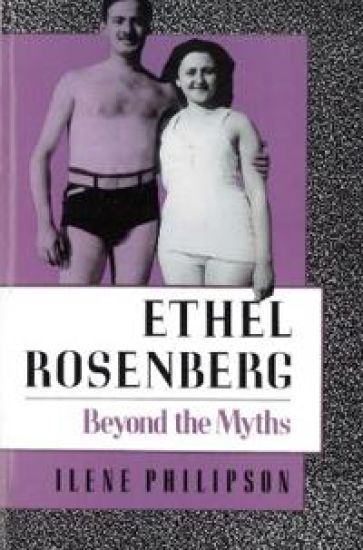
Ilene Philipson's biography of Ethel Rosenberg, only the second woman in U.S. history to be executed for treason, is now available in paperback for the first time. "Contributes to women's history and biography and to radical history, particularly to our understanding of family, gender relations, and feminine identity of women radicals. . . . Ilene Philipson has produced a fascinating book"--Nancy Chodorow "Tells the story of Ethel . . . from a woman's point of view. . . . Philipson, whose literary style has the clean exactitude of a tracer bullet, has produced a heart-rending masterpiece. If you read only one book a year, make it this one."--Florence King, Newsday "[Ethel Rosenberg's] stoicism on the witness stand, her unflinching response to the guilty verdict and death sentence, and her seeming indifference to the ordeal of her two children shocked the nation. . . . Concerned with rehabilitating not only Ethel Rosenberg's name, but also her image, the author creates a moving portrait of a human and ordinary woman."--John Patrick Diggins, New York Times Book Review