Kirjojen hintavertailu. Mukana 11 244 527 kirjaa ja 12 kauppaa.

Kirjahaku

Etsi kirjoja tekijän nimen, kirjan nimen tai ISBN:n perusteella.

87 tulosta hakusanalla Ethyene Andrade Costa

Der Familienkreis in der Psychoanalyse mit Kindern

Der Familienkreis in der Psychoanalyse mit Kindern

Ethyene Andrade Costa

Verlag Unser Wissen
2024
pokkari
In der psychoanalytischen Arbeit mit Kindern ist man einerseits mit der Bedeutung der famili ren Beziehungen f r die Subjektivierung und andererseits mit der unbestreitbaren Besonderheit des Subjekts konfrontiert, das in seiner eigenen Konstitution aktiv ist. Diese Multifaktorialit t hat die Autorin dieses Buches veranlasst, ihre eigene klinische Praxis mit Kindern zu hinterfragen. Was ist mit der Familie zu tun, wenn der Patient das Kind ist? Wie kann die Familie in das analytische Setting einbezogen werden, ohne die Autonomie und Stimme des Kindes zu gef hrden? Ist es m glich, diejenigen aus der Analyse auszuschlie en, die bei den f r die Bildung des Subjekts notwendigen Begegnungen anwesend sind? In diesem Buch wird aufgezeigt, wie die Psychologin versucht hat, die Steine, die ihr in den Weg gelegt wurden, zu nutzen, um die M glichkeiten der Betreuung (neu) zu denken. Angesichts dieses Scheidewegs stellte sie in Frage, wie die psychoanalytische Theorie die Familie im Laufe ihrer Geschichte verstanden hat. Um die Diskussion zu aktualisieren, enth lt das Buch Interviews mit Psychoanalytikern, die mit Kindern arbeiten. Der Leser ist eingeladen, sich an dieser unaufh rlichen Befragung zu beteiligen, denn durch die Beziehungen zum Anderen, durch den intersubjektiven Austausch, bilden die Kinder ihre subjektive Position und die Psychoanalytiker ihre eigene Position in ihrer Arbeit.
The family circle in psychoanalysis with children

The family circle in psychoanalysis with children

Ethyene Andrade Costa

Our Knowledge Publishing
2024
pokkari
When it comes to psychoanalytic treatment of children, one is faced, on the one hand, with the importance of family relationships in subjectivation and, on the other, with the undeniable particularity of the subject, active in its own constitution. This multifactoriality has led the author of this book to question her own clinical practice with children. What to do with the family when the patient is the child? How can the family be included in the analytical setting without jeopardising the child's autonomy and voice? Is it possible to leave out of the analysis those who are present in the encounters necessary for the formation of the subject? This book sets out to show how the psychologist tried to use the stones that came up along the way to (re)think the possibilities of care. Faced with this crossroads, she questioned how psychoanalytic theory has understood the family throughout its history. In order to update the discussion, the book includes interviews with psychoanalysts who work with children. The reader is invited to take part in this incessant questioning. After all, it is through relationships with otherness, through intersubjective exchanges, that children form their subjective position, and analysts position themselves in their work.
Le cercle familial dans la psychanalyse avec les enfants

Le cercle familial dans la psychanalyse avec les enfants

Ethyene Andrade Costa

Editions Notre Savoir
2024
pokkari
Dans le traitement psychanalytique des enfants, on est confront , d'une part, l'importance des relations familiales dans la subjectivation et, d'autre part, l'ind niable particularit du sujet, actif dans sa propre constitution. Cette multifactorialit a conduit l'auteur de ce livre s'interroger sur sa propre pratique clinique avec les enfants. Que faire de la famille quand le patient est l'enfant ? Comment inclure la famille dans le cadre analytique sans mettre en p ril l'autonomie et la parole de l'enfant ? Est-il possible d'exclure de l'analyse ceux qui sont pr sents dans les rencontres n cessaires la formation du sujet ? Ce livre se propose de montrer comment la psychologue a tent de (re)penser les possibilit s de prise en charge partir des pierres qui se sont dress es sur son chemin. Face ce carrefour, elle s'est interrog e sur la mani re dont la th orie psychanalytique a appr hend la famille tout au long de son histoire. Afin d'actualiser la r flexion, l'ouvrage propose des entretiens avec des psychanalystes travaillant avec des enfants. Le lecteur est invit participer ce questionnement incessant, car c'est dans la relation l'alt rit , dans les changes intersubjectifs, que l'enfant construit sa position subjective et que l'analyste se positionne dans son travail.
Il cerchio familiare nella psicoanalisi con i bambini

Il cerchio familiare nella psicoanalisi con i bambini

Ethyene Andrade Costa

Edizioni Sapienza
2024
pokkari
Quando si parla di trattamento psicoanalitico dei bambini, ci si trova di fronte, da un lato, all'importanza delle relazioni familiari nella soggettivazione e, dall'altro, all'innegabile particolarit del soggetto, attivo nella propria costituzione. Questa multifattorialit ha portato l'autrice di questo libro a interrogarsi sulla propria pratica clinica con i bambini. Cosa fare con la famiglia quando il paziente il bambino? Come includere la famiglia nel setting analitico senza compromettere l'autonomia e la voce del bambino? possibile lasciare fuori dall'analisi coloro che sono presenti negli incontri necessari alla formazione del soggetto? Questo libro si propone di mostrare come la psicologa abbia cercato di utilizzare le pietre che si sono presentate lungo il percorso per (ri)pensare le possibilit di cura. Di fronte a questo bivio, si interrogata sul modo in cui la teoria psicoanalitica ha inteso la famiglia nel corso della sua storia. Per aggiornare la discussione, il libro include interviste a psicoanalisti che lavorano con i bambini. Il lettore invitato a partecipare a questo incessante interrogarsi: in fondo, attraverso le relazioni con l'alterit , attraverso gli scambi intersoggettivi, che i bambini formano la loro posizione soggettiva e gli analisti si posizionano nel loro lavoro.
Ethylene

Ethylene

Muhammad Arshad; William T. Frankenberger Jr.

Kluwer Academic/Plenum Publishers
2002
sidottu
With an ever-increasing demand for more food supply, agricultural scientists will have to search for new ways and technologies to promote food production. In recent decades, plant growth regulators (PGRs) have made great strides in promoting plant growth and development. PGRs are organic compounds which have the ability to dramatically affect physiological plant processes when present in extremely low concentrations (in the range of micro-to picograms). Although all higher plants have the ability to synthesize PGRs endogenously, they do respond to the exogenous sources most likely due to not having the capacity to synthesize sufficient endogenous phytohormones for optimal growth and development under given climatic and environmental conditions. In recent years, PGRs have established their position as a new generation of agrochemicals after pesticides, insecticides and herbicides. Interest in the commercial use of PGRs for improving plant growth and crop yields is also increasing because of their non-polluting nature. The use of PGRs in the post-harvest technology is well established and many new breakthroughs have recently been revealed.
Ethylene Sensing and Signaling

Ethylene Sensing and Signaling

SPRINGER-VERLAG NEW YORK INC.
2025
sidottu
This detailed volume presents protocols centered on the sensing and signaling of ethylene, a plant hormone with a vital role in fruit ripening, seed germination, stress adaptation, and a wide array of developmental processes. Beginning with a section on ethylene detection and quantification techniques, including gas chromatography and analysis during hypoxia and pathogen interactions, the book continues by examining the role of ethylene in post-harvest biology and fruit ripening, and associated regulatory mechanisms, including promoter characterization and protein-protein interactions. Further sections explore bioinformatics workflows for unraveling mechanistic roles of ethylene at the cellular and whole-plant levels, as well as the regulatory capacity of ethylene in plant developmental processes, root system modifications, and adaptation to diverse biotic and abiotic stressors. Written for the highly successful Methods in Molecular Biology series, chapters offer readers a hands-on approach to investigate the myriad roles that ethylene plays in plant growth and development. Authoritative and practical, Ethylene Sensing and Signaling serves as a key resource for scientists seeking to employ reliable methodologies in understanding the central function of ethylene in plant biology.
Ethylene in Plant Biology

Ethylene in Plant Biology

JOHN WILEY SONS INC
2022
sidottu
ETHYLENE IN PLANT BIOLOGY Comprehensive resource detailing the role of ethylene in plant development regulation, gene regulation, root development, stress tolerance, and more Ethylene in Plant Biology presents ethylene research from leading laboratories around the globe to allow readers to gain strong foundational coverage of the topic and aid in further ethylene research as it pertains to plant biology. The work covers general ideas as well as more specific and technical knowledge, detailing the overall role of ethylene in plant biology as a gaseous plant hormone that has emerged as an important signaling molecule which regulates several steps of a plant’s life cycle. The ideas covered in the work range from discovery of ethylene, to its wide roles in plant growth and development, all the way to niche topics such as stress acclimation. Written by highly qualified authors in fields directly related to plant biology and research, the work is divided into 20 chapters, with each chapter covering a specific facet of ethylene or the interaction between ethylene and plant health. Topics discussed in the text include: Our current understanding of ethylene and fruit ripening, plus the role of ethylene in flower and fruit developmentEthylene implications in root development and crosstalk of ethylene with other phytohormones in plant developmentEthylene as a multitasking regulator of abscission processes and powerful coordinator of drought responsesMechanisms for ethylene synthesis and homeostasis in plants, along with ethylene and phytohormone crosstalk in plant defenseEthylene and metabolic reprogramming under abiotic stresses, as well as ethylene’s applications in crop improvement For biologists, scientists, researchers, and policy makers in the agriculture and pharmaceutical industries, Ethylene in Plant Biology is a key resource to understand the state of the art in the field and establish a foundation of knowledge that can power future research efforts and practical applications.
Ethylene

Ethylene

Muhammad Arshad; William T. Frankenberger Jr.

Springer-Verlag New York Inc.
2012
nidottu
With an ever-increasing demand for more food supply, agricultural scientists will have to search for new ways and technologies to promote food production. In recent decades, plant growth regulators (PGRs) have made great strides in promoting plant growth and development. PGRs are organic compounds which have the ability to dramatically affect physiological plant processes when present in extremely low concentrations (in the range of micro-to picograms). Although all higher plants have the ability to synthesize PGRs endogenously, they do respond to the exogenous sources most likely due to not having the capacity to synthesize sufficient endogenous phytohormones for optimal growth and development under given climatic and environmental conditions. In recent years, PGRs have established their position as a new generation of agrochemicals after pesticides, insecticides and herbicides. Interest in the commercial use of PGRs for improving plant growth and crop yields is also increasing because of their non-polluting nature. The use of PGRs in the post-harvest technology is well established and many new breakthroughs have recently been revealed.
Ethylene Signaling

Ethylene Signaling

Humana Press Inc.
2017
sidottu
This volume provides a collection of protocols aimed toward the study of ethylene signaling in plants. Ethylene Signaling: Methods and Protocols is divided into three sections: ethylene biosynthesis, the signal transduction pathway, and the diverse ethylene responses of dicots and monocots. The chapters in section one discuss techniques for the measurement of activities related to the biosynthetic enzymes ACC synthase and ACC oxidase, the levels of ethylene synthesized by plants, and the treatment of plants with exogenous ethylene. Section two focuses on the analysis of the new membrane-associated proteins involved in the initial perception and transduction of the ethylene signal, such as ethylene receptors, CTR1, and EIN2. The third section covers assays applicable to dicots and monocots, including methods related to the roles of ethylene in germination, growth, abscission, abiotic stress, and defense. Section three also includes information on Arabidopsis mutantsand the variety of chemical inhibitors that affect ethylene responses. Written in the highly successful Methods in Molecular Biology series format, chapters include introductions to their respective topics, lists of the necessary materials and reagents, step-by-step, readily reproducible laboratory protocols, and tips on troubleshooting and avoiding known pitfalls.Thorough and comprehensive, Ethylene Signaling: Methods and Protocols is a valuable resource for both experienced and beginner researchers with prior experience in the study of ethylene signaling and for those who are just entering this exciting research field.
Ethylene Signaling

Ethylene Signaling

Humana Press Inc.
2018
nidottu
This volume provides a collection of protocols aimed toward the study of ethylene signaling in plants. Ethylene Signaling: Methods and Protocols is divided into three sections: ethylene biosynthesis, the signal transduction pathway, and the diverse ethylene responses of dicots and monocots. The chapters in section one discuss techniques for the measurement of activities related to the biosynthetic enzymes ACC synthase and ACC oxidase, the levels of ethylene synthesized by plants, and the treatment of plants with exogenous ethylene. Section two focuses on the analysis of the new membrane-associated proteins involved in the initial perception and transduction of the ethylene signal, such as ethylene receptors, CTR1, and EIN2. The third section covers assays applicable to dicots and monocots, including methods related to the roles of ethylene in germination, growth, abscission, abiotic stress, and defense. Section three also includes information on Arabidopsis mutantsand the variety of chemical inhibitors that affect ethylene responses. Written in the highly successful Methods in Molecular Biology series format, chapters include introductions to their respective topics, lists of the necessary materials and reagents, step-by-step, readily reproducible laboratory protocols, and tips on troubleshooting and avoiding known pitfalls.Thorough and comprehensive, Ethylene Signaling: Methods and Protocols is a valuable resource for both experienced and beginner researchers with prior experience in the study of ethylene signaling and for those who are just entering this exciting research field.

Ethylene Oxide Emissions Standards for Sterilization Facilities (US Environmental Protection Agency Regulation) (EPA) (2018 Edition)
Ethylene Oxide Emissions Standards for Sterilization Facilities (US Environmental Protection Agency Regulation) (EPA) (2018 Edition) The Law Library presents the complete text of the Ethylene Oxide Emissions Standards for Sterilization Facilities (US Environmental Protection Agency Regulation) (EPA) (2018 Edition). Updated as of May 29, 2018 This action finalizes our decision not to revise the Ethylene Oxide Emission Standards for Sterilization Facilities, originally promulgated on December 6, 1994. Within 8 years of promulgating these standards, the Clean Air Act directs us to assess the risk and to promulgate more stringent standards if necessary to protect public health with an ample margin of safety and to prevent adverse environmental effects. Also, within 8 years of promulgating the national emission standards, the Clean Air Act requires us to review and revise the standards as necessary, taking into account developments in practices, processes, and control technologies. Today's action reflects our findings that after conducting these risk and technology reviews, no additional control requirements are warranted. This book contains: - The complete text of the Ethylene Oxide Emissions Standards for Sterilization Facilities (US Environmental Protection Agency Regulation) (EPA) (2018 Edition) - A table of contents with the page number of each section
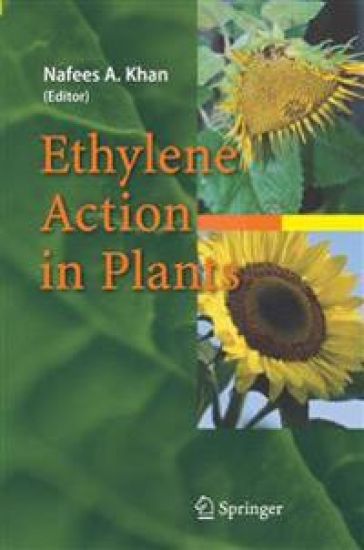
Ethylene Action in Plants

Ethylene Action in Plants

Springer-Verlag Berlin and Heidelberg GmbH Co. K
2006
sidottu
The discovery of the plant hormone ethylene was stunning—ethylene is a simple gas! Our expanding knowledge of the multiplicity of ethylene’s roles in plant development, physiology, and metabolism makes the study of this plant hormone increasingly compelling. Elucidation of the genetic regulation of ethylene biosynthesis, characterization of ethylene receptors and analysis of the pathway of ethylene signal transduction, coupled with the identifi- tion of components in the cascade and target genes, have provided insight into how this simple molecule can drive such a diversity of divergent processes. These scientific advances will lead to new technologies that will further enable researchers to harness the powers of ethylene for the benefit of agriculture. In Ethylene Action in Plants, classic and emerging roles of ethylene in plant developmental processes are integrated through recent advances ch- acterizing ethylene receptors, promoters and antagonists, and biological and environmental factors that mediate ethylene responses. The book’s editor, Dr. Nafees Khan, Aligarh Muslim University, Aligarh, India, an expert on ethylene with an impressive number of publications on the interactions between ethylene, photosynthesis, and growth of Brassica spp, brought together a highly qualified group of international experts to provide state-- the-art information. To simply list the topics included does not do justice to the book’s contents, as the articles are not just a compilation of the literature relevant to the topic.
Ethylene Action in Plants

Ethylene Action in Plants

Springer-Verlag Berlin and Heidelberg GmbH Co. K
2010
nidottu
The discovery of the plant hormone ethylene was stunning—ethylene is a simple gas! Our expanding knowledge of the multiplicity of ethylene’s roles in plant development, physiology, and metabolism makes the study of this plant hormone increasingly compelling. Elucidation of the genetic regulation of ethylene biosynthesis, characterization of ethylene receptors and analysis of the pathway of ethylene signal transduction, coupled with the identifi- tion of components in the cascade and target genes, have provided insight into how this simple molecule can drive such a diversity of divergent processes. These scientific advances will lead to new technologies that will further enable researchers to harness the powers of ethylene for the benefit of agriculture. In Ethylene Action in Plants, classic and emerging roles of ethylene in plant developmental processes are integrated through recent advances ch- acterizing ethylene receptors, promoters and antagonists, and biological and environmental factors that mediate ethylene responses. The book’s editor, Dr. Nafees Khan, Aligarh Muslim University, Aligarh, India, an expert on ethylene with an impressive number of publications on the interactions between ethylene, photosynthesis, and growth of Brassica spp, brought together a highly qualified group of international experts to provide state-- the-art information. To simply list the topics included does not do justice to the book’s contents, as the articles are not just a compilation of the literature relevant to the topic.