

Kirjahaku
Etsi kirjoja tekijän nimen, kirjan nimen tai ISBN:n perusteella.
109 tulosta hakusanalla Euan Patterson
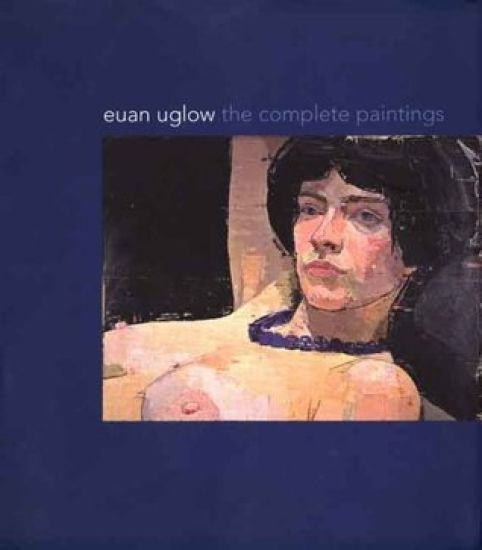
British artist Euan Uglow (1932–2000) maintained a lower profile than others of his generation, yet his beautiful, intelligent, humane, and often witty landscapes, still lifes, and figure studies are today gaining the recognition they so clearly deserve. Many critics and admirers now consider Uglow one of Britain’s greatest post-war artists. This is the first book devoted to Uglow and his oeuvre. Richard Kendall’s essay explores Uglow’s fundamental attitudes, beliefs, and processes in the years 1950 to 1970, and Catherine Lampert looks at the content and personal nature of the artist’s paintings over a lifetime, emphasizing his growing attention to color and light. The volume reproduces every known oil painting by Uglow—a total of more than 400 works--some 80 of which are here reproduced for the first time. In addition to a chronology, bibliography, and exhibition history for each work, the catalogue entries provide many other details and illuminating notes, including the artist’s own observations.Exhibition Schedule:Marlborough Gallery, London (opens May 2007)


Despite his grandmother's warnings, a little boy wanders into a forest and becomes lost. How does he find his way out of the forest? A ferocious lion has a lesson to teach him.
Euan Macdonald: We Already See So Much
JRP Ringier
2013
sidottu
This artist's book collects 85 landscape drawings by Scottish-born, Los Angeles-based artist Euan Macdonald (born 1965). The drawings are interspersed with reproductions of 22 Swiss postcards that were issued around 1912-1915, when Swiss author Robert Walser wrote the classic short story "A Little Ramble," from whose last line this book takes its title.
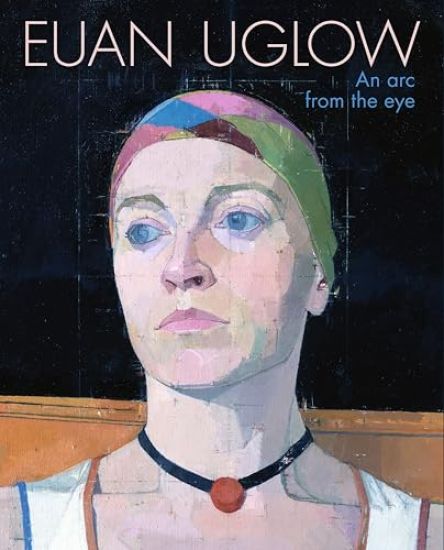
Euan Uglow
PHILIP WILSON PUBLISHERS LTD
2026
nidottu
A beautifully illustrated study of one of Britain’s most significant 20th century painters, featuring over 40 of his most ambitious paintings. Euan Uglow (1932–2000) was one of Britain’s most significant twentieth-century painters, known for his sustained observation and painstaking technique, often taking months, if not years, to complete a work. Each picture pursues a particular idea, seeking to depict the visual reality of the concept, expressed with radiant colours and light. This book accompanies the first solo exhibition of Uglow’s work in a UK public institution (MK Gallery) for 20 years and features over 40 of his most ambitious paintings. Uglow often had three or four active ‘set-ups’ in his Battersea studio, using particular rectangular compositions in an attempt ‘to paint a structured painting full of controlled and therefore potent emotion’. Almost mathematical in his methods, Uglow left markings on his canvases that reveal his processes, including how the passage of time affected the depiction of his subjects. Best known for his large-scale nudes, Uglow also made landscapes in the summer light of the Mediterranean and still lifes, taking up the challenge of painting materials such as plastic, as well as organic material in gradual decay, such as fruit. With essays by Catherine Lampert and Kate Aspinall the book also includes drawings and examples of work by his artistic influences, Paul Cézanne, Alberto Giacometti and his former tutors William Coldstream, Victor Pasmore and Claude Rogers.

Morocco as it is, with an account of Sir Charles Euan Smith's recent mission to Fez
Stephen Bonsal
Hansebooks
2020
nidottu
'What are we going to do with a parcel of old stones?' wrote the director of an African museum a century and a half ago, when one of my ancestors presented him with a splendid collection of fossils of mammal-like reptiles. Old stones, however intriguing, are difficult to interpret, dusty, and do not fit well in the neatly ordered contents of a house of learning. Archaean geology, which is the study of the Earth's history in the period from after 9 the end of planetary accretion (4.5-4.4 x 10 years ago) up to the beginning 9 of the Proterozoic (2.5 x 10 years ago) is much the same - a parcel of old stones seemingly impossible to understand. Yet these stones contain the history of our origins: they can tell us a story that is interesting not just to the geologist (for whom this book is primarily written) but instead addresses the human condition in general.

The Reformation of Heretics The Waldenses of the Alps, 1480-1580

Are nonhuman animals conscious? When do babies begin to feel pain? What function is served by consciousness? What evidence could resolve these issues? These questions are tackled by exploring psychologists' findings on topics as diverse as: animal cognition, unconscious learning and perception in humans, infantile amnesia, theory of mind in primates, and the nature of pleasure and pain. Experimental results are placed in theoretical context by tracing the development of concepts of consciousness in animals and humans (from Plato to Penrose). Two themes emerge: first, the capacity for language marks a fundamental difference between humans and nonhumans; second, there is neither proof that any nonhuman species is conscious, nor any convincing function to be found for consciousness. Finally, a sketch is offered of a novel functionalist theory according to which the developing capacity for language allows the creation by infants of a 'self', which may be a precondition for consciousness.

Since the dawn of history people have used charms and spells to try to control their environment, and forms of divination to try to foresee the otherwise unpredictable chances of life. Many of these techniques were called 'superstitious' by educated elites. For centuries religious believers used 'superstition' as a term of abuse to denounce another religion that they thought inferior, or to criticize their fellow-believers for practising their faith 'wrongly'. From the Middle Ages to the Enlightenment, scholars argued over what 'superstition' was, how to identify it, and how to persuade people to avoid it. Learned believers in demons and witchcraft, in their treatises and sermons, tried to make 'rational' sense of popular superstitions by blaming them on the deceptive tricks of seductive demons. Every major movement in Christian thought, from rival schools of medieval theology through to the Renaissance, the Reformation, and the Enlightenment, added new twists to the debates over superstition. Protestants saw Catholics as superstitious, and vice versa. Enlightened philosophers mocked traditional cults as superstitions. Eventually, the learned lost their worry about popular belief, and turned instead to chronicling and preserving 'superstitious' customs as folklore and ethnic heritage. Enchanted Europe offers the first comprehensive, integrated account of western Europe's long, complex dialogue with its own folklore and popular beliefs. Drawing on many little-known and rarely used texts, Euan Cameron constructs a compelling narrative of the rise, diversification, and decline of popular 'superstition' in the European mind.

Since its first appearance in 1991, The European Reformation has offered a clear, integrated, and coherent analysis and explanation of how Christianity in Western and Central Europe from Iceland to Hungary, from the Baltic to the Pyrenees splintered into separate Protestant and Catholic identities and movements. Catholic Christianity at the end of the Middle Ages was not at all a uniformly 'decadent' or corrupt institution: it showed clear signs of cultural vigour and inventiveness. However, it was vulnerable to a particular kind of criticism, if ever its claims to mediate the grace of God to believers were challenged. Martin Luther proposed a radically new insight into how God forgives human sin. In this new theological vision, rituals did not 'purify' people; priests did not need to be set apart from the ordinary community; the church needed no longer to be an international body. For a critical 'Reformation moment', this idea caught fire in the spiritual, political, and community life of much of Europe. Lay people seized hold of the instruments of spiritual authority, and transformed religion into something simpler, more local, more rooted in their own community. So were born the many cultures, liturgies, musical traditions and prayer lives of the countries of Protestant Europe. This new edition embraces and responds to developments in scholarship over the past twenty years. Substantially re-written and updated, with both a thorough revision of the text and fully updated references and bibliography, it nevertheless preserves the distinctive features of the original, including its clearly thought-out integration of theological ideas and political cultures, helping to bridge the gap between theological and social history, and the use of helpful charts and tables that made the original so easy to use.

Since the dawn of history people have used charms and spells to try to control their environment, and forms of divination to try to foresee the otherwise unpredictable chances of life. Many of these techniques were called 'superstitious' by educated elites. For centuries religious believers used 'superstition' as a term of abuse to denounce another religion that they thought inferior, or to criticize their fellow-believers for practising their faith 'wrongly'. From the Middle Ages to the Enlightenment, scholars argued over what 'superstition' was, how to identify it, and how to persuade people to avoid it. Learned believers in demons and witchcraft, in their treatises and sermons, tried to make 'rational' sense of popular superstitions by blaming them on the deceptive tricks of seductive demons. Every major movement in Christian thought, from rival schools of medieval theology through to the Renaissance, the Reformation, and the Enlightenment, added new twists to the debates over superstition. Protestants saw Catholics as superstitious, and vice versa. Enlightened philosophers mocked traditional cults as superstitions. Eventually, the learned lost their worry about popular belief, and turned instead to chronicling and preserving 'superstitious' customs as folklore and ethnic heritage. Enchanted Europe is the first comprehensive, integrated account of western Europe's long, complex dialogue with its own folklore and popular beliefs. Drawing on many little-known and rarely used texts, Euan Cameron constructs a compelling narrative of the rise, diversification, and decline of popular 'superstition' in the European mind.

This is a critical survey of the physiological approach to learning, memory and intelligence in animals. Emphasis has been placed on the implications of physiological research for theories of the intelligence processes of animals.

This is the first major English-language study to explore the broad and longstanding connections between Japan’s national security and the safety of its sea lanes. Tracing issues from pre-and post-1945 eras, the book explores how Japan’s concerns with sea lane protection have developed across such diverse fields as military strategy, diplomacy, trade policy, energy security, and law enforcement.Drawing upon case study material and primary research including interviews with officials and security analysts, the book presents a chronological analysis of Japan’s sea lane security. While Japan’s security policies have recently undergone relatively rapid change, a historical treatment of sea lane security issues reveals long-term continuity in security policymakers’ perceptions and responses regarding Japan's defence and foreign policy.Revealing a neglected but important aspect of Japan’s military and economic security, the book investigates why officials and analysts continue to portray the defence of Japan’s sea lanes as ‘a matter of life and death’.

This is the first major English-language study to explore the broad and longstanding connections between Japan’s national security and the safety of its sea lanes. Tracing issues from pre-and post-1945 eras, the book explores how Japan’s concerns with sea lane protection have developed across such diverse fields as military strategy, diplomacy, trade policy, energy security, and law enforcement.Drawing upon case study material and primary research including interviews with officials and security analysts, the book presents a chronological analysis of Japan’s sea lane security. While Japan’s security policies have recently undergone relatively rapid change, a historical treatment of sea lane security issues reveals long-term continuity in security policymakers’ perceptions and responses regarding Japan's defence and foreign policy.Revealing a neglected but important aspect of Japan’s military and economic security, the book investigates why officials and analysts continue to portray the defence of Japan’s sea lanes as ‘a matter of life and death’.
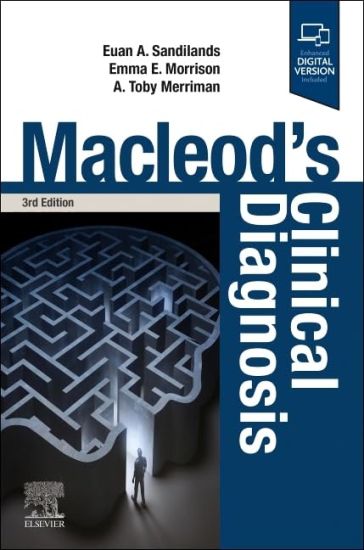
Macleod's Clinical Diagnosis
Euan Sandilands; Emma E Morrison; Andrew Merriman
Elsevier Health Sciences
2024
nidottu
Macleod's Clinical Diagnosis is a practical manual for evaluating and diagnosing problems based on presenting symptoms. The book covers the principles of the diagnostic process, then takes the reader step-by-step through common acute medical presentations and how to interpret symptoms in context to produce a differential diagnosis. Readers will learn to interpret clinical features, examination findings and investigation results, and will build their confidence in assessing patients and identifying red flags. Whether used as a stand-alone resource or as a companion to Macleod’s Clinical Examination, this book will prove invaluable for medical students and junior doctors as they build on their basic clinical skills theory to practice in the real world. Series of clear 'diagnostic guides' to all the common acute medical presentations that may present to the emergency department or acute medical unit Diagnostic flow charts in each chapter - helps the reader to follow a clear step-by-step approach to diagnosis Clear, succinct and logically ordered to support learning Includes how to recognise red flags, eliminate life-threatening conditions and generate a logical differential diagnosis Takes a problem-based approach to diagnostic reasoning, reflecting both modern medical and current educational practices Builds on the clinical skills outlined in the companion Macleod's Clinical Examination textbook Covers all the acute medical presentations required by the UKMLA syllabus Comes with an interactive eBook for easy anytime, anywhere access New chapter on the diagnostic approach to the poisoned patient Content restructured to reflect common acute medical presentations Fully updated to reflect current approaches to clinical diagnoses including diagnostic tests

Macleod's Essentials of Examination
Euan Sandilands; Katharine Strachan
Elsevier Health Sciences
2024
nidottu
Despite many diagnostic advances, expert clinical examination is fundamental to the practice of medicine. Macleod's Essentials of Examination provides a concise guide to examining each body system, ideal for senior medical students, doctors in training and other health professionals. Each chapter provides a standardised framework for examining a body system, along with important considerations for the clinician as well as self-test questions. The book is spiral-bound, portable and concise, with space for the reader to annotate and add their own notes - making it ideal as both a guide on the wards and as an exam revision aid. The second edition of this popular title has been fully revised to take into account current terminology, guidelines and diagnostic pathways. Written specifically for this format, the book can be used as a standalone resource or alongside its hugely successful parent text, Macleod's Clinical Examination and the other MacLeod’s titles. Practical, quick-reference guide for senior medical students and doctors in training - can be used for both examinations and clinical practice Concise, point-by-point template for examining all the major body systems Clear set of guidelines on what to do at each stage of the clinical examination Specific instructions around technique and key clinical points to consider Typical OSCE scenarios, exam questions and answers - with tips on presenting findings and how to maximise exam success Self-test questions to consolidate knowledge and skills Can be used alongside the other Macleod’s titles or as a standalone resource Includes complete eBook version for easy access anytime, anywhere Fully updated throughout New chapters on skin and eyes Updated exam tips and questions/answers to ensure they are relevant, current and accurate

In Volatility Trading, Sinclair offers you a quantitative model for measuring volatility in order to gain an edge in your everyday option trading endeavors. With an accessible, straightforward approach. He guides traders through the basics of option pricing, volatility measurement, hedging, money management, and trade evaluation. In addition, Sinclair explains the often-overlooked psychological aspects of trading, revealing both how behavioral psychology can create market conditions traders can take advantage of-and how it can lead them astray. Psychological biases, he asserts, are probably the drivers behind most sources of edge available to a volatility trader. Your goal, Sinclair explains, must be clearly defined and easily expressed-if you cannot explain it in one sentence, you probably aren't completely clear about what it is. The same applies to your statistical edge. If you do not know exactly what your edge is, you shouldn't trade. He shows how, in addition to the numerical evaluation of a potential trade, you should be able to identify and evaluate the reason why implied volatility is priced where it is, that is, why an edge exists. This means it is also necessary to be on top of recent news stories, sector trends, and behavioral psychology. Finally, Sinclair underscores why trades need to be sized correctly, which means that each trade is evaluated according to its projected return and risk in the overall context of your goals. As the author concludes, while we also need to pay attention to seemingly mundane things like having good execution software, a comfortable office, and getting enough sleep, it is knowledge that is the ultimate source of edge. So, all else being equal, the trader with the greater knowledge will be the more successful. This book, and its companion CD-ROM, will provide that knowledge. The CD-ROM includes spreadsheets designed to help you forecast volatility and evaluate trades together with simulation engines.
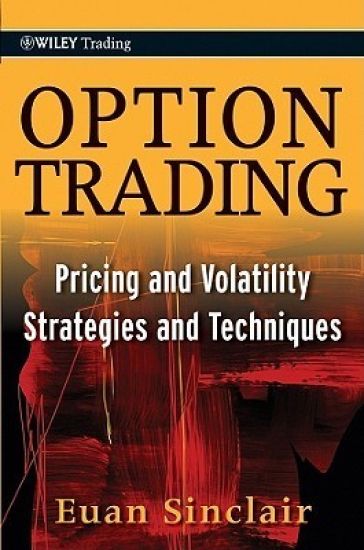
An A to Z options trading guide for the new millennium and the new economy Written by professional trader and quantitative analyst Euan Sinclair, Option Trading is a comprehensive guide to this discipline covering everything from historical background, contract types, and market structure to volatility measurement, forecasting, and hedging techniques. This comprehensive guide presents the detail and practical information that professional option traders need, whether they're using options to hedge, manage money, arbitrage, or engage in structured finance deals. It contains information essential to anyone in this field, including option pricing and price forecasting, the Greeks, implied volatility, volatility measurement and forecasting, and specific option strategies. Explains how to break down a typical position, and repair positionsOther titles by Sinclair: Volatility TradingAddresses the various concerns of the professional options trader Option trading will continue to be an important part of the financial landscape. This book will show you how to make the most of these profitable products, no matter what the market does.